

A patio that’s done right changes how you use your property. You get usable outdoor space from spring through fall, sometimes longer if you add a fire feature. Your home value goes up – we’re talking about 80% to 109% ROI on well-executed patio projects.
But here’s what matters day-to-day: no more standing water after storms. No ice patches in winter. No sunken sections or heaving pavers after a few seasons. Just a flat, stable surface that looks the same in year five as it did on install day.
You also get space that actually fits how you live. Some people want room for a grill and a table. Others are building full outdoor kitchens with seating areas. We’ve done simple concrete patios and elaborate Cambridge paver designs with built-in fire pits. What you choose depends on your budget and how you plan to use the space, but the installation process stays the same: proper base, correct slope, real drainage solutions.
The difference between a patio that lasts and one that fails in three years usually comes down to what you can’t see. The base preparation. The drainage layer. The slope that keeps water moving away from your foundation instead of pooling under your pavers.
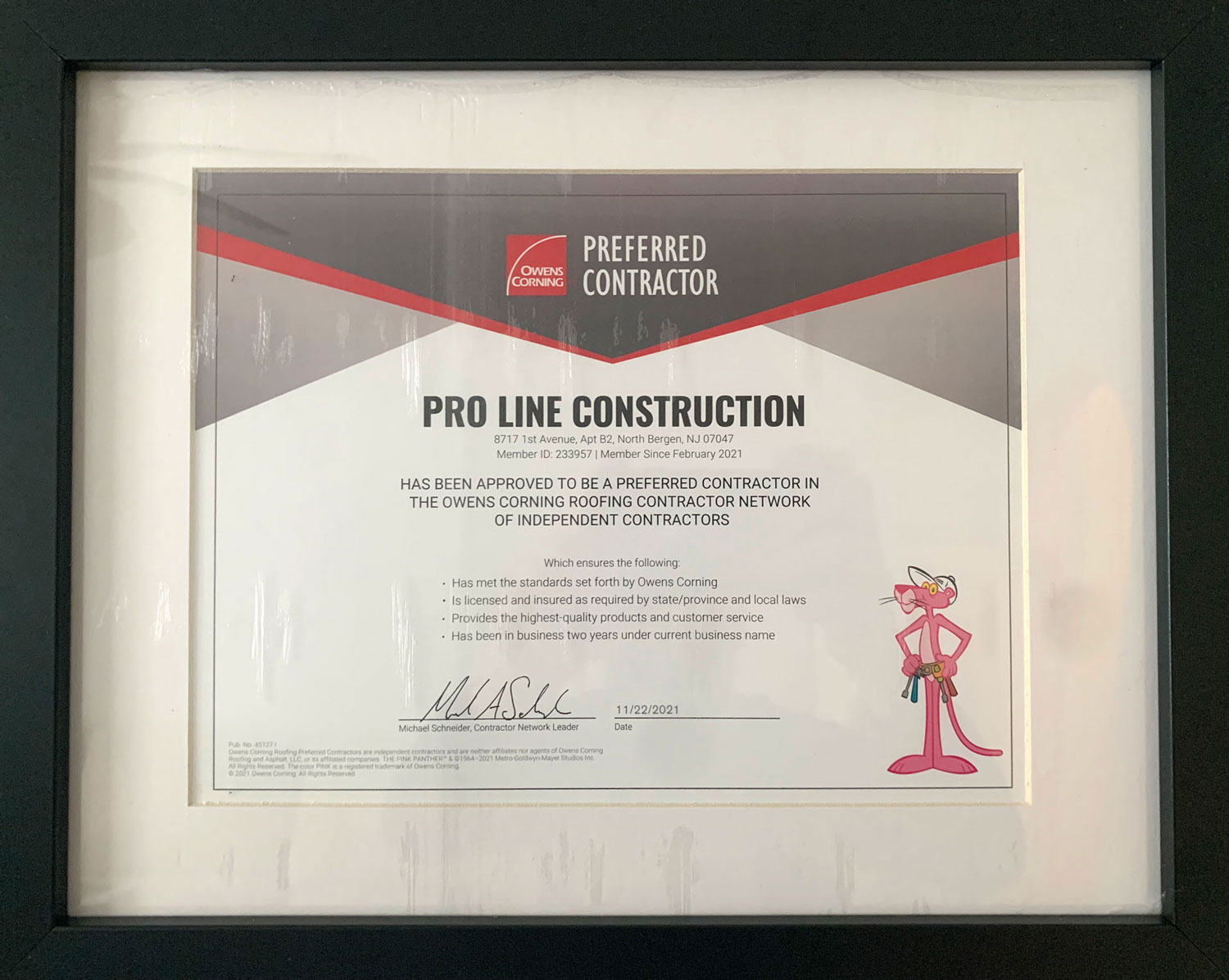
Proline Construction handles the full scope of exterior work – roofing, siding, masonry, paving. We’re certified contractors who know New Jersey building codes and how to navigate permit requirements in Orange and surrounding towns.
What sets us apart is transparency. We discuss pricing upfront with no hidden charges. We manage every aspect of your project ourselves instead of subbing it out. And we use materials that make sense for our climate – Cambridge pavers, Techo-Bloc, EP Henry – brands that hold up to humidity, freeze-thaw cycles, and everything else New Jersey dishes out.
We’ve seen what happens when patios are installed wrong. Settling. Cracking. Water damage to foundations. Our job is making sure that doesn’t happen to you.

First, we look at your property. Drainage is the biggest factor – Orange sits on heavy clay soil that doesn’t drain well, so we need to see where water goes during storms. We also check for slopes, existing drainage issues, and how close you are to impervious surface limits that could trigger permit requirements.
Then we talk about what you want. Concrete patio or pavers? Simple rectangle or custom shape? Any built-in features like seating walls or fire pits? We’ll show you material options – different paver stones, colors, patterns – and give you a realistic quote based on the actual scope of work.
Once you approve, we start with excavation and base prep. This is where most contractors cut corners and where most patios fail. We excavate deep enough, add proper gravel layers, and install drainage solutions if your property needs them. The base gets compacted correctly – not just once, but in layers. Then we set the pavers or pour the concrete with a 2% slope minimum so water always moves away from your house.
Final step is sealing and cleanup. You get a finished patio that’s ready to use, plus clear guidance on maintenance. The whole process typically takes a week to ten days depending on size and complexity, and we manage it start to finish so you’re not coordinating multiple crews.

Ready to get started?
Every patio project includes proper site prep, base installation, drainage solutions, and the finish surface – whether that’s concrete or pavers. We handle permits if your project requires them, which depends on size and how much impervious surface you already have on your property.
For paver patios, you get to choose from Cambridge pavers, Techo-Bloc, EP Henry, and other quality brands. These aren’t just aesthetic choices – different pavers handle New Jersey weather differently. Cambridge pavers, for example, are engineered specifically for freeze-thaw climates like ours. We’ll walk you through options that fit your budget and use case.
Drainage is non-negotiable in Orange. Our clay soil doesn’t absorb water, so without proper drainage layers and slope, you’ll have pooling, settling, and foundation issues. We install extra gravel layers, French drains when needed, and always maintain at least 2% slope away from your house. Some properties need more extensive solutions depending on existing drainage problems.
You also get our management throughout the project. We’re not a referral service – we’re the actual contractors doing the work. That means one point of contact, clear communication, and accountability if anything needs adjustment. We discuss all costs upfront and don’t surprise you with add-ons halfway through.
The goal is a patio that works with your property instead of against it. In Orange, that means accounting for our weather, our soil, and local regulations that govern how much impervious surface you can add. We handle all of that so you just get the finished product.

A properly installed paver patio should last 25 to 30 years in New Jersey, sometimes longer. The key phrase is “properly installed” – most failures happen because of poor base prep or inadequate drainage, not because the pavers themselves wear out.
New Jersey’s freeze-thaw cycles are brutal on hardscaping. Water gets into cracks, freezes, expands, and causes heaving or cracking. Quality pavers like Cambridge are engineered to handle this, but only if they’re installed on a stable base with proper drainage underneath. If water pools under your pavers and freezes, you’ll see settling and uneven sections within a few years regardless of paver quality.
Concrete patios typically last 20 to 25 years here, but they’re more prone to cracking than pavers. Once a crack starts, freeze-thaw cycles make it worse every winter. Pavers have the advantage of being individual units – if one gets damaged, you can replace it without redoing the whole patio.
It depends on the size and how much impervious surface you already have on your property. Orange, like most New Jersey towns, has regulations about impervious surface ratios – basically, how much of your lot can be covered by structures, driveways, patios, and other surfaces that don’t absorb water.
If your patio pushes you over that limit, you’ll need a permit and possibly a variance. You might also need a permit if the patio is over a certain size or if you’re adding structures like pergolas or outdoor kitchens. The rules vary by town and sometimes by neighborhood.
We handle this research for you. We’ll check your property’s existing impervious surface coverage and let you know if permits are required before we start work. If you need permits, we can guide you through that process. Skipping permits when they’re required can lead to fines and potentially having to remove the patio, so it’s worth doing it right from the start.
Both work, but pavers give you more flexibility and typically hold up better long-term in our climate. Concrete is less expensive upfront, but it’s more prone to cracking from freeze-thaw cycles. Once concrete cracks, repairs are visible and the damage usually spreads over time.
Pavers cost more initially but offer better durability and easier repairs. If a section settles or a paver cracks, you can lift and relay that area without touching the rest of the patio. Pavers also handle ground movement better than concrete – they can shift slightly without cracking, which matters in Orange where our clay soil expands and contracts with moisture changes.
From a design standpoint, pavers give you more options. Different colors, patterns, borders, inlays. Concrete is more limited unless you’re doing stamped or decorative concrete, which costs almost as much as pavers anyway. For resale value, paver patios typically add more to your home value than concrete, especially if you use quality materials like Cambridge pavers or Techo-Bloc. The ROI on paver patios often exceeds 100%, meaning you recoup more than you spent when you sell.
Drainage starts with proper slope – minimum 2% grade away from your house, sometimes more depending on your property. That’s about a quarter-inch drop per foot. Sounds small, but it’s enough to keep water moving instead of pooling. We see a lot of patios installed at 1% slope, which isn’t enough. Water sits, seeps into the base, and causes settling or freeze damage.
The base layer is just as important. We excavate deeper than standard and add extra gravel layers because Orange soil is heavy clay that doesn’t drain. That gravel layer gives water somewhere to go instead of sitting under your pavers or concrete. On properties with existing drainage issues, we’ll install French drains or other drainage solutions to move water away from the patio area entirely.
We also look at where water goes after it leaves your patio. If it’s running toward your foundation or pooling elsewhere in your yard, we need to address that. Sometimes that means regrading around the patio, adding drainage channels, or connecting to existing drainage systems. The goal is water management across your whole property, not just the patio itself. New Jersey stormwater regulations require this kind of planning anyway, so it’s not optional – it’s part of doing the job right.
Cambridge pavers are our most common recommendation for Orange properties. They’re engineered specifically for climates with freeze-thaw cycles and they hold up well to our humid summers and cold winters. EP Henry and Techo-Bloc are also solid choices – all three brands make pavers that maintain structural integrity and color in New Jersey weather.
The specific style depends on your use case and aesthetic preferences. Thicker pavers work better for areas with vehicle traffic like driveway pavers, while standard thickness is fine for patios and walkways. Textured surfaces give you better traction when wet, which matters during our rainy springs and falls. Color choice is mostly personal preference, but darker colors show less weathering over time.
Permeable pavers are worth considering if you’re close to impervious surface limits or if your property has drainage issues. They allow water to filter through instead of running off, which helps with both drainage and permit requirements. They cost slightly more but can solve multiple problems at once. We’ll walk you through all these options when we look at your property – the right choice depends on your specific situation, budget, and how you plan to use the space.
Most paver patios in Orange run between $15 and $30 per square foot installed, depending on materials, site conditions, and design complexity. A basic 300-square-foot patio with standard pavers might cost $5,000 to $7,000. A larger patio with premium Cambridge pavers, custom patterns, and built-in features could run $12,000 to $20,000 or more.
Concrete patios are less expensive – typically $8 to $15 per square foot for basic installation, more for decorative finishes. But remember, lower upfront cost doesn’t always mean better value. Concrete requires more maintenance, repairs are more visible, and it doesn’t add as much to resale value as quality paver work.
Site conditions affect pricing significantly. If your property has drainage issues, difficult access, or needs extensive base prep because of poor soil conditions, costs go up. Properties that require permits or variance applications add administrative costs. We give you a detailed quote upfront based on your specific property and what you want to build, so you know exactly what you’re paying for before we start. No hidden charges, no surprises halfway through the project.
Other Services we provide in City Of Orange