

Your patio should be where you want to spend time, not something you avoid because the pavers are uneven or water pools in the corners. When it’s done right, you get a space that drains properly, stays level through winter, and looks the same in year five as it did on day one.
Most patios fail because the base wasn’t prepared correctly. Water gets underneath, freezes, expands, and pushes everything up. Then it thaws and leaves gaps. That’s how you end up with sinking stones and a surface that shifts every season.
A properly built patio starts below the surface. The base needs to account for Nutley’s slope and drainage patterns, especially with the heavier rainfall we’ve been seeing. If water doesn’t move away from your foundation, you’ll deal with more than just a bad patio.
We’ve been serving Nutley and the surrounding North Jersey area for 100 years. We’re a family-owned masonry company that handles everything from patios and driveways to roofing and chimney work.
We know how Nutley’s terrain works. The slopes here matter more than in most towns, and grading has to be done right the first time. We’ve worked in every neighborhood from Bloomfield to Cedar Grove, and we understand what it takes to build something that lasts in this climate.
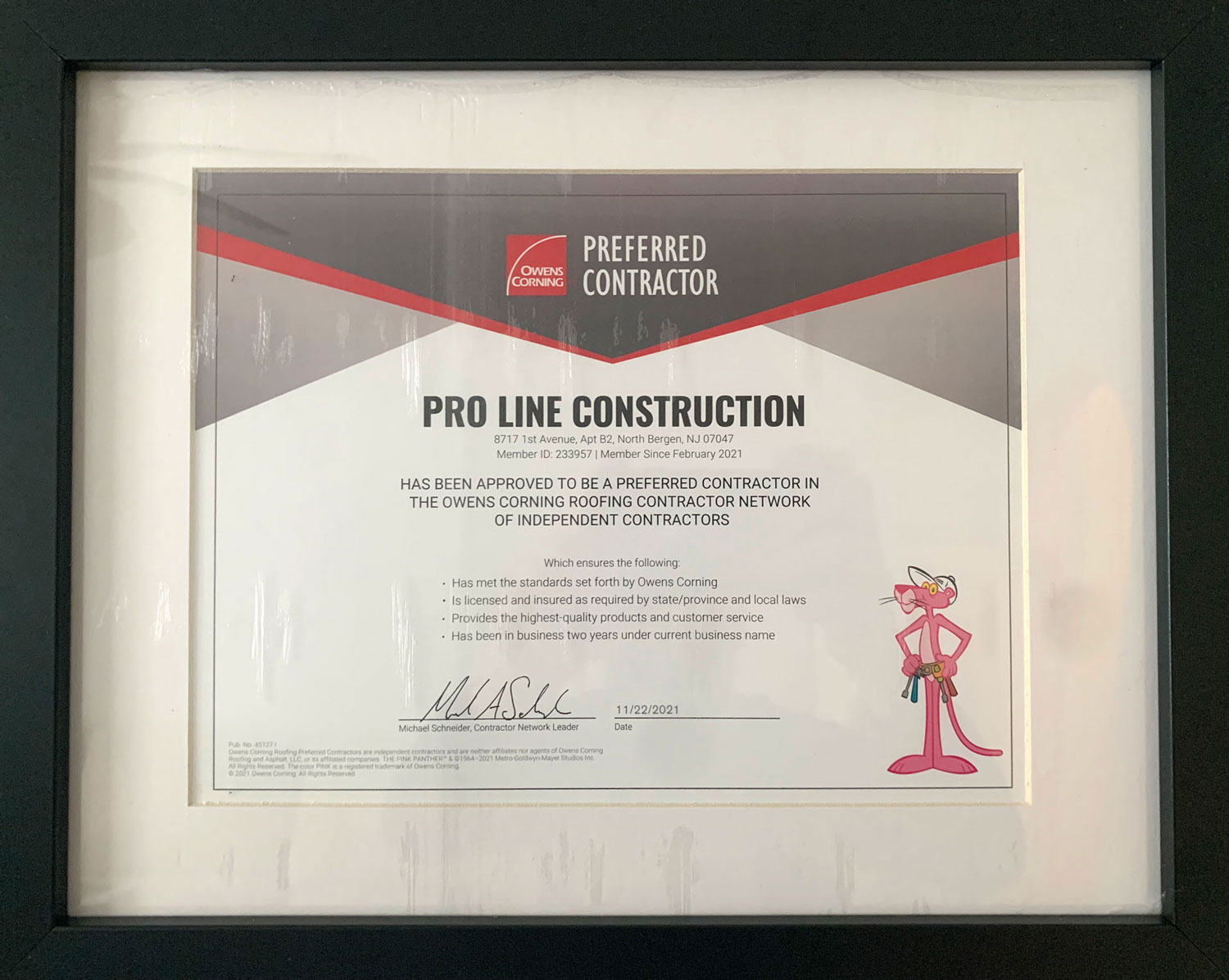
You’ll work directly with our certified contractors who follow New Jersey construction codes and discuss all costs upfront. No hidden charges. No surprises halfway through the job.

We start with a site visit to assess your space, drainage, and any grading issues. If your yard has a slope or sits near your foundation, we’ll talk through how to manage water flow before anything gets built.
Next, we prepare a customized estimate based on the size of your patio, the materials you choose, and any site-specific challenges. We discuss pricing upfront so you know exactly what you’re paying for—materials, labor, grading, base prep, and installation.
Once you approve the estimate, we handle permits if needed. Then we excavate, grade the area, and install a flexible base system designed to handle freeze-thaw movement. After the base is compacted and leveled, we install your pavers or pour your concrete patio, making sure everything drains away from your home.
The final step is cleanup and a walkthrough. You’ll see how the surface drains, where the edges are, and what to expect for maintenance. Most projects take a few days to a week depending on size and complexity.

Ready to get started?
You have options when it comes to patio materials, and each one has trade-offs. Concrete pavers are durable, affordable, and easy to replace if one cracks. They handle freeze-thaw cycles better than poured concrete because they can flex slightly without breaking.
Cambridge pavers are a step up. They’re made with ArmorTec technology, which uses superfine sand and high-quality cement to create a dense, smooth surface that resists fading and wear. If you want something that still looks sharp after years of weather, Cambridge pavers are worth the investment.
Poured concrete patios cost less upfront but are more prone to cracking over time, especially in areas with poor drainage or shifting soil. If you go this route, proper base prep and control joints are critical.
For Nutley specifically, drainage is non-negotiable. With the rainfall patterns we’ve seen in recent years, your patio needs to be designed to push water away from your house. That means proper grading, a well-compacted base, and attention to slope during installation. We also account for Nutley’s terrain—many properties here have elevation changes that require extra grading work to keep your patio stable long-term.

For a standard 400-square-foot patio in Nutley, you’re looking at $3,200 to $6,000 depending on materials and site conditions. That includes excavation, base prep, grading, materials, and installation.
Concrete pavers typically run $20 to $25 per square foot installed. Premium options like Cambridge pavers or bluestone can go $28 to $40 per square foot. Labor usually matches or exceeds material costs, especially if your yard has drainage issues or needs significant grading.
If your property has a slope or sits close to your foundation, expect additional costs for grading and drainage work. It’s not optional—it’s what keeps your patio from failing in two years. We discuss all of this upfront so there are no surprises once the project starts.
It depends on the size and type of patio. Most uncovered, ground-level patios don’t require a permit in New Jersey, but if you’re adding a roof, enclosing the space, or building something attached to your house, you’ll likely need approval.
Even for projects that don’t technically require a permit, it’s worth checking with Nutley’s building department. Skipping this step can lead to fines, stop-work orders, or expensive fixes down the road if the work doesn’t meet code.
We handle permit coordination as part of the process when it’s required. If your project needs approval, we’ll walk you through what’s involved and make sure everything is filed correctly before we start work.
A properly installed paver patio can last 25 to 50 years in New Jersey, even with freeze-thaw cycles. The key is in the base. If the base is prepared correctly and the pavers are installed on a flexible system, they’ll handle seasonal movement without cracking or sinking.
Poured concrete patios, on the other hand, typically start showing cracks within 10 to 15 years. Concrete is rigid, so when the ground shifts or water freezes underneath, it cracks. Pavers can flex slightly, which is why they hold up better long-term.
The other factor is drainage. If water pools on your patio or seeps underneath, even the best materials will fail eventually. That’s why we focus so much on grading and base prep—it’s what makes the difference between a patio that lasts and one that needs repair in five years.
Concrete pavers are the best option for New Jersey winters. They’re designed to handle freeze-thaw cycles without cracking, and if one paver does get damaged, you can replace it without tearing up the entire patio.
Cambridge pavers are even better if you want something that holds up to heavy use and harsh weather. They’re made with denser materials and a smoother finish, so they resist water absorption and stay looking good longer. They also come with better color retention, which matters if you care about how your patio looks after a few winters.
Poured concrete is cheaper upfront but more likely to crack over time. Natural stone like bluestone is beautiful but can be slippery when wet and requires more maintenance. For most homeowners in Nutley, concrete pavers or Cambridge pavers offer the best balance of durability, cost, and low maintenance.
If you’re seeing uneven pavers, water pooling, or tripping hazards, those are signs of a deeper structural issue. Surface-level fixes won’t solve the problem—you need to address what’s happening underneath.
Sinking or shifting pavers usually mean the base wasn’t installed correctly or has eroded over time. Water gets underneath, freezes, and pushes everything up. When it thaws, you’re left with gaps and an unstable surface. If this is happening, you’ll need to pull up the pavers, regrade the base, and reinstall everything properly.
Cracks in poured concrete are harder to fix. Small cracks can be patched, but if the slab is shifting or you’re seeing multiple cracks, replacement is usually the better option. We can assess your patio and tell you whether repair or replacement makes more sense based on what’s actually going on below the surface.
Yes, but it requires more grading and base work than a flat yard. Nutley has a lot of properties with elevation changes, and building on a slope means managing drainage and making sure the patio stays level over time.
We typically excavate deeper on the high side and build up the base to create a level surface. Retaining walls or step-downs might be necessary depending on how steep the slope is. The goal is to create a stable base that won’t shift when water runs downhill during heavy rain.
Drainage is even more critical on a sloped yard. Water naturally flows downhill, so we design the patio to direct runoff away from your foundation and prevent erosion underneath the pavers. It’s more work upfront, but it’s what keeps your patio from failing after the first winter.
Other Services we provide in Nutley