
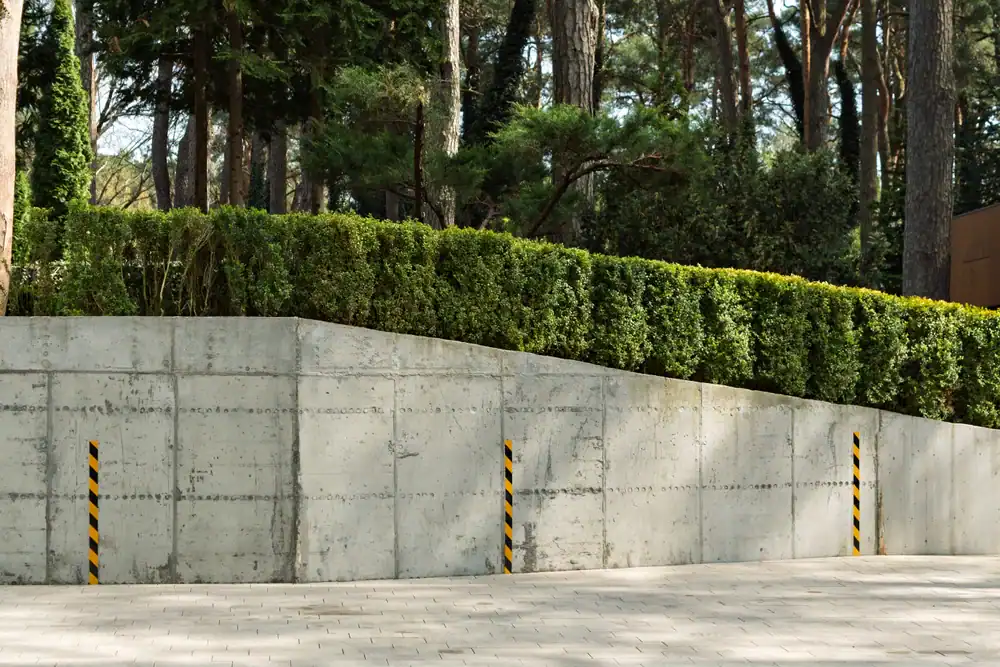

You’re dealing with slopes, water runoff, and soil that wants to move. A properly built retaining wall stops that before it becomes your problem.
The right wall does more than hold back dirt. It redirects water away from your foundation, prevents erosion that eats away at your landscaping, and keeps your yard usable instead of watching it slide downhill every spring.
Around here, with Budd Lake sitting at 933 feet and terrain that shifts with every storm, you need a wall that accounts for hydrostatic pressure and Morris County soil conditions. That means engineered drainage behind the wall, a foundation that goes deep enough, and materials that handle freeze-thaw cycles without cracking apart in three years.
Most failures happen because water wasn’t managed correctly. We build walls with proper drainage systems from day one, so you’re not dealing with bulging blocks or complete collapse down the road.
We handle exterior work across Morris County, and we know what happens when retaining walls aren’t built right here. The soil shifts, the weather beats on it, and shortcuts show up fast.
We work with licensed engineers when your wall needs one—anything over four feet or supporting additional load requires professional design under New Jersey code. That’s not optional, and we don’t skip it.
You’re hiring people who understand local regulations, pull the right permits, and build walls that pass inspection the first time. We’ve seen what happens when contractors cut corners, and we’re not interested in being the crew that has to come back and fix our own work.

First, we look at your property. Slope angle, soil type, water flow, and what you’re trying to accomplish. If your wall is over four feet or supporting anything above it, we bring in a licensed engineer to design it properly. That’s a New Jersey requirement, not a suggestion.
Next, we handle permits. Building Department and Engineering Department both need to sign off before we dig. We submit the plans, wait for approval, and then schedule the work.
The build starts with excavation and foundation prep. We go deep enough to support the wall and account for frost lines. Then we install the drainage system—gravel, perforated pipe, filter fabric—so water moves away from the wall instead of building up behind it. After that, we set the blocks or pour the concrete, making sure everything is level, reinforced, and backfilled correctly.
Once it’s done, we call for inspection. You get a wall that’s built to code, engineered for your property, and designed to handle Morris County weather without falling apart.

Ready to get started?
You’re getting a wall that meets the 2018 International Residential Code and New Jersey Uniform Construction Code. That means proper engineering, correct materials, and construction that passes inspection.
We handle concrete retaining wall blocks, poured concrete walls, and segmental retaining wall systems depending on what your site needs. Each material has different applications—blocks work well for certain heights and loads, poured concrete handles others.
Drainage is built into every wall we install. That includes gravel backfill, perforated drainage pipe, and filter fabric to keep soil from clogging the system. Without proper drainage, hydrostatic pressure builds up and pushes your wall over. We’ve seen it happen, and it’s expensive to fix.
In Budd Lake, you’re also dealing with elevation changes and soil that moves when it gets saturated. We account for that in the foundation depth and reinforcement. A wall that works in flat terrain doesn’t necessarily work here, and we adjust the design accordingly.
You also get permit handling, engineer coordination when required, and a build process that doesn’t leave you guessing what’s happening next.

Yes, if your wall is over a certain height or supporting additional load. In New Jersey, retaining walls over four feet require both a building permit and engineering calculations from a licensed professional engineer.
Even walls under four feet may need permits depending on what they’re supporting. If there’s a structure, driveway, or slope above the wall, you’ll likely need engineering and approval from both the Building Department and Engineering Department.
We handle the permit process as part of the job. That includes submitting plans, coordinating with engineers, and scheduling inspections. Skipping permits might save time upfront, but it creates problems when you try to sell your property or if the wall fails and insurance won’t cover it.
With proper design, materials, and drainage, most retaining walls last 50 years or more. The key is building it right from the start, not trying to fix problems later.
The biggest factor in longevity is drainage. If water builds up behind the wall, hydrostatic pressure will push it over no matter how well it’s built. We install drainage systems with every wall—perforated pipe, gravel backfill, and filter fabric—so water moves away instead of sitting there and creating pressure.
Material choice also matters. Concrete retaining wall blocks hold up well in freeze-thaw cycles if they’re installed correctly. Poured concrete works for taller walls and heavy loads. The wrong material for your site means you’re replacing the wall in 10 years instead of 50.
About 30% of retaining walls fail within a few years, and it usually comes down to three things: poor drainage, inadequate foundation, or cheap construction.
Poor drainage is the most common. When water builds up behind the wall, it creates hydrostatic pressure that pushes outward. Eventually, the wall bulges, cracks, or collapses completely. Proper drainage systems prevent this, but a lot of contractors skip them to save money or time.
Inadequate foundation is the second issue. If the base isn’t deep enough or the soil isn’t compacted correctly, the wall shifts and settles unevenly. In Morris County, where soil conditions vary and frost lines matter, you can’t just dig a shallow trench and hope it holds.
Cheap construction is the third problem. Low-quality materials, improper reinforcement, and shortcuts during installation all lead to early failure. You might save money upfront, but you’ll pay more to rebuild it correctly later.
Segmental retaining walls use interlocking blocks stacked without mortar. They’re flexible, handle ground movement well, and work for most residential applications under a certain height. Installation is faster, and they’re easier to repair if one section gets damaged.
Poured concrete walls are solid, reinforced structures that handle taller heights and heavier loads. They’re stronger for walls over six feet or when you’re supporting structures above them. They take longer to install because you need forms, rebar placement, and curing time, but they’re the right choice for certain applications.
Which one you need depends on your site. Slope angle, soil type, height requirements, and what’s sitting above the wall all factor into the decision. We assess your property and recommend the option that makes sense for your situation, not just what’s easier to install.
Costs vary based on height, length, material, and site conditions. A basic segmental block wall runs differently than an engineered poured concrete wall with complex drainage needs.
Walls over four feet require engineering, which adds to the cost but isn’t optional under New Jersey code. Permit fees, engineer fees, and inspection costs are part of the total. Difficult access, poor soil conditions, or significant excavation also affect pricing.
We provide transparent estimates after looking at your property. That includes materials, labor, permits, engineering if needed, and drainage installation. We don’t hide costs or surprise you halfway through the job. You’ll know what you’re paying for before we start digging.
Sometimes, but it depends on why it’s failing and how far gone it is. If the foundation is inadequate or drainage was never installed, repairs often cost more than rebuilding it correctly.
We assess the wall to determine what’s causing the failure. If it’s minor settling or surface damage, repairs might work. If the wall is bulging from hydrostatic pressure, leaning significantly, or cracking through multiple blocks, rebuilding is usually the better option.
Patching a failing wall without fixing the underlying problem just delays the inevitable. If drainage is the issue, we need to excavate behind the wall and install a proper system. If the foundation is too shallow, we’re essentially rebuilding it anyway. We’ll tell you honestly whether repair makes sense or if you’re better off starting over with a wall that’s built to last.
Other Services we provide in Budd Lake