
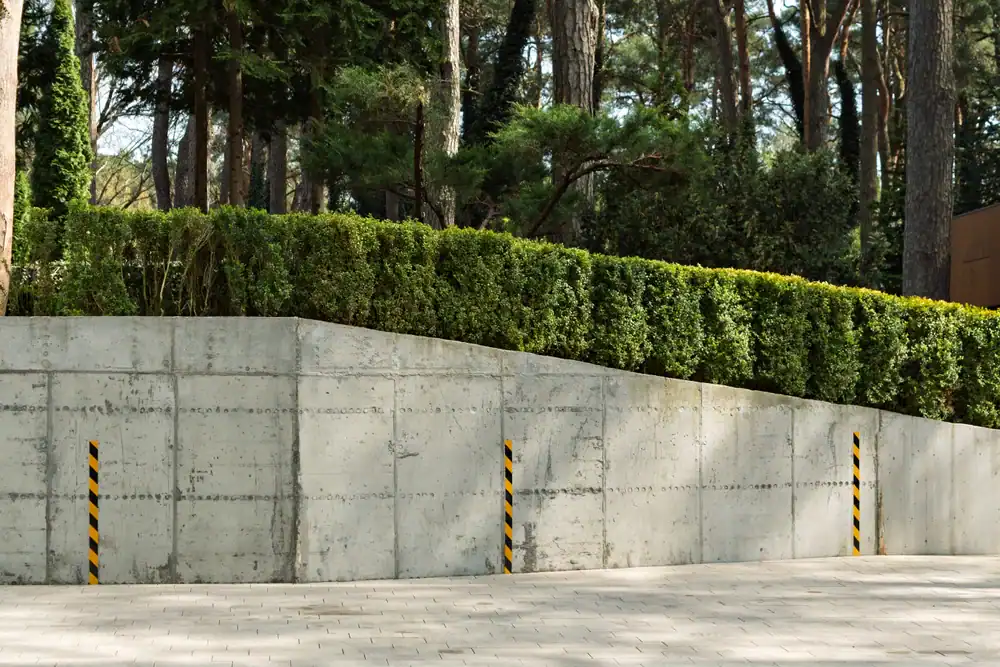

You’re not just stacking blocks to hold back dirt. You’re protecting your foundation from water damage, turning a sloped yard into functional outdoor space, and adding real value that buyers notice when it’s time to sell.
Most properties in Kinnelon deal with elevation changes. That’s not unusual. What is unusual is how many homeowners wait until they see cracks, leaning walls, or water pooling near their foundation before they call someone.
A properly built block wall retaining wall does three things: it stops erosion before it reaches your foundation, it manages water through drainage systems that prevent hydrostatic pressure, and it creates level areas where you actually want to spend time. The difference between a wall that lasts 10 years and one that lasts 50 comes down to how it’s engineered and what’s happening behind the blocks you can see.
We’ve spent nearly two decades working on properties across Morris County. We’ve seen what fails here and what doesn’t.
Kinnelon’s terrain isn’t flat. You’ve got slopes, rocky soil, and weather that swings from 95 degrees in July to below freezing with snow and ice by January. That freeze-thaw cycle destroys walls that weren’t built right the first time.
We work with wet cast concrete retaining wall blocks designed for this climate. We don’t cut corners on drainage, and we don’t install walls that need permits without pulling them. You’ll know what the job costs before we start, and you’ll know what’s happening at every step.

We start with a site visit. You show us the problem area, we measure the slope, check drainage patterns, and talk through what you’re trying to accomplish. If your wall needs to be over four feet, we’ll tell you upfront that engineering and permits are required in New Jersey.
Once we agree on the scope, we excavate and prepare the base. This isn’t optional. A retaining wall is only as stable as what it’s sitting on, so we dig down to solid ground, compact the base material, and make sure it’s level before any blocks go in.
Then we install the drainage system. Perforated pipe, gravel backfill, and proper grading keep water from building up behind the wall. That’s what prevents leaning and cracking five years down the road. After drainage is handled, we set the blocks, check alignment as we go, and backfill properly so everything stays where it’s supposed to.

Ready to get started?
Every retaining wall project includes site assessment, proper excavation, engineered base preparation, and a drainage system that actually works. We’re not just setting concrete retaining wall blocks on top of dirt and calling it done.
You’ll get options for materials. Belgard, Techo-Bloc, EP Henry—these are manufacturers that make blocks built for the Northeast. You’ll see samples, pick colors and textures that match your property, and understand what each option costs before you decide.
If you’ve got an old timber wall that’s rotting or a stone wall that’s leaning, we handle removal and replacement. A lot of wood retaining walls installed 20 or 30 years ago are failing now because they weren’t built with drainage in mind and the freeze-thaw cycle has done its job. Replacing them with concrete blocks means you’re not doing this again in another decade.
Morris County properties deal with heavy stormwater runoff, especially during spring thaw and summer storms. Your wall needs to handle that. We design for it, not around it.

A properly built block retaining wall can last 50 to 100 years in New Jersey’s climate. That’s assuming it was installed with the right base, proper drainage, and quality materials designed to handle freeze-thaw cycles.
The walls that fail early usually have one of three problems: no drainage system, a poorly compacted base, or blocks that weren’t made for this kind of weather. Water is the enemy. When it builds up behind the wall and freezes, it creates pressure that pushes blocks out of alignment.
Wet cast concrete blocks hold up better than timber, which rots, and better than natural stone, which shifts. If you’re replacing an old wall, you’re looking at a material that outlasts what was there before and doesn’t require the same level of maintenance.
In New Jersey, retaining walls over four feet typically require engineering and permits. Kinnelon follows state building codes, so if your wall is going to be taller than four feet or if it’s supporting a significant load, you’ll need to pull permits before construction starts.
This isn’t something to skip. An improperly installed tall wall is a safety issue and a liability. If it fails and causes damage to your property or a neighbor’s, you’re looking at expensive repairs and potential legal problems.
We handle the permit process if your project requires it. That includes working with engineers, submitting plans, and making sure inspections happen on schedule. It adds time to the project, but it’s not optional, and it protects you in the long run.
Poor drainage is the number one cause. When water builds up behind the wall, it creates hydrostatic pressure that pushes the blocks forward. Over time, that pressure causes leaning, cracking, or complete failure.
The second most common issue is a bad base. If the wall wasn’t built on properly compacted material or if the ground underneath shifts, the whole structure moves. You’ll see this with walls that were installed without excavation or on top of loose soil.
Freeze-thaw cycles make both problems worse. Water gets into cracks, freezes, expands, and breaks the material apart. That’s why walls in New Jersey need to be built with drainage systems that move water away and materials that can handle temperature swings without deteriorating.
Cost depends on height, length, material choice, and site conditions. A basic segmental retaining wall might run a few thousand dollars for a short section. A taller wall with engineering, permits, and complex drainage can cost significantly more.
Kinnelon properties often have rocky soil and steep slopes, which means more excavation and site prep. That affects pricing. If we’re removing an old wall first, that’s additional labor and disposal costs.
We don’t give estimates over the phone because every site is different. We’ll come out, look at what you’re dealing with, and give you a clear number that includes everything—materials, labor, drainage, and any permit fees if they apply. No hidden charges.
It depends on what’s failing and why. If the wall is leaning slightly and the blocks are still intact, sometimes we can reinforce it, improve drainage, and extend its life. If it’s leaning more than a few inches, cracked in multiple places, or built without a proper base, replacement is usually the better option.
Repairing a wall that’s fundamentally flawed just delays the inevitable. You’ll spend money on a fix that lasts a couple years, then spend more money on a full replacement when it fails again. That’s not a good use of your budget.
We’ll tell you honestly whether repair makes sense or if you’re better off starting over. If the wall is old timber that’s rotting or stone that’s shifting because there’s no drainage, replacement with concrete blocks gives you a structure that actually lasts.
A gravity wall uses its own weight to hold back soil. These are typically shorter walls made from heavy concrete blocks or stone. They rely on mass and proper base preparation to stay in place. Most residential retaining walls in Kinnelon are gravity walls because they’re effective for heights under six feet and don’t require complex engineering.
A cantilever wall uses a reinforced concrete footing and a stem that’s engineered to resist pressure. These are used for taller walls or situations where a gravity wall would be too thick or heavy. They require professional engineering and are more common in commercial projects.
For most residential properties dealing with slopes and drainage issues, a segmental retaining wall system—which is a type of gravity wall using interlocking blocks—handles the job. It’s cost-effective, durable, and doesn’t require the same level of engineering unless you’re going above certain heights.
Other Services we provide in Kinnelon