
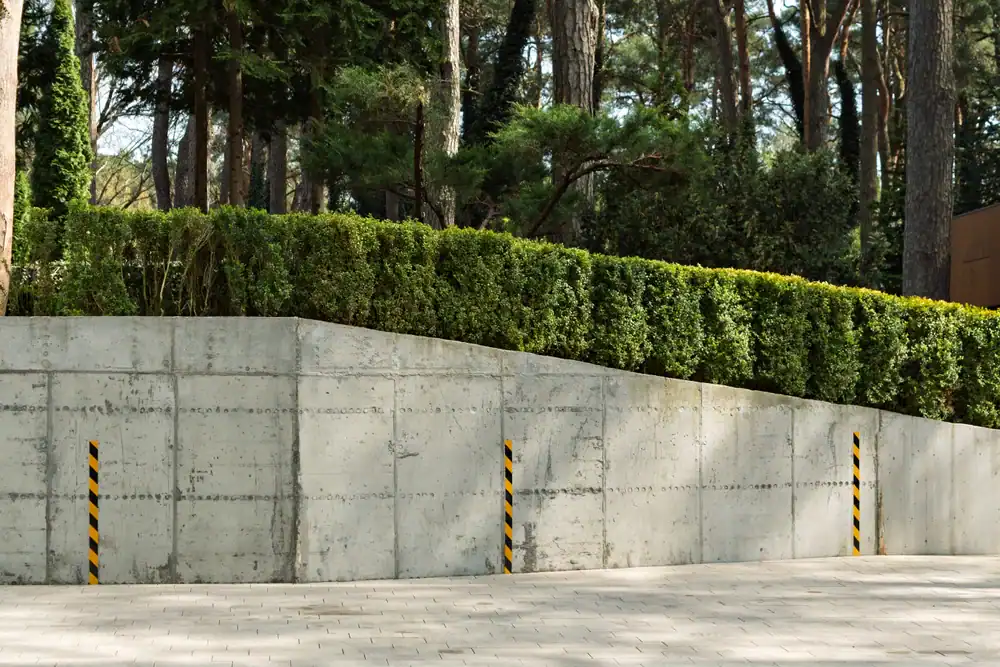

Your sloped yard isn’t just inconvenient. It’s costing you usable space, creating drainage headaches, and probably stressing you out every time it rains hard.
A properly built retaining wall changes that. You get flat areas where you can actually put furniture, plant gardens, or let kids play without worrying about runoff tearing through your landscaping. The water goes where it’s supposed to go—away from your foundation, not pooling in your basement or washing out your driveway.
This isn’t about making things look nice, though that’s a bonus. It’s about stopping erosion before it becomes a foundation problem. It’s about controlling water before it controls your property. And it’s about finally using your whole yard instead of just the flat parts.
In Lake Hiawatha, where we get heavy rainfall and freeze-thaw cycles that crack poorly built walls, you need concrete retaining wall blocks installed with proper drainage from day one. That means weep holes, gravel backfill, and a base that won’t shift when the ground moves. Most DIY jobs and cheap contractors skip these steps. Then you’re paying twice—once for the wall, once for the repair.
We handle exterior work across Lake Hiawatha—roofing, siding, gutters, and retaining walls that actually hold up. We’re local, licensed, and we don’t disappear after the job’s done.
You’re not hiring a crew that learned retaining walls from YouTube. You’re hiring people who understand how New Jersey soil moves, how our winters crack weak walls, and what it takes to pass inspection without delays. We’ve seen what happens when walls are built without proper drainage or permits, and we’ve fixed plenty of those mistakes.
We don’t oversell. We don’t add hidden fees halfway through. You get a free estimate that breaks down exactly what you’re paying for, and we manage the whole project so you’re not chasing down answers or dealing with surprises.

First, we come out and look at your property. We’re checking the slope, the soil, where water’s going, and whether you need a permit. In Lake Hiawatha, any retaining wall four feet or taller requires a permit, and even shorter walls need one if they’re near a foundation. We handle that paperwork.
Next, we dig down to solid ground and build a compacted gravel base. This is where most cheap jobs fail—they skip the base or don’t compact it right, and the wall shifts within a year. We don’t cut that corner.
Then we install the concrete retaining wall blocks or stone, depending on what you chose. Each course gets leveled and locked in. We add drainage pipes behind the wall, backfill with gravel, and install weep holes so water pressure doesn’t build up and push the wall out.
Finally, we grade the area, clean up, and walk you through what we did. You’ll know how to maintain it, what to watch for, and how to reach us if anything comes up. Most walls we build last decades without major repairs, as long as the drainage stays clear.

Ready to get started?
You’re getting engineered stability, not just stacked blocks. That means proper excavation, a compacted base, and drainage systems that prevent water from building up behind the wall. In Lake Hiawatha, where heavy rain and freeze-thaw cycles are constant, drainage isn’t optional.
We use concrete retaining wall blocks for most residential jobs because they’re durable, cost-effective, and handle New Jersey’s climate without cracking. If you want natural stone for aesthetics, we do that too—but we build it the same way, with the same attention to drainage and structural integrity.
You also get transparency. We pull permits when required, we don’t hide costs, and we don’t start until you know exactly what’s happening. If your project needs engineering plans—usually for walls over four feet or near property lines—we coordinate that too.
And if you’re repairing a retaining wall that’s already failing, we assess whether it can be fixed or needs full replacement. A lot of times, fixing a poorly built wall costs more than rebuilding it right. We’ll tell you which makes sense before you spend a dime.

Most residential retaining walls in Lake Hiawatha run between $900 and $6,800, depending on height, length, materials, and site conditions. A basic 3-foot block wall retaining wall for a small slope costs less than a 6-foot engineered wall with complex drainage.
Concrete retaining wall blocks are usually the most affordable and durable option. Natural stone costs more but offers a different look. Either way, you’re paying for excavation, materials, labor, drainage installation, and grading.
If your property has tough soil, limited access, or requires a permit and engineering, that adds cost. We give you a free estimate that breaks it all down upfront. No surprises, no hidden fees halfway through the job.
Yes, if your retaining wall is four feet or taller, or if it’s shorter but near a foundation or property line. Lake Hiawatha follows strict building codes, and skipping the permit process can lead to fines or forced removal.
We handle permit applications as part of the project. That includes submitting plans, coordinating inspections, and making sure everything meets local code. It’s not complicated, but it does add a few days to the timeline.
Even if your wall doesn’t legally require a permit, it still needs proper drainage and a solid base. A lot of DIY walls fail because people assume they can skip engineering principles on shorter walls. Height doesn’t change how water and soil behave—it just changes what the township requires on paper.
A properly built retaining wall in Lake Hiawatha should last 50 to 100 years, depending on materials and maintenance. Concrete retaining wall blocks hold up well in our freeze-thaw cycles if they’re installed with proper drainage.
The biggest killer of retaining walls isn’t age—it’s water. If water builds up behind the wall because there’s no drainage system, the pressure pushes it out. Cracks form, blocks shift, and you’re looking at expensive repairs within a few years.
We install weep holes, drainage pipes, and gravel backfill on every wall. That keeps water moving away from the structure instead of building pressure. As long as you keep those weep holes clear and don’t let soil pile up against the wall, it’ll hold for decades.
It depends on why it’s failing. If the wall is leaning, cracking, or losing blocks because it was built without drainage or a proper base, replacement usually makes more sense than repair. Fixing a structurally flawed wall often costs as much as rebuilding it right.
If the damage is limited—a few cracked blocks, minor settling, or clogged drainage—we can repair it. We assess the foundation, check for water damage, and determine whether the existing structure is salvageable.
Most of the failing retaining walls we see in Lake Hiawatha were DIY projects or budget jobs that skipped critical steps. Repairing them means addressing the root cause, not just patching the visible damage. We’ll tell you honestly whether repair or replacement is the smarter investment.
Concrete retaining wall blocks are the best combination of durability, cost, and performance for most Lake Hiawatha properties. They handle freeze-thaw cycles, they’re easy to repair if needed, and they don’t require mortar, which can crack in our climate.
Natural stone looks great and lasts just as long, but it costs more and takes longer to install. It’s a good choice if aesthetics are a priority and you’re willing to pay for it.
Poured concrete works for taller walls or commercial projects, but it’s overkill for most residential jobs. Timber and railroad ties rot in New Jersey’s wet conditions, so we don’t recommend them unless you’re okay replacing the wall in 10 to 15 years. Whatever material you choose, the drainage system matters more than the blocks themselves.
If you have a slope that’s eroding, losing soil, or creating water problems near your foundation, you probably need both. A retaining wall holds the soil in place, but it only works long-term if water can drain away from it.
Sometimes grading and drainage improvements are enough—if the slope is gentle and you’re just dealing with runoff. But if the slope is steep, if you’re losing usable yard space, or if erosion is threatening structures, a retaining wall is the right fix.
We assess your property during the free estimate and tell you what’s actually needed. If you don’t need a wall, we’ll say so. If you do, we’ll explain why and show you what proper wall landscaping and drainage will do for your property long-term.
Other Services we provide in Lake Hiawatha