

You’re watching soil slide down your slope every time it rains. Water’s pooling where it shouldn’t. Your yard’s half-unusable because of the grade.
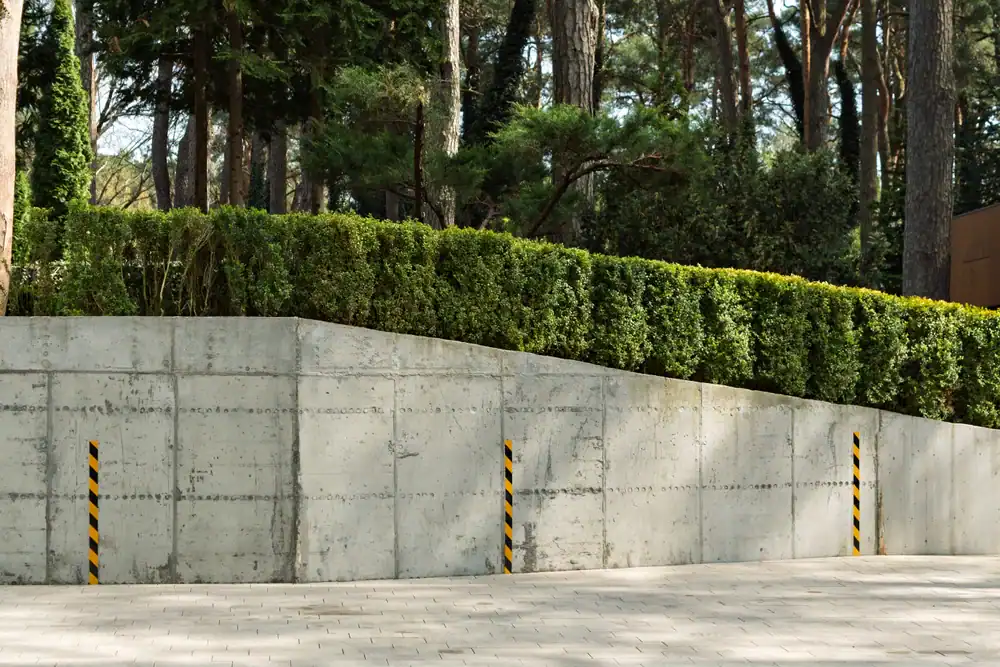
A properly built retaining wall stops that. It holds back soil, redirects water away from your foundation, and turns steep, wasted space into flat, functional areas you can actually use. Garden beds. Patio space. A level lawn where your kids can play.
Around Lake Hopatcong, the terrain doesn’t do you any favors. Glacial soils, rocky subsurface, steep slopes—it’s all working against you. That’s why drainage and structural integrity matter more here than in flatter areas. A wall that doesn’t account for water pressure will bow, crack, or fail within a few years. One that does will protect your property for decades.
You’re not just stacking blocks. You’re engineering a solution that handles the specific conditions of your property.
We’ve been working on properties across New Jersey for nearly two decades. We’ve dealt with every type of slope, soil condition, and drainage challenge the area throws at us.
We’re not new to this. We’re licensed, we follow code, and we don’t cut corners on drainage or foundation prep. When we assess your property, we’re looking at grade, water flow, soil composition, and what’s going to hold up long-term—not just what looks good for the estimate.
Lake Hopatcong properties come with unique challenges. Shallow, stony soils. Steep grades. Water that moves fast when it rains. We account for all of it. You get a wall that’s built right the first time, with materials that last and a process that’s transparent from start to finish.

We start with a site assessment. That means walking your property, checking the slope, looking at where water goes when it rains, and figuring out what’s causing the erosion or drainage problem. We measure, we ask questions, and we give you an upfront quote with no hidden fees.
Once you approve, we handle permits if your wall’s over four feet. Then we prep the site—excavation, grading, and laying a solid base of compacted gravel. This step matters more than most people realize. A weak base means a failed wall, period.
Next, we install the retaining wall blocks. We use interlocking concrete blocks that don’t need mortar and are engineered to handle lateral pressure. As we build, we install drainage behind the wall—perforated pipe, gravel backfill, the works. Water has to go somewhere, and if it builds up behind your wall, you’re looking at structural failure.
We backfill, compact, and finish the top. Then we clean up and walk you through maintenance. The whole process is managed by our team from day one to completion. You’re not dealing with subcontractors or surprise delays.

Ready to get started?
You’re getting more than stacked blocks. Every retaining wall we build includes proper drainage systems—perforated pipe, gravel backfill, and grading that moves water away from your foundation. Without drainage, walls fail. It’s that simple.
We use segmental retaining wall blocks—interlocking concrete units that are engineered for strength and don’t require mortar. They’re durable, they handle freeze-thaw cycles, and they’re available in multiple colors and textures if aesthetics matter to you.
If your wall’s over four feet, we bring in structural engineering. That’s not optional in New Jersey—it’s code. We handle the permitting, the engineering specs, and the inspections. You don’t have to chase down paperwork or worry about compliance.
For Lake Hopatcong properties specifically, we account for the area’s glacial soils and steep terrain. That means deeper excavation in some cases, more robust drainage, and base prep that’s overkill by flat-land standards but necessary here. You’re paying for a wall that works with your land, not against it.

Most retaining walls in New Jersey run between $4,000 and $15,000, depending on height, length, and site conditions. A standard 50-foot wall that’s four feet tall typically costs around $8,000, including materials and labor. Cost per square foot averages $35 to $65.
Here’s what affects price: how much excavation is needed, whether you need engineering (required for walls over four feet), soil conditions, drainage complexity, and access to your property. Steep grades or rocky soil mean more prep work. Limited access means smaller equipment and more labor hours.
We don’t have hidden fees. When we give you a quote, it includes everything—materials, labor, permits, drainage, and cleanup. If your project needs engineering, that’s an additional $500 to $2,000, but we’ll tell you that upfront. Most contractors have a minimum project cost between $1,500 and $3,000, and we’re no different.
Yes, if your wall is over four feet tall. New Jersey requires permits for taller retaining walls, and you’ll also need a design from a licensed structural engineer. Permit fees typically range from $50 to $500 depending on your municipality.
Even if your wall is under four feet, some towns have their own rules. Setback requirements, zoning restrictions, and HOA guidelines can all come into play. We handle the permit process as part of our service, so you’re not stuck navigating township offices or waiting on approvals.
If you skip the permit and build anyway, you’re risking fines and being forced to tear down the wall. Worse, if the wall fails and causes damage to a neighbor’s property, you’re liable. It’s not worth the risk. We pull permits, follow code, and make sure everything’s documented properly.
Interlocking concrete retaining wall blocks are the most reliable option for residential properties. They’re engineered to handle lateral soil pressure, they don’t require mortar, and they’re built to last decades with minimal maintenance.
These blocks lock together mechanically, which gives the wall flexibility during freeze-thaw cycles without cracking. That matters in New Jersey, where temperature swings are common. They also come in different colors, textures, and sizes, so you’re not stuck with one look.
Stone is an option if aesthetics are a priority, but it costs more and requires more skilled labor. Poured concrete works for taller walls or commercial applications, but it’s overkill for most residential projects. For Lake Hopatcong properties dealing with erosion and drainage, concrete blocks give you the best balance of performance, cost, and durability.
Most residential retaining walls take one to two weeks from start to finish, depending on size and site conditions. That includes excavation, base prep, block installation, drainage setup, backfill, and cleanup.
Permitting can add time if your wall requires engineering and township approval. That process usually takes two to four weeks, but we handle it and keep you updated. Once permits are in hand, the physical work moves quickly.
Weather can delay things. Heavy rain during excavation or base prep means we stop and wait for the site to dry out. Rushing through wet conditions leads to poor compaction and foundation issues down the line. We’d rather take an extra few days than build a wall that fails in two years.
A retaining wall can fix drainage problems, but only if it’s designed with drainage in mind. Every wall we build includes a drainage system—perforated pipe behind the wall, gravel backfill, and grading that directs water away from your foundation.
Water is the biggest threat to retaining walls. If it builds up behind the wall, it creates hydrostatic pressure that will eventually cause the wall to bow, crack, or collapse. That’s why drainage isn’t optional. It’s engineered into the structure from the beginning.
If you’re dealing with water pooling near your foundation or soil erosion on a slope, a properly built retaining wall will redirect that water and stabilize the soil. But if your drainage issues are more complex—like a high water table or poor grading across your entire property—we’ll tell you that upfront and recommend additional solutions.
Look for cracks, bulging, or leaning. If your wall is bowing outward, that’s a sign of water pressure building up behind it or foundation failure. Cracks wider than a quarter-inch mean structural issues. Leaning means the base is shifting or the soil behind the wall is pushing too hard.
Other signs: water pooling at the base of the wall, soil washing out from behind it, or blocks that are separating or shifting. If you see any of these, you need an assessment. Small problems turn into expensive failures if you wait.
Sometimes the fix is drainage-related. Adding or repairing the drainage system can relieve pressure and stabilize the wall. Other times, the wall needs to be rebuilt, especially if the base wasn’t properly compacted or the original installation skipped critical steps. We’ll assess what’s going on and give you an honest answer about whether repair or replacement makes more sense.
Other Services we provide in Lake Hopatcong