
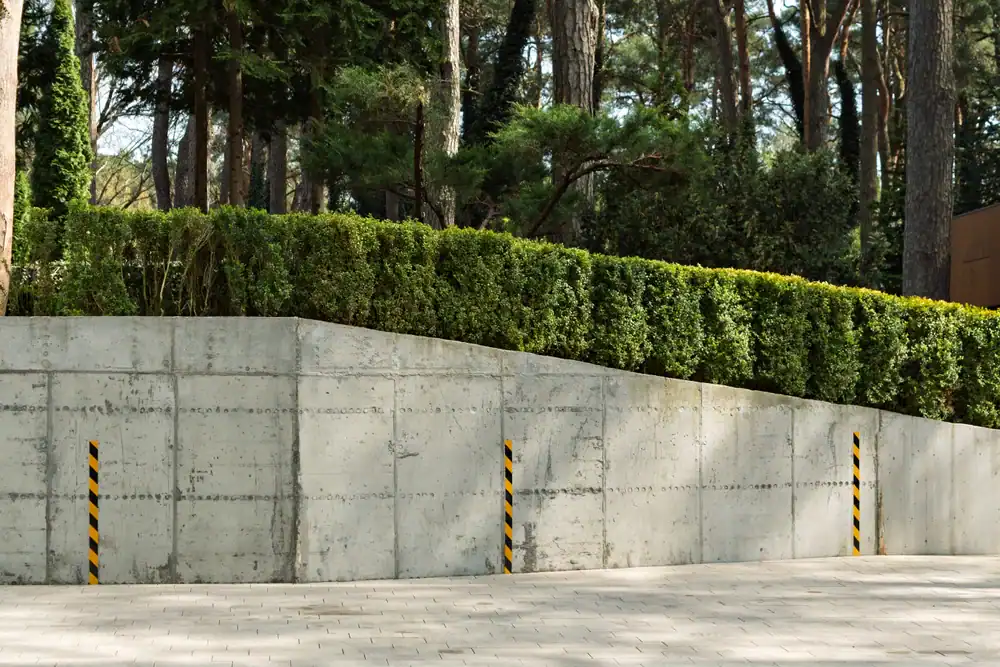

A retaining wall isn’t just stacked blocks. It’s engineered to hold back soil, redirect water, and prevent your yard from washing away every time it rains.
When it’s done right, you get a yard that drains properly. No more standing water. No more mud sliding down the slope. Just stable ground you can landscape, entertain on, or let your kids play on without worrying about erosion taking it all back.
In Millburn, where 55% of properties face serious flood risk over the next 30 years, that’s not cosmetic. It’s structural. Your retaining wall needs to handle drainage with weep holes, gravel backfill, and proper grading. Otherwise, hydrostatic pressure builds up behind the wall and you’re looking at cracks, bulging, or total failure within a few years.
We design walls that account for your soil type, slope angle, and water flow. That means the wall works with your property, not against it.
Proline Construction has been handling home improvement projects in New Jersey for over 27 years. We’re licensed, insured, and we’ve seen every kind of drainage disaster, sloped yard challenge, and soil issue this area throws at us.
Millburn properties come with their own set of problems. Clay soil. Steep grades. Older homes on uneven lots. We know what works here because we’ve built walls that are still standing after decades of freeze-thaw cycles and heavy rain.
You’re not getting a crew that learned retaining walls from YouTube. You’re getting people who understand local codes, permit requirements, and how to build something that lasts without needing repairs every few years.

First, we come out and look at your property. We’re checking slope, drainage patterns, soil composition, and where water goes when it rains. If your wall needs to be over four feet, we’re pulling engineering calculations because that’s what Millburn requires.
Next, we handle permits. Both the Building Department and Engineering Department need to sign off. We know what they’re looking for, so we make sure everything’s submitted correctly the first time.
Then we excavate and prep the base. This is where most DIY jobs and cheap contractors fail. The foundation needs to be level, compacted, and deep enough to prevent settling. We install drainage pipes, geogrid reinforcement if the load requires it, and gravel backfill to keep water moving away from the wall.
After that, we build. Whether you want concrete retaining wall blocks, natural stone, or another material, we’re setting each course level and backfilling as we go. The wall gets built to handle the load it’s going to carry, not just to look good for the listing photos.
Finally, we grade everything, clean up, and make sure water flows where it’s supposed to. You get a yard that’s usable and a wall that’s not going to shift, crack, or lean after the first heavy storm.

Ready to get started?
You’re getting a custom-designed retaining wall built for your specific property. That includes site evaluation, permit handling, excavation, drainage installation, and the wall itself.
Material options depend on what you need and what fits your home’s style. Concrete retaining wall blocks are durable and cost-effective. Natural stone gives you that high-end look Millburn buyers expect. Segmental retaining walls (SRWs) work well for taller installations or heavy loads.
We’re also handling the stuff most people don’t think about until it’s a problem. Weep holes to prevent water buildup. Gravel backfill for drainage. Geogrid reinforcement if your slope or soil requires it. Proper grading so water doesn’t pool against your foundation.
In Millburn, where the median home value is over $1 million and property taxes average $26,000 a year, your landscaping needs to match the investment. A well-built retaining wall doesn’t just prevent erosion. It adds curb appeal, creates usable outdoor space, and protects your property value.
If you’re dealing with an existing wall that’s failing, we handle repairs too. Repairing retaining walls means assessing what went wrong, whether that’s poor drainage, inadequate foundation, or just age, and fixing it so it doesn’t happen again.

You’re looking at $80 to $150 per linear foot for most retaining wall projects in Millburn. That range depends on height, materials, drainage complexity, and site access.
A basic 30-inch high, 20-foot long poured concrete wall runs about $1,500 to $2,000. If you’re going with natural stone or need a taller wall with engineering, that number goes up. Concrete retaining wall blocks fall somewhere in the middle for cost and durability.
The real cost isn’t just materials and labor. It’s whether the wall actually works five years from now. Cheap installations skip drainage, use inadequate base prep, or ignore soil conditions. Then you’re paying again to fix or rebuild it. We price projects to include everything that makes the wall last, not just what makes it look good on day one.
Yes. Millburn requires permits from both the Building Department and the Engineering Department for retaining walls. If your wall is over four feet tall, you also need engineering calculations submitted with your permit application.
Height restrictions matter too. In side or rear yards, the maximum allowable height is six feet. In front yards, it’s two feet. If your slope requires something taller, you may need variances or a different design approach.
We handle the permit process as part of the job. That means pulling the right paperwork, submitting calculations if needed, and making sure inspections pass. Skipping permits might save money upfront, but it creates problems when you sell the house or if the wall fails and insurance won’t cover it.
It depends on your budget, the wall’s height, and what look you’re going for. Concrete retaining wall blocks are the most common choice because they’re strong, affordable, and come in different styles. They work well for most residential projects and hold up in New Jersey weather.
Natural stone costs more but gives you that high-end aesthetic a lot of Millburn homeowners want. It fits with older homes and naturalistic landscaping trends. The downside is it takes longer to install and requires more skilled labor.
Poured concrete works for taller walls or heavy loads, but it’s not the most attractive option unless you’re doing a veneer over it. Segmental retaining walls (SRWs) are engineered block systems that handle serious structural demands. We recommend materials based on your slope, soil type, and what the wall needs to do, not just what looks nice in a photo.
Look for cracks, bulging, or leaning. If the wall is tilting forward or you see horizontal cracks forming, that’s hydrostatic pressure pushing from behind. It means water isn’t draining properly and the wall is under stress it wasn’t designed to handle.
Soil erosion around the base or water pooling near the wall are also red flags. If you’re seeing efflorescence (white chalky deposits), that’s water moving through the wall and bringing salts with it. Over time, that weakens the structure.
Repairing retaining walls early saves money. Once a wall starts failing, the damage accelerates. We assess what’s causing the problem, whether it’s poor drainage, inadequate foundation, or just age, and recommend whether you need a repair or a rebuild. Ignoring it doesn’t make it cheaper. It just makes it worse.
Most residential retaining wall projects in Millburn take one to two weeks from start to finish. That includes permit approval time, excavation, installation, and cleanup.
Simpler walls with easy site access and no drainage complications can go faster. Taller walls, difficult terrain, or projects that need engineering calculations and variances take longer. Weather also plays a role since we can’t pour concrete or compact base material in heavy rain or freezing temps.
We give you a realistic timeline upfront and manage the project so it stays on track. You’re not waiting months for a wall to get finished. We schedule the job, show up when we say we will, and get it done without dragging it out.
Yes, if it’s designed with proper drainage. A retaining wall alone doesn’t stop flooding, but the drainage system behind it redirects water and prevents it from pooling or eroding your yard.
We install drainage pipes, gravel backfill, and weep holes that move water away from the wall and your foundation. If your property has serious drainage issues, we may also recommend French drains or regrading to handle runoff before it becomes a problem.
In Millburn, where flood risk is high and a lot of properties sit on slopes, managing stormwater is critical. A well-built retaining wall with integrated drainage protects your yard, your foundation, and your investment. It won’t solve every flooding issue on its own, but it’s a major part of the solution.
Other Services we provide in Millburn