

Your yard stops washing away during heavy rain. Water flows where it’s supposed to go instead of pooling near your foundation or turning your lawn into a mud pit.
You gain flat, usable outdoor space on slopes that were previously wasted. That means room for a patio, garden beds, or just a level area where your kids can actually play without sliding downhill.
Your property value goes up because the landscaping looks intentional and well-maintained. Buyers notice when a home has clean boundaries, defined spaces, and no visible erosion damage. A properly built retaining wall with the right drainage system behind it can last 20 to 50 years depending on materials. That’s not an expense—it’s an investment that protects everything else you’ve put into your property.
Most wall failures happen because of poor drainage, not bad materials. When water builds up behind a wall with no way out, it creates pressure that cracks concrete retaining wall blocks or pushes the entire structure forward. That’s why we dig deeper than most contractors, install drainage pipes and gravel backfill, and make sure water has a clear path away from the wall.
We’ve spent more than 12 years working on properties throughout Parsippany and Morris County. We’re licensed and insured in New Jersey (Contractor License NJ #13VH12693500), and we handle the permit process so you don’t have to deal with township requirements.
Parsippany has specific soil challenges—clay-heavy ground, uneven grading, older drainage layouts that can’t handle the kind of rainfall we’ve been getting. We’ve seen what works here and what fails in three years. That experience matters when you’re moving soil, pouring foundations, and building something that has to hold back thousands of pounds of earth.
We don’t hide costs or add surprise fees halfway through a project. You get a free estimate upfront, and we walk through every aspect of the job so you know exactly what you’re paying for and why.

First, we assess your property to understand the slope, soil type, and drainage patterns. We’re looking at where water flows during heavy rain, how much soil needs to be retained, and whether you need a permit (Parsippany requires permits for walls over four feet or when you’re moving more than five cubic yards of soil).
Next, we dig down below the frost line and prepare a solid foundation using compacted gravel. This base has to be level and stable, or everything above it will eventually shift. We don’t cut corners here because the foundation determines how long your wall stands.
Then we install the drainage system—perforated pipes, gravel backfill, and landscape fabric to keep soil from clogging the drainage path. This is the step most contractors skip or rush through, and it’s the reason 90% of retaining walls fail early.
After drainage is handled, we build the wall itself using concrete retaining wall blocks, natural stone, or poured concrete depending on your needs and budget. Each row is leveled and set properly so the wall can handle lateral pressure without bowing or cracking.
Finally, we backfill behind the wall, compact the soil in layers, and make sure water drains away from both the wall and your foundation. You’re left with a structure that does its job without constant maintenance or expensive repairs down the road.

Ready to get started?
You get a full site evaluation before we start any work. We measure the slope, test drainage, and identify any issues that could cause problems later—like high water tables, tree roots, or unstable soil. This isn’t a quick walkthrough. We’re looking at your property the way an engineer would.
We handle all permit applications and make sure the project meets local building codes. Parsippany has specific requirements for retaining walls, especially regarding sight triangles in front yards and setbacks from property lines. We know what the township expects and how to get approvals without delays.
Your project includes proper drainage installation with gravel backfill, perforated drainage pipes, and filter fabric. This is non-negotiable if you want a wall that lasts. We also compact the base in layers and use the right materials for Parsippany’s soil conditions—not whatever’s cheapest or easiest to source.
With median home values in Parsippany sitting around $341,900 and property tax bills over $10,000 a year, you’re already invested heavily in your property. A failing retaining wall doesn’t just look bad—it can cause foundation damage, flooding, and erosion that costs far more to fix than building the wall correctly in the first place. We’re not the cheapest option, but we’re the one that saves you money over time because you won’t be calling someone else to rebuild it in five years.

Cost depends on height, length, materials, and site conditions. A basic concrete block retaining wall might run $20 to $30 per square foot, while natural stone or walls requiring significant excavation and drainage work can go higher.
What drives up cost is usually the prep work—dealing with poor soil, adding proper drainage, or working on a steep slope that requires more excavation and backfill. If your property has clay-heavy soil or drainage issues, expect to pay more upfront for a system that actually works long-term.
We give you a free estimate that breaks down material costs, labor, drainage installation, and permit fees so there’s no confusion. Parsippany charges $175 for retaining wall permits under 550 square feet and $250 for larger projects, and we factor that into your quote from the start.
Yes, if you’re moving more than five cubic yards of soil or building in a township right of way. Parsippany also requires permits for most retaining walls, especially those over a certain height or located in front yards where sight triangle regulations apply.
The permit process involves submitting plans that show the wall location, height, materials, and drainage design. The township wants to make sure your wall won’t cause drainage problems for neighboring properties or violate setback requirements.
We handle the permit application for you, including any required drawings or engineering specs. That means you don’t have to figure out what the township needs or make multiple trips to the municipal building. We submit everything, follow up on approvals, and make sure inspections are scheduled when needed.
Poor drainage is the number one reason. When water builds up behind a wall with no way to escape, it creates hydrostatic pressure that pushes the wall forward. Over time, that pressure causes cracks, bulging, or complete collapse.
The second most common issue is a weak foundation. If the base isn’t deep enough, properly compacted, or built below the frost line, the wall will shift when the ground freezes and thaws. Parsippany winters are cold enough that frost heave is a real problem if the foundation isn’t done right.
Cheap materials or improper installation also cause early failure. Skipping steps like using landscape fabric, installing drainage pipes, or backfilling with gravel might save money upfront, but it guarantees you’ll be paying for repairs or a full rebuild within a few years. We’ve repaired dozens of walls that failed because the original contractor cut corners on drainage or foundation work.
Concrete retaining wall blocks are the most common choice because they’re durable, affordable, and relatively easy to install. They come in different styles and colors, so you’re not stuck with a basic gray look. They also interlock, which adds stability.
Natural stone looks great and lasts a long time, but it costs more and requires more labor to install properly. If aesthetics are a priority and budget isn’t a major concern, stone is a solid option that adds serious curb appeal.
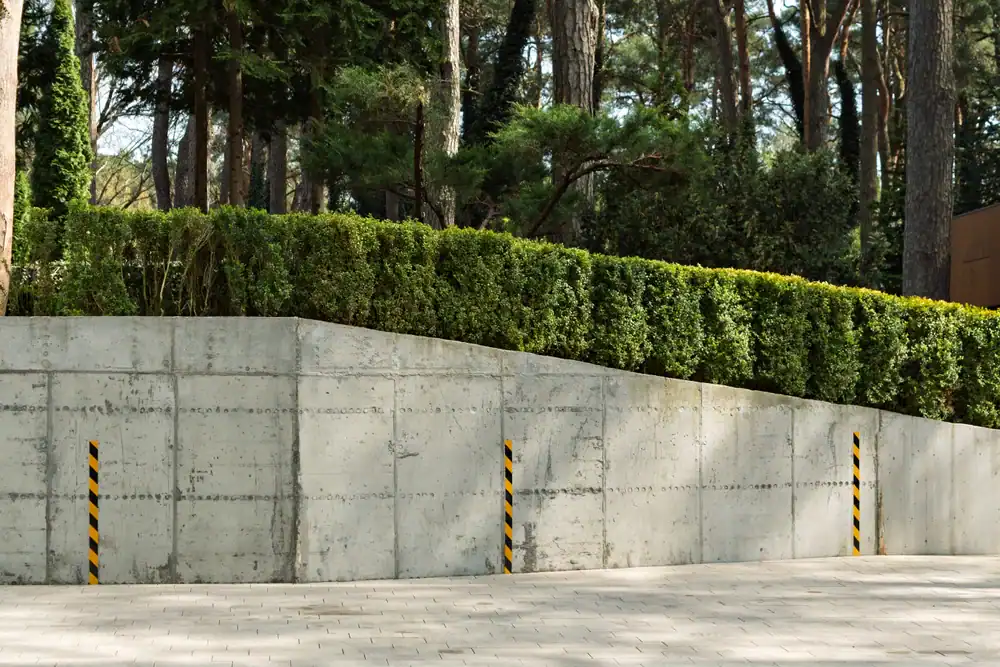
Poured concrete works well for taller walls or situations where you need maximum strength. It’s more expensive and requires forming and curing time, but it’s the strongest option available. The right material depends on your budget, the height and length of the wall, and how much weight it needs to hold back. We’ll walk you through the pros and cons of each option based on your specific property and goals.
Sometimes, yes—but it depends on how bad the damage is and what caused the failure. If the wall is leaning slightly or has minor cracks, we can often stabilize it by improving drainage, adding support, or rebuilding specific sections.
If the wall has shifted significantly, bulged outward, or the foundation has failed, a full rebuild is usually the better option. Trying to patch a structurally compromised wall might buy you a year or two, but you’ll end up paying for a rebuild anyway—plus you’ll have wasted money on a temporary fix.
We’ll assess the wall, explain what’s causing the problem, and give you an honest recommendation. If a repair makes sense, we’ll do it. If the wall needs to be rebuilt, we’ll tell you that too. Our goal is to give you a solution that actually works, not just sell you on the cheapest short-term fix.
A typical residential retaining wall takes anywhere from three days to two weeks depending on size, height, site conditions, and weather. Smaller walls with straightforward drainage and minimal excavation can be done in a few days. Larger projects or sites with difficult access, poor soil, or complex drainage needs take longer.
Weather plays a role too—we can’t pour concrete or compact soil properly in heavy rain or freezing temperatures. Parsippany’s clay soil also takes longer to work with when it’s wet, so timing matters.
We’ll give you a realistic timeline during the estimate process and keep you updated if anything changes. Most delays come from permit approvals or unexpected site conditions we uncover during excavation, but we manage the schedule closely so your project stays on track as much as possible.
Other Services we provide in Parsippany