
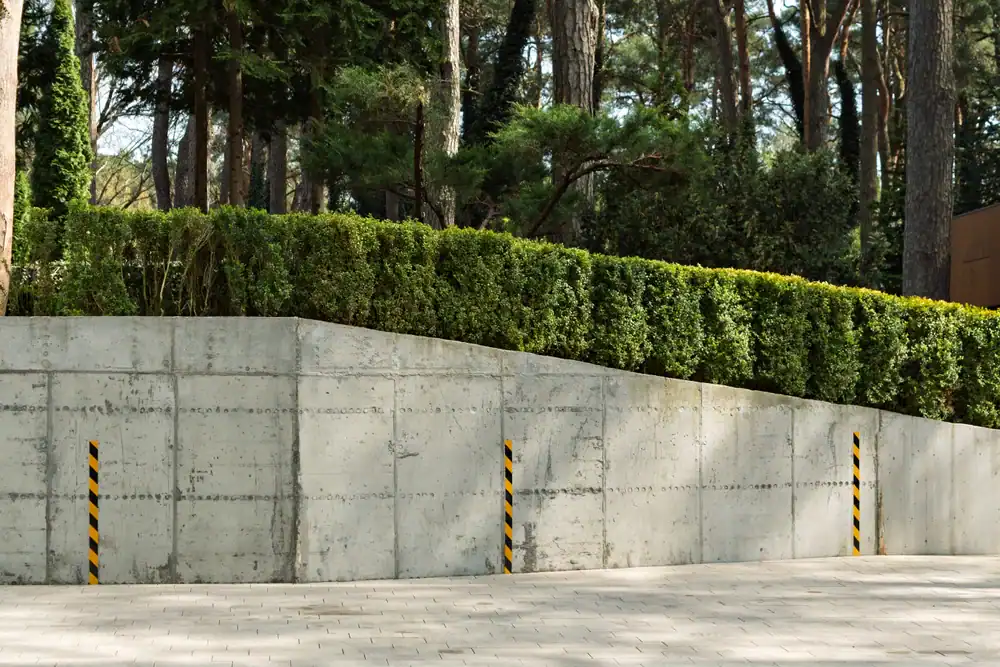

You get flat, usable space where there was only a slope. Your soil stays where it belongs instead of washing into your driveway after every storm. Water flows away from your foundation instead of pooling against it.
That’s what happens when a retaining wall is built right. The erosion stops. The drainage improves. Your property becomes more functional and more valuable.
Around Parsippany-Troy Hills, where properties sit on varied terrain and heavy rainfall is common, a concrete retaining wall or interlocking block wall retaining wall does more than hold back dirt. It protects your foundation from water damage, creates outdoor living areas you can actually use, and prevents the kind of soil loss that leads to expensive emergency repairs down the road.
This isn’t landscaping for looks. It’s structural work that solves real problems and lasts for decades when done correctly.
We’ve been handling masonry and construction projects across New Jersey for almost two decades. We know the soil conditions in Parsippany-Troy Hills, the drainage challenges that come with Morris County terrain, and what it takes to build a retaining wall that holds up through freeze-thaw cycles and summer downpours.
Our team consists of certified professionals who assess your property, recommend the right materials for your specific situation, and install retaining wall blocks or concrete retaining wall systems that actually solve the problem you’re dealing with. No hidden charges. No surprises halfway through the job.
You’re hiring people who’ve done this hundreds of times in your area and know what works.

First, we come to your property and assess the slope, drainage patterns, soil type, and what you’re trying to accomplish. This isn’t a quick glance—it’s a thorough evaluation that determines wall height, material selection, and whether you need additional drainage solutions.
Next, we prepare a detailed estimate that breaks down materials, labor, and timeline. You’ll know exactly what you’re paying for before any work begins.
Once you approve, we excavate and prepare the base. This foundation work is critical—it’s what keeps your wall stable for years. We install proper drainage systems, including weep holes and gravel backfill, so water doesn’t build up behind the wall and cause failure.
Then we build the wall using interlocking concrete retaining wall blocks or poured concrete, depending on your project requirements. Each course is leveled and secured correctly. We backfill, compact, and grade the area so water flows away from both the wall and your home.
The job gets done on schedule, the site gets cleaned up, and you’re left with a wall that does exactly what it’s supposed to do.

Ready to get started?
You get a complete solution, not just a wall. That means site assessment, engineered design recommendations, proper excavation, base preparation, drainage installation, and the wall itself built with quality concrete retaining wall blocks or poured concrete.
In Parsippany-Troy Hills, where properties often feature significant elevation changes and mature landscaping, we account for existing trees, utility lines, and how water currently moves across your land. The goal is to solve your erosion or space problem without creating new issues.
We also handle repairing retaining walls that are bowing, cracking, or failing due to poor drainage or improper installation. Sometimes that means rebuilding from scratch. Other times we can reinforce and extend the life of what’s there.
Every project includes proper grading so water drains away from your foundation, not toward it. We use materials that hold up in New Jersey weather—freeze-thaw cycles, heavy rain, summer heat. And we follow local codes and engineering standards, especially for taller walls that require permits.
You’re not getting a cosmetic fix. You’re getting a structural solution designed to last.

Most residential retaining wall projects in this area run between $4,000 and $15,000, depending on wall height, length, materials, and site conditions. A basic 3-foot-tall wall using standard concrete retaining wall blocks costs less than a 6-foot engineered wall that requires permits and additional drainage work.
Your property’s slope, soil type, and accessibility also affect cost. If we need to bring equipment through a narrow side yard or excavate through rock, that adds time and labor. Same goes for walls that need to tie into existing structures or work around mature trees.
We give you a detailed estimate upfront that breaks down materials and labor. No hidden fees. You’ll know what you’re paying before we start digging.
Interlocking concrete blocks are the most common choice because they handle freeze-thaw cycles well, don’t require mortar, and allow for some movement without cracking. These segmental retaining wall blocks come in different styles and colors, so you’re not stuck with one look.
For taller walls or areas with significant water pressure, we sometimes recommend reinforced concrete or engineered block systems with geogrid reinforcement. These provide extra strength and stability for challenging sites.
Natural stone is an option if you want a specific aesthetic, but it costs more and requires skilled installation. The key is matching the material to your site conditions and budget while making sure it’s going to last. We’ll walk you through what makes sense for your property during the assessment.
Look for visible cracks, bowing or leaning, separation between blocks, or soil washing out from behind the wall. If you see any of these, you’ve got a problem that needs attention before it gets worse.
Water pooling at the base of the wall or drainage issues nearby usually mean the wall wasn’t built with proper drainage systems. That causes hydrostatic pressure, which pushes the wall outward and leads to failure over time.
Small cracks can sometimes be repaired, especially if caught early. But if the wall is leaning more than an inch or two, or if multiple blocks are shifting, you’re likely looking at a rebuild. We assess the damage, explain what’s causing it, and tell you honestly whether repair or replacement makes more sense. Repairing a retaining wall that’s structurally compromised just delays the inevitable.
It depends on the wall height and location. Generally, walls over 4 feet tall require a permit and engineered plans. Walls near property lines, easements, or that affect drainage patterns may also need approval regardless of height.
We handle permit applications as part of the project when required. That includes working with engineers to provide stamped drawings and ensuring the wall meets local building codes and safety standards.
Even if your wall doesn’t require a permit, it still needs to be built correctly with proper drainage, adequate base preparation, and appropriate materials. Skipping permits when they’re required can create problems if you ever sell your property or if the wall fails and causes damage. We make sure everything is done by the book.
Most residential retaining wall projects take one to two weeks from start to finish, depending on wall size, site access, and weather. A simple 20-foot wall might be done in a few days. A larger terraced system with multiple levels and extensive drainage work takes longer.
Excavation and base preparation usually take the most time because that work has to be done right. Rushing the foundation stage leads to wall failure later. Once the base is set and drainage is installed, the actual wall construction moves relatively quickly.
Weather can delay things, especially if we’re dealing with heavy rain during excavation. We’ll give you a realistic timeline during the estimate and keep you updated if anything changes. The goal is to finish on schedule without cutting corners that compromise the wall’s long-term stability.
A properly designed retaining wall with correct drainage systems will significantly improve water management on your property. We install weep holes, drainage pipes, and gravel backfill that allow water to move through and away from the wall instead of building up behind it.
But a retaining wall alone won’t fix every drainage issue. If water is flowing toward your foundation from uphill areas, we need to address grading and possibly add drainage solutions beyond the wall itself. Same thing if you have low spots that collect water or downspouts dumping water in the wrong places.
During the site assessment, we look at how water currently moves across your property and identify what needs to happen to direct it away from problem areas. Sometimes that means combining the retaining wall with regrading, French drains, or other drainage work. We’ll tell you exactly what your property needs to solve the water problems for good.
Other Services we provide in Parsippany-Troy Hills