

If your yard slopes toward your foundation, you’re watching soil wash away with every heavy rain. That’s not just an eyesore—it’s a drainage problem that gets worse every season.
A properly built retaining wall stops that. It holds back soil, redirects water away from your home, and creates level ground where you can add a patio, driveway, or garden bed. You’re not just fixing erosion—you’re reclaiming square footage.
In Watsessing, where properties often sit on varied terrain near Watsessing Park, managing slope and drainage isn’t optional. The right wall landscaping approach protects your foundation, prevents runoff issues, and adds real value to your property. Most retaining walls return 100-200% of what you invest when it’s time to sell.
We’ve been handling exterior projects across Essex County for years. We’re not a landscaping crew that dabbles in walls—we’re certified contractors who understand soil mechanics, drainage systems, and what it takes to build something that won’t fail in five years.
We’ve worked on properties throughout Watsessing, NJ, where soil conditions and local codes require more than guesswork. Every project starts with a free estimate that breaks down materials, labor, and timeline. No hidden fees. No surprises halfway through.
You’ll work with the same team from start to finish. We pull permits when needed, engineer walls over three feet, and make sure drainage is handled right the first time.

First, we come out to look at your property. We measure the slope, check soil conditions, and talk through what you’re trying to accomplish. If drainage is an issue, we map out where water’s going and how to redirect it.
Next, we design the wall. For anything over three feet, that includes engineering and permits. We’ll recommend materials—concrete retaining wall blocks, natural stone, or poured concrete—based on your budget and the job requirements.
Then we excavate, set the base, and start building. Every course gets leveled and backfilled properly. We install drainage behind the wall so water pressure doesn’t build up. Once it’s built, we compact the soil, clean up the site, and walk you through maintenance.
The timeline depends on height and length, but most residential walls take a few days to a week. You’ll know the schedule before we start.

Ready to get started?
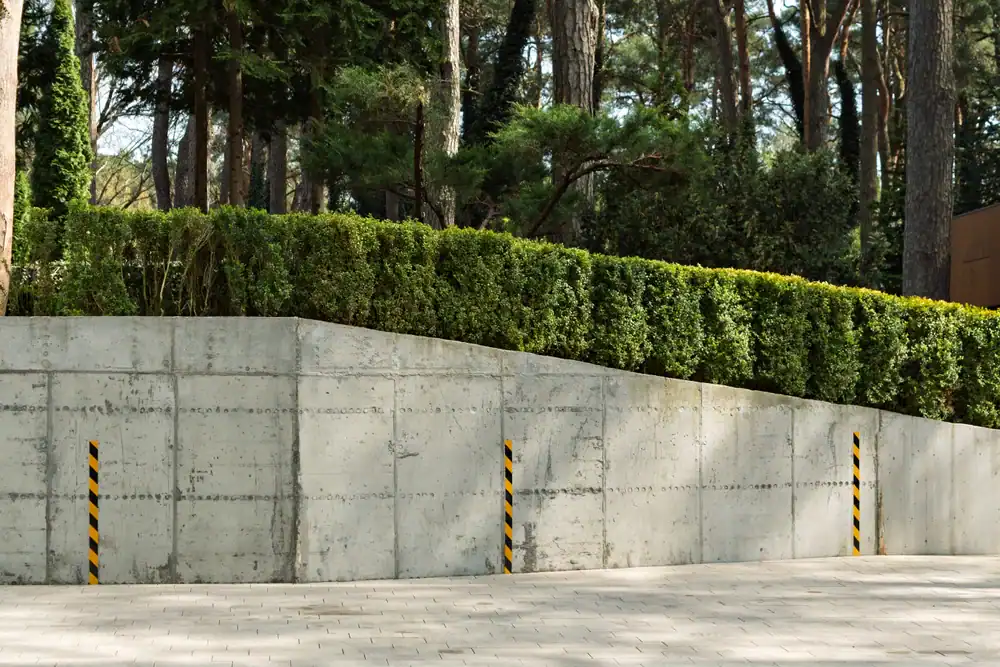
We use concrete retaining wall blocks for most projects because they’re durable, affordable, and versatile. These interlock without mortar, which makes them easier to install and repair down the road. If you want a more natural look, we also work with stone veneer or full stone walls.
Every wall includes proper drainage—either gravel backfill with a perforated pipe or weep holes, depending on the design. Without drainage, even the best-built wall will fail. We also compact the base and backfill in layers to prevent settling.
In Watsessing, where home values have been climbing and younger buyers are moving in, a well-built retaining wall adds curb appeal and function. It’s one of the few projects that pays for itself when you sell. And if your wall ever needs repairing retaining wall work years later, the modular block design makes that straightforward.

Most residential retaining walls in Watsessing run between $3,000 and $8,000, depending on height, length, and materials. A basic 3-foot concrete block wall costs less than a 6-foot engineered stone wall.
Concrete retaining wall blocks are the most affordable option and work well for most residential projects. Natural stone costs more but offers a high-end look. Poured concrete is the strongest but also the priciest.
If your wall needs engineering, permits, or significant excavation, expect to add $500 to $1,500 to the total. We give you a detailed estimate upfront so there’s no confusion about what’s included.
In most cases, yes—especially if your wall is over three feet tall. Bloomfield Township, where Watsessing is located, requires permits for retaining walls that affect drainage, property lines, or structural stability.
Even if your wall is shorter, it’s worth checking with the township before you start. Unpermitted work can cause problems when you sell or if a neighbor complains. We handle permit applications as part of the project, so you don’t have to deal with the paperwork.
For walls over three feet, you’ll also need an engineer’s stamp. That costs between $350 and $1,100, depending on complexity. We coordinate that too.
Concrete retaining wall blocks are the best choice for most homeowners. They’re strong, affordable, and last 50+ years with minimal maintenance. They also come in different colors and textures, so you’re not stuck with a basic gray block look.
Natural stone works if you want something that blends into the landscape. It’s more expensive and takes longer to install, but it’s hard to beat aesthetically. Poured concrete is the strongest option and works well for taller walls or heavy-duty applications.
Avoid wood or railroad ties unless it’s a temporary solution. Wood rots, shifts, and needs replacing every 10 to 15 years. Block wall retaining wall systems outlast wood by decades and require almost no upkeep.
Most residential retaining walls take three to seven days, depending on size and site conditions. A simple 20-foot wall that’s three feet tall might be done in a long weekend. A larger wall with multiple tiers or difficult access takes longer.
Weather can affect the timeline, especially if we’re pouring concrete or working on wet ground. We’ll give you a realistic schedule during the estimate and keep you updated if anything changes.
The process includes excavation, base prep, wall installation, backfill, and drainage work. Rushing any of those steps leads to problems later, so we build it right the first time even if it takes an extra day.
Sometimes, yes—but it depends on what’s failing and why. If a concrete block wall is leaning or bulging, that usually means the drainage failed or the base wasn’t compacted properly. In those cases, rebuilding is often smarter than patching.
If the wall is cracked but still structurally sound, we can replace damaged blocks or reinforce weak sections. For stone walls, repairing retaining wall damage often means resetting stones and improving drainage behind the wall.
About 30% of retaining walls fail within a few years because they weren’t built right in the first place. If your wall is showing signs of failure—leaning, cracking, or separating—don’t wait. The longer you leave it, the more expensive the fix becomes.
A retaining wall can help manage drainage, but only if it’s designed with that in mind. Every wall we build includes drainage behind it—either a gravel layer with a perforated pipe or weep holes that let water escape.
If water pools near your foundation or runs across your yard during storms, a retaining wall combined with proper grading can redirect that flow. We assess drainage during the estimate and design the wall to handle it.
But a retaining wall alone won’t fix every drainage issue. If you have groundwater problems or poor soil, you might also need French drains, catch basins, or regrading. We’ll tell you what’s needed so you’re not surprised later.
Other Services we provide in Watsessing