Summary:
Why Masonry Fails in Northern New Jersey (It’s Not Just You)
Your home’s masonry isn’t failing because it has a bad attitude or was built by a lazy ghost. It’s failing because this specific region of the country is basically a laboratory for masonry destruction. We live in the “Goldilocks Zone” of bad weather—it’s just wet enough and just cold enough to cause maximum chaos.
Morris County and Essex County see dozens of freeze-thaw cycles every single winter. Rain or melted snow seeps into the microscopic pores of your brick or mortar, and when the temperature drops at night, that water turns to ice and expands by about 9%. Imagine a tiny, icy crowbar prying at your bricks every single night for four months—eventually, something is going to snap.
Then there is the “Clay Factor.” Much of northern NJ sits on soil that acts like a sponge; it swells up when it rains and shrinks when it dries out. This constant subterranean “breathing” puts immense pressure on everything from your foundation to your backyard patio. Add in a heavy spring snowmelt that saturates the ground, and you have the perfect recipe for settling, shifting, and structural cracks.
Chimney Repair: More Than Just a "Santa Entrance"
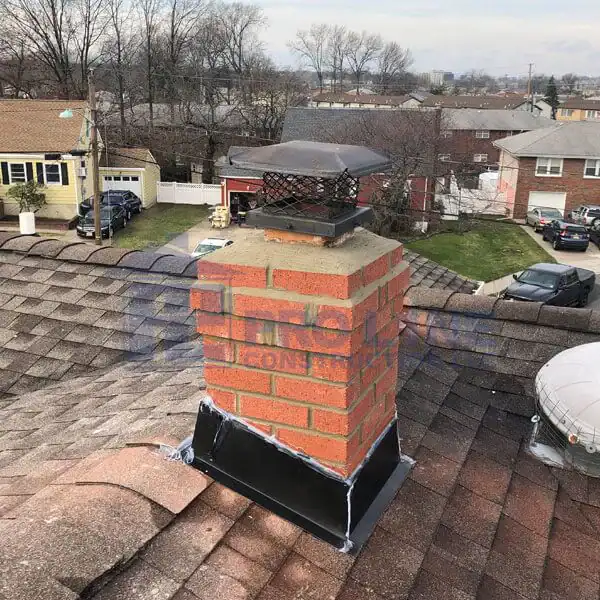
Your chimney is the most socially distanced part of your home—it sits up there all alone, taking the full brunt of 70 mph winds, driving sleet, and 90-degree summer sun. Because of this exposure, when homeowners in Morris County ask us about chimney repair, it’s rarely just for looks. Usually, it’s because the chimney has started acting like a vertical funnel for rainwater.
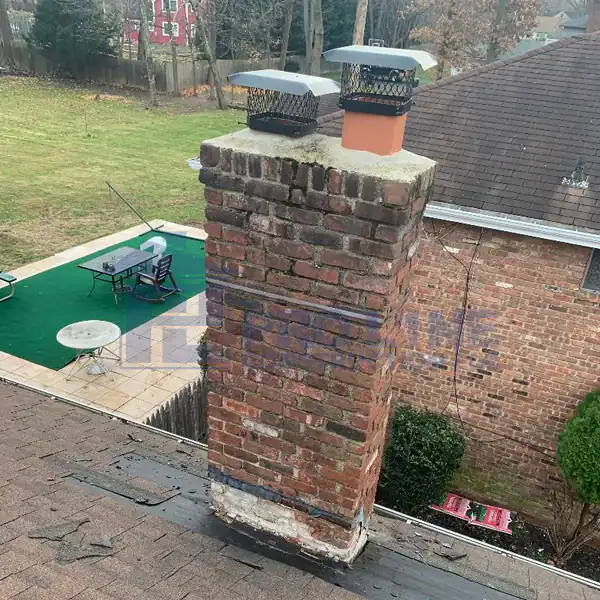
The most common culprit is a cracked “crown”—that’s the concrete hat on top. Its only job is to shed water, but once it cracks, it’s basically an open invitation for moisture to move into your flue and eat your mortar from the inside out. Patching a crown is a relatively quick fix (usually $400 to $1,000), but if you wait until the bricks start falling off, you’re looking at a full rebuild that could cost three times that.
Then there is “repointing,” which is the masonry equivalent of a facelift. Mortar joints naturally break down over time, and if you see gaps or white, salty stains (efflorescence), it means your chimney is literally leaking its minerals. Ignoring “brick dandruff” leads to loose bricks, which is a major safety hazard for anyone standing on your deck—or any squirrels unfortunate enough to be nearby when a brick decides to “retire” from the structure.
Brick and Stone: When to Patch and When to Panic
Not all brick damage is a “code red” emergency, but knowing the difference can save you a fortune. We see a lot of homeowners in Essex County who get nervous about a few hairline cracks, and while they should be addressed, they don’t always mean the house is falling down. However, you do need to know the difference between a surface scratch and a structural groan. “Repointing” is the magic word when your bricks are fine but the “glue” (mortar) is turning into dust. We carefully grind out the old, tired mortar and pack in fresh, high-strength material that matches your home’s aesthetic. Done correctly, it can last 20 to 30 years and keep your walls watertight. It’s a smart, cost-effective way to hit “reset” on your exterior’s lifespan without a full-scale demolition. “Spalling,” on the other hand, is when the actual face of the brick starts flaking off like a bad sunburn. This usually happens because water got trapped inside the brick itself and froze, literally blowing the front of the brick off. You can’t “patch” a spalled brick—it has to be surgically removed and replaced. If you see this happening across large areas, it’s a sign that your waterproofing has failed and you need to intervene before the wall becomes structurally unsound.
Outdoor Upgrades: Turning Your Yard into a Destination
Masonry isn’t just about fixing the stuff that’s broken; it’s about building the stuff that makes your neighbors jealous. A well-executed patio or walkway is one of the few home improvements that actually pays for itself in both daily enjoyment and resale value. Unlike wood decks that require constant staining and eventually rot, quality stone is essentially forever.
In northern New Jersey, where “usable outdoor space” is the holy grail of real estate, a stone fire pit area or a tiered patio isn’t just a luxury—it’s an extension of your living room. Buyers in our area look for these features because they know it means they won’t have to deal with muddy feet or rotting wood. It signals that the home is solid, well-cared for, and ready for a summer BBQ.
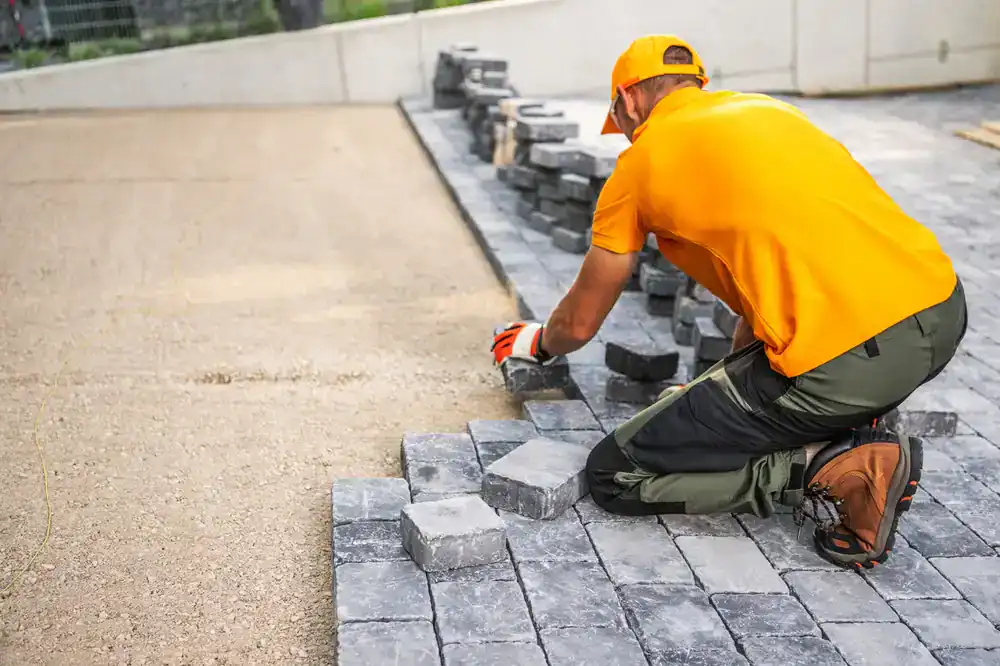
Of course, the “wow factor” only works if the patio stays level. We’ve all seen the “DIY Special” where the pavers start to look like a mountain range after two winters. True masonry value comes from the stuff you can’t see—the excavation, the compacted base, and the drainage. If the foundation is solid, your stone will look just as good in 2046 as it does today.
Patios and Walkways: Built to Survive a Jersey Winter
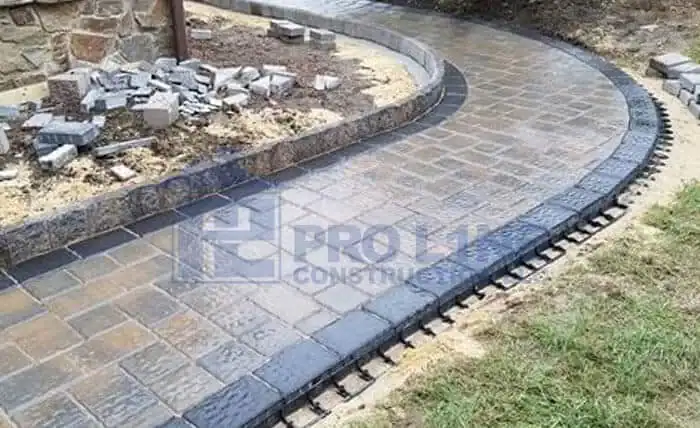
When planning a patio in Morris or Essex County, you have to remember that your pavers are going to be under attack by snow shovels, salt, and 50-degree temperature swings. Concrete pavers are a fantastic, durable choice because they can “flex” a bit with the ground’s movement. They come in styles that mimic everything from old-world cobblestone to modern slate, giving you the look of luxury with the durability of a tank.
If you want the “Elite” tier, natural stone like Bluestone or Flagstone is the way to go. These materials are slip-resistant, stay relatively cool under the summer sun, and develop a beautiful patina as they age. Natural stone doesn’t “fade” like some manufactured products; it just gets more character. It’s a more labor-intensive install, but if you want that classic “Jersey Estate” feel, it’s the only way to fly.
The “Secret Ingredient” to any patio is drainage. If your contractor doesn’t talk about “pitch” (sloping the water away from your foundation), you should probably show them the door. A good patio should slope about a quarter-inch per foot, ensuring that a summer downpour doesn’t turn your basement into an indoor swimming pool. It’s the difference between a beautiful asset and a watery nightmare.
Retaining Walls: Fighting the "Clay Push"
If your backyard looks like a ski slope, you need a retaining wall. But here is the thing: a retaining wall isn’t just a “pretty fence made of rocks.” It is a structural engineering project that is holding back thousands of pounds of wet, heavy NJ clay. If it’s built incorrectly, that wall is eventually going to succumb to “hydrostatic pressure” and end up in your lap while you’re trying to mow the lawn.
In 2026, we are seeing a move toward “Segmental Block Systems.” These are engineered concrete blocks that interlock like giant LEGOs, allowing the wall to breathe and move slightly without cracking. For anything over four feet, we often use “geogrid”—a specialized fabric that anchors the wall back into the soil. It’s invisible once finished, but it’s the “muscle” that keeps your hill where it belongs.
Drainage is once again the hero of the story. Every retaining wall needs a gravel backfill and a perforated pipe at the base to give water an “exit strategy.” Without this, the water pools behind the wall, the soil gets heavy, and the wall starts to bulge like it just ate a massive Thanksgiving dinner. A well-drained wall is a wall that will still be standing straight when your kids are buying their own homes.
Stop the Crumble and Start the Upgrade
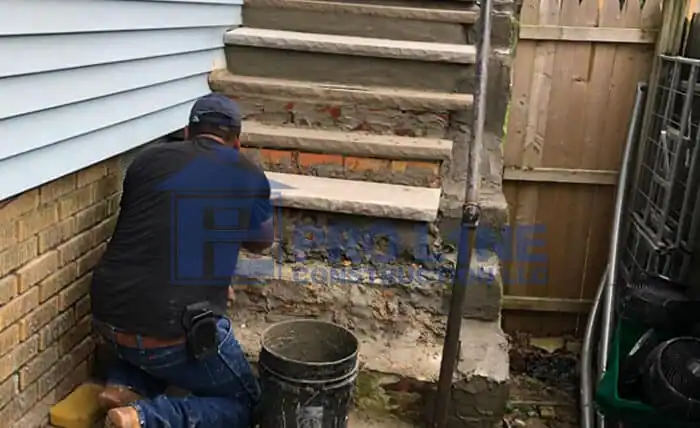
Your home’s masonry is its first line of defense against the elements. Regardless of if you’re dealing with a leaking chimney that’s threatening your attic or a crumbling front stoop that’s making your house look like a haunted mansion, the best time to act is before the next big freeze. Small repairs are an investment; major structural rebuilds are a headache.
The key is working with a team that actually understands the unique “geology” of northern New Jersey. We don’t just slap on some mortar and call it a day; we look at the drainage, the soil, and the structural integrity to make sure our work stays put. We want your home to be the “stunning” one on the block, not the “crumbling” one.
Ready to see what’s possible for your property? From emergency chimney saves to the backyard patio of your dreams, Proline Construction is here to help you navigate the “NJ Masonry Maze.”