Summary:
What Causes Chimney Damage in Morris and Essex Counties
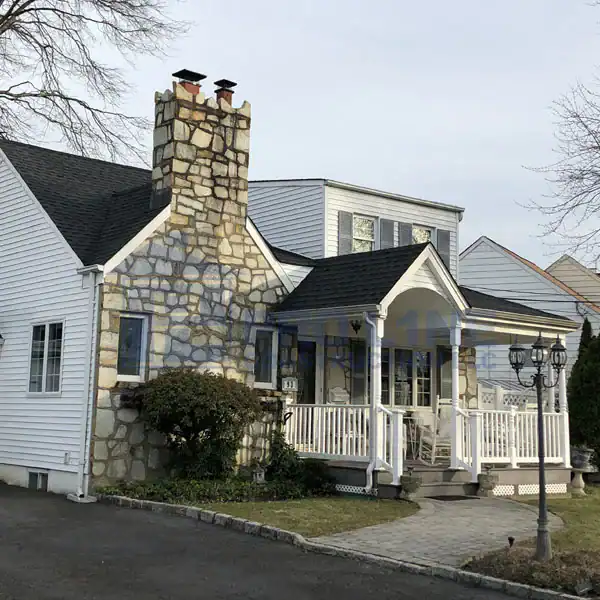
Your chimney is the only part of your house that has to stand out in the rain, snow, and sleet while literally having a fire built inside its stomach. It’s a tough job, and New Jersey weather doesn’t make it any easier. From the humid summers in Montclair to the ice-coated winters in Morristown, your masonry is under constant atmospheric assault.
The biggest villain in this story isn’t time; it’s water. Bricks and mortar might feel like solid rock, but they are actually as porous as a sponge. When New Jersey decides to rain at 2:00 PM and then drop to 20 degrees by 8:00 PM, that trapped moisture turns into ice, and the physics of expansion takes over.
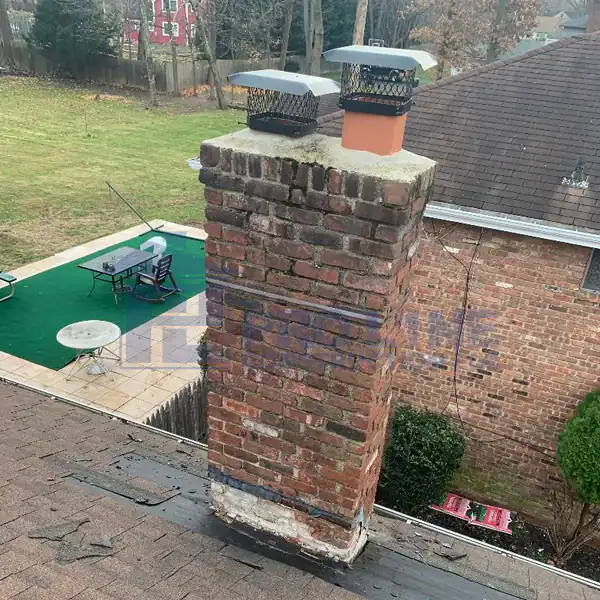
This constant “push and pull” of freezing and thawing is what really does the damage. It forces those tiny, invisible cracks to open up like a New York City pothole. Before you know it, you’re looking at spalling bricks and mortar joints that are basically just suggestively placed sand.
How Freeze-Thaw Cycles Turn Bricks into Dust
When water gets inside your brickwork and freezes, it expands by about 9%. That might not sound like much, but when it’s happening inside a rigid structure, it’s like your chimney is trying to grow a size larger without buying new pants. Something has to give, and usually, it’s the face of your expensive bricks.
Each cycle creates more space for the next rainstorm to fill. This is a cycle that feeds itself, and it has an appetite for your home’s structural integrity. In Essex and Morris Counties, we get these cycles dozens of times a winter, meaning your chimney is essentially being dismantled from the inside out in slow motion.
The areas most likely to wave the white flag first are the chimney crown—the concrete “hat” at the top—and the mortar joints. If your crown is cracked, you’re basically inviting every raindrop in Northern Jersey to come inside and stay a while. Once that water is in, the winter ice does the heavy lifting of breaking things apart.
The Five Most Common Chimney "Fails" in Northern New Jersey
First up is the Damaged Crown. If your chimney’s “hat” is cracked, water runs straight into the masonry rather than off the roof. It’s like going out in a Nor’easter with a colander instead of an umbrella. Crown repairs can be a simple patch or a full replacement, depending on how long you’ve let it “ventilate.”
Second is the Failed Flashing. This is the metal seal where your chimney meets the roof, and when it fails, you get a front-row seat to a leak in your attic. Third is Deteriorating Mortar, which is often called “tuckpointing territory.” When the mortar goes, the bricks start to wiggle, and a wiggling chimney is a recipe for a very expensive Saturday afternoon.
Finally, we have Spalling Bricks and Missing Caps. Spalling is when the front of the brick pops off like a scab, which is as gross as it sounds for your curb appeal. A missing cap, on the other hand, is basically an open door for rain, snow, and the occasional confused raccoon.
What Chimney Repair Actually Involves (No, It’s Not Just Paint)
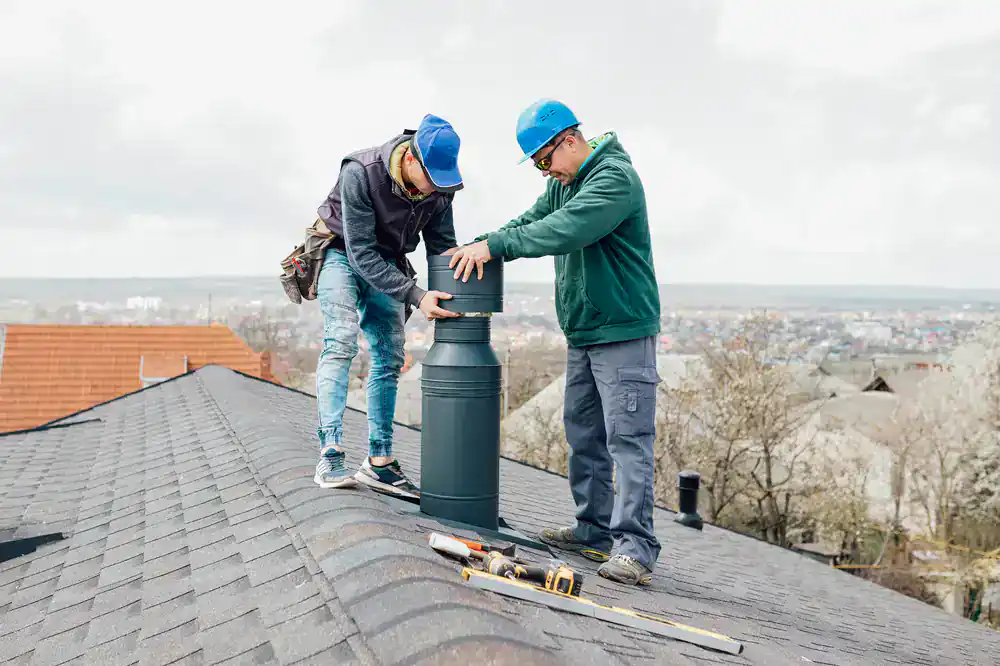
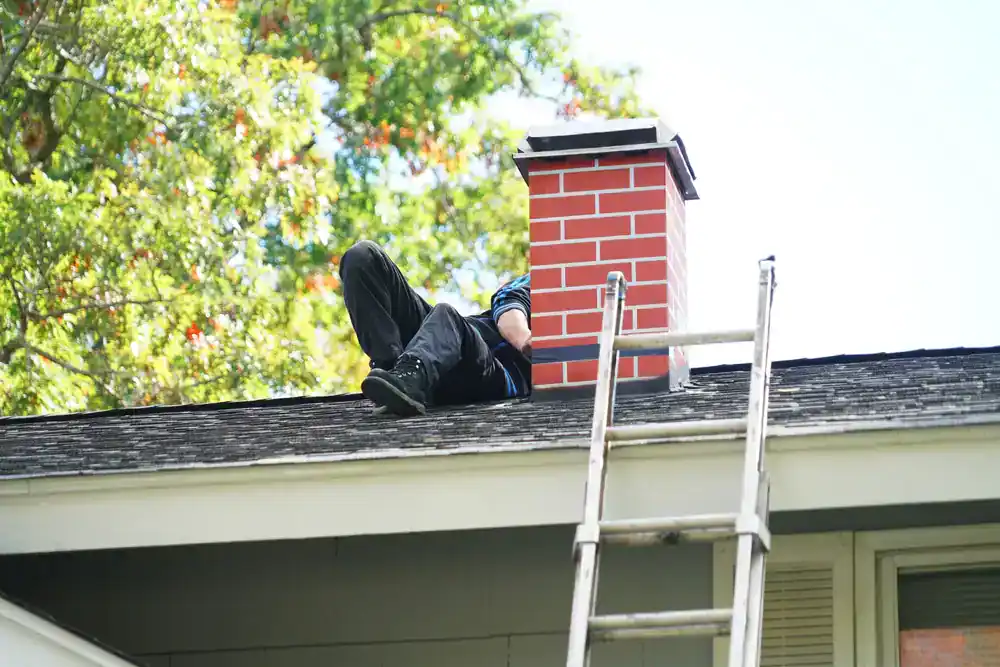
Chimney repair isn’t a “one-size-fits-all” situation, though some contractors might try to convince you otherwise. What your chimney needs depends entirely on how much of its soul it has lost to the New Jersey elements. A real pro will look at everything from the flue liner to the damper before they even touch a trowel. A proper inspection might involve cameras, drones, or just a very brave person on a ladder. We’re looking for the root cause, not just the visible symptoms. If you just patch a crack without fixing the water source, you’re basically putting a band-aid on a leaky pipe.
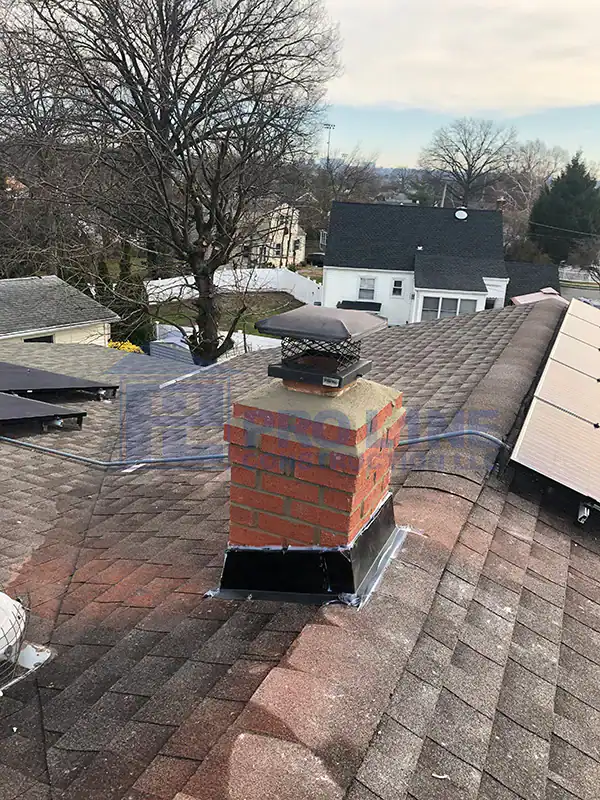
Once the investigation is over, we move into the actual masonry work. This could mean replacing individual bricks, rebuilding the crown, or performing a “masonry facelift” known as repointing. The goal is to make the structure watertight again so you can go back to worrying about more important things, like why your team keeps losing.
How Repointing Restores Your Chimney’s "Spine"
Repointing (or tuckpointing) is the process of carving out the old, tired mortar and shoving in fresh, energetic stuff. Because mortar is designed to be softer than brick, it’s usually the first thing to fail. You can’t just smear new mortar over the old stuff—that’s the “cake frosting” method, and it lasts about as long as a New Year’s resolution.
The old mortar has to be ground out to a specific depth to give the new material something to grab onto. We then mix a custom batch that matches the strength and color of your original masonry. If the new stuff is too hard, it’ll actually crack your bricks; if it’s too soft, it’ll wash away in the next storm. It’s a delicate balance.
When done correctly, repointing can add decades to your chimney’s life. It locks the bricks back into place and creates a seal that tells water to go bother someone else’s house. It’s the ultimate “preventative maintenance” move for any homeowner in Madison or Montclair who wants to avoid a five-figure rebuild bill.
Waterproofing: Because Bricks Don't Like Swimming
Once the repairs are finished, waterproofing is the “SPF 50” for your chimney. We use a professional-grade, vapor-permeable sealant. This is fancy talk for a coating that lets internal moisture escape (it lets the brick “breathe”) while preventing external rainwater from soaking in.
If you use a cheap, non-breathable sealer from a big-box store, you might actually trap moisture inside the brick, which is basically setting a time bomb for the next freeze. Our professional sealants create an invisible barrier where water beads up and rolls off like it’s hitting a freshly waxed car.
This isn’t a “forever” fix—you’ll need to re-apply it every few years—but at $500 to $1,000, it’s a bargain compared to the cost of a masonry overhaul. In a place as soggy as New Jersey, waterproofing is the difference between a chimney that lasts 80 years and one that needs a doctor every five.
Protect Your Chimney Before the "Big Chill" Returns
Chimney damage is a slow-motion disaster that only moves in one direction: worse. A tiny crack you noticed in October will be a gaping hole by April if you let the freeze-thaw cycle have its way. If you’ve seen water stains, crumbling bits, or “brick dandruff,” the time to act is now.
The best time for chimney work is before the snow starts flying, so the materials have time to cure and you aren’t stuck with a cold fireplace in January. An inspection today could save you thousands tomorrow and keep your family safe from the “quiet” dangers like carbon monoxide leaks.
We’ve been rescuing chimneys across Morris and Essex Counties for years, providing honest talk and even better masonry. If your chimney is looking a little worse for wear, give us a shout for a free consultation. We’ll give you a straight answer and a plan to keep your roof bricks exactly where they belong.