Summary:
What Makes an Outdoor Kitchen Worth the Investment
The numbers tell part of the story. Outdoor kitchens typically return between 55% and 200% of what you invest, depending on how you build them and where you live. In the Northeast, you’re looking at a solid 50-70% return even with our shorter outdoor season compared to places like Florida or California.
But ROI isn’t the whole picture. You’re adding usable square footage to your home without the cost and hassle of a room addition. You’re creating a space that keeps cooking heat and mess outside during the summer months. You’re building something that makes your property stand out when it’s time to sell, because 83% of realtors say outdoor kitchens rank as a top feature buyers want.
The real value shows up when you’re using it. When you can prep, cook, and serve without missing what’s happening with your guests. When you’re not tracking dirt and food through your house. When your backyard becomes the place everyone wants to be instead of just the place where the grill lives.
Outdoor Kitchen Design Ideas That Work for New Jersey
New Jersey weather doesn’t mess around. We get freezing winters, humid summers, and everything in between. That means your outdoor kitchen needs to be built differently than one in Arizona or Southern California.
Start with the structure. Custom masonry work gives you the durability to handle freeze-thaw cycles without cracking or shifting. Natural stone, brick, and concrete stand up to the elements year after year when they’re installed correctly. These materials also tie into your home’s existing architecture instead of looking like an afterthought someone dropped in the yard.
Think about your layout before you commit to anything. You need counter space on both sides of your grill for prep and landing zones. At least 36 inches is standard, but more is better if you cook for groups. Plan for traffic flow so people aren’t walking through your cooking zone or bumping into each other when someone opens the fridge.
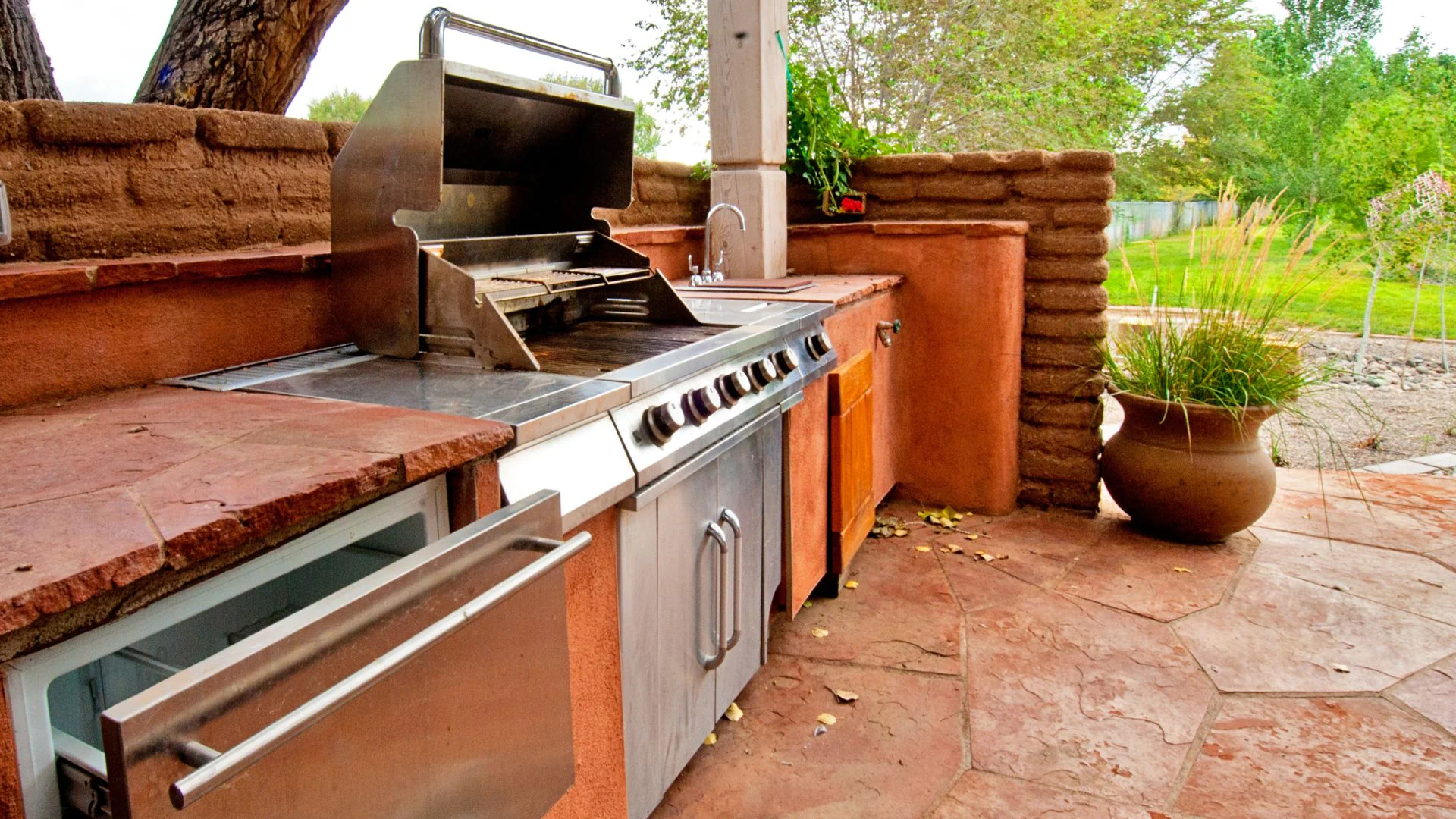
Consider what you’ll actually use. A built-in grill is the centerpiece, but what else fits your style? Some people want a pizza oven for authentic wood-fired cooking. Others prioritize a sink so they’re not constantly running inside to rinse vegetables or wash hands. Refrigeration keeps drinks cold and ingredients fresh without the trek indoors. Storage cabinets mean your tools, plates, and supplies stay where you need them.
Covered structures extend your season. A pergola or pavilion protects you from sun and light rain. Add some heating elements or a fire feature, and you’re cooking outside well into fall and even winter if you’re dedicated. Lighting matters too—you want task lighting over your work areas and ambient lighting for when the sun goes down.
The key is building something proportional to your home and property. A massive kitchen on a small lot feels out of place. A tiny grill station on a large property misses the opportunity. Get the scale right, and everything else falls into place.
Custom Masonry Kitchen Construction for Durability
Masonry isn’t just about looks, though a well-built stone or brick kitchen definitely makes an impression. It’s about creating something that lasts.
When you build with custom masonry, you’re working with materials that have proven themselves for centuries. Stone doesn’t warp in humidity. Brick doesn’t rot when it gets wet. Concrete doesn’t fade in the sun the way cheaper materials do. These aren’t theoretical benefits—they’re practical advantages that matter every single season in New Jersey.
The construction process makes the difference between something that looks good for a few years and something that’s still solid decades later. Proper foundation work prevents settling and cracking. Reinforcement techniques that exceed basic building codes mean your structure handles weight and weather without issues. Careful attention to drainage keeps water from pooling around your kitchen and causing problems down the line.
Countertop selection matters more than most people realize. Granite handles temperature changes without cracking and resists stains better than marble or slate. Concrete offers a clean contemporary look and can be customized, but it needs proper sealing and maintenance. Natural stone brings warmth and character while standing up to the elements.
For cabinetry, you can’t use the same materials you’d put in your indoor kitchen. Marine-grade polymer resists moisture without the maintenance wood requires. Stainless steel handles humidity and temperature swings. If you prefer wood accents, certain hardwoods like teak naturally resist moisture and seasonal changes, but they need annual sealing to stay protected.
The installation details separate professional work from amateur attempts. Corners and transitions need special attention because that’s where lesser-quality construction shows its flaws first. Each stone gets carefully selected and placed to create patterns that flow naturally. Support systems for countertops and appliances get integrated during construction, not added as an afterthought.
This level of craftsmanship costs more upfront, but it pays off. You’re not replacing warped cabinets after three years. You’re not dealing with cracked countertops after one harsh winter. You’re not watching your investment deteriorate while you’re still paying for it. You’re building something that adds value to your property and keeps adding it.
Backyard Kitchen Ideas and Essential Features
Every outdoor kitchen contractor NJ needs certain elements to function properly, but how you combine them depends on how you plan to use the space.
Your grill is the heart of everything. Don’t size down to save money—you’ll regret it when you’re cooking for a group and running out of space. A family of four should consider at least a 48-inch grill, especially if you cook multiple items at once. Built-in grills integrate with your masonry work and typically offer better longevity than standalone units.
Counter space solves more problems than people expect. You need room to prep ingredients, set down hot pans, and stage finished dishes. Skimping here means you’re juggling plates and running back inside constantly. Plan for at least 36 inches of usable countertop on either side of your grill, and keep it at least 24 inches deep.
Storage makes the difference between a kitchen and a grill with some stuff around it. Cabinets keep your tools, serving pieces, and supplies protected from weather and accessible when you need them. Drawers organize smaller items. Specialized storage like spice racks or utensil drawers add convenience without taking up counter space.
Outdoor Kitchen Appliances and Upgrades
Once you’ve covered the basics, certain upgrades transform how you use your outdoor kitchen.
Refrigeration isn’t optional if you’re serious about outdoor cooking. An outdoor-rated refrigerator keeps ingredients fresh and drinks cold without constant trips inside. Make sure it’s designed for exterior use—indoor fridges don’t handle temperature fluctuations and humidity. Position it out of direct sunlight to maximize efficiency.
Sinks add convenience that’s hard to overstate. Rinsing vegetables, filling pots, washing hands, cleaning as you go—all without leaving your cooking area. Running a water line requires professional plumbing work and proper drainage planning, but the functionality justifies the investment. Some people even add small water heaters for hot water access.
Pizza ovens have surged in popularity, and for good reason. Wood-fired cooking adds flavor you can’t replicate on a grill. They handle more than just pizza—bread, roasted vegetables, even full meals. The caveat is they take up significant space and add cost, so think about whether you’ll actually use it regularly.
Side burners extend your cooking capacity beyond the grill. Sauté vegetables, boil corn, make sauces—anything you’d do on a stovetop. They’re especially useful for tasks you don’t want to do indoors, like blackening fish or frying foods that create smoke.
Lighting determines whether your kitchen works after dark. Task lighting over prep areas and the grill is essential for safety and functionality. Ambient lighting creates atmosphere for evening entertaining. Under-cabinet lights add both practical illumination and visual appeal.
Heating elements extend your season significantly. Infrared heaters mounted overhead keep you comfortable on cool evenings. Fire pits or outdoor fireplaces provide warmth and become gathering spots. In New Jersey, these additions mean you’re not shutting down your outdoor kitchen in September.
The key with upgrades is being honest about what you’ll use. A warming drawer is fantastic if you’re serving multi-course meals to groups. It’s wasted money if you’re mostly grilling burgers for the family. A kegerator impresses beer enthusiasts but sits unused if you’re wine drinkers. Build for your actual lifestyle, not for impressing people.
Planning Your Outdoor Kitchen Installation
The planning phase determines whether your outdoor kitchen becomes something you love or something you tolerate.
Location matters more than most people initially consider. You want to be close enough to your house for utility connections but positioned so smoke doesn’t drift into windows or doors. Think about sun exposure throughout the day—you don’t want your refrigerator in direct afternoon sun, and you probably don’t want to be squinting into glaring light while you cook.
Utilities require professional work and proper permits. Gas lines for grills or pizza ovens need licensed installation. Electrical work for outlets, lights, and appliances must meet code requirements. Plumbing for sinks involves both supply lines and drainage. Trying to DIY these elements creates safety hazards and code violations that come back to haunt you.
Permits vary by municipality in New Jersey. Some towns don’t require permits for prefab grill islands. Most require permits for electrical and plumbing work. Check with your local building department before you start, and if you’re part of an HOA, review their requirements too. The last thing you want is having to dismantle work because you didn’t get proper approval.
Budget realistically for the full project. The outdoor kitchen itself is one cost, but you might need patio or deck work to create the foundation. Utility installation adds expense. Quality appliances and materials cost more upfront but save money long-term by not needing replacement. Get detailed estimates that break down all the components so you understand where your money goes.
Timing affects both cost and convenience. Contractors stay busy during summer months, so booking during fall or winter might speed up your project and potentially save money. Weather impacts construction timelines—masonry work needs certain temperature ranges to cure properly. Plan for a realistic timeline that accounts for these factors.
Materials need to match New Jersey’s climate. Not all products withstand harsh winters and ocean air. For appliances, 304 stainless steel resists rust and corrosion better than cheaper alternatives. For masonry, proper sealing and weatherproofing protect against freeze-thaw damage. For countertops, choose materials rated for outdoor use that handle temperature swings without cracking.
The difference between a good outdoor kitchen and a great one often comes down to working with experienced professionals who understand these details. Someone who’s built dozens of outdoor kitchens in New Jersey knows which materials hold up, which layouts work best, and which shortcuts will cause problems later. That expertise saves you from expensive mistakes and ensures you get something that works properly from day one.
Building Your Outdoor Kitchen in Essex or Morris County
An outdoor kitchen changes how you use your property. It’s not just about cooking outside—it’s about creating space that brings people together, extends your home’s footprint, and adds real value to your investment.
The key is building it right from the start. That means using materials designed for New Jersey weather. It means planning layouts that actually work for how you cook and entertain. It means working with professionals who understand masonry construction, utility installation, and local building requirements.
Whether you’re envisioning a simple grill station or a fully-equipped outdoor cooking space, the right approach makes all the difference. If you’re ready to explore what’s possible for your property in Essex County or Morris County, we bring the expertise to turn your backyard into the space you’ve been imagining.