
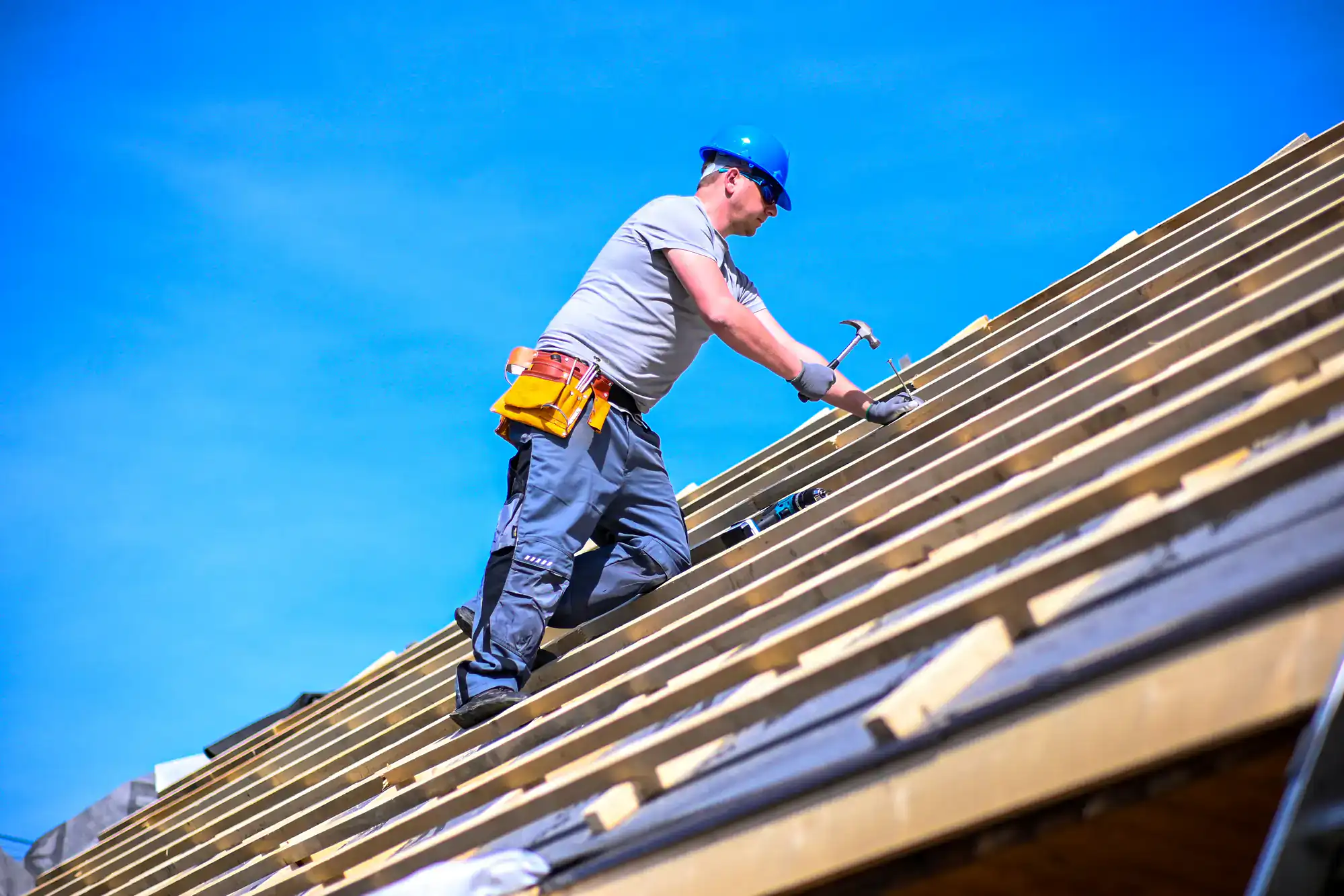

Most roof problems in Budd Lake don’t start with a shingle flying off in plain sight. They start quietly a small gap in the flashing around your chimney, a pipe boot that’s been cracking for two winters, a gutter that’s been pushing water back under the edge of your roof every time it rains. By the time you see a stain on your ceiling, the damage is already deeper than the surface.
That’s the part most contractors miss. They patch what’s visible and move on. What you actually need is someone who looks at the full picture the flashing, the decking, the ventilation, the gutters because in a community like Budd Lake, where homes sit at higher elevation and deal with harder freezes, heavier snow loads, and persistent lake-adjacent moisture, the source of a leak is rarely where it appears.
When the repair is done correctly, you stop chasing the same problem every season. Your attic stays dry. Your insulation stays intact. The interior of your home doesn’t absorb another winter’s worth of water damage before you realize something’s wrong. That’s the outcome worth paying for not just a patch, but a fix that actually holds.
We’ve been serving homeowners across northern New Jersey since 2018. We’re family-owned and based in the region, which means when we take on a job in Budd Lake whether it’s off Route 46, near Turkey Brook Park, or along the older residential streets closer to the lake we’re not sending a subcontracted crew from three states away. We show up ourselves.
We’re BBB Accredited and a GAF Preferred Contractor, which are two credentials you can actually verify before you call us. Our NJ Division of Consumer Affairs registration number is on file. We back every job with a full warranty and offer free consultations because we’d rather you understand your options clearly than feel pressured into a decision.
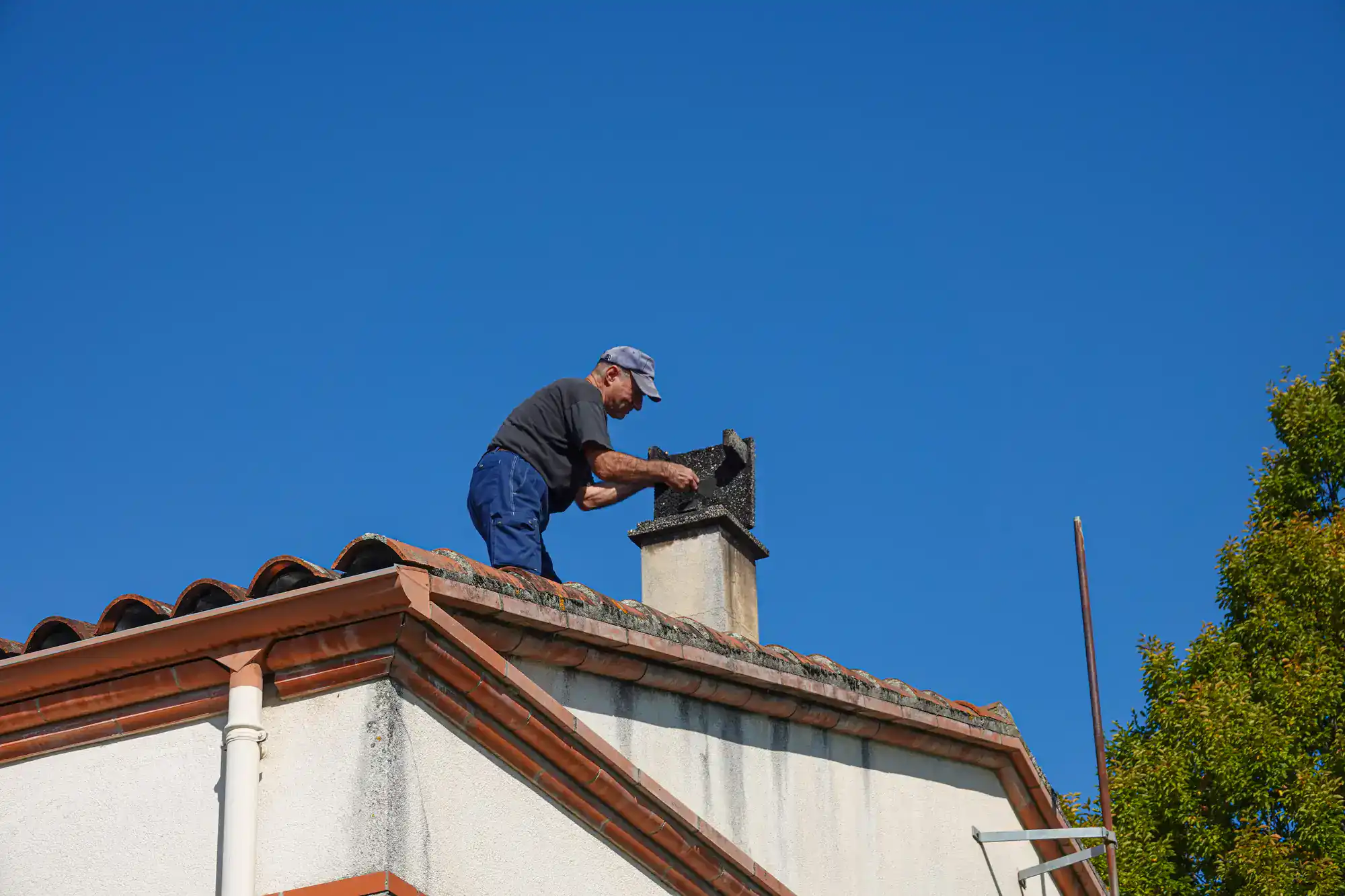
We also handle chimney repair, masonry, gutters, and siding which matters more than it sounds. A lot of what looks like a roofing problem in the older homes around Budd Lake is actually a chimney flashing issue, a failing gutter junction, or deteriorated sealant around a skylight. We find the real source, not just the symptom.
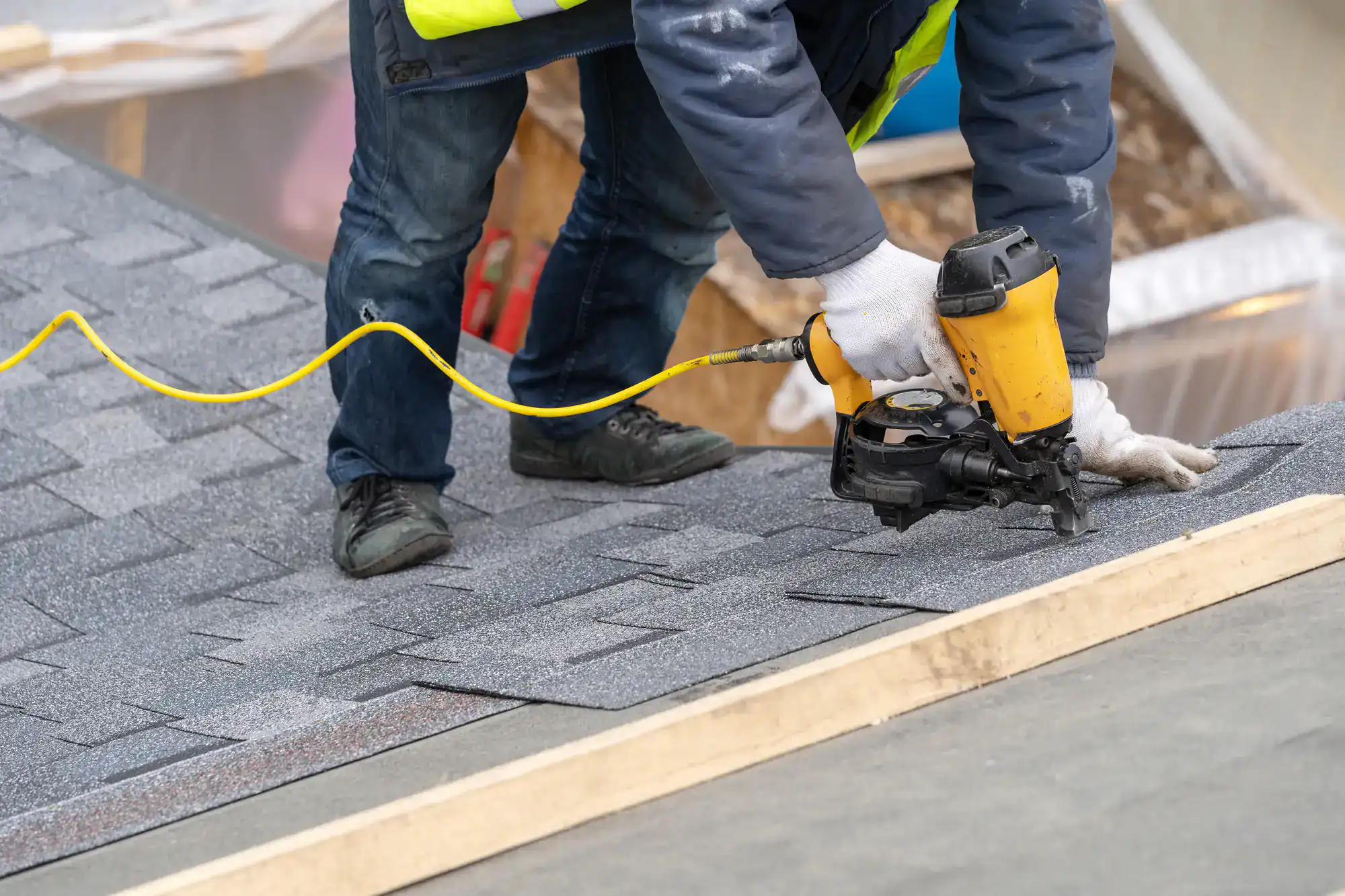
It starts with a free consultation and a thorough inspection. Not a quick walk-around from the driveway an actual look at your roof system, including the flashing, the gutters, the decking condition, and your attic if access is available. In Budd Lake’s older housing stock, where a lot of homes were built between the 1950s and 1980s and have never had a full systems assessment, this step alone surfaces problems that would otherwise keep coming back.
From there, you get a clear scope of work and a straightforward price. No vague estimates that balloon after we start. If the repair is something that requires a permit through Mount Olive Township’s Construction Department which handles all permitting for Budd Lake since it’s an unincorporated community we’ll walk you through that process. Most targeted repairs don’t require one, but we’ll tell you upfront either way.
Once work begins, we communicate throughout. If you’re a commuter household running on a tight schedule, we work around that. You’ll know when we’re arriving, what we’re doing, and when we’re done. If it’s an emergency situation a storm came through overnight, shingles are missing, water is getting in we move fast. Emergency tarping is available to stop the damage from spreading while the permanent repair is planned. When the job is finished, the workmanship is backed by warranty. If something isn’t right, we make it right.
Ready to get started?
Request a callback

Budd Lake sits at an elevation that most Morris County towns don’t deal with. That elevation means more snowfall, harder freezes, and faster freeze-thaw cycling all of which accelerate wear on flashing, sealants, and shingle edges in ways that lower-lying communities simply don’t experience at the same rate. Add in the tree canopy density that comes with being in the Highlands Region, and you’ve got a recipe for debris impact, moss growth on shaded roof planes, and gutters that clog faster than average.
The repair services we provide here are built around those realities. Roof leak patching and roof leak repair address active water intrusion before it spreads into your insulation or framing. Shingle repair and missing shingle repair get your roof weathertight after wind events, which are common at Budd Lake’s elevation. Flat roof repair covers the low-slope systems found on additions and commercial-adjacent structures throughout Mount Olive Township. Emergency roof repair and emergency roof tarping are available when you can’t wait when a storm has already done damage and every hour of exposure makes it worse.
For homes along Sand Shore Road or the older lakefront-adjacent streets, we pay particular attention to moisture-related wear: granule loss, algae staining, and wood rot in fascia and soffits that often accompany roofs on properties with high humidity exposure. Storm damage roof repair is handled with full documentation support if you’re filing an insurance claim, so you’re not left navigating that process alone.

This is the most important question to get an honest answer on, because the wrong call in either direction costs you. A repair makes sense when the damage is localized a section of missing shingles, a failed flashing around a chimney or skylight, a cracked pipe boot, or a small area of deteriorated underlayment. If the rest of the roof is structurally sound and has reasonable life left, a targeted repair is the right move.
Replacement becomes the conversation when damage is widespread, when the decking underneath has been compromised by long-term moisture intrusion, or when the roof is already at or past the end of its expected lifespan. In Budd Lake, where a significant portion of the housing stock was built between the 1950s and 1980s, a lot of homeowners are inheriting roofs that are 30 to 40 years old. Asphalt shingles typically last 20 to 30 years under normal conditions and at Budd Lake’s elevation, with heavier freeze-thaw cycling and more snowfall than lower Morris County towns, that lifespan can run shorter. A free inspection gives you the honest picture so you can make the right call, not the most expensive one.
The most common sources of roof leaks in Budd Lake homes aren’t the shingles themselves they’re the transition points. Chimney flashing, pipe boots, skylight seals, and the valleys where two roof planes meet are where water finds its way in. These are also the areas that degrade fastest under the freeze-thaw cycling that Budd Lake experiences at nearly 1,000 feet of elevation. When sealant cracks and metal flashing shifts slightly over dozens of freeze-thaw cycles, it creates a gap that’s invisible from the ground but very effective at channeling water into your attic.
Fixing a roof leak the right way means finding the actual entry point, not just the spot where water shows up inside. Water travels. A stain on your second-floor ceiling might be sourced from a flashing failure near the ridge. We trace it back to the origin, repair the underlying cause, and make sure the surrounding materials are in good shape before we close it up. That’s what separates a repair that holds from one you’re calling about again six months later.
For emergency situations active leaks, storm damage, missing shingles after a wind event we respond as fast as possible, and that often means same-day. When a nor’easter comes through or a summer thunderstorm strips shingles off overnight, the window between “roof damage” and “soaked insulation and water-stained drywall” is short. At Budd Lake’s elevation, winter storms hit harder and linger longer than in lower-lying parts of Morris County, which makes fast response even more critical.
If a permanent repair can’t happen immediately due to weather conditions, we deploy emergency roof tarping to create a moisture barrier over the damaged area. This stops the damage from spreading into your attic, insulation, and interior walls while the full repair is scheduled. We’ll also document the damage thoroughly if you’re planning to file a homeowner’s insurance claim, which is worth doing after any significant storm event. The goal is to stop the bleeding first, then fix it properly.
In most cases, yes if the damage was caused by a covered event like wind, hail, or a falling tree, your homeowner’s insurance policy should cover roof repair or replacement, minus your deductible. New Jersey sees its share of nor’easters, summer hail events, and high-wind storms, and Morris County homeowners file storm damage claims regularly after significant weather events. The key is documenting the damage correctly and promptly before conditions change or temporary repairs obscure what happened.
Where claims get complicated is when the damage is attributed to wear and neglect rather than a sudden event. Insurance companies distinguish between storm damage and deferred maintenance, and an adjuster who sees a roof that’s clearly been declining for years may deny a claim even if a storm was the final trigger. This is why getting a professional inspection and damage documentation done quickly after a storm matters. We can walk through the damage with you, provide written documentation of what we find, and help you understand what’s likely to be covered before you commit to a repair scope.
It’s a real factor, and most homeowners don’t think about it until they’ve had one too many repair calls in a short period. Budd Lake sits at an elevation of 933 feet significantly higher than most of eastern Morris County and the communities along the Route 10 and Route 24 corridors. That elevation means more snowfall accumulation, harder and longer freezes, and more frequent freeze-thaw cycling throughout the winter and early spring. Every time temperatures drop below freezing and then climb back above it, the materials in your roofing system flashing, sealants, shingle edges, pipe boots expand and contract slightly. Over time, that movement causes gaps and cracks that lower-elevation homes develop more slowly.
Add the tree canopy density that comes with being in the Highlands Region, and you’ve got additional debris impact, accelerated moss and algae growth on shaded roof planes, and gutters that need more frequent clearing to prevent ice dam formation. Homes near the lake’s shoreline also deal with persistent humidity and moisture exposure that shortens shingle life and promotes wood rot in fascia and soffits faster than inland properties. Staying ahead of repairs with periodic inspections especially in fall before the first freeze and in spring after the snow clears is the most cost-effective approach for Budd Lake homeowners.
This is a legitimate concern in Morris County, especially after storm events. When a nor’easter or hail storm comes through Budd Lake, out-of-state contractors show up quickly, knock on doors, collect deposits, and in too many cases either disappear or deliver work that fails within a season. It’s a documented pattern, and it’s one of the reasons verifiable credentials matter so much in this market.
The short checklist worth running before you hire anyone: confirm they’re registered with the NJ Division of Consumer Affairs that registration number should be on their website or available when you ask. Check their BBB profile directly at bbb.org, not just the badge on their site. Look for manufacturer certifications like GAF Preferred Contractor status, which requires the contractor to meet verified standards you can confirm it on GAF’s own website. Read reviews on multiple platforms and look for specifics: named employees, described work, real timelines. Generic five-star reviews with no detail are easy to manufacture. Specific ones aren’t. Ask for references from homeowners in Budd Lake or nearby Mount Olive Township local work speaks louder than testimonials from out of state.
Other Services we provide in Budd Lake