
When siding fails in Cedar Grove, it rarely announces itself loudly. It starts with a hairline crack near a window frame, a panel that warps after a hard winter, or caulk that quietly gave out two freeze-thaw cycles ago. By the time you notice it from the driveway, moisture has usually already found its way in. Getting ahead of that with siding that’s properly installed and built for this climate is what actually protects a home worth $650,000 or more.
Cedar Grove’s housing stock was built primarily in the 1940s, which means a lot of homes in this township are working with original or once-replaced siding that’s decades past its useful life. The hillside lots in the North End and Park Ridge Estates see more wind-driven rain than most people expect, and homes near the Cedar Grove Reservoir corridor sit in higher ambient moisture than homes in flatter, drier areas. Both conditions accelerate exterior wear and both require an installation approach that accounts for what’s actually happening to your home, not just what looks good from the street.
Done right, new siding does more than improve curb appeal. It tightens the building envelope, reduces energy loss, eliminates the maintenance cycle of patching and painting aging materials, and gives you real protection for the equity you’ve built. The 2024 Cost vs. Value Report puts siding replacement at roughly 80–95% ROI at resale. For a Cedar Grove home, that math is worth paying attention to.
We’re a family-owned general contracting company based in northern New Jersey, serving Cedar Grove and throughout Essex County since 2018. We hold NJ Home Improvement Contractor Business license number 13VH09838700, earned BBB Accreditation in January 2025, and carry GAF Preferred Contractor status. Every one of those credentials is verifiable before you ever pick up the phone.
What that means practically: you’re not betting on a company you found through a flyer. You’re working with a licensed, insured, accredited contractor whose work is backed by a full warranty on both materials and workmanship. That last part matters more than most people realize because the most common siding failures come from installation errors, not product defects, and a material-only warranty won’t protect you from those.
We handle siding, roofing, gutters, chimney, and masonry which is a real advantage in Cedar Grove, where homes built in the 1940s often need coordinated attention across multiple exterior systems at once. One contractor, one point of contact, one warranty.
It starts with a free consultation no obligation, no pressure. A member of our team comes to your home, looks at what you’re working with, and gives you an honest assessment of what needs to happen. If there’s hidden moisture damage or substrate issues behind the existing siding which is common in Cedar Grove’s older homes you’ll know about it before the project starts, not after.
From there, we handle the permit process with Cedar Grove’s Building Department at 525 Pompton Avenue. The township’s own guidance is clear that permits are required for almost everything you do to a property, and siding replacement is no exception under New Jersey’s Uniform Construction Code. If your home is on a hillside lot in the North End or Park Ridge Estates area, there may be additional zoning considerations our familiarity with Essex County’s requirements means that doesn’t become your problem to figure out.
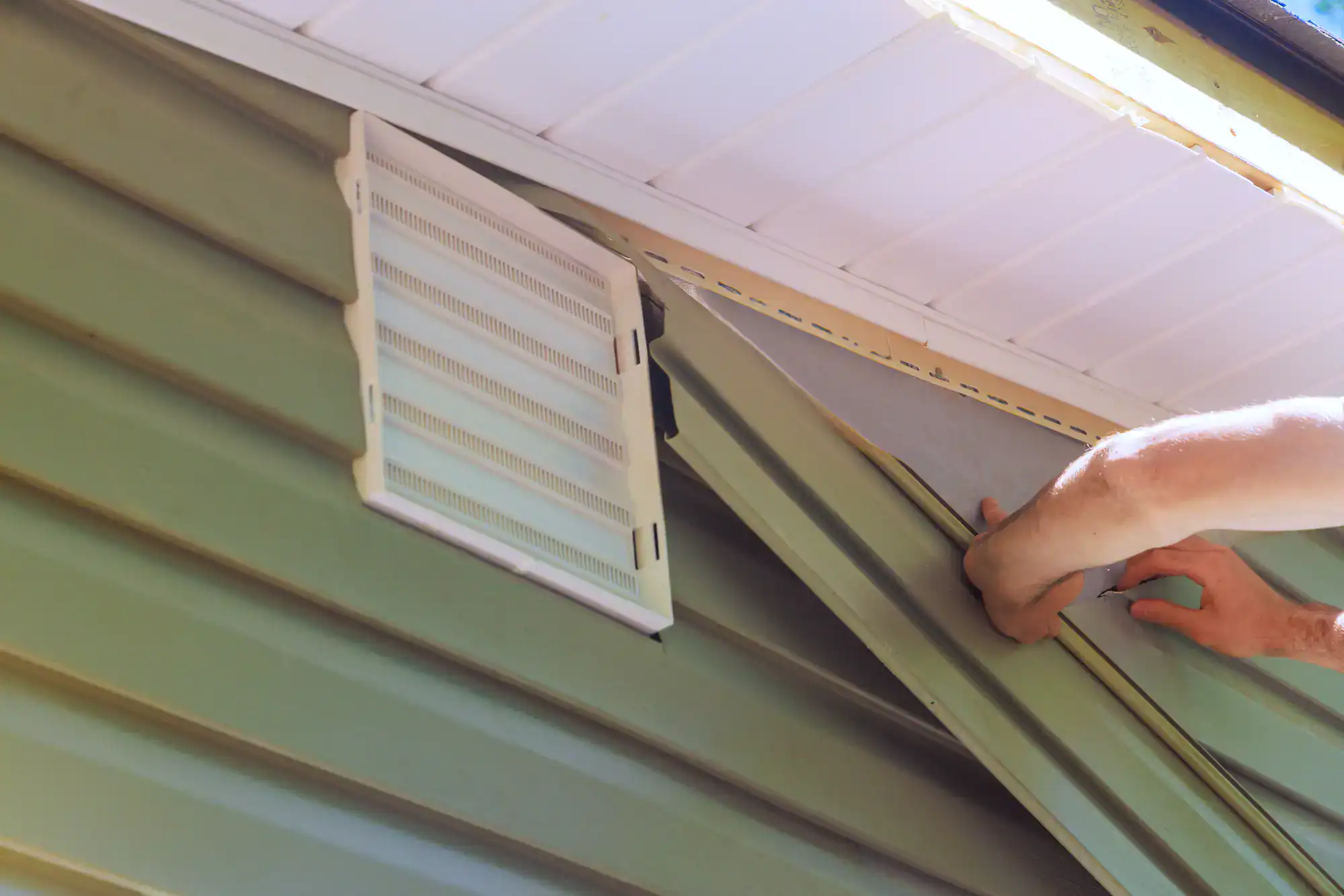
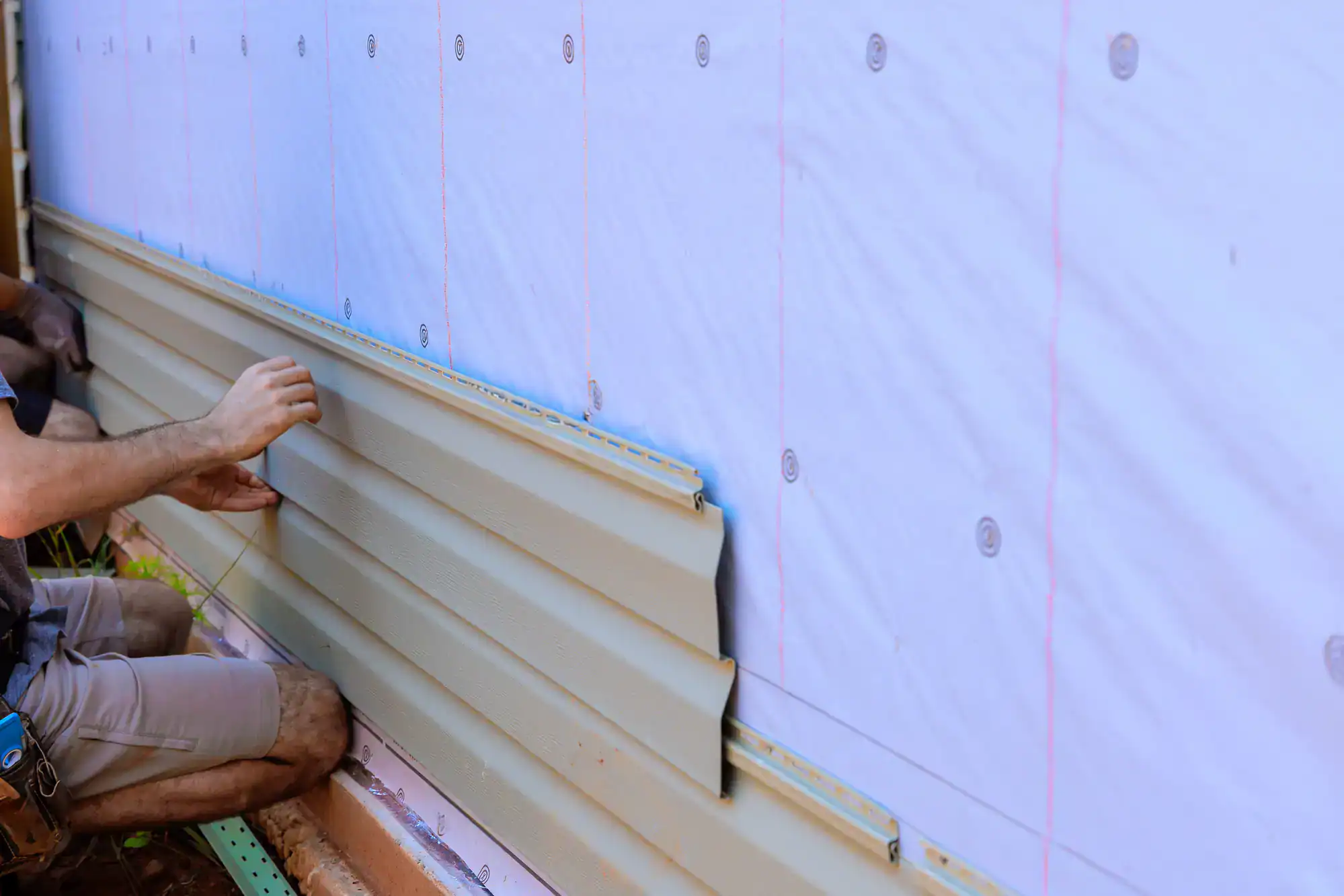
Once permits are in place, installation begins with proper moisture barrier work before a single panel goes up. Vinyl is nailed with enough room to expand and contract through temperature swings a detail that separates a clean installation from one that buckles after its first full season. When the job is done, the site is cleaned up, the work is inspected, and you’re walked through exactly what was done and what your warranty covers. You’ll hear from our team throughout by call, text, or on-site not just at the beginning and end.
Ready to get started?
Request a callback

We offer full siding installation, siding replacement, and siding repair for residential and commercial properties throughout Cedar Grove. Whether you’re replacing deteriorating vinyl on a South End colonial, upgrading to fiber cement on a Park Ridge Estates property, or dealing with storm damage after a nor’easter came through, the scope of work is built around what your specific home needs not a one-size package.
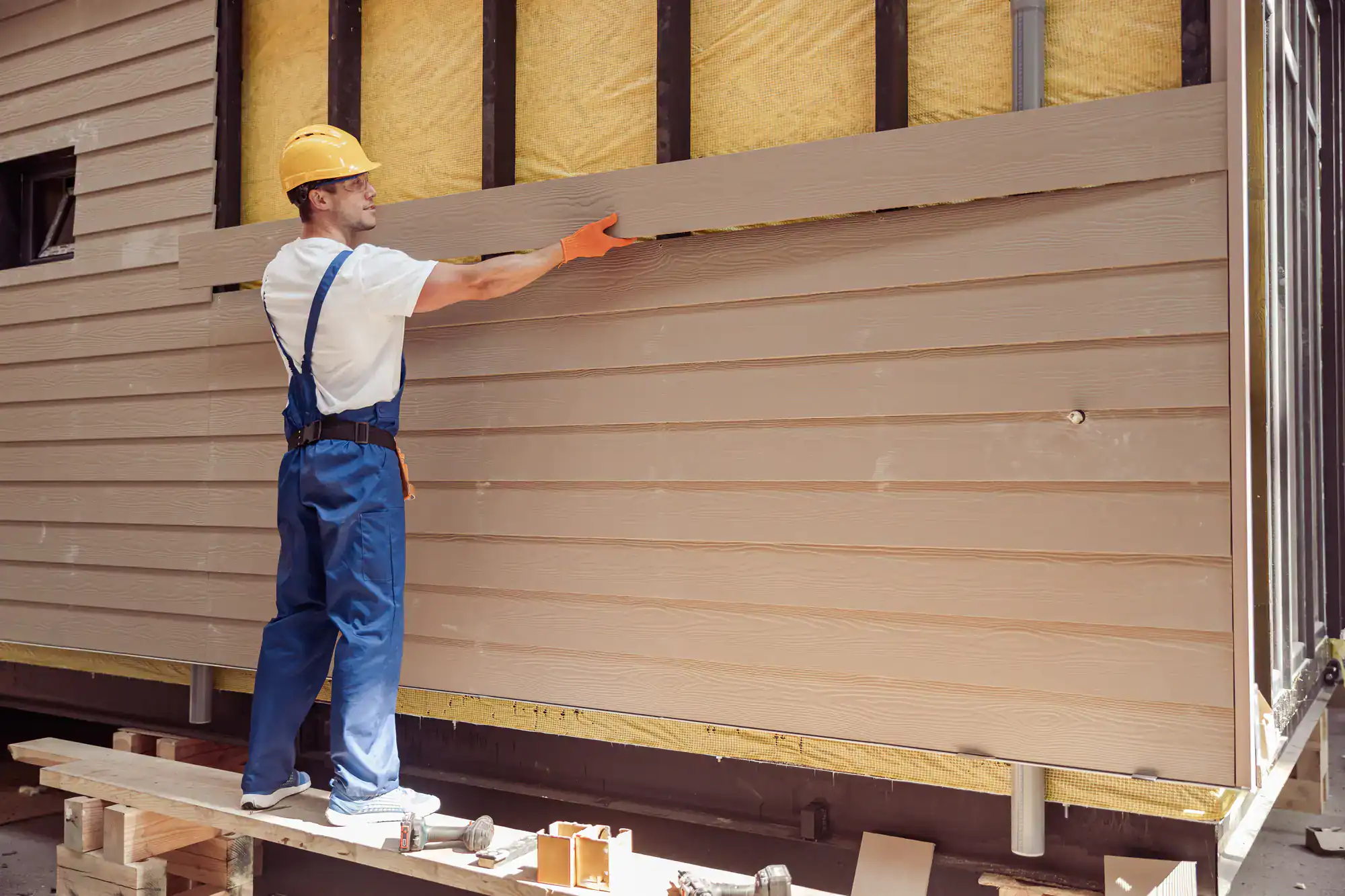
Vinyl siding remains the most practical and cost-effective choice for most Cedar Grove homeowners, and we install it correctly meaning with a proper moisture barrier, appropriate nailing technique for northern NJ’s temperature swings, and thorough sealing at every penetration, window, and transition point. For homeowners in higher-value properties or those planning to sell, fiber cement is worth the conversation: it returns approximately 87% of project cost at resale, holds up exceptionally well against moisture and impact, and doesn’t require the maintenance cycle that wood and older composite materials demand.
We also handle soffit, fascia, and trim work as part of a complete exterior siding project because replacing panels while leaving deteriorating trim in place is a shortcut that creates problems down the road. If your gutters or roofline need attention at the same time, that can be coordinated under the same project rather than scheduled separately with a different contractor. For Cedar Grove homeowners dealing with multiple exterior issues on an aging home, that kind of coordination is genuinely useful.
Yes, in most cases you do. Cedar Grove’s Building Department is straightforward about this permits are required for almost everything you do to your property, and siding replacement typically falls under New Jersey’s Uniform Construction Code as a regulated alteration to the building envelope. That means a permit application, inspection, and sign-off are part of the process, not optional steps you can skip to save time.
What that means for you practically is that any contractor who tells you a permit isn’t needed for a full siding replacement in Cedar Grove should raise a flag. Working without a permit creates real problems: code violations, failed inspections, and complications when you go to sell the home. We handle the permit process with Cedar Grove’s Building Department as part of every project, so you’re not navigating that on your own. If your property is on a hillside lot particularly in the North End or Park Ridge Estates there may be additional zoning considerations under Cedar Grove’s steep slope regulations, and those get addressed upfront.
The honest answer is that it depends on the size of your home, the material you choose, and what’s found once the old siding comes off. For a typical Cedar Grove single-family home, vinyl siding replacement generally runs somewhere in the range of $8,000 to $18,000 for the full project. Fiber cement which is a strong choice for higher-value properties and homes with significant moisture exposure typically runs higher, often $15,000 to $30,000 or more depending on scope.
What affects the number most is what’s underneath. Cedar Grove’s 1940s housing stock means substrate issues, moisture damage, and deteriorated sheathing are common discoveries once old siding is removed. A contractor who gives you a firm price before seeing what’s behind the existing panels is guessing and you’ll find out the real number mid-project. Our free consultation includes an honest assessment of what’s likely underneath so you’re not caught off guard. The estimate you receive is itemized and explains exactly what’s included, what materials are being used, and what the warranty covers.
For most homes in Cedar Grove, high-quality vinyl siding is the most practical choice it handles freeze-thaw cycles well when installed correctly, requires minimal maintenance, and holds up against the wind-driven rain that hillside lots in the North End and Park Ridge Estates area see regularly. The key word there is “installed correctly.” Vinyl that’s nailed too tight can’t expand and contract with temperature swings, which leads to buckling and cracking within a few seasons. The installation technique matters as much as the product.
Fiber cement is worth considering if you’re in a higher-moisture environment like properties near the Cedar Grove Reservoir corridor or if you’re in a higher-value home where long-term durability and resale return justify the higher upfront cost. It doesn’t warp, it’s resistant to moisture and impact, and it doesn’t require the repainting cycle that wood demands. For homes that have had repeated moisture intrusion issues or are located on particularly exposed lots, fiber cement is often the smarter long-term investment even if the initial cost is higher.
A few things point clearly toward replacement rather than repair. If you’re seeing warped or buckling panels in multiple areas, if moisture has gotten behind the siding and caused damage to the sheathing or insulation underneath, or if the siding is original to a home built in the 1940s or 1950s, repair is usually a short-term fix on a system that’s already at the end of its life. You’ll spend money patching problems that will keep reappearing.
Repair makes sense when the damage is isolated a few panels damaged by a fallen branch, storm impact on one section of the home, or localized cracking near a specific penetration point. The honest answer is that you don’t fully know what you’re dealing with until someone looks at it in person and checks what’s happening at the substrate level, not just at the surface. That’s exactly what our free consultation covers a real assessment of what’s going on, not a sales pitch for the most expensive option. Cedar Grove homes built in the 1940s are frequently at the point where a proper inspection reveals more than what’s visible from the outside.
It can, but with limitations worth knowing. Vinyl siding becomes brittle in temperatures below roughly 40°F, which means it’s more prone to cracking during cutting and installation if the work is rushed in cold weather. For most Cedar Grove homeowners, scheduling siding replacement in late fall before temperatures drop consistently, or waiting until spring, produces better results and fewer installation risks.
That said, winter scheduling does have a real upside: shorter lead times. Spring and fall are peak seasons for siding contractors in northern Essex County, and booking windows can stretch out significantly. If your project isn’t urgent, scheduling a winter consultation and locking in a spring start date is a smart approach. If your siding has been damaged by a storm and you’re dealing with active moisture exposure, that’s a different situation emergency repair work can be done in winter conditions when necessary to stop further damage, and we’re available for exactly those situations. The goal is always to protect the home first and optimize the timing second.
Cedar Grove is the kind of town where a $700,000 home is a fairly typical asset. The risk of hiring the wrong contractor one who isn’t licensed, cuts corners on moisture barriers, or disappears after taking a deposit isn’t abstract. The BBB tracks contractor complaints across New Jersey, and the pattern is consistent: the overwhelming majority of complaints go to low-cost bidders who undercut on price by skipping the steps that protect the home.
A licensed contractor under NJ’s Home Improvement Contractor Business requirements carries the insurance, bonding, and compliance documentation that protects you if something goes wrong. A manufacturer-certified contractor like us which holds GAF Preferred Contractor status has been vetted for installation quality by an independent third party, not just by our own marketing. And a contractor who backs their work with a full warranty on both materials and workmanship is making a commitment that a low-bid operator typically won’t. You can verify our NJ HICB license number 13VH09838700 directly on the Division of Consumer Affairs website before signing anything. That’s the kind of transparency Cedar Grove homeowners should expect from anyone working on their home.
Other Services we provide in Cedar Grove