
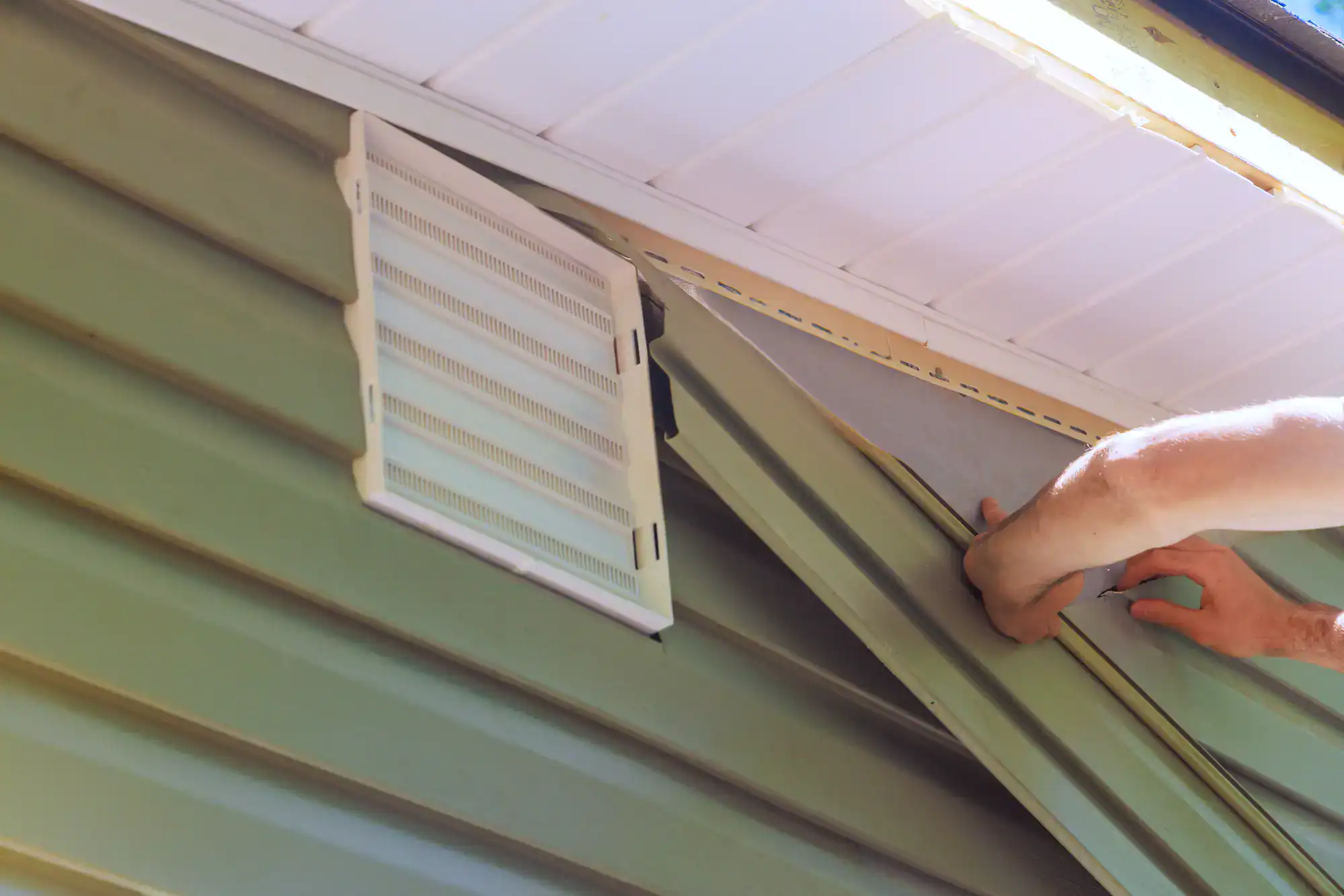
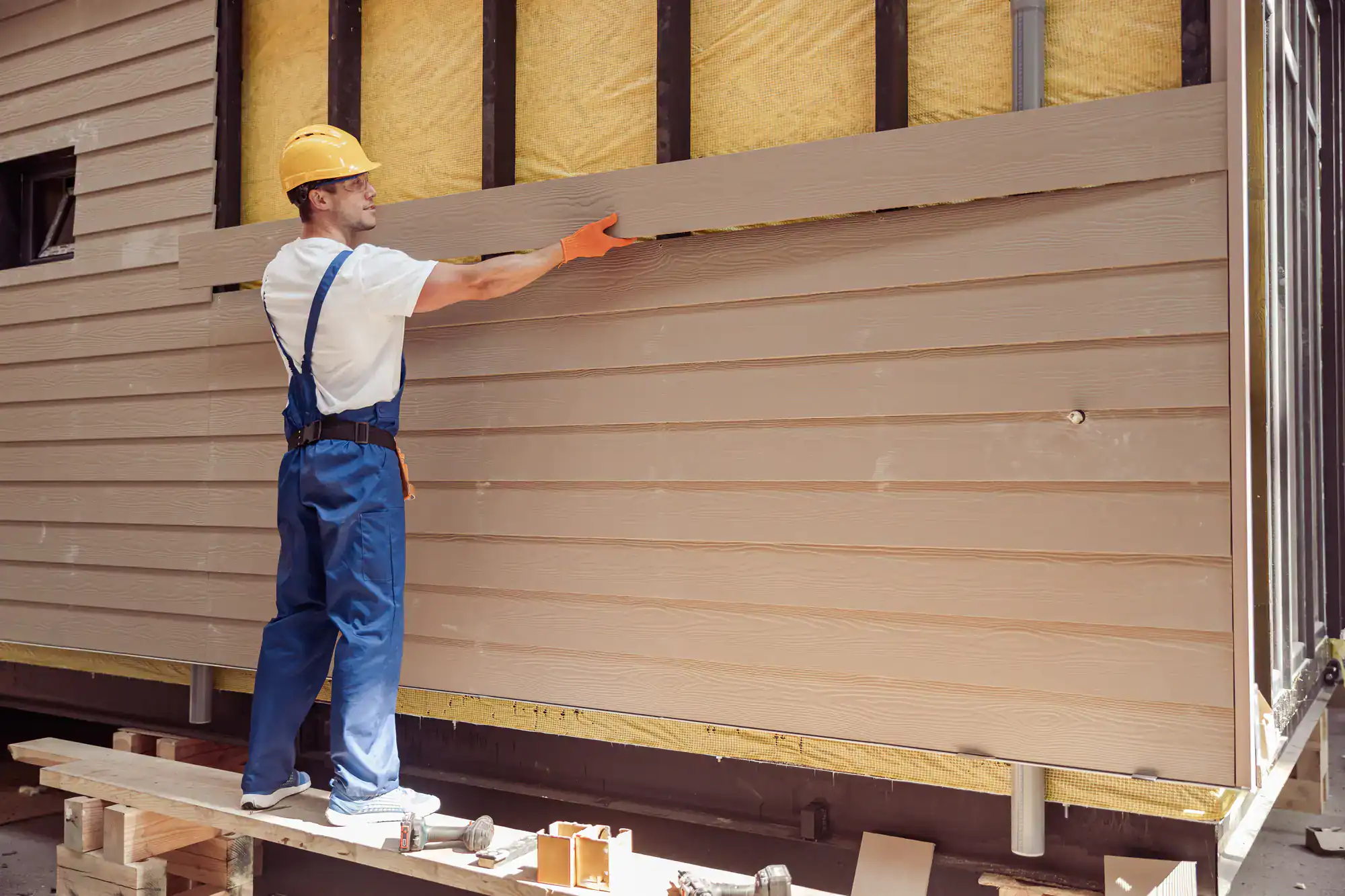
Montclair winters don’t go easy on older homes. The freeze-thaw cycles work fasteners loose, open up seams, and push moisture into sheathing that was already stressed from decades of use. When you replace siding correctly right materials, right installation, right substrate prep that cycle stops doing damage and starts getting handled.
The elevation matters here too. Homes in Upper Montclair and the Estate Section sit higher on the Watchung ridgeline than most of Essex County, which means stronger wind exposure and more direct weather impact during nor’easters. That’s not a reason to panic it’s a reason to be specific about what goes on your home and how it’s installed.
Beyond protection, there’s real financial weight to this decision. Montclair’s median home sale price hit $1.4 million in 2024, up 49% since 2020. A properly installed siding replacement returns 80 to 95 cents on the dollar at resale. On a home worth what yours is worth, that’s not a minor detail.
We’re a family-owned general contracting company based in northern New Jersey, serving Montclair and Essex County homeowners since 2018. We hold NJ Home Improvement Contractor Business license #13VH09838700, earned BBB Accreditation in January 2025, and carry GAF Preferred Contractor status credentials you can verify on your own before you ever pick up the phone.
What that means practically: you’re not dealing with a fly-by-night crew that showed up in Montclair chasing storm work. We work regularly throughout Essex County, including on the older Victorians, Tudors, and Colonial Revivals that define neighborhoods from Watchung Plaza to the Estate Section along South Mountain Avenue. Our team knows what’s typically behind the walls of a 1920s home in this township and we check before we price.
Every project comes with a full warranty covering both materials and workmanship. Free consultations, no pressure. If something’s urgent, emergency services are available.
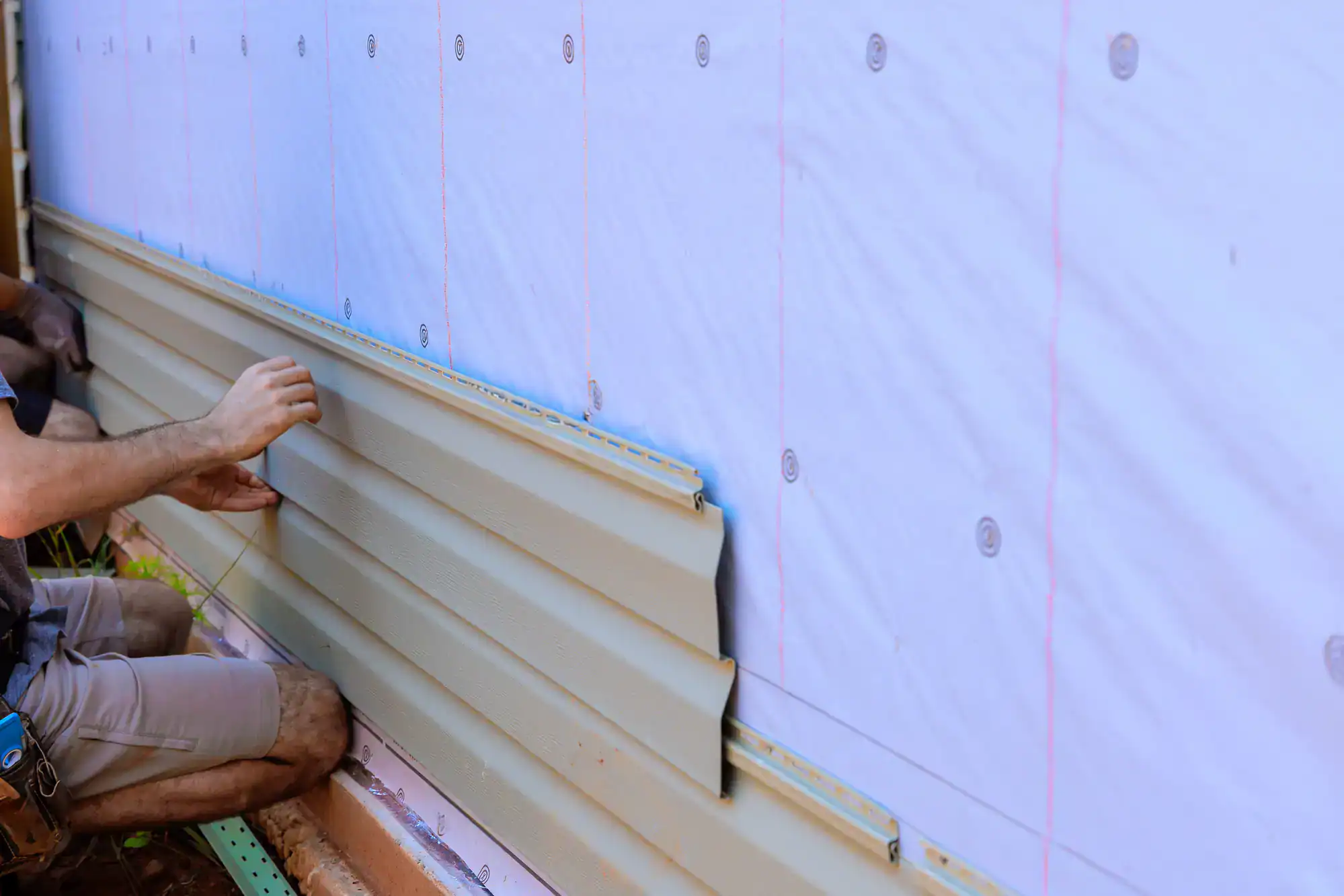
It starts with a free on-site consultation. We come out, look at your home’s exterior, and give you an honest read on what’s going on not a sales pitch, just an actual assessment. For older homes in Montclair, that means checking the substrate before anything else. Layers of original wood, aluminum from the 1970s, and aging vinyl are common in this township, and what’s underneath determines the full scope of the work. You’ll know what you’re dealing with before a contract gets signed.
If your home falls within one of Montclair’s six historic districts or is individually listed as a landmark a Certificate of Appropriateness from the Township’s Historic Preservation Commission is required before a building permit can be issued. We’re familiar with that process and can help you navigate it without delays. It’s a step that catches a lot of homeowners off guard, especially if they’re newer to the township.
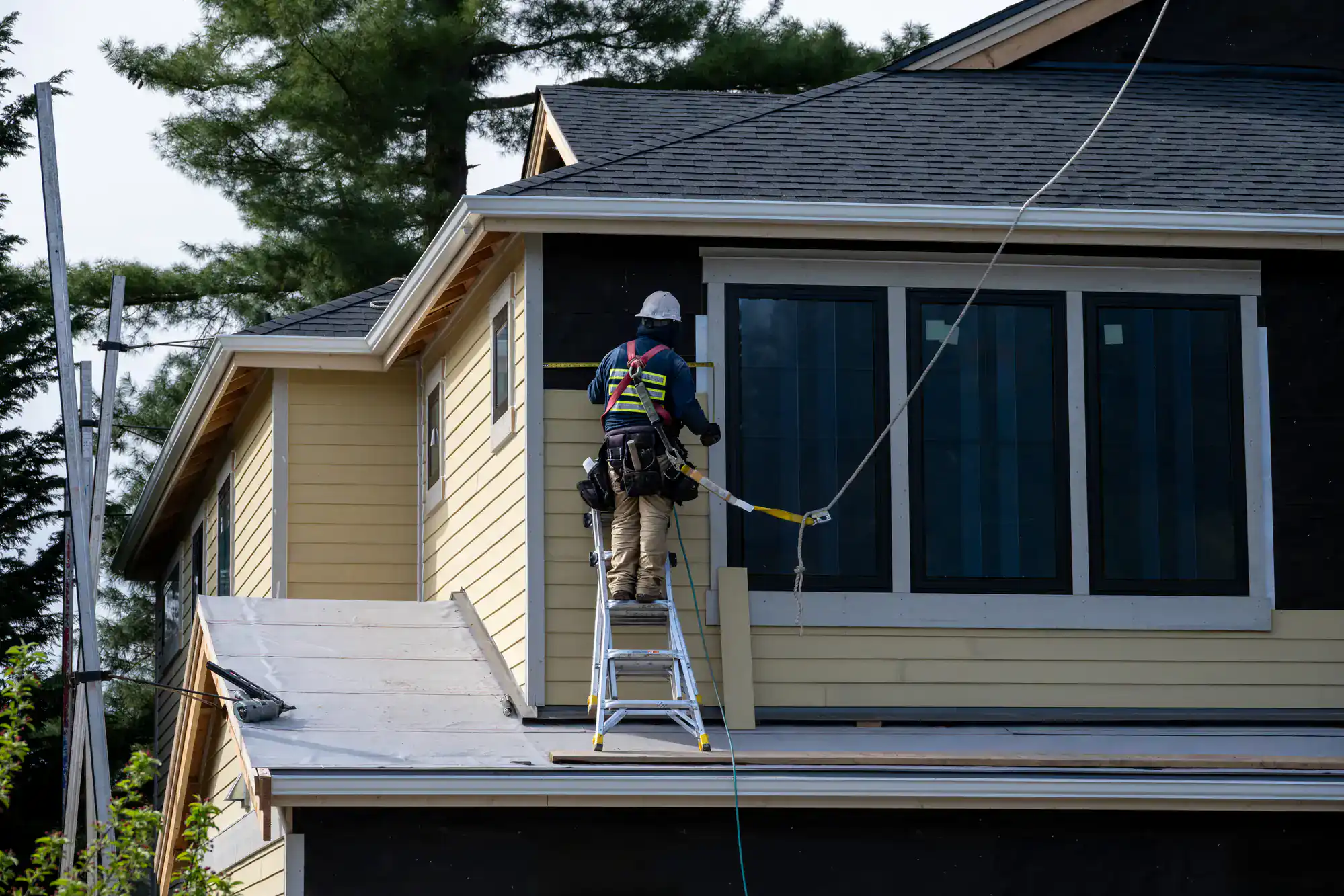
Once permits are in order, installation moves forward with the right materials for your home’s age, style, and exposure. After the work is done, we inspect everything flashing, seams, trim, drainage. You get a finished exterior that’s sealed correctly and built to hold up through whatever New Jersey throws at it next.
Ready to get started?
Request a callback

Not every siding material belongs on every home in Montclair. A fiber cement product with real dimensional depth looks right on a 1920s Tudor near Erwin Park or a Victorian in the Estate Section. Vinyl even quality insulated vinyl reads differently on a home with that kind of architectural character, and in some cases it won’t clear the Township’s residential historic design guidelines for landmark properties. We walk you through the tradeoffs honestly: lifespan, maintenance, historic appropriateness, thermal performance, and long-term cost. You pick what’s right for your home, not what’s easiest to install.
We handle the full range of exterior siding work new installation, full replacement, and targeted repair. For homes where only sections have failed, repair can be the smarter call. For homes where aging aluminum or deteriorating wood has reached the end of its life, a full replacement with a proper moisture barrier and new substrate prep is what actually solves the problem.
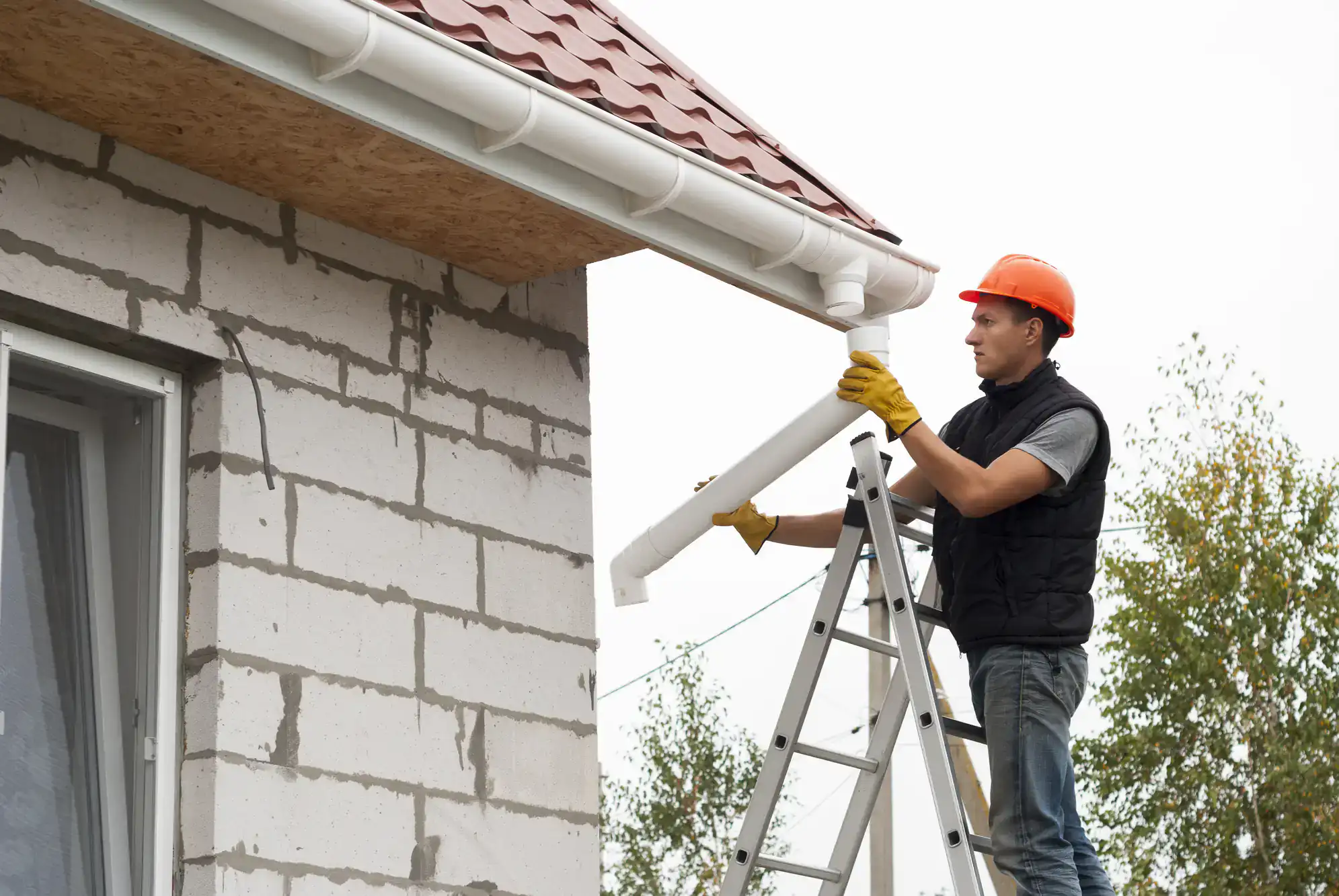
Because we’re a multi-trade contractor, siding work can be coordinated with roofing, chimney, masonry, and gutter services in the same project. On older Montclair homes, that matters failing gutters and compromised flashing are often what caused the siding damage in the first place, and fixing one without the other just sets up the next problem.
Yes any siding replacement in Montclair requires a building permit from the Township’s Construction Department. That’s standard across New Jersey municipalities and something your contractor should be pulling before work begins, not something you should be chasing down yourself.
What’s specific to Montclair is the additional layer that applies to landmark properties and properties within one of the Township’s six historic districts. If your home falls under that designation, you’ll also need a Certificate of Appropriateness from the Montclair Historic Preservation Commission before a permit can be issued. This applies to any exterior work that’s visible from a public way including siding replacement, material changes, and significant repairs. Montclair updated its residential historic design guidelines in October 2022, and those guidelines influence which materials are considered appropriate for designated properties. A contractor unfamiliar with this process can cause real delays. We know it and work within it.
The range is wide depending on your home’s size, the material you choose, and what’s found underneath the existing siding. A straightforward vinyl replacement on a mid-sized home might run $10,000 to $18,000. Fiber cement on a larger or architecturally detailed home which is common in neighborhoods like the Estate Section or Upper Montclair can run $20,000 to $35,000 or more, especially if substrate damage needs to be addressed before new siding goes on.
Montclair’s older housing stock means substrate issues are more the rule than the exception. Rotted sheathing, failed moisture barriers, and layers of previous siding materials all add to the scope. We assess what’s underneath before finalizing a price not after demo day. Our initial consultation includes a substrate inspection so the estimate you receive reflects the actual project, not a best-case scenario that changes once work starts.
Fiber cement is the most common recommendation for Montclair’s older architectural styles Victorians, Tudors, Craftsman bungalows, and Colonial Revivals. It holds paint well, resists moisture and freeze-thaw cycling, and has the dimensional depth that reads correctly on homes with detailed trim and traditional profiles. It’s also the material most likely to satisfy the Township’s historic design guidelines for landmark properties, which place real restrictions on what exterior materials are considered appropriate replacements for original wood siding.
Insulated vinyl is a strong option for post-war homes where thermal performance is the priority and historic appropriateness isn’t a constraint. It’s durable, low-maintenance, and handles New Jersey’s climate well when installed correctly. The right material depends on your specific home its age, its architectural style, its location within or outside a historic district, and your long-term plans for the property. That’s exactly the kind of conversation the free consultation is designed to have.
Montclair has six historic districts listed on the state and national registers, plus 92 individually listed landmarks and two locally designated commercial districts. The Marlboro Park Historic District, portions of the Estate Section, and several Upper Montclair neighborhoods are among the areas where historic preservation requirements apply to exterior work.
The most reliable way to confirm your property’s status is to check with the Montclair Township Construction Department or the Historic Preservation Commission directly. You can also look up your address against the Township’s landmark and district maps, which are publicly available. If your home is listed or within a district, any exterior work including siding requires a Certificate of Appropriateness before a building permit will be issued. This is a real step in the process that affects your project timeline. Knowing your status before you start planning saves you from surprises mid-project.
New Jersey’s freeze-thaw cycles are hard on siding regardless of where you live, but Montclair’s position on the First Mountain of the Watchung range adds a layer of exposure that lower-lying towns in Essex County don’t face to the same degree. Homes in Upper Montclair and the Estate Section sit at higher elevation, which means stronger wind loads during nor’easters and more direct weather impact on the western-facing sides of the house.
Add in the mature tree canopy that defines Montclair’s streetscape beautiful, but it keeps moisture against the siding longer than an open suburban setting would and you have conditions that accelerate wear on materials that weren’t installed with adequate moisture management behind them. The five streams running through the township (Toney’s Brook, Nishuane Brook, and others) also contribute to elevated ambient moisture in lower-lying neighborhoods. Quality installation with a proper moisture barrier isn’t optional in this environment. It’s what determines whether your siding lasts 15 years or 30.
It depends on what’s actually going on, and the honest answer is that you won’t know until someone looks at it properly. Targeted repair makes sense when damage is isolated a section that took impact, a few panels that have separated, or localized rot that hasn’t spread to the sheathing. In those cases, pulling and replacing the affected area is faster, less disruptive, and costs a fraction of a full replacement.
Where repair stops making sense is when the underlying problem is systemic widespread moisture intrusion, failing substrate across multiple wall sections, or siding that’s reached the end of its serviceable life and is failing in multiple places at once. On Montclair’s older homes, that scenario is common. A house that’s been re-sided two or three times over the past century often has compounding issues that a patch job won’t resolve. The free consultation is specifically designed to give you a straight answer on which situation you’re in so you’re not spending money on a repair that buys you two years before the same problem comes back somewhere else.
Other Services we provide in Montclair