
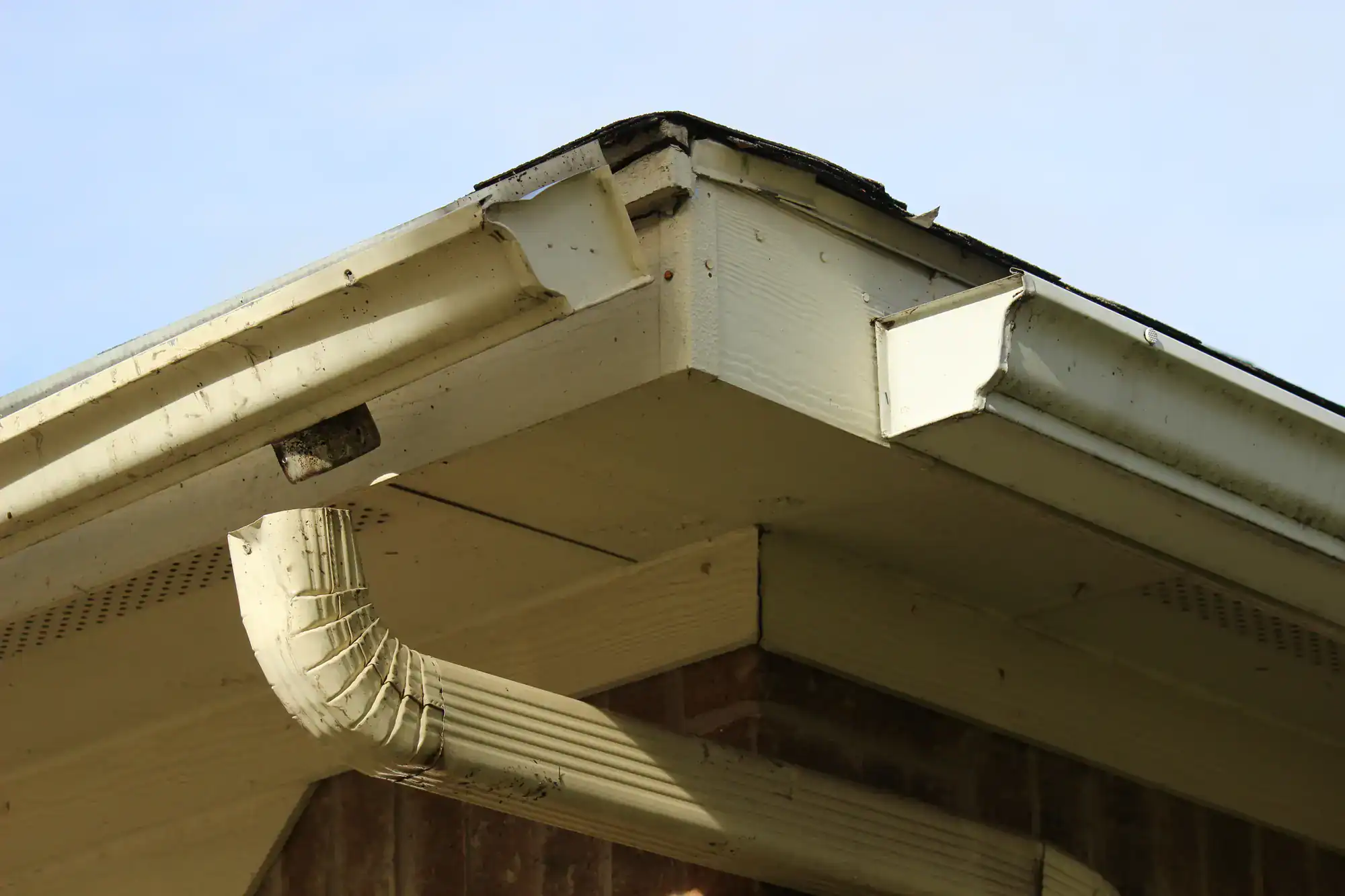
Clogged or failing gutters don’t just overflow they create a chain of problems that gets expensive fast. Water that can’t drain properly saturates the soil around your foundation, backs up under shingles, and rots the fascia boards holding your gutters in place. By the time you notice the damage inside, the repair bill is already in the thousands.
Morris’s tree canopy makes this worse than most people expect. The mature deciduous trees throughout neighborhoods like Loantaka Terrace, Cromwell Hills, and along Madison Avenue dump an enormous amount of debris into gutters every fall. When that debris sits and the temperature drops which it does hard here, given Morris’s inland position you get ice dams. That’s when meltwater gets trapped behind a wall of ice and starts working its way under your roof. Restoration companies operating in this area specifically flag ice dam damage as one of the most common winter issues they see in Morris.
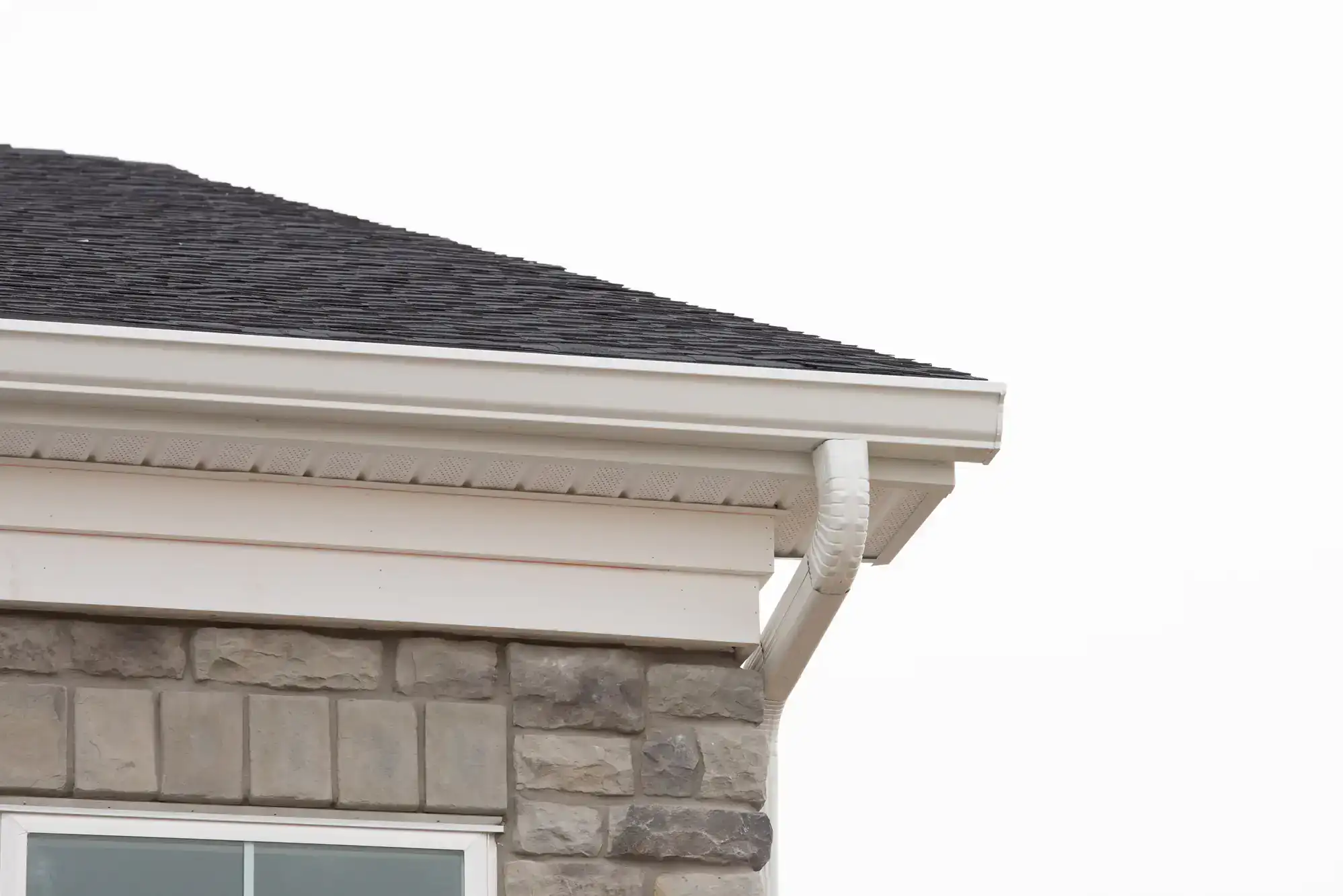
A properly installed seamless gutter system solves the root problem. No seam joints means 80% fewer leak points than sectional gutters. Correct pitch means water moves where it’s supposed to. And for homes in the Normandy Park Historic District or along Washington Valley where the architecture actually matters the right installation preserves the look of the property, not just the function.
Proline Construction is a family-owned general contracting company that’s been serving northern New Jersey since 2018. Morris is core territory for us not a footnote on a service area map. That means familiarity with the housing stock here, the seasonal conditions, and the kind of homeowner who takes their property seriously.
Our credentials are real and verifiable. NJ Home Improvement Contractor License #13VH09838700 is publicly searchable through the NJ Division of Consumer Affairs. BBB accreditation and GAF Preferred Contractor status aren’t decorative they reflect actual standards that protect you as the homeowner. Every job comes with a full written warranty, because the work should hold up long after the crew leaves.
What sets Proline apart from gutter-only specialists is scope. When we assess a gutter problem on a Morris property, we can also evaluate the fascia for rot, check the roofline for damage, and flag anything else that needs attention no referrals, no coordination between multiple contractors, no gaps in accountability.
It starts with a free consultation. Someone from our team comes out, walks the property, and gives you an honest read on what’s going on whether that’s a full gutter replacement, targeted repair, or something in between. No pressure, no upsell for work you don’t need.
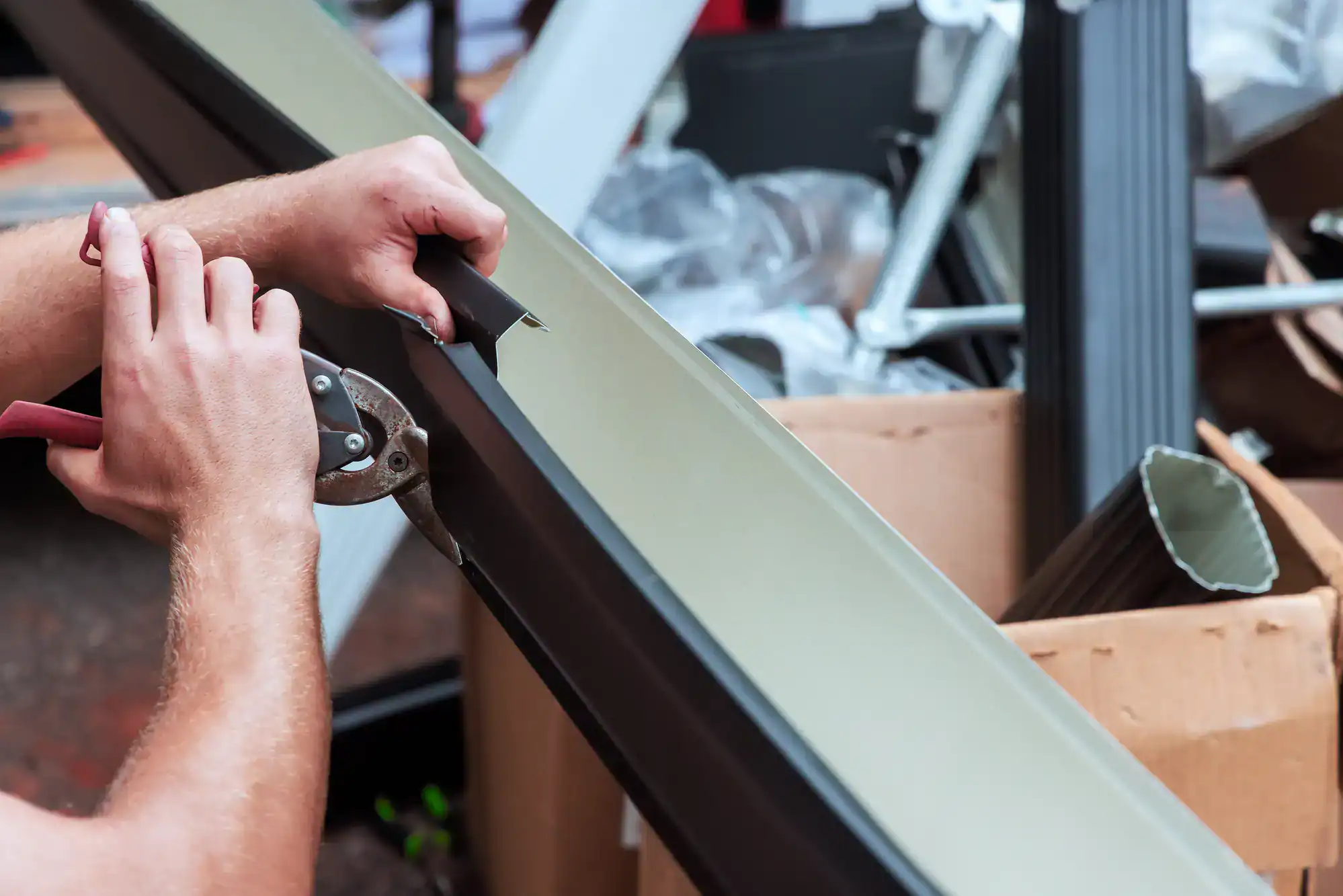
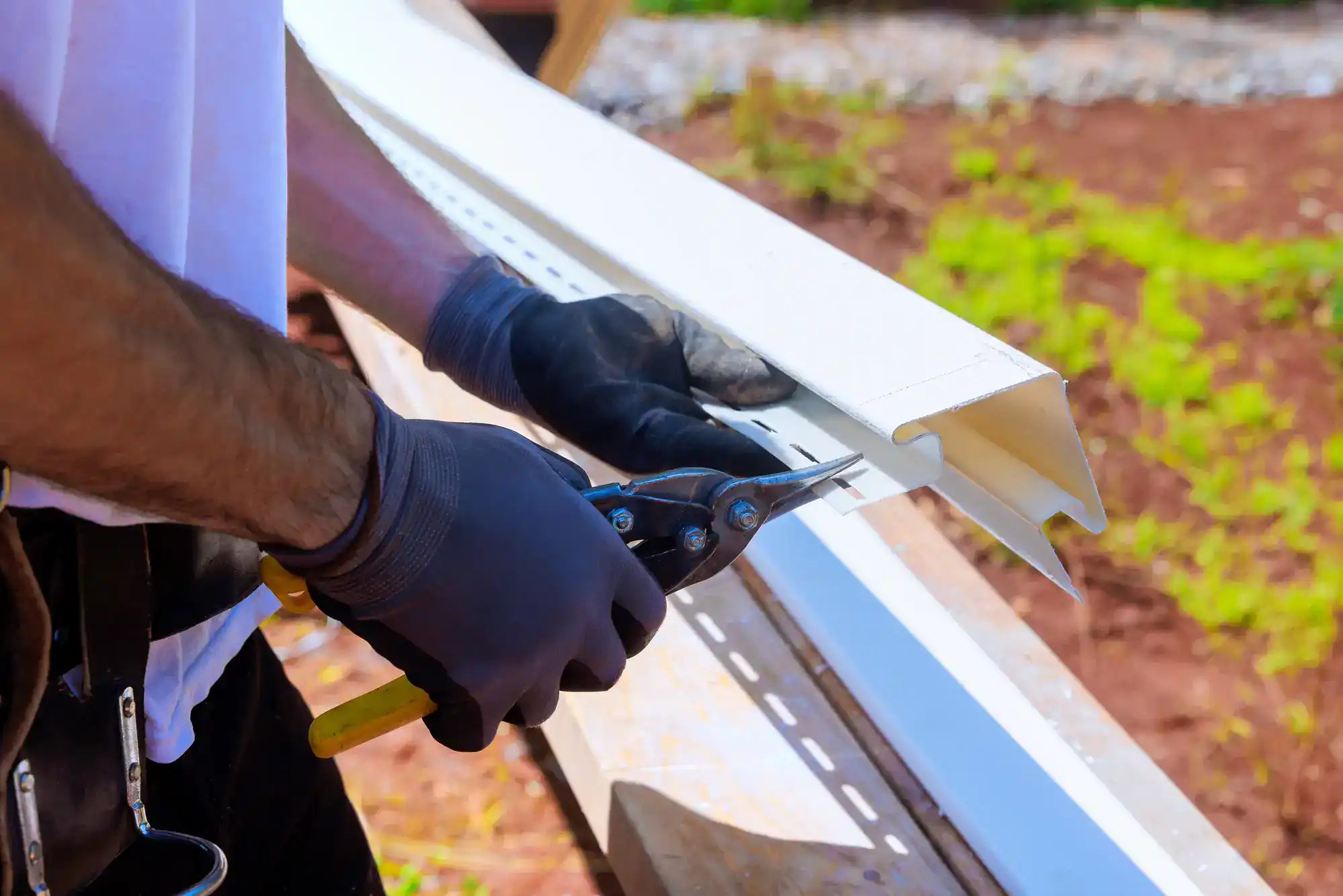
From there, measurements are taken and your seamless gutters are custom-fabricated on-site to fit the exact dimensions of your roofline. This matters more than it sounds. Morris homes especially the larger, multi-gable properties in the Normandy Park Historic District and along the older streets near Convent Station aren’t standard configurations. A gutter system that’s cut and bent to fit your specific roofline performs better and lasts longer than anything pre-sectioned and pieced together.
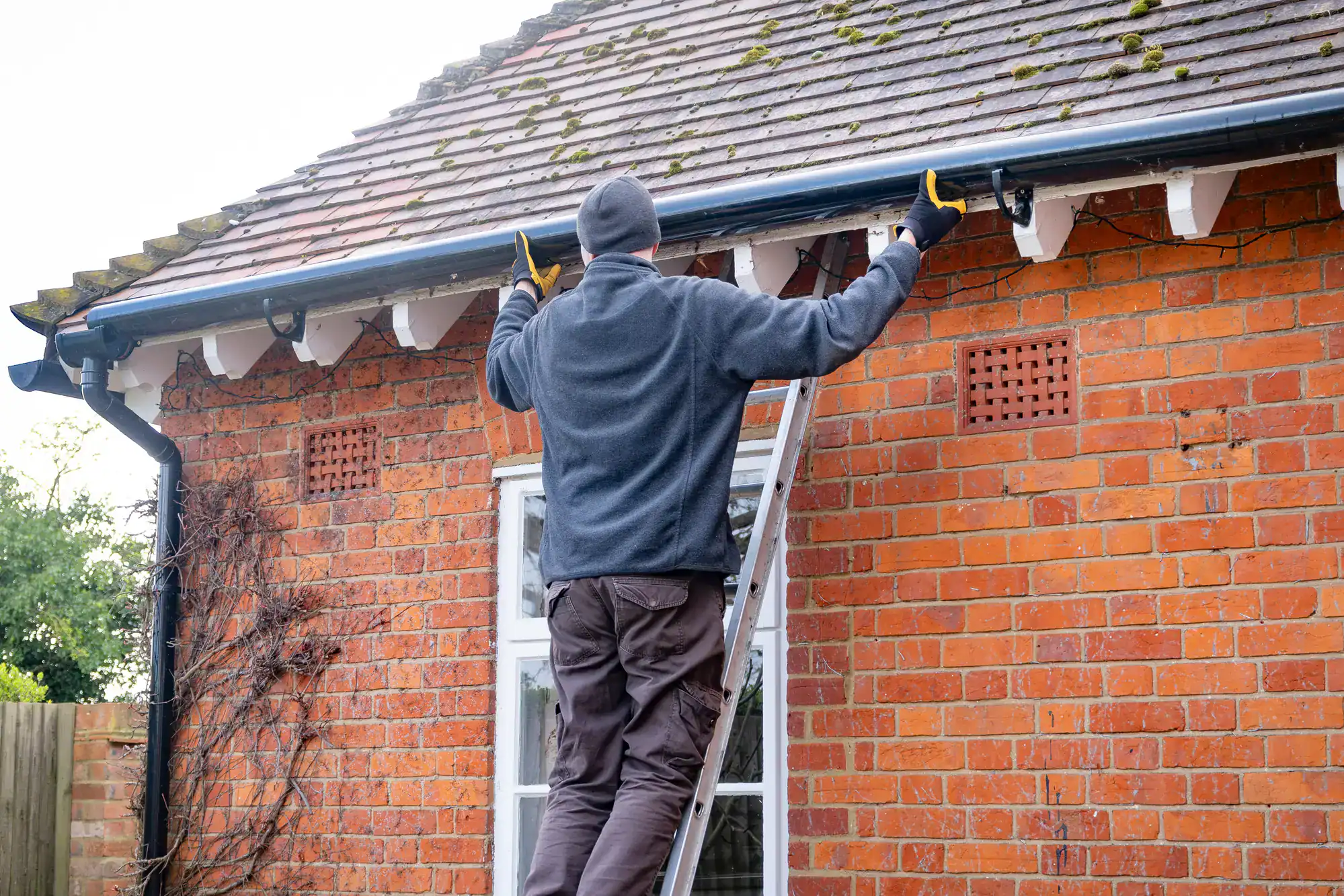
Installation day is straightforward. Our team shows up when we said we would, works efficiently, and cleans up before we leave. If there’s any fascia damage discovered during installation, you’ll know about it before it becomes a surprise on the invoice. For standard gutter replacement in New Jersey, a building permit typically isn’t required under the Uniform Construction Code but if the scope of work extends to structural repairs like fascia replacement, we know what triggers a permit in Morris and handle it accordingly. When the job is done, your downspouts are positioned to move water away from the foundation, your pitch is set correctly, and the system is built to handle what northern New Jersey actually throws at it.
Ready to get started?
Request a callback

We handle the full range of gutter work new seamless gutter installation, gutter repair, full system replacement, downspout work, and fascia assessment. The material of choice for most Morris installs is aluminum: it’s durable, it doesn’t rust, it holds up through freeze-thaw cycles, and it’s available in profile options that suit both modern and historic homes. For properties in the Normandy Park Historic District or other architecturally significant areas of Morris, half-round profiles and period-appropriate color matching are available because the visual character of a home like that is worth protecting.
Sizing is determined by your roof’s actual drainage load, not a default. Most homes in Morris County do fine with 5-inch K-style gutters, but larger rooflines or steep pitches common on the bigger properties here often warrant 6-inch systems to handle heavy rain volume. Downspout placement is planned to move water away from the foundation, which is especially important for homes near lower-lying areas of Morris where groundwater conditions are already elevated.
If you’ve got an older sectional system that’s pulling away from the fascia, leaking at the seams, or sagging after years of debris load and winter stress, we’ll tell you honestly whether repair makes sense or whether replacement is the smarter call. No one’s going to push a full replacement on a system that has years of life left in it. Free estimates, written scope, and a full warranty on labor and materials that’s the standard on every job.
For most standard gutter installations and replacements in Morris, a building permit is not required under New Jersey’s Uniform Construction Code (N.J.A.C. 5:23). Routine gutter work swapping out an old system, installing seamless gutters, replacing downspouts generally falls under ordinary maintenance and doesn’t trigger the permit process.
Where it gets more nuanced is when the scope of work expands. If the fascia boards are rotted and need to be replaced, or if there’s any structural work involved along the roofline, that can cross into permit territory. Morris’s Building Department administers the NJ UCC and does require permits for work that goes beyond maintenance. A qualified contractor who knows the local code and holds an active NJ Home Improvement Contractor license will flag this for you before the job starts, not after. That’s part of what you’re paying for when you hire someone licensed and accountable.
The honest answer is that it depends on what’s actually failing, not just how old the gutters are. Isolated issues a sagging section, a leaking seam, a downspout that’s disconnected are usually repairable without replacing the whole system. If the damage is contained and the rest of the gutters are holding up, repair is often the smarter call financially.
Where replacement makes more sense is when you’re dealing with a sectional system that has multiple failing seams, gutters that are pulling away from the fascia in several spots, or a system that’s been patched repeatedly and is just past its useful life. In Morris, older homes especially those in the Normandy Park area or along the historic streets near Convent Station sometimes have original or significantly aged gutter systems that are well beyond repair. We’ll walk you through both options and give you an honest read on which one actually makes sense for your home, not just the one with the higher ticket price.
For most residential properties in Morris County, seamless aluminum gutters are the practical choice. Aluminum doesn’t rust, handles temperature swings well, and is light enough that it doesn’t put unnecessary stress on the fascia over time. The seamless construction eliminates the joints where sectional gutters almost always start to fail first and in a climate with real winters, that matters.
Profile and size are where it gets more specific to your actual home. K-style gutters are the most common profile and handle high water volume efficiently. Half-round gutters are a better fit for older or historic properties they’re more period-appropriate and are commonly used on homes in the Normandy Park Historic District. For sizing, most standard homes do fine with 5-inch gutters, but larger rooflines or steeper pitches often need 6-inch systems to handle Morris County’s heavier rainfall events without overflowing. The right answer depends on your roof’s square footage, pitch, and how many downspouts are in the plan all of which should be assessed before anything gets installed.
Ice dams form when heat escaping through your roof melts snow near the ridge, and that meltwater runs down to the cold eave where it refreezes. Over time, the ice builds up into a dam that traps water behind it. That trapped water has nowhere to go except backward under your shingles, into the sheathing, and eventually into your ceilings and walls.
Gutters don’t cause ice dams, but clogged gutters make the conditions significantly worse. When gutters are packed with the leaf debris that accumulates every fall in Morris’s heavily wooded neighborhoods, water can’t drain freely. It pools, freezes, and contributes to the ice buildup along the roof edge. Morris’s inland location means colder sustained temperatures than coastal parts of New Jersey which means the freeze-thaw cycle here is more aggressive and the ice dam risk is real. Clean, properly installed gutters with correct pitch and clear downspouts won’t eliminate the risk entirely, but they remove one of the primary contributing factors. If you’re also dealing with inadequate attic insulation or ventilation, that’s a separate conversation worth having.
For aluminum seamless gutters in New Jersey, most homeowners are looking at roughly $5 to $12 per linear foot installed, depending on profile, size, and the complexity of the roofline. For a typical home, that puts a full gutter system replacement somewhere in the $800 to $1,600 range though larger homes with more linear footage, complex rooflines, or multi-story configurations will run higher.
Morris homes tend to be on the larger end of the spectrum, and many of the older properties particularly around Convent Station, Normandy Park, and Washington Valley have more complex rooflines than a standard suburban ranch. That complexity affects the total cost, but it also affects the quality of the installation. A system that’s properly fitted to a multi-gable historic home performs better and lasts longer than one that’s pieced together without attention to the specific geometry. The best way to get an accurate number for your property is a free on-site estimate that’s the only way to account for your actual linear footage, downspout count, and any fascia work that might be needed.
For most homes in Morris, twice a year is the baseline once in late spring after the tree seeds and pollen have cleared, and once in late fall after the leaves have dropped but before the first hard freeze. The fall cleaning is the more critical of the two. Going into winter with clogged gutters in Morris is genuinely risky given the inland temperatures and the volume of deciduous trees throughout neighborhoods like Cromwell Hills, Loantaka Terrace, and along the streets near the Loantaka Brook Reservation.
If your property has heavy tree coverage directly over the roofline which is common in the more wooded parts of Morris you may need a third cleaning in early fall to stay ahead of the debris load before the main drop. Skipping the fall cleaning and heading into a Morris County winter with packed gutters is one of the most direct paths to ice dam damage, fascia rot, and the kind of foundation saturation that turns a $150 cleaning into a multi-thousand-dollar repair.
Other Services we provide in Morris