
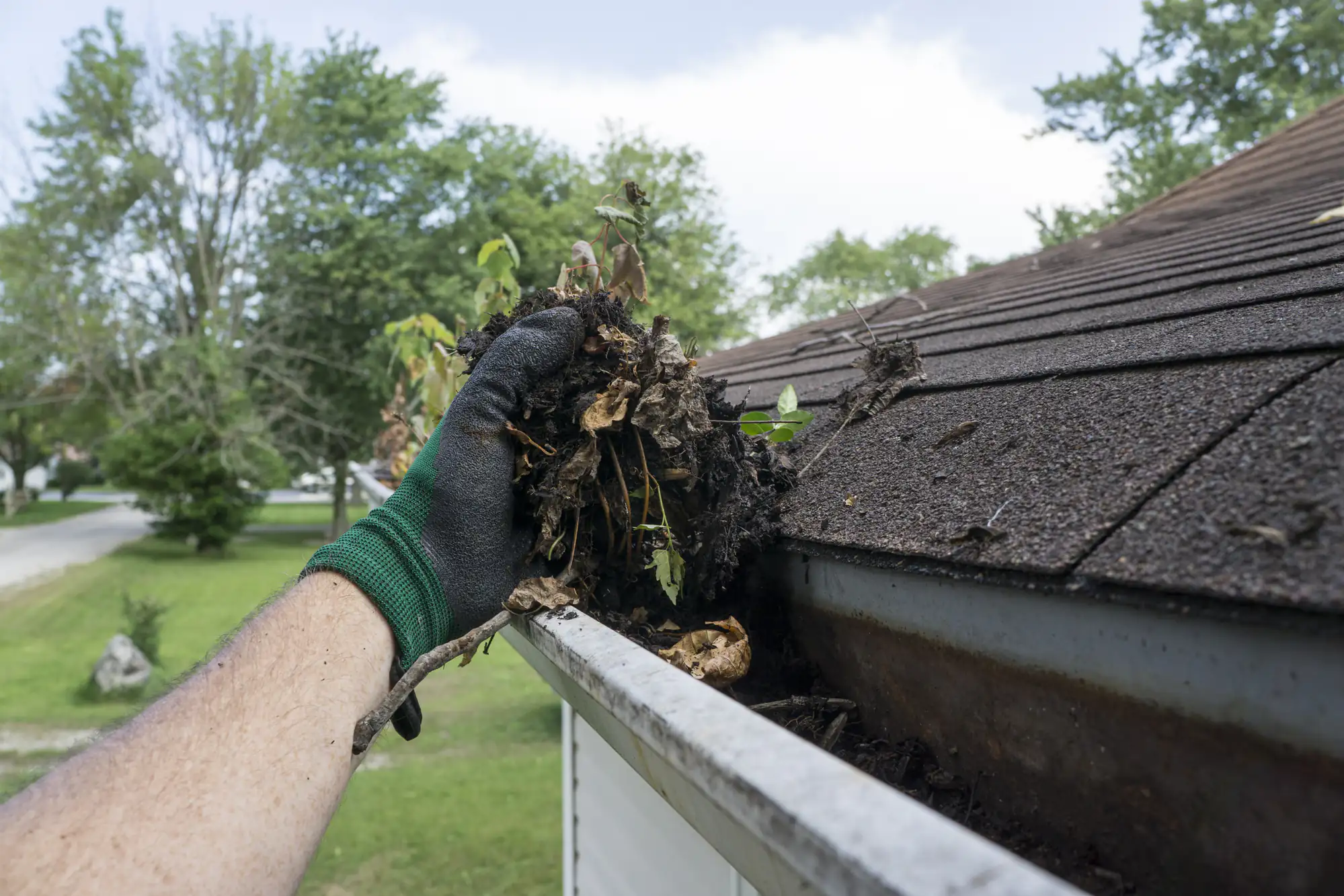
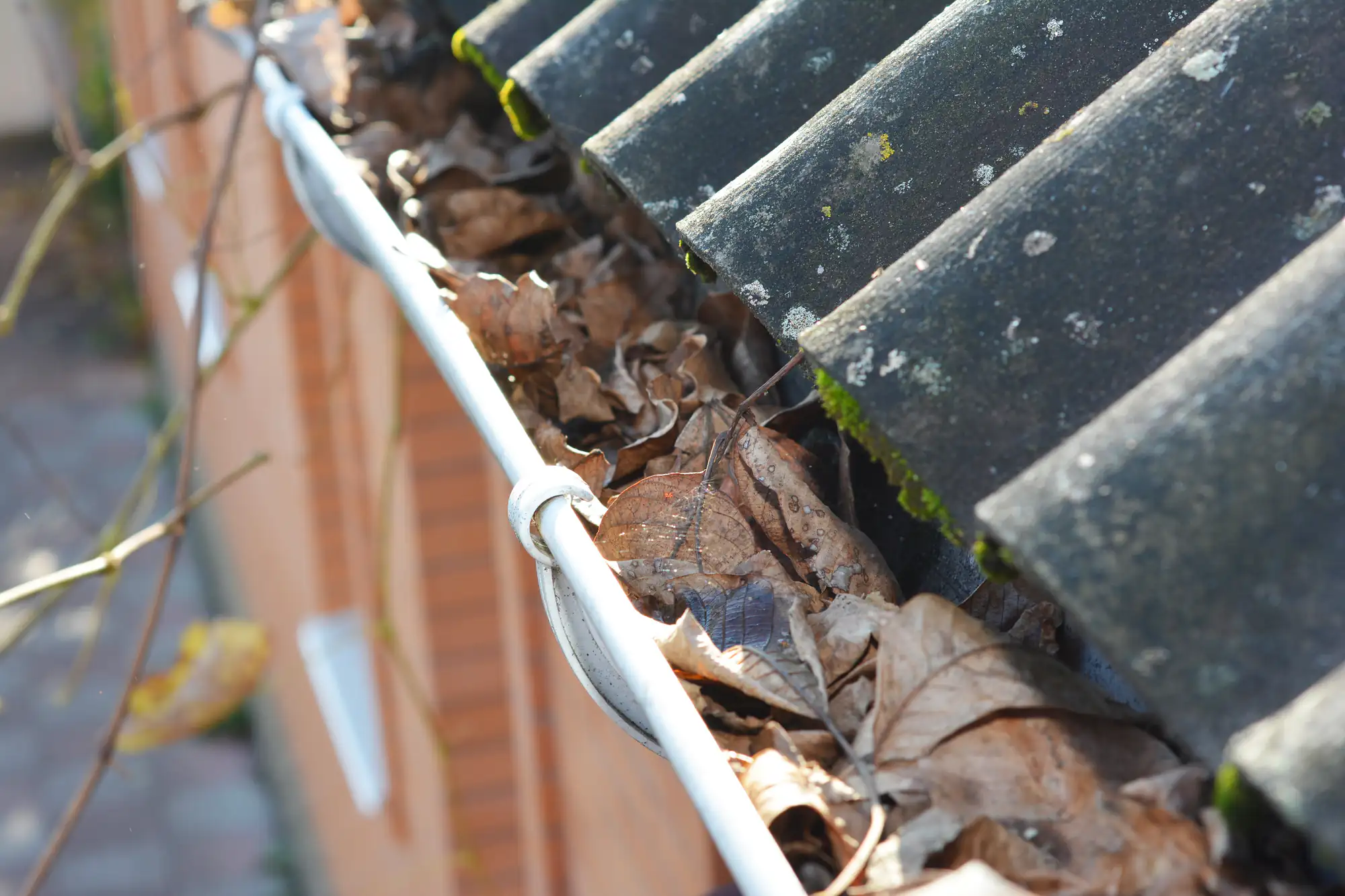
When gutters are doing their job, you don’t think about them. When they’re not, water finds the path of least resistance and that usually means your fascia, your foundation, or your basement. In Madison, where Morris County’s clay-heavy soil saturates fast and doesn’t drain quickly, a clogged gutter isn’t a minor inconvenience. It’s an active problem that gets worse every time it rains.
Madison gets 45 to 51 inches of rainfall a year, and that’s before accounting for the flash flooding events that hit Morris County hard like the July 2025 storm that dropped over two inches on Madison in a single afternoon. If your downspouts aren’t clear and your gutters are packed with debris from Drew University’s wooded campus or the maple trees along Maple Avenue, that water has nowhere to go except against your home.
The older Victorian and colonial homes that define Madison’s neighborhoods are especially vulnerable. Original fascia boards, aging gutter hangers, and multi-plane rooflines mean there’s more that can go wrong and more that a thorough cleaning can catch before it becomes a repair. When your gutters are clean and flowing, your home is protected. That’s what this service is actually about.
We’re a family-owned general contracting company that has been serving Madison and northern New Jersey since 2018. We’re BBB accredited, GAF preferred, fully licensed, and fully insured and we work across Morris County, including Madison and the surrounding Convent Station area.
What sets us apart from a gutter-only company isn’t just that we clean gutters. It’s that when we’re on a ladder on your 1920s colonial and we spot a soft fascia board or a separating seam behind the bracket, we can fix it. You don’t have to call someone else, wait for another estimate, or let the problem sit. We handle it.
We back everything with a full warranty and offer free consultations without pressure. Our reviews consistently mention punctuality, fair pricing, and cleanup that leaves the property exactly as we found it minus the clogged gutters. For Madison homeowners who’ve invested significantly in their homes and expect a contractor who actually shows up and communicates, that track record matters.
It starts with a free consultation no pressure, no obligation. We talk through what you’re dealing with, take a look at the property if needed, and give you a clear, flat-rate price upfront. No vague estimates that balloon after the job starts.
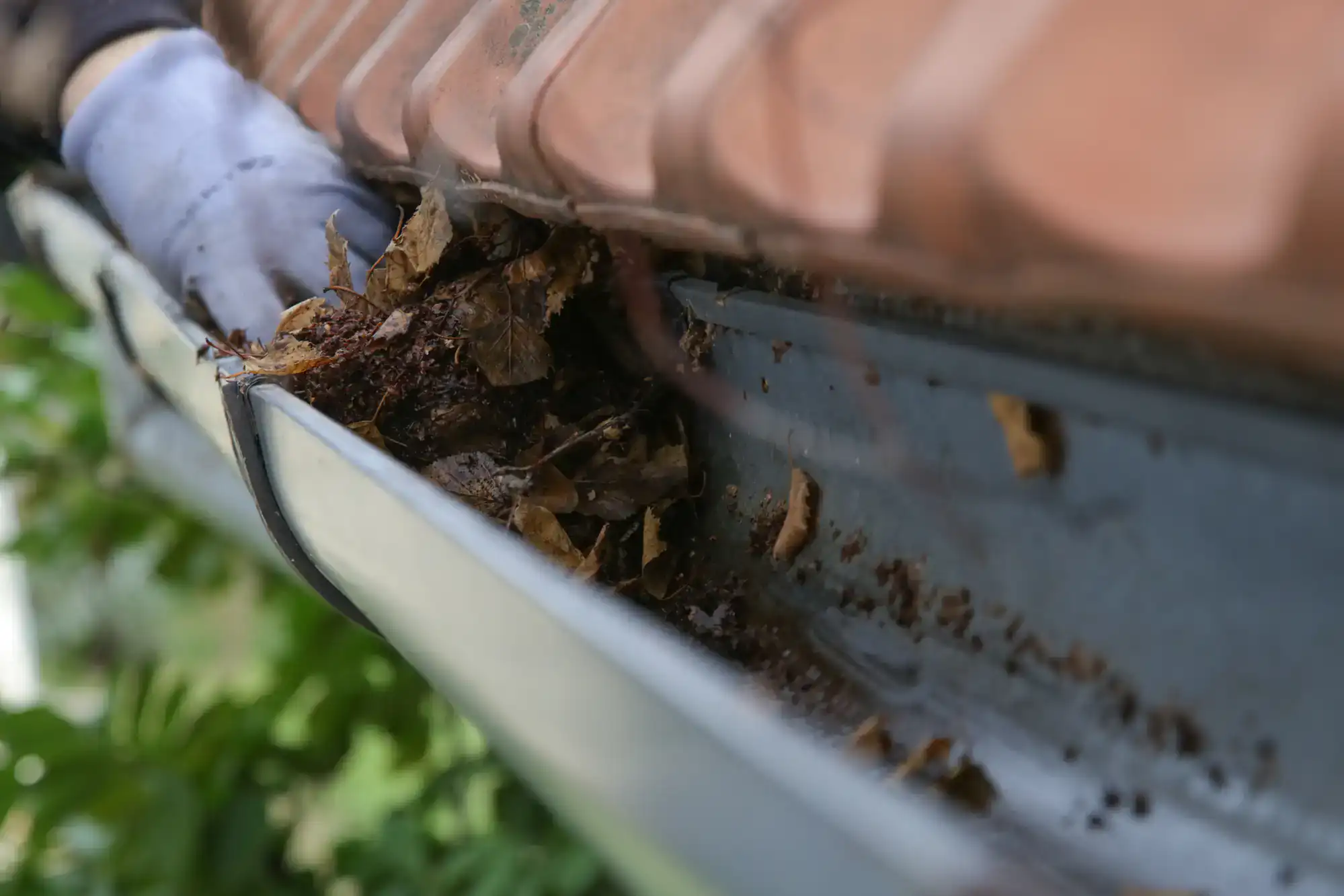
On the day of service, we start by clearing all debris from the gutter troughs leaves, seed pods, shingle granules, whatever’s accumulated. In Madison, that load is often heavier than homeowners expect, especially on properties near Drew University’s wooded campus or on streets with significant canopy coverage. After the troughs are cleared, we flush every downspout. Not just the ones that look blocked every single one. That step is what separates a real cleaning from a surface-level job. A downspout that looks fine from the outside can still be packed tight a few feet down, and that’s exactly where overflow problems start.
Once the cleaning is done, we do a full inspection of the gutter system hangers, seams, pitch, fascia condition, and how the system connects at the roofline. If we find something that needs attention, we tell you clearly and can handle most repairs on the same visit. When we leave, the gutters are clear, the downspouts are flowing, and you know exactly what condition your system is in. For older homes in Madison and most of them are older that inspection piece is not optional. It’s where real problems get caught before they become expensive ones.
Ready to get started?
Request a callback

Gutter cleaning in Madison isn’t a one-size-fits-all job. The borough’s housing stock mostly pre-1960 Victorians, Edwardian colonials, and 1920s center-hall colonials has more linear footage of guttering per home, more roof planes, and more potential failure points than a standard suburban ranch. Add in the density of the tree canopy maintained by Madison’s Shade Tree Management Board and the Friends of Madison Shade Trees, and you’ve got a property that needs real attention twice a year at minimum.
Every cleaning we do includes full trough clearing, downspout flushing from top to bottom, and a system inspection that covers hangers, seams, pitch alignment, and fascia condition. We also look at the roofline while we’re up there because shingle granule buildup in the gutter trough is one of the early signs that a roof is approaching the end of its service life, and catching that early saves money. For properties near Green Village Road, along Kings Road, or adjacent to Drew’s campus where canopy overhang is heaviest, we pay extra attention to the corners and valleys where debris packs in and stays.
Because we’re a full-service exterior contractor not a gutter-only company any repair work we identify is something we can actually do. Fascia replacement, hanger re-securing, downspout realignment, minor flashing repairs: all of it is within scope. New Jersey’s Home Improvement Contractor licensing requirements apply to that repair work, and we carry everything required. You’re protected, and the job gets finished.
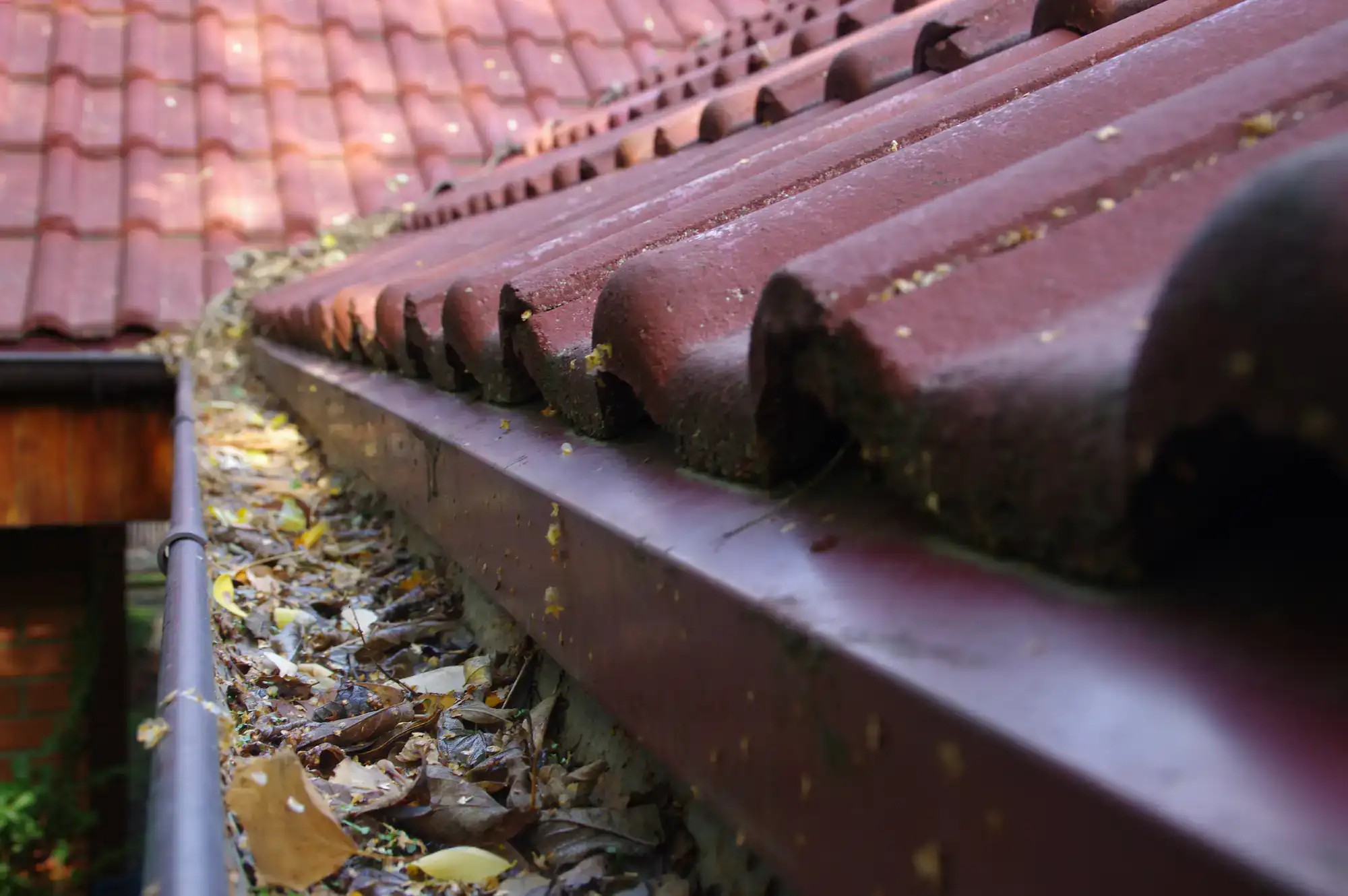
For most Madison homes, twice a year is the baseline once in late fall after peak leaf drop, and once in early spring before the heavy rain season starts. But if your property sits near Drew University’s wooded campus, backs up to a tree line, or is on a street like Maple Avenue where the borough recently added 20 new maple trees, you may need a third cleaning. The Sugar Maple and Eastern Hemlock trees that dominate Morris County’s canopy drop dense, wet debris that packs into gutter troughs quickly and can penetrate standard mesh guards.
Victorian and Edwardian homes which make up a significant portion of Madison’s housing stock have more complex rooflines and more gutter footage than a standard house. That means more places for debris to accumulate and more potential points of failure. If you’re not sure how often your specific property needs service, a free consultation with us will give you a clear answer based on your actual tree coverage and gutter configuration, not a generic schedule.
In Morris County, the underlying soil is largely Brunswick Formation clay a dense, low-permeability material that doesn’t drain quickly. When gutters overflow and dump water at the base of your home, that water doesn’t disperse. It pools against the foundation, saturates the soil, and generates hydrostatic pressure against basement walls. Over time, that pressure causes cracks, water infiltration, and in serious cases, structural movement.
The average water damage insurance claim resulting from gutter neglect runs between $11,600 and $14,000. Professional gutter cleaning typically costs $150 to $250 per visit. The math is straightforward two cleanings a year for a decade costs a fraction of a single foundation repair or basement remediation. For Madison homeowners who’ve invested $600,000 or more in their properties, keeping gutters clear isn’t an optional maintenance item. It’s one of the simplest things you can do to protect the investment you’ve already made.
Yes and it’s one of the more expensive outcomes of deferred gutter maintenance, especially on Madison’s older homes. Ice dams form when standing water in a clogged gutter freezes, expands, and forces ice up under the shingles. Once ice gets under the shingles, it melts and refreezes with temperature swings, and that water works its way into the roof deck and eventually into the interior of the home.
Madison experiences regular freeze-thaw cycling through December, January, and February. The Sugar Maple and Eastern Hemlock debris that fills gutters in the fall is specifically documented as penetrating standard mesh guards and contributing to ice dam formation in Morris County’s climate zone. For homes with original or aging shingle systems which describes a lot of Madison’s Victorian and Edwardian housing stock the risk is elevated. A thorough fall cleaning before temperatures drop is the most effective way to prevent ice dam formation, and it’s significantly cheaper than the interior water damage that follows when they’re not addressed.
Not in Madison and not with the tree coverage this borough has. Gutter guards reduce how often you need to clean, but they don’t eliminate the need entirely. The Sugar Maple and Eastern Hemlock debris common throughout Morris County is fine enough and dense enough to penetrate most standard mesh and micro-mesh guard systems. Seed pods, shingle granules, and decomposed organic matter also work their way through or accumulate on top of guards in ways that eventually restrict water flow.
Beyond the debris issue, guards can actually create a false sense of security. Homeowners assume the gutters are fine because they can’t see debris from the ground, but a blocked downspout or a guard that’s shifted out of alignment can cause the same overflow problems as an unguarded gutter. If you have guards installed, we can still inspect and clean the system we’ll check that the guards are seated correctly, clear anything that’s accumulated underneath or on top, and flush every downspout to confirm the full drainage path is open.
The most obvious sign is water spilling over the sides of the gutter during rain instead of flowing through the downspout. But there are quieter signals that show up before it gets that obvious. If you see water staining on your siding below the gutter line, soil erosion directly under the gutters, or paint peeling on your fascia boards, those are signs that water has been overflowing for a while. Sagging gutters where the trough has pulled away from the fascia slightly often indicate the weight of debris and standing water has been stressing the hangers.
Inside the home, musty smells in the basement or visible moisture along the foundation wall can also trace back to overflowing gutters, especially in Madison where the clay soil holds water against the foundation rather than letting it drain away. If you’re seeing any of these signs, it’s worth a cleaning and inspection sooner rather than later. Catching it early is almost always less expensive than dealing with the downstream damage.
Yes. New Jersey requires that any contractor performing repair work associated with gutter cleaning fascia replacement, downspout installation, bracket repair, soffit work hold a valid Home Improvement Contractor license. We carry that licensing along with full general liability and workers’ compensation insurance on every job.
This matters more than it might seem. If an uninsured worker is injured on your Madison property, you can be personally liable for their medical costs and any resulting legal claim. That’s a real exposure, and it’s one that homeowners in New Jersey often don’t think about until something goes wrong. Before any work begins, we can provide a Certificate of Insurance and we’d encourage you to ask any contractor you hire for the same. For a borough like Madison, where homes are high-value and homeowners are thorough about who they let onto their property, verifying insurance isn’t being difficult. It’s being smart.
Other Services we provide in Madison