
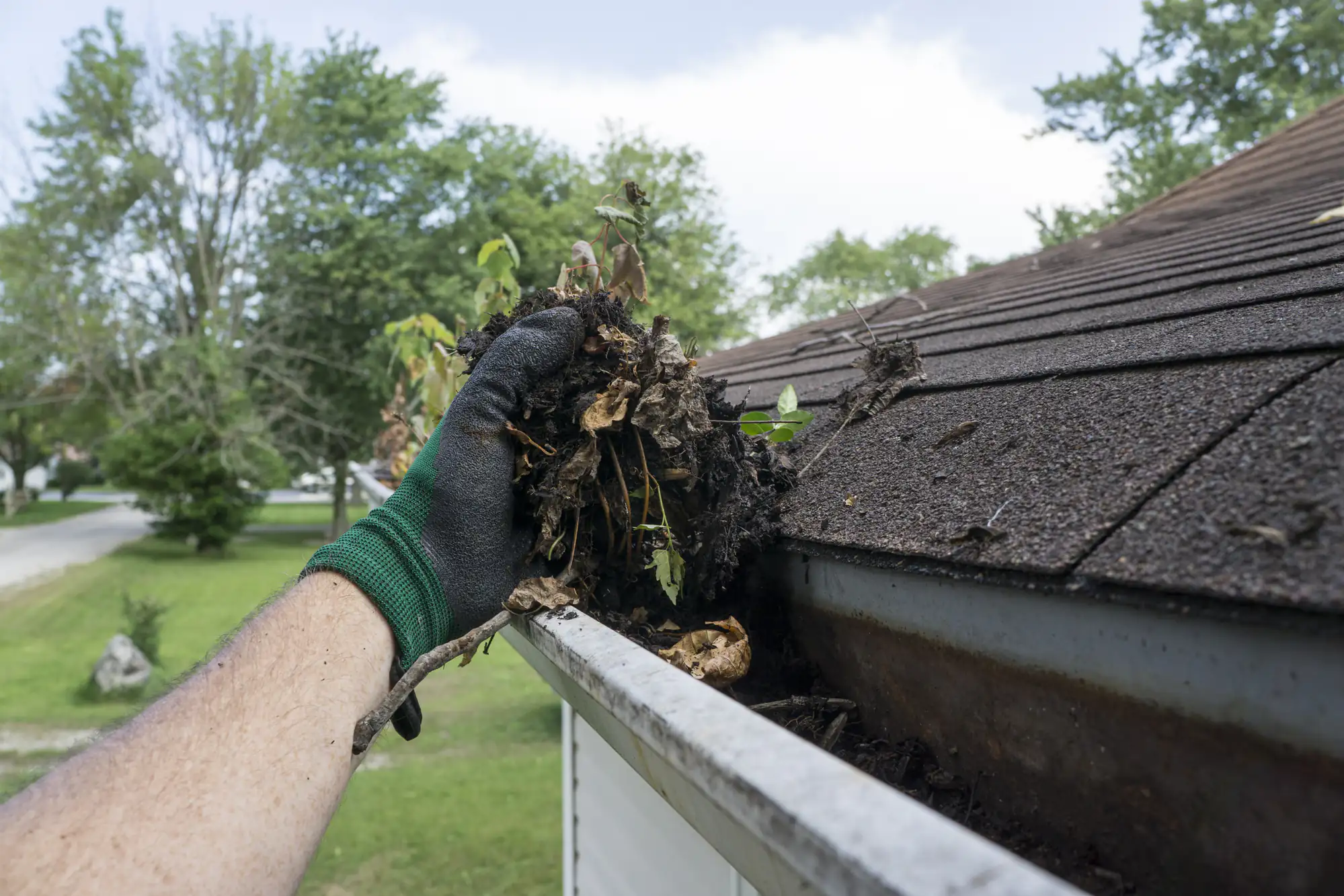
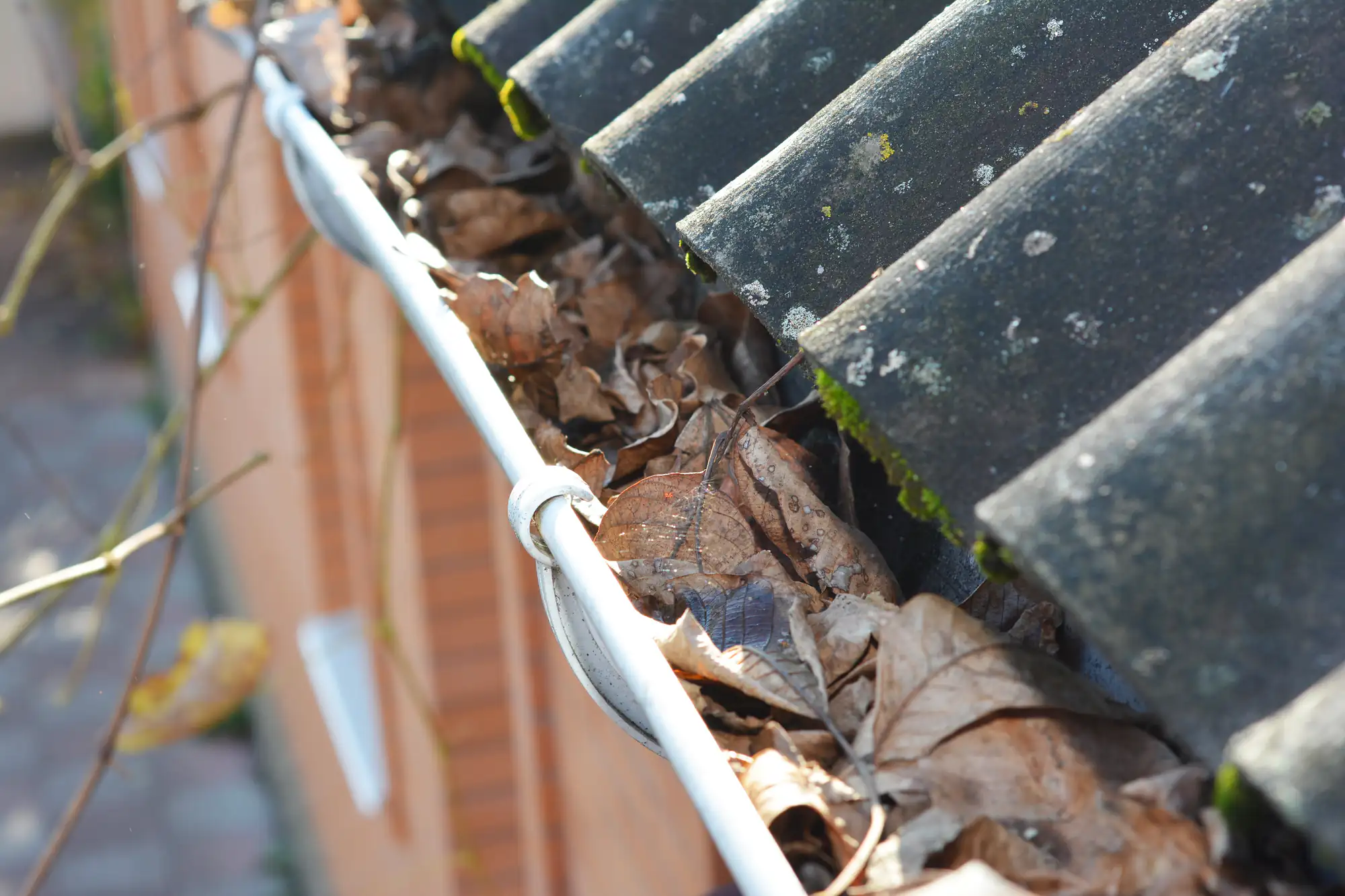
Millburn’s tree canopy is dense and it’s not just any trees. The red oaks, maples, and beeches that line the streets bordering South Mountain Reservation drop heavy, mat-forming leaves that pack into gutters and seal off downspouts completely. When that happens, water has nowhere to go except over the edge and straight down toward your foundation.
For homes near the Rahway River corridor or in lower-lying parts of Millburn, that’s not a minor inconvenience. The township has a documented flooding history Tropical Storm Ida put water into homes and businesses along Millburn Avenue, and the township still runs an active Flood Mitigation Advisory Committee because of it. Clogged gutters don’t cause river flooding, but they absolutely add to the water load around your home when the ground is already saturated and drainage systems are already stressed.
Then there’s winter. Northern New Jersey’s freeze-thaw cycle means blocked gutters turn into ice dams water that has nowhere to drain refreezes under your shingles and forces its way into walls and ceilings. For the older Colonials and Tudors that make up most of Millburn and Short Hills, where rooflines are complex and some homes still have original sectional gutters, that kind of damage is expensive. A thorough cleaning before the first hard freeze is the most cost-effective thing you can do for your home heading into December.
We’re a family-owned general contracting company serving Millburn, Essex County, and the surrounding region since 2018. We’re BBB accredited and a GAF Preferred Contractor not because those credentials look good on a website, but because they reflect the standard we hold ourselves to on every job. Every estimate is written before work begins, and the final bill matches it. No surprises.
What sets us apart in a town like Millburn isn’t a sales pitch it’s a track record. Millburn’s own community forums are full of residents warning each other about contractors who charged for work they never did. That’s not how we operate. We show up when we say we will, we do what we said we’d do, and we clean up after ourselves. One of our customers once flagged that we’d returned an overpayment without being asked. That’s just how we work.
We serve homeowners throughout Millburn, Short Hills, and the broader Essex County area, and we’re familiar with the housing stock here the Tudors, the Colonials, the older homes near the Short Hills Park Historic District that need a careful eye, not just a quick scoop.
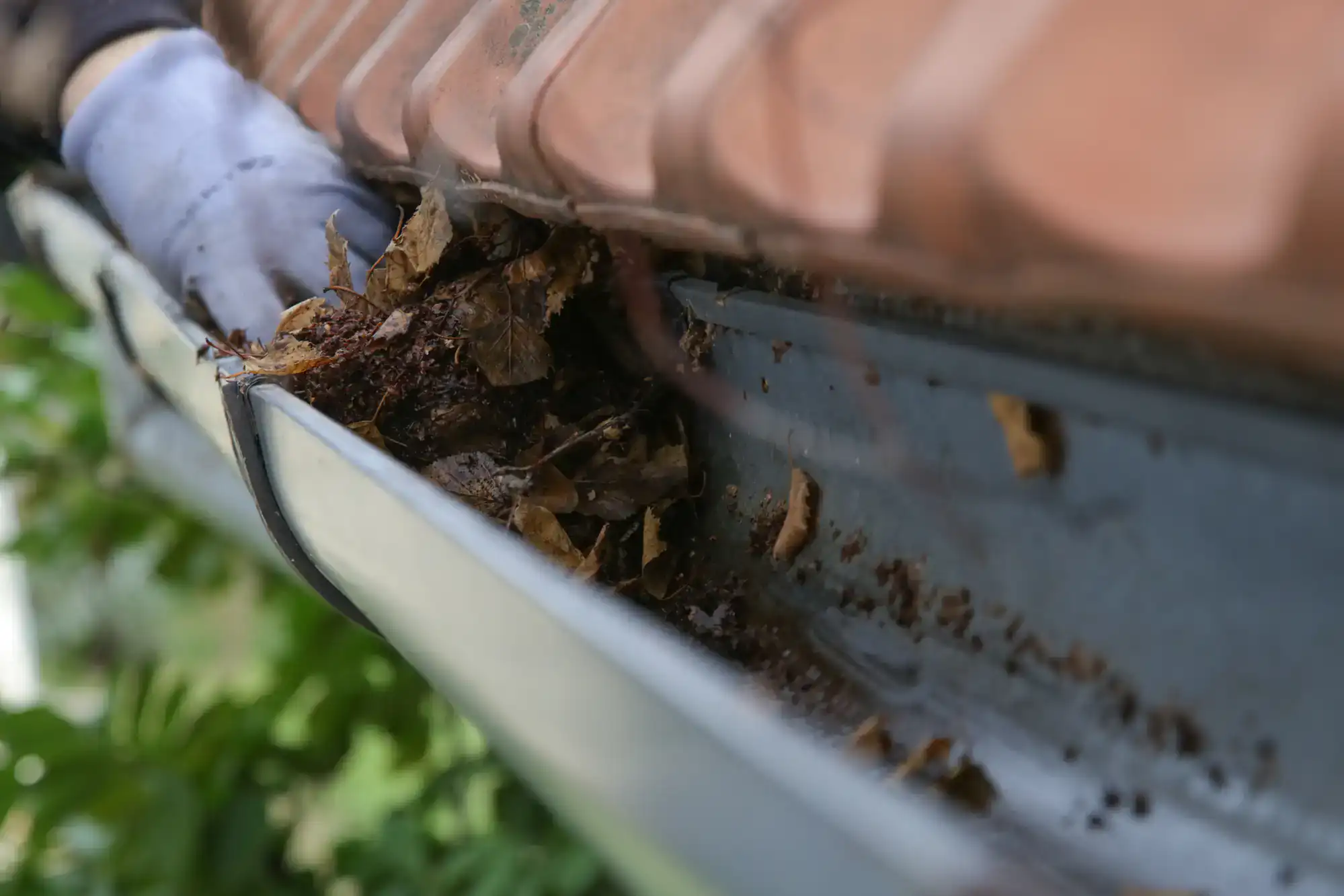
It starts with a full assessment of your gutter system before anything is touched. For Millburn homes especially those with multi-story Colonials, steep-pitched Tudors, or complex rooflines with multiple valleys that walkthrough matters. We’re looking at the condition of the gutters themselves, the hangers, the fascia behind them, and where debris has accumulated most heavily. Homes near the South Mountain Reservation boundary on streets like White Oak Ridge Road tend to see the worst of it in October and November, and we factor that in.
Then comes the actual cleaning. Debris is removed from every gutter run not blown off the roof onto your lawn or into your landscaping, but collected and cleared. After that, every downspout is flushed individually with water. This is the step that separates a real cleaning from a surface job. A downspout can look fine from the outside and still be completely blocked two feet down. We confirm water is actually moving from roof to ground before we leave.
Once the cleaning is done, we walk the job and let you know what we found. If there’s a loose hanger, a separating seam, or a section of fascia that’s starting to soften, you’ll hear about it with a straight assessment, not a manufactured upsell. Because we’re a full-service exterior contractor, we can address those repairs on the same visit if you want. No second contractor call, no scheduling gap while a problem gets worse.
Ready to get started?
Request a callback

Every gutter cleaning in Millburn includes a full debris removal from all gutter runs, individual downspout flushing to confirm clear drainage, and a post-cleaning inspection of the gutter system and surrounding components. We check hangers, seams, end caps, and downspout connections the areas where older sectional gutters, common throughout Millburn and Short Hills, tend to fail first.
For most Millburn homes, we recommend two cleanings per year. The fall cleaning ideally after peak leaf drop in late November is the most critical one. It clears the heavy oak and maple load from the South Mountain tree line and ensures your gutters are open heading into the freeze-thaw months. The spring cleaning addresses the winter debris, maple seed pods, pollen, and shingle grit that accumulate over winter and need to be cleared before New Jersey’s heavy spring storm season begins.
If we find something during the cleaning that needs attention a damaged section, a pulling bracket, a downspout that’s separating from the foundation block we’ll tell you what it is and what it would take to fix it. We carry full general liability and workers’ compensation insurance on every job, and all work comes with a full warranty. Free consultations are available, and emergency services are offered for situations that can’t wait for a scheduled appointment.
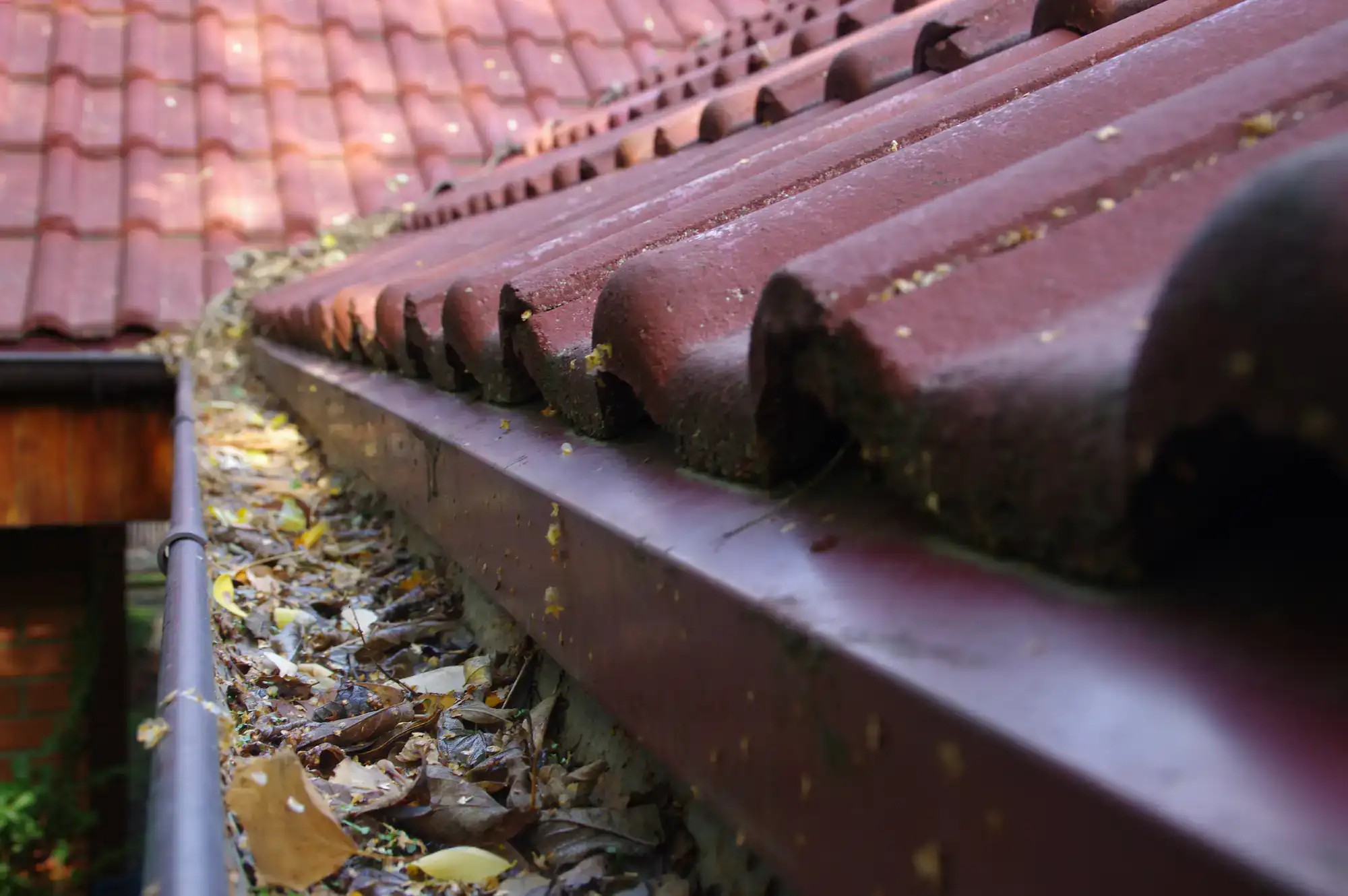
For most Millburn homeowners, twice a year is the right answer and the reasoning is specific to this area. The western and southern edges of Millburn border the South Mountain Reservation, 2,110 acres of mature hardwood forest. The red oaks, maples, and beeches in that canopy generate one of the heaviest leaf loads in Essex County, and they don’t drop all at once. Leaves accumulate through October and into November, which means a single early-fall cleaning often isn’t enough.
The fall cleaning should happen after peak leaf drop typically late November in Millburn so you’re clearing the full season’s load before the first hard freeze. The spring cleaning handles what winter leaves behind: seed pods, pollen, shingle grit, and any debris that settled during freeze-thaw cycles. With Millburn’s documented sensitivity to stormwater runoff and flooding near the Rahway River corridor, having clean, fully functional gutters heading into the spring storm season isn’t optional. It’s basic water management for your home.
The damage compounds in stages, and it moves faster than most people expect. When gutters are blocked and water overflows consistently, the first thing that goes is the fascia the wood board the gutter is mounted to. Once that softens, the gutter starts pulling away from the roofline, and now you have a structural repair on top of a cleaning. Behind the fascia, water works its way into the soffit and eventually into the wall cavity.
In Millburn, there’s an added layer of concern for homes near lower-lying areas or the Rahway River corridor. When the ground is already saturated from heavy rain the kind of rain that put water into homes along Millburn Avenue during Tropical Storm Ida overflowing gutters add to the water load around your foundation at exactly the wrong time. The average water damage insurance claim tied to gutter neglect runs between $11,000 and $14,000. A professional cleaning costs a fraction of that. The math isn’t complicated.
Yes and it’s one of the most common and preventable sources of winter roof damage in northern New Jersey. Here’s what happens: snow melts on the upper part of your roof, the meltwater runs down toward the eaves, and if the gutters are blocked, it has nowhere to go. It pools, refreezes, and forms a ridge of ice that backs up under your shingles. From there, water forces its way into the roof deck, insulation, and interior walls.
For Millburn’s older housing stock the Tudors and Colonials throughout Short Hills and the Wyoming neighborhood, many built between 1900 and 1960 this is a real vulnerability. Steep-pitched rooflines and older roofing systems are particularly susceptible to ice dam damage, and repairs to interior walls and ceilings caused by water infiltration are not cheap. A thorough fall gutter cleaning, done after the leaves are fully down in late November, is the single most effective thing you can do to reduce ice dam risk before winter sets in.
We flush every downspout individually it’s a standard part of every cleaning, not an add-on. This matters more than most people realize. The most common cause of overflowing gutters isn’t actually the debris sitting in the trough it’s a blockage in the downspout that stops water from draining at all. A downspout can look completely clear from the outside and still be packed solid two feet down with compacted leaves, seed pods, or sediment.
Millburn residents who’ve used other services before often mention this specifically they had their gutters “cleaned” and still had overflow the first time it rained hard. That’s a downspout problem that a surface cleaning doesn’t catch. We run water through every downspout and confirm it’s flowing freely from the gutter outlet all the way to the ground-level discharge point before we consider the job done. If there’s a blockage, we clear it. If there’s a structural issue with the downspout connection, we’ll tell you what it is.
A few things to look for: gutters that are visibly pulling away from the fascia, sections that sag or hold standing water after rain, seams that are separating or showing rust staining on the exterior wall, and downspouts that are disconnected or draining too close to the foundation. Any of these indicate that cleaning alone won’t solve the problem.
This is especially relevant in Millburn and Short Hills, where a significant portion of the housing stock features older sectional gutters the kind with multiple seam points that tend to fail at the joints over time. Local contractors who work in this area regularly note that Tudor and Colonial homes here often have original or aging gutter systems that need more than a seasonal cleaning. When we clean your gutters, we inspect the full system hangers, seams, end caps, fascia condition, and downspout connections and give you a straight assessment of what we found. If something needs attention, you’ll know about it before it becomes a bigger problem.
For a single-story ranch with simple rooflines, a DIY cleaning is manageable if you’re comfortable on a ladder. But most homes in Millburn and Short Hills aren’t that. They’re two- and three-story Colonials and Tudors with steep pitches, multiple valleys, and complex rooflines that require repositioning a ladder repeatedly at significant heights. The Consumer Product Safety Commission tracks roughly 500,000 ladder-related emergency room visits in the U.S. every year and a large portion of those happen during exactly this kind of routine home maintenance task.
Beyond the safety question, there’s the thoroughness question. Scooping visible debris out of the trough is the easy part. Flushing downspouts, checking seam integrity on older sectional gutters, identifying early fascia damage, and spotting a downspout that’s pulling away from the foundation block that’s what a professional brings to the job. For Millburn homeowners managing demanding schedules and high-value properties, the cost of professional gutter cleaning is a straightforward trade: a few hundred dollars twice a year versus the time, risk, and likelihood of missing something that a trained eye would catch.
Other Services we provide in Millburn