
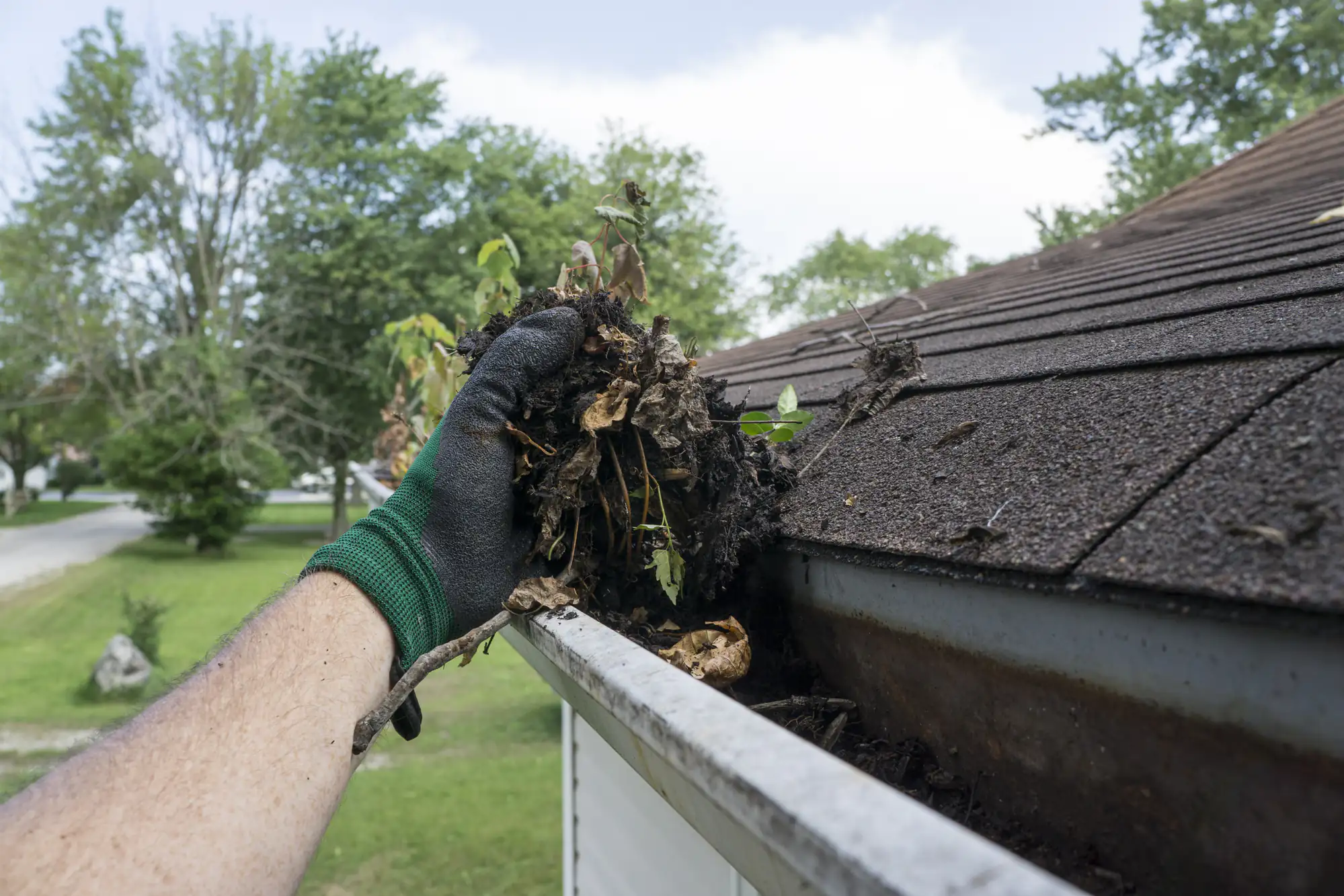
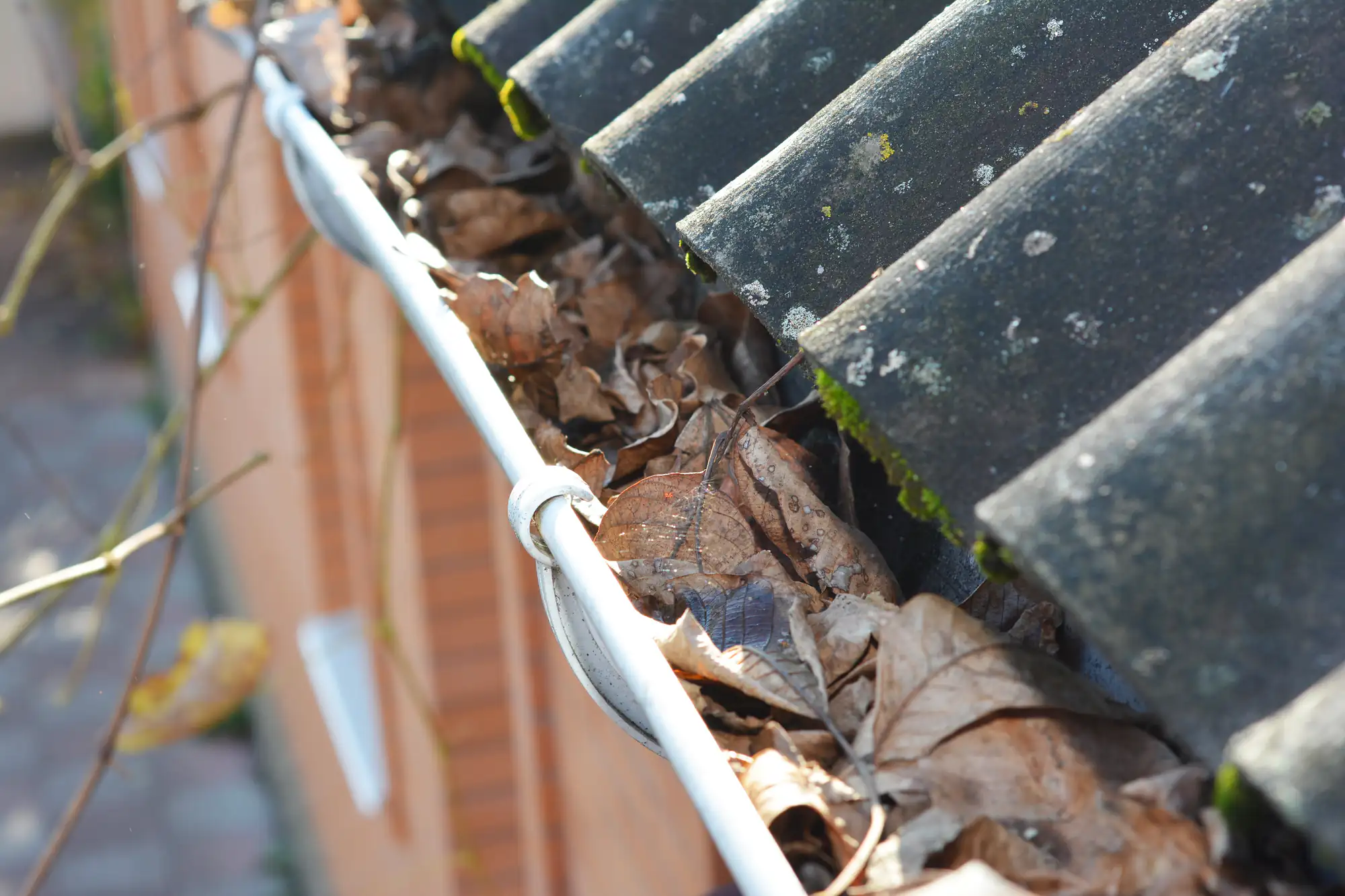
Mount Olive gets roughly 49 inches of rain per year. That’s well above the national average, and it means your gutters are working every single season not just in fall. When they’re clogged, that water doesn’t disappear. It runs down your fascia, pools against your foundation, and eventually finds its way into your basement. The water damage restoration companies actively working in Mount Olive aren’t busy by accident.
The red oaks and sugar maples throughout Flanders and the Budd Lake neighborhoods drop dense, heavy loads every November. Add in the white pine and eastern hemlock needles that shed year-round, and you’re looking at a gutter system that can go from clear to completely blocked in a matter of weeks. Homes in the Budd Lake section face an extra layer lakeside humidity accelerates fascia rot behind the brackets, and wind off the water pushes debris into gutters that inland homes never see.
After a proper cleaning, water moves the way it’s supposed to. Your foundation stays dry. Your fascia stays intact. And when the next nor’easter rolls through western Morris County, you’re not watching water back up over the edge and pour down your siding.
We’re a family-owned general contracting company that has been serving northern New Jersey since 2018. We’re BBB accredited and a GAF Preferred Contractor credentials that are independently verified, not just something we say about ourselves. Every job comes with a full warranty and a free consultation, no pressure attached.
We work throughout Morris County regularly, which means we know the housing stock in Mount Olive intimately the older cottage-style homes near Budd Lake, the Toll Brothers colonials in communities like Wyndham Pointe, and everything in between. We’re not guessing at what your gutters are dealing with. We’ve seen it firsthand across dozens of homes in this township.
What separates us from a gutter-only company is simple: when we find a rotted fascia board, a loose hanger, or a downspout that’s been quietly failing for a season, we can fix it. You don’t need to schedule a second contractor. One call, one crew, one visit that actually solves the problem.
It starts with a free consultation. You tell us what you’re seeing overflow during rainstorms, gutters pulling away from the roofline, water staining on your siding and we’ll give you a straight answer about what needs to be done and what it’ll cost. No vague estimates, no surprise charges when the crew shows up.
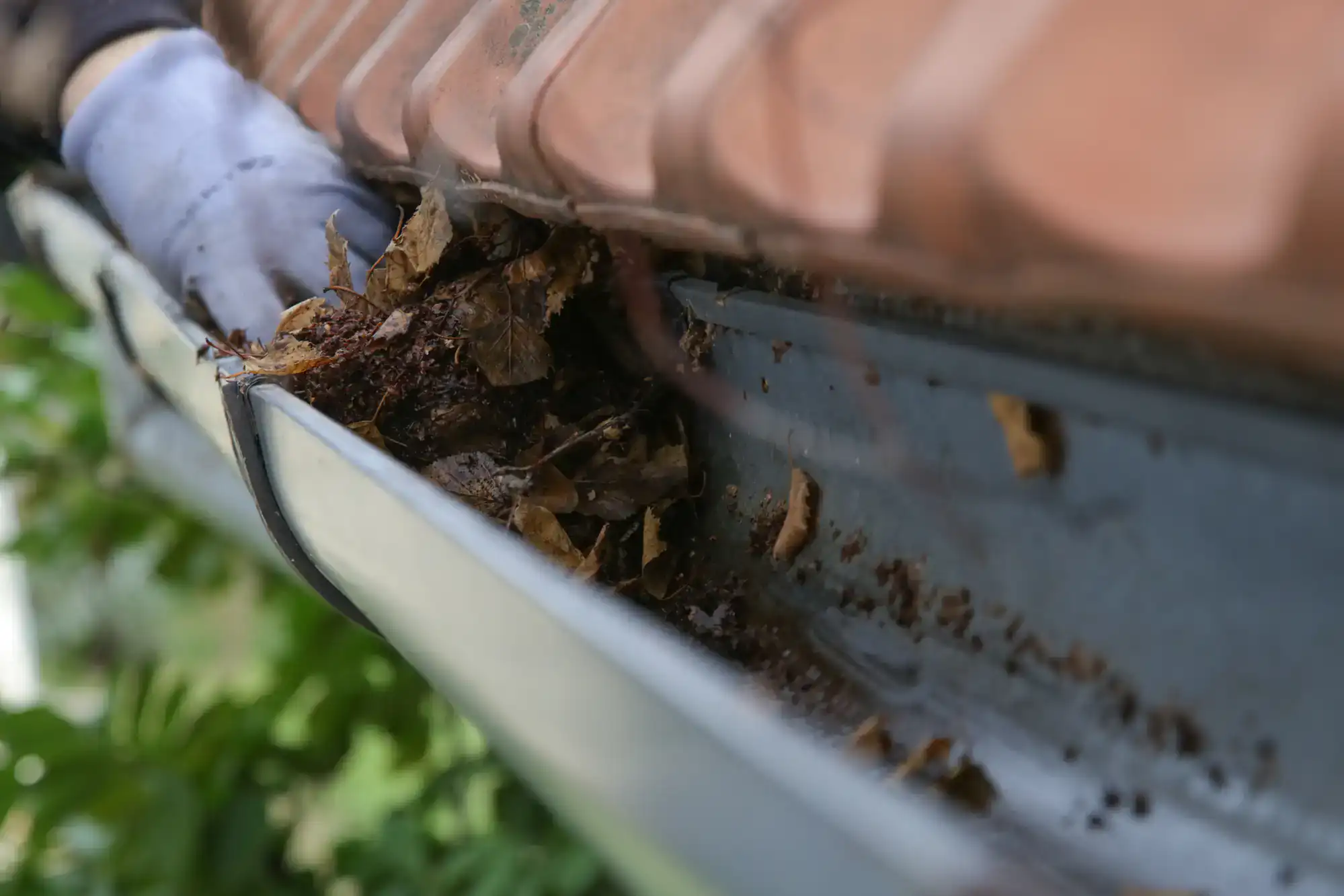
On the day of service, we clear every gutter run of leaves, debris, and compacted buildup. In Mount Olive, that usually means dealing with dense oak and maple leaf loads in the fall, or a mix of pine needles and seed pods in the spring. We don’t just scoop the visible debris and call it done. Every downspout gets flushed from top to discharge point. If there’s a blockage, we clear it. If the downspout is damaged, we tell you and we can handle the repair on the same visit.
Before we leave, we do a full visual inspection of the gutter system: hangers, seams, pitch, and the fascia behind the brackets. Homes in the 40-to-70-year age range which covers a large portion of Mount Olive’s housing stock often have issues that a cleaning alone won’t solve. We flag anything we find, give you an honest assessment, and let you decide how to move forward. Then we clean up and get out of your way.
Ready to get started?
Request a callback

A gutter cleaning from us isn’t a surface-level pass. We clear the full gutter run, flush every downspout, and inspect the system for anything that could cause problems before the next rain hits. In Mount Olive, that inspection matters more than in most places. With 49 inches of annual rainfall, freeze-thaw cycles through the winter months, and a tree canopy that ranks in the top 10% nationally, there’s no such thing as a gutter system that can afford to be partially maintained.
For homes near Budd Lake, we pay close attention to the fascia boards behind the gutter brackets. Constant lakeside humidity and wind-driven moisture accelerate wood deterioration in ways that aren’t always visible from the ground. Catching that early before a bracket pulls away from a soft fascia board saves you from a much more expensive repair down the road. If we find it, we’ll tell you exactly what’s there and what it’ll take to fix it.
Timing matters too. The optimal window for fall gutter cleaning in Mount Olive is late November after the red oaks and sugar maples have finished dropping but before hard freezes lock debris in place. Spring cleaning is best done in March or April, ahead of the heavy thunderstorm season. Homes with significant evergreen coverage near white pine or hemlock trees often benefit from a third visit mid-summer. We’ll tell you what makes sense for your specific property, not just sell you a package that doesn’t fit.
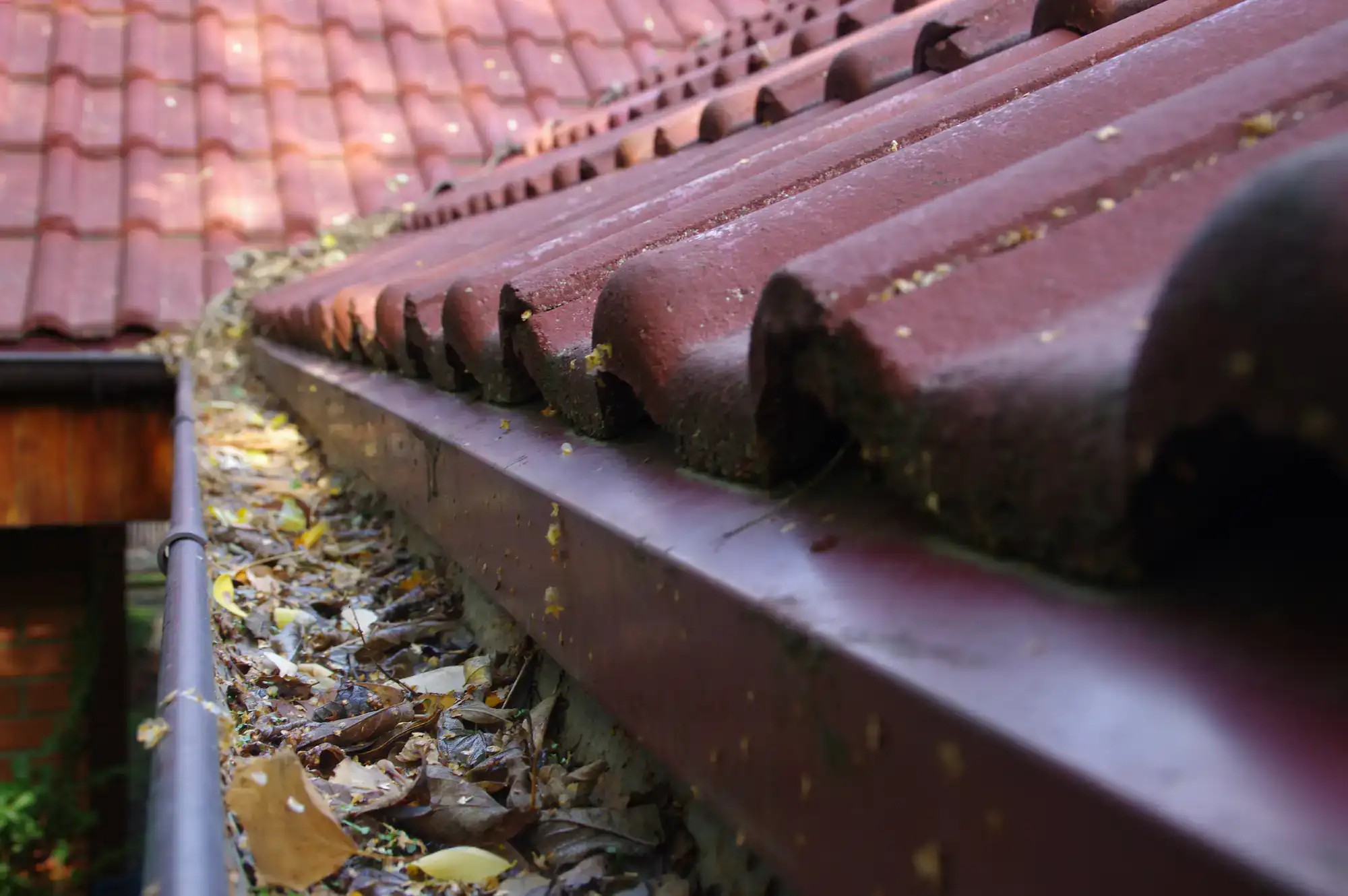
For most homes in Mount Olive, twice a year is the baseline once in late fall after the red oaks and sugar maples have finished dropping, and once in early spring before the heavy rain season kicks in. That schedule works well for a typical colonial or bi-level with standard tree coverage nearby.
If your property is in the Budd Lake section or backs up to wooded acreage in Flanders, you may need a third cleaning mid-summer. White pine and eastern hemlock trees shed needles year-round, not just in fall, which means debris accumulates even when most people aren’t thinking about their gutters. Homes with heavy evergreen canopy can see meaningful buildup between the standard spring and fall visits. A quick mid-year check can prevent a slow, invisible clog from turning into an overflow problem during a summer thunderstorm.
The short answer: water finds another way out, and it’s never a good one. When gutters are clogged, overflow runs down the side of the house instead of through the downspout. That means water against your siding, water saturating the soil around your foundation, and eventually water in your basement. Mount Olive gets close to 49 inches of rainfall annually there’s no dry season where a clogged gutter gets a pass.
The longer-term damage is often structural. Water sitting in debris-filled gutters adds significant weight, which pulls hangers away from the fascia over time. In winter, that same trapped water freezes, expands, and can force ice up under your shingles damage that doesn’t show up as a ceiling stain until weeks after the fact. The average water damage insurance claim tied to gutter neglect runs between $11,000 and $14,000. A professional cleaning is a fraction of that, and it’s not a close comparison.
Yes and it’s one of the more common winter problems we see in western Morris County. When gutters are packed with debris going into the cold months, water can’t drain properly. It sits in the gutter channel, freezes, and begins to back up. That ice doesn’t stay in the gutter. It works its way under the bottom course of shingles, and when temperatures fluctuate which they do regularly in Mount Olive through January and February that ice melts and refreezes in cycles that push water into the roof deck.
By the time you notice a water stain on your ceiling, the damage has already been happening for a while. The fix at that point isn’t just cleaning gutters it’s addressing whatever the water has already worked its way into. Getting gutters cleaned before the first hard freeze, typically by late November in this area, is the simplest way to avoid the whole situation. It dramatically reduces the conditions that create ice dams.
We flush every downspout on every visit. This is worth asking about because not every company does it, and a clean gutter trough with a blocked downspout is still a gutter that overflows. The downspout is where the water actually exits the system if it’s clogged at the elbow, at the base, or anywhere in between, the water backs up through the entire run and spills over the edge just like it would with a debris-filled gutter.
In Mount Olive, downspout blockages are especially common in the fall because of how the red oak and sugar maple leaves drop. They’re dense, they mat together when wet, and they compact into the downspout entry point quickly. A flush test at the end of every cleaning confirms the water is moving all the way through from the gutter channel, down the downspout, and out at the discharge point away from the foundation. If it’s blocked, we clear it before we leave.
There are a few things to look for. If your gutters are visibly pulling away from the roofline, sagging in the middle of a run, or have visible rust or separation at the seams, cleaning alone won’t fix the problem. Same goes for gutters that overflow in the same spot every time it rains even when they appear clear that usually means the pitch has shifted and water is pooling instead of flowing toward the downspout.
For homes in the older sections of Mount Olive Clover Hill, the original Budd Lake cottage areas, Bennington Woods gutter systems from the 1960s through the 1980s are common. At 40 to 60 years old, aluminum and steel gutters have been through a lot of expansion and contraction cycles, and the hardware holding them to the fascia doesn’t last forever. When we clean, we do a visual inspection of hangers, seams, fascia boards, and pitch on every visit. If we find something that needs attention, we’ll tell you what it is and what it’ll take to address it no upsell, just an honest look at what’s there.
You can do it yourself on a single-story home with straightforward access and a stable ladder setup. But for most homes in Mount Olive two-story colonials in Flanders, split-levels near Budd Lake, larger homes in communities like Wyndham Pointe you’re looking at significant ladder height, often on uneven or sloped ground. Nationally, ladder-related injuries send about 500,000 people to the emergency room every year.
Beyond safety, there’s also the inspection piece. A homeowner cleaning their own gutters is focused on getting the debris out. A trained contractor is also looking at what the debris was hiding soft fascia boards, separated seams, hangers pulling loose, downspouts that drain too close to the foundation. Those are the things that turn a $150 cleaning into a $5,000 repair if they go unnoticed for another season. For a property you’re actively maintaining and protecting, having a licensed, insured contractor handle it once or twice a year is straightforward value.
Other Services we provide in Mount Olive