
Silver Lake isn’t a sprawling suburb with wide-open backyards. Lots are tight, homes are older, and a lot of properties here are two- or three-family buildings that come with their own set of structural considerations. When a deck is done right in this neighborhood, it doesn’t just look good it genuinely extends your usable living space in a place where interior square footage is already at a premium.
There’s also the water issue. Silver Lake’s history with flooding isn’t a secret this area sits in a low-lying section of Belleville with documented drainage challenges going back over a century. A deck built without proper ledger flashing, elevated footings, and moisture-resistant materials will show its age fast. The right material selection and drainage planning upfront saves you a costly replacement down the road.
And if your home was built before 1970 which describes most of Silver Lake’s housing stock there’s a real chance your existing deck or rear porch is overdue for a serious look. Rotted ledger boards, corroded hardware, and failing footings don’t always look dangerous from the outside. A professional assessment gives you a clear picture before a small issue becomes a structural one.
We’re a family-owned general contracting company based in Garfield, NJ about five miles north of Silver Lake on Route 21. We’ve been serving homeowners across northern New Jersey since 2018, and Essex County is firmly in our backyard. We know the Belleville construction code office. We know that part of Silver Lake falls under Bloomfield’s jurisdiction. We know about the Silver Lake Residential District zoning standards in Belleville’s ordinance and we factor all of that in before a single board goes down.
We’re BBB Accredited and a GAF Preferred Contractor, which means a third party has already verified our licensing, insurance, and professional standing. Every project comes with a full written warranty and a free, no-pressure consultation. When you call Proline Construction, you get a straight answer not a sales pitch.
It starts with a free on-site consultation. We come out, look at your property, talk through what you’re thinking, and give you an honest assessment including whether your existing structure needs to be addressed before new construction begins. For Silver Lake properties, that first visit also helps us confirm which municipality governs your address, since the CDP straddles Belleville and Bloomfield and the permitting process differs depending on which side of the line you’re on.
From there, we put together a written quote with itemized costs. No ballpark figures, no verbal promises. Once you’re ready to move forward, we handle the permit application with the appropriate construction code office whether that’s Belleville or Bloomfield and we don’t break ground until that permit is approved and in hand.
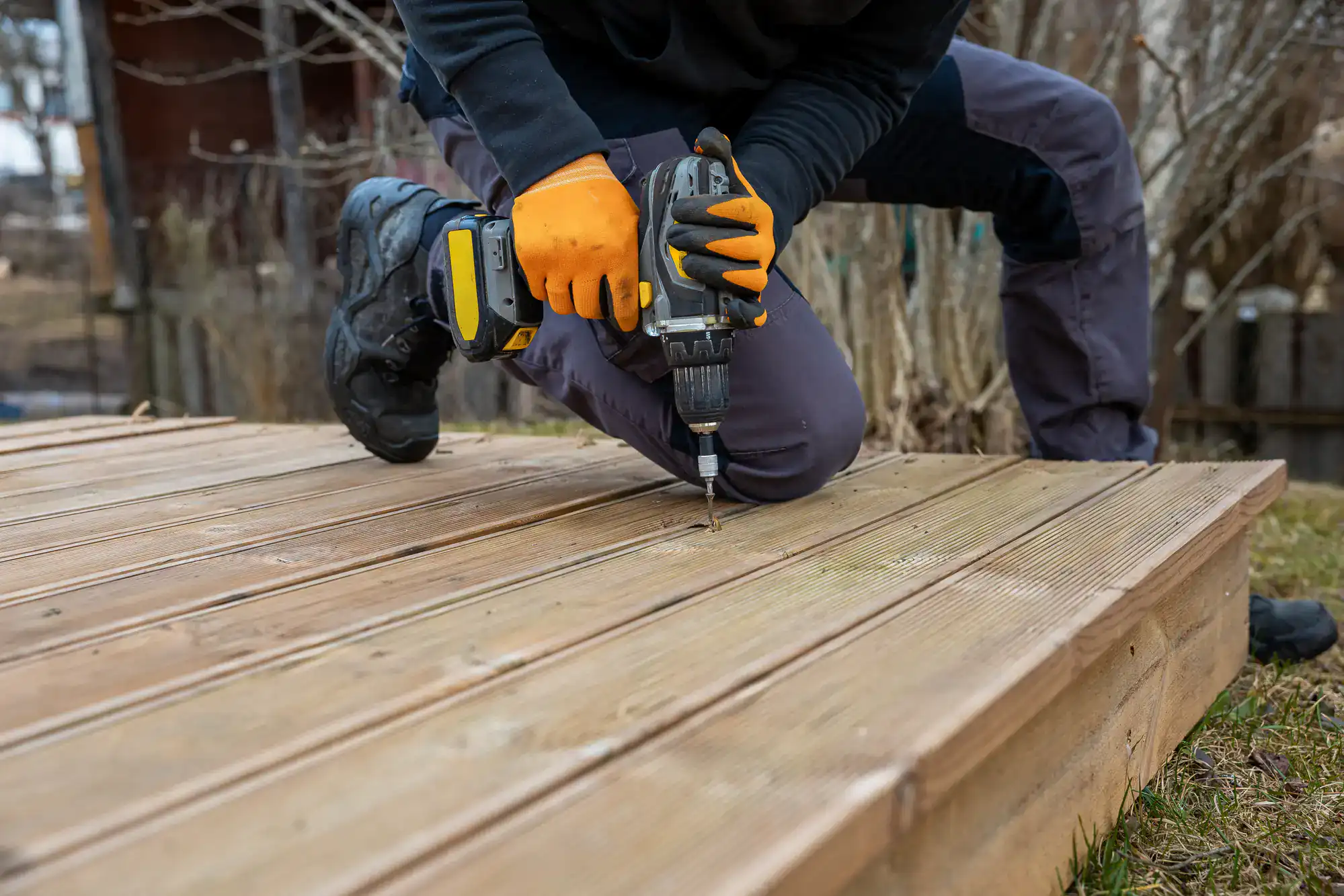
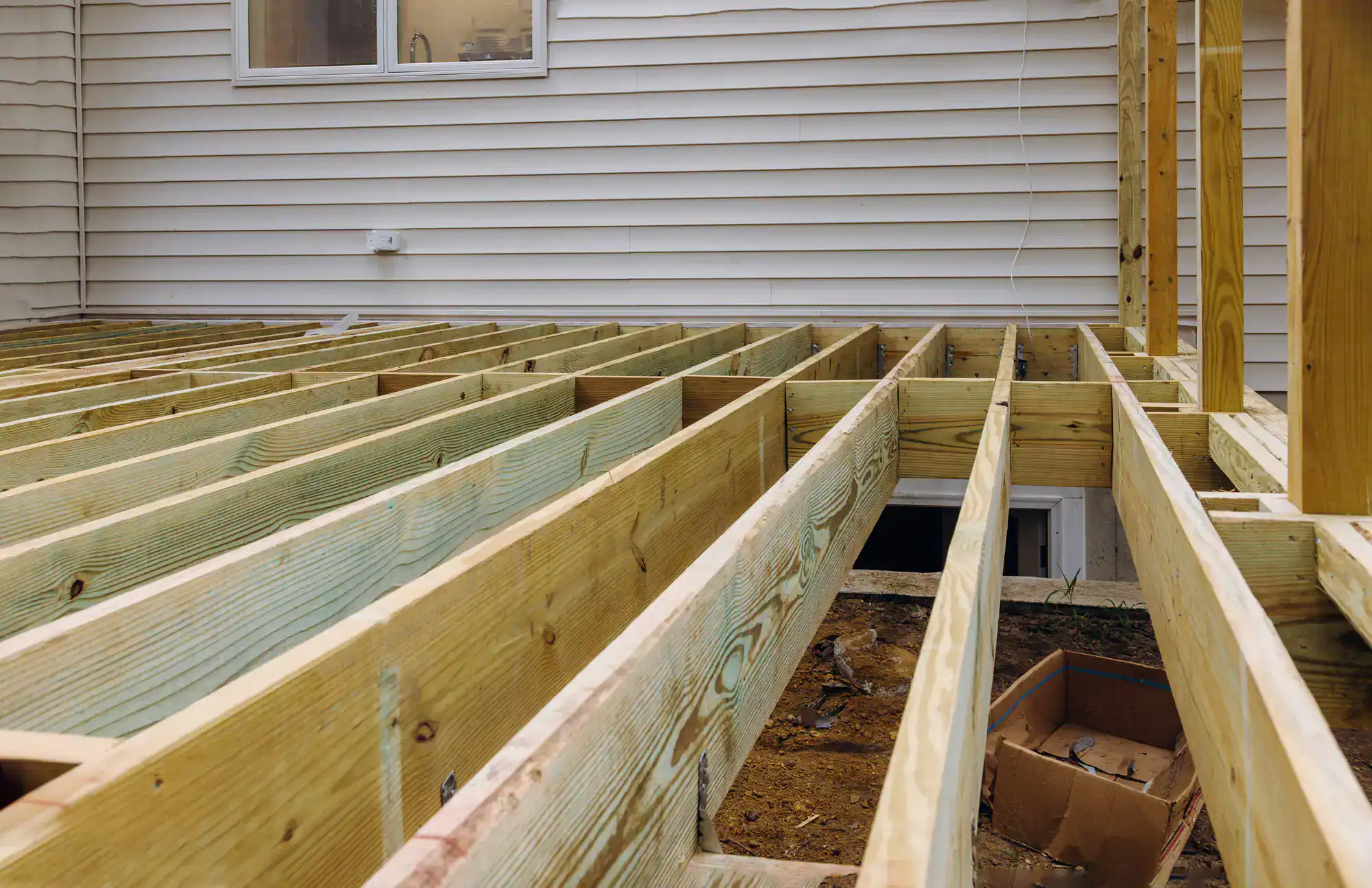
Construction typically moves in a clear sequence: footings first, set below Essex County’s frost line at 36 to 42 inches, then framing, decking, railings, and stairs. We keep you updated throughout by call, text, or in person, whatever works for you. When the work is done, we walk through the final inspection with you and make sure everything meets code before we close out the project.
Ready to get started?
Request a callback

We build new decks, replace aging structures, and handle full custom deck construction for both single-family and multi-family homes. In Silver Lake, that last part matters more than most places. Adding a deck to a two- or three-family home involves different load considerations, different attachment requirements, and more complex permitting than a standard suburban single-family build. We’ve done it, and we know what it takes to do it correctly.
On the material side, we work with both pressure-treated wood and composite decking, and we’ll give you an honest breakdown of what makes sense for your situation. If you’re managing a rental unit and don’t want to deal with annual staining and sealing, composite is worth the higher upfront cost especially in a neighborhood with Silver Lake’s moisture exposure. If you’re an owner-occupant working with a tighter budget, pressure-treated wood delivers strong performance and solid resale value. Remodeling Magazine’s 2024 Cost vs. Value Report puts wood deck ROI at around 83% that’s a real return on a real investment.
Every deck we build includes proper ledger board flashing, hardware rated for exterior exposure, and footings set to NJ code depth. These aren’t add-ons they’re the baseline for a deck that holds up in this climate and this neighborhood.
Yes and in Silver Lake, it’s a little more involved than most places because the neighborhood straddles two municipalities. If your property sits in the Belleville portion of Silver Lake, your permit goes through Belleville’s Building and Construction Code office, and your project may also fall under the Silver Lake Residential District design standards outlined in Belleville’s Zoning Ordinance. If your address falls on the Bloomfield side of the CDP, you’re working with Bloomfield’s construction code office instead.
Either way, a permit is required before any deck construction begins in New Jersey. The permit process involves submitting plans that show deck dimensions, footing locations and depths, ledger attachment details, railing specs, and stair layout. After construction, a municipal inspection is required before the deck can be used. We handle the entire permit process for you we determine which office governs your address, submit the application, and coordinate the inspection. You don’t have to figure out the jurisdictional question on your own.
Deck costs in this area vary based on size, material, and complexity but here’s a realistic range. A standard pressure-treated wood deck in the 12×16 foot range typically runs between $9,000 and $13,000 in northern New Jersey. A composite deck of similar size generally falls between $15,000 and $20,000. Larger or more custom builds multi-level decks, built-in seating, cable railings can reach $25,000 to $35,000 or more depending on the scope.
For Silver Lake specifically, a few factors can affect where your project lands in that range. Multi-family properties often require additional structural engineering and more complex permitting, which adds to the overall cost. Smaller rear lots common in Silver Lake can also limit design options and require more custom framing solutions. The good news is that with median home values in Silver Lake now exceeding $600,000 and the neighborhood actively revitalizing, a well-built deck is one of the better home investments you can make here. We provide a free, written, itemized quote so you know exactly what you’re getting before any work begins.
Both are solid options the right choice depends on your property type, your budget, and how much ongoing maintenance you want to deal with. Pressure-treated wood costs less upfront, performs well in New Jersey’s climate when properly maintained, and delivers strong resale value. Remodeling Magazine’s 2024 Cost vs. Value Report puts wood deck ROI at approximately 83%. For owner-occupants who are hands-on with their property, wood is a practical, proven choice.
Composite decking costs more upfront but requires significantly less maintenance no annual staining, no sealing, and it handles moisture far better than wood over time. For Silver Lake homeowners managing rental units or dealing with the neighborhood’s documented drainage challenges in lower-lying sections near the Passaic River watershed, composite is worth the investment. It won’t warp, splinter, or absorb standing water the way untreated wood will after a few wet seasons. We’ll walk you through both options honestly including the long-term cost difference so you can make the call that fits your situation, not just the one that’s easier to sell.
Yes, it can but it’s not the same process as adding a deck to a single-family home, and not every contractor handles it correctly. Multi-family structures have different load requirements, and the deck’s attachment to the building has to account for the way the structure is framed. In older Silver Lake homes many of which were built between the 1920s and 1960s the framing can present surprises that a contractor without general contracting experience might not know how to address.
The permitting side is also more involved. Belleville’s construction code office will want to see that the deck is properly engineered for the building type, and the application may require additional documentation compared to a standard single-family permit. We have experience building deck additions on multi-family properties in Essex County, and we approach each one with the structural and permitting complexity it actually requires. If you own a two- or three-family home in Silver Lake and want to add a deck, the first step is a site visit we’ll look at the building, assess the attachment points, and give you a clear picture of what the project involves.
Spring is the most popular window, and for good reason. Once the ground thaws and temperatures stay consistently above freezing, footings can be poured properly and framing can begin without weather delays. In Essex County, that typically means construction can start in late March or April, which puts your deck ready for full use by early summer.
The catch is that spring is also when most homeowners are calling contractors at the same time. If you’re hoping to have a deck done before Memorial Day weekend, the time to start the conversation is late fall or winter. We can get your design finalized, your permit submitted, and your project queued so that construction begins as early in the season as possible. Fall is also a good time for deck finishing work staining, sealing, and any touch-ups go on better in moderate temperatures with lower humidity, which is exactly what you get in September and October in northern New Jersey.
This is one of the most common questions we get from homeowners in older neighborhoods like Silver Lake, and the honest answer is that it depends on what’s actually failing. Surface-level issues weathered boards, loose railings, worn finish are often repairable. But the problems that actually make a deck unsafe are usually underneath: a rotted or improperly flashed ledger board, corroded hardware, cracked or settled footings, or structural framing that’s been compromised by years of moisture exposure.
In Silver Lake, where most homes were built before 1970 and drainage challenges are a known factor in lower sections of the neighborhood, hidden moisture damage is more common than people expect. A deck that looks fine from the surface can have serious structural issues at the ledger or footing level. The only way to know for certain is to have someone who understands structural connections take a proper look not just walk across the boards. We offer free consultations, and part of what we do on that first visit is assess your existing structure honestly. If it can be repaired, we’ll tell you. If replacement makes more sense for your safety and long-term value, we’ll explain exactly why.
Other Services we provide in Silver Lake