
When water is getting in, everything else stops. The ceiling stain spreading across original plaster, the hardwood floor buckling near the window, the drip you hear at 2 AM those aren’t small problems. They’re what happens when a repair gets delayed or handed to the wrong person. Getting it fixed right the first time means not dealing with the same issue six months from now.
South Orange Village’s housing stock makes this more complicated than most towns. The majority of homes here were built between the late 1800s and the mid-1930s Victorians, Tudors, Colonial Revivals with multi-plane rooflines, dormers, ornate flashing details, and in many cases, original slate. That’s not a standard shingle job. It requires someone who can read the roof, identify where the system is actually failing, and repair it without creating new problems in the process.
The village’s mature tree canopy and proximity to South Mountain Reservation add to the equation. Overhanging limbs, shaded north-facing roof sections, and leaf-packed valleys accelerate wear in ways that aren’t always visible from the ground. After a storm rolls through and South Orange Village has a documented history with significant ones the damage can be immediate and obvious, or it can be subtle and spreading. Either way, you want it diagnosed and addressed before it becomes a full replacement conversation.
We’re a family-owned general contracting company based in northern New Jersey, serving South Orange Village and Essex County homeowners since 2018. BBB Accredited, GAF Preferred Contractor certified, and registered with the NJ Division of Consumer Affairs (#13VH09838700) every credential is publicly verifiable, not just listed on a website.
That matters in this market. South Orange Village attracts its share of out-of-state contractors after every major storm event, and the fraud risk is real. We’re a local operation with a track record, a license number you can look up, and a 4.9-star rating across nearly 200 reviews from real homeowners many citing five-minute callback times and direct communication with the owner by name.
We handle roofing, chimney, masonry, and gutters which is especially relevant here. Many apparent roof leaks in older South Orange Village homes actually originate at chimney flashings or deteriorated masonry. Having one contractor who can diagnose and fix the actual source, not just patch what’s visible, saves you time, money, and a second call.
It starts with a free consultation. You describe what you’re seeing a stain, a drip, missing shingles after a storm, something that doesn’t look right and we schedule a time to come out and assess the roof directly. No charge to take a look, no pressure to commit on the spot.
On-site, our focus is on finding the actual source of the problem. On a pre-war home in South Orange Village, that’s not always where the water shows up. A leak appearing near a second-floor window might trace back to a flashing failure at the chimney, a failed valley, or a compromised section of flat roof above an addition. The assessment covers the full picture before any repair scope is written.
From there, you get a clear, itemized estimate with no hidden charges. If the repair requires a permit and South Orange Village’s Building Department does require permits for reroofing we handle that process. Work is scheduled around your availability, completed with a full warranty, and backed by direct communication throughout. If the situation is urgent, emergency tarping can be deployed immediately to protect the interior while permanent repairs are planned. Every step is straightforward, and you’ll know exactly where things stand.
Ready to get started?
Request a callback

We handle the full range of roof repair work roof leak patching, shingle repair, missing shingle repair, flat roof repair, storm damage roof repair, emergency roof repair, and emergency roof tarping. For South Orange Village specifically, a few of these come up more than others.
Storm damage roof repair is a consistent need here. The village has sustained documented impacts from Hurricane Irene, Tropical Storm Ida, and repeated nor’easters events that strip shingles, drive water under flashings, and bring limbs down on roof surfaces. After any significant storm, a professional inspection is the right first move before filing an insurance claim, and we can document the damage properly if you’re going that route.
Flat roof repair is relevant for the village’s commercial buildings along South Orange Avenue, multi-family properties, and residential additions a category that requires specific material knowledge in EPDM, TPO, and modified bitumen that not every roofer carries. And for homes in the Montrose Park Historic District, where the Historic Preservation Commission may have a say in material choices for exterior alterations, our experience navigating those requirements means your repair stays compliant without turning into a drawn-out approval process. Every job comes with a full warranty and a free consultation to start.
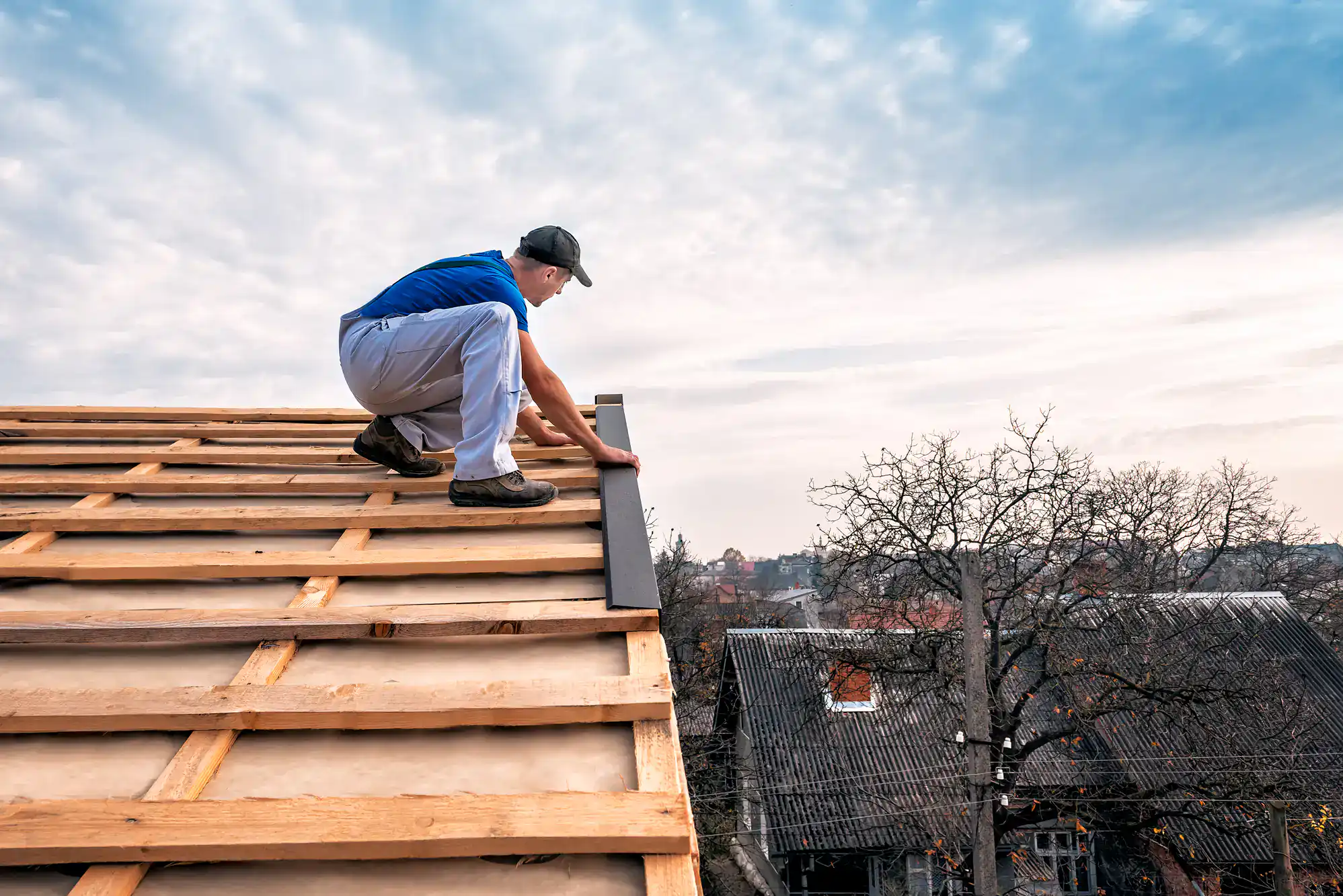
Yes, South Orange Village requires a building permit for reroofing. This is not optional, and it’s not something to skip to save time. Pulling the permit protects you as the homeowner it creates an official record of the work, confirms the contractor is licensed and insured, and ensures the job is inspected to code. If you ever sell your home, unpermitted roofing work can surface during the buyer’s inspection and become a real problem.
The permit is issued through the South Orange Village Building Department at 76 South Orange Avenue, and we handle the application as part of the project. If your home is in the Montrose Park Historic District or another locally designated historic area, there may be an additional review step through the South Orange Historic Preservation Commission before exterior alterations including certain roofing material changes are approved. That process affects timeline and material selection, and it’s something we account for upfront so there are no surprises mid-project.
The honest answer is that it depends on the age of the roof, the extent of the damage, and where the failures are occurring. A few missing shingles after a storm or an isolated flashing failure around a chimney are typically repair territory localized problems with a clear fix. If you’re seeing widespread granule loss, multiple areas of water intrusion, significant structural sagging, or a roof that’s pushing 25 to 30 years old with no prior major work, replacement becomes the more cost-effective long-term decision.
In South Orange Village, this question comes up often because of the age of the housing stock. A Victorian or Tudor built in the 1890s or 1920s may have had several roofing layers installed over the decades, and what looks like a patchable problem on the surface can reveal deeper issues once a contractor gets up there. The free consultation gives you a real assessment not a sales pitch toward replacement so you understand what you’re actually dealing with before committing to anything.
First, stay safe and stay inside if the damage is severe. Don’t attempt to access the roof yourself, especially on a multi-story Victorian or Tudor with steep pitch and complex geometry. If there’s an active opening in the roof a fallen limb, displaced shingles over a large area, or visible structural damage call for emergency tarping right away. A tarp deployed over the damaged section prevents water from reaching insulation, drywall, plaster, and the interior finishes of your home while permanent repairs are arranged.
Once the immediate situation is stabilized, document everything with photos before any temporary repairs are made. If you’re planning to file a homeowner’s insurance claim which is common after the kind of storm events South Orange Village sees regularly that documentation is important. We can also provide a written damage assessment, which insurers typically require as part of the claims process. Getting a professional on-site quickly after a storm isn’t just about fixing the roof; it’s about protecting your claim and making sure nothing gets missed in the initial assessment.
Ice dams form when heat escaping through the roof melts snow near the ridge, and that meltwater refreezes at the cold eaves before it can drain. The ice builds up, water backs up behind it, and eventually forces its way under shingles and into the interior. It’s a common and damaging winter problem, and South Orange Village homes are genuinely at risk particularly those built before modern insulation and ventilation standards existed.
The elevated areas near South Mountain Reservation see more significant snowpack accumulation, and pre-war construction throughout South Orange Village Colonials, Tudors, Victorians often has inadequate attic insulation and ventilation by today’s standards, which is exactly the condition that produces ice dams. If you’ve noticed water staining near exterior walls or around dormers after a winter thaw, or if your gutters are pulling away from the fascia under ice weight, those are signs worth addressing before next winter. The fix often involves both the immediate damage repair and an assessment of the underlying insulation and ventilation situation.
Roof repair costs vary significantly depending on what’s actually wrong, the size of the affected area, the roofing material involved, and how accessible the damaged section is. A straightforward shingle repair on a standard section of roof might run a few hundred dollars. Flashing repairs around a chimney or skylight typically fall in the $300 to $700 range depending on complexity. More involved repairs storm damage affecting a larger area, flat roof membrane work, or emergency repairs on a multi-plane historic roofline can range from $800 to several thousand dollars.
In South Orange Village specifically, the age and architectural complexity of the housing stock tends to push repair costs toward the higher end of the range compared to newer suburban construction. Slate roofs, ornate dormers, and century-old flashing systems require more time and more specialized knowledge than a standard asphalt shingle repair. That said, a well-executed repair on a high-value historic home is almost always less expensive than deferred maintenance that turns into a full replacement. The free consultation gives you a clear, itemized number before any work begins no guessing, no surprises.
It happens because storm events create urgency, and urgency is exactly when bad actors show up. After every significant weather event in Essex County and South Orange Village has had its share, from Tropical Storm Ida to the nor’easters that come through the Watchung corridor out-of-state contractors flood the area, knock on doors, collect deposits, and in many cases never return or deliver substandard work. It’s a documented pattern in New Jersey, and the state’s Division of Consumer Affairs fields complaints about it every year.
The protection is straightforward: verify before you hire. Check that the contractor is registered with the NJ Division of Consumer Affairs that number is publicly searchable. Look them up on BBB.org and confirm their accreditation is active. Ask for their GAF certification or equivalent manufacturer credential. Our registration number is 13VH09838700, BBB Accreditation has been active since January 2025, and the GAF Preferred Contractor status is verifiable through GAF’s own directory. These aren’t difficult boxes to check, and any legitimate contractor will have no problem with you checking them before signing anything.
Other Services we provide in South Orange Village