
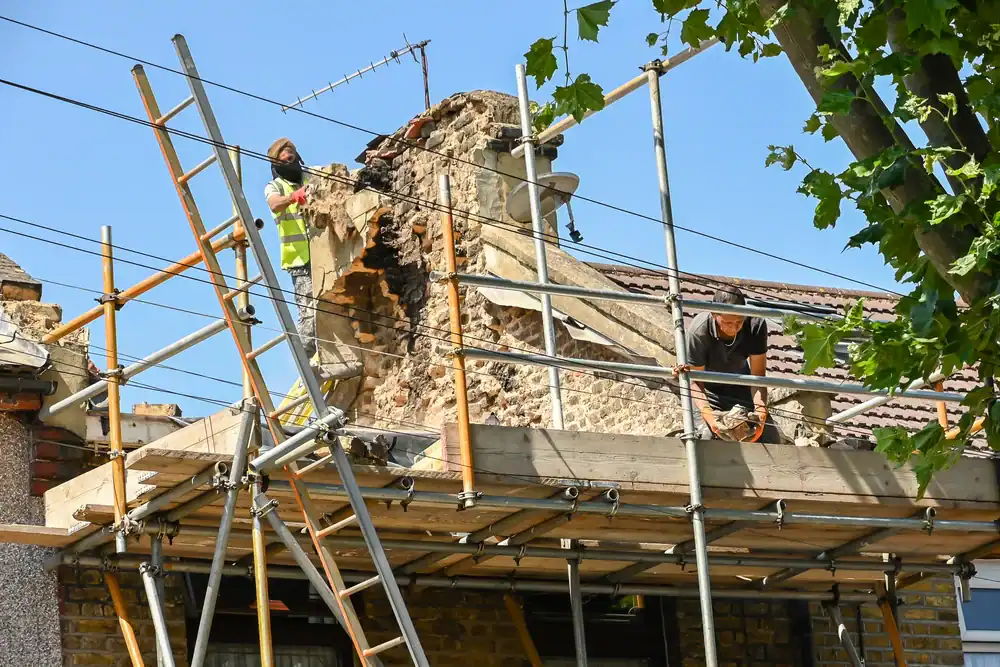

Water doesn’t just stain your ceiling. It works its way into the masonry, freezes during winter, expands, and cracks the structure from the inside out.
By the time most homeowners in Ampere North notice the problem, the damage has already spread. A small leak becomes a $3,000 rebuild because it sat unnoticed for two seasons.
Fixing chimney leaks early means you’re dealing with repointing a few joints or replacing a damaged crown—not tearing down and rebuilding entire sections. The work costs less, takes less time, and keeps your home safe from the kind of structural issues that make buyers walk away during inspections.
We’ve been handling chimney repair, roofing, siding, and masonry work throughout New Jersey since the early 2000s. We’re licensed, insured, and we’ve seen what happens when homeowners wait too long or hire the wrong crew.
Essex County’s freeze-thaw cycles are brutal on brick and mortar. Ampere North homes deal with temperature swings that crack crowns, loosen flashing, and let water seep into places it shouldn’t be. We’ve repaired hundreds of chimneys damaged by exactly these conditions.
You’ll get a free estimate that breaks down what’s wrong, what it costs, and why it matters. No upselling, no hidden fees.

First, we schedule a free inspection at your property. A certified contractor climbs up, checks the crown, flashing, mortar joints, flue liner, and any visible damage. We’re looking for cracks, spalling brick, water intrusion, and structural issues that could get worse.
Then we walk you through what we found. If it’s a simple fix—repointing a few joints or sealing the crown—we’ll tell you that. If the chimney needs a partial or full rebuild, we’ll explain why and show you exactly what’s compromised.
Once you approve the estimate, we pull permits if needed, order materials, and schedule the work. Most chimney repairs in Ampere North take one to three days depending on scope. Larger jobs like masonry rebuilds or chimney installation can take longer, but we’ll give you a clear timeline upfront.
After the work’s done, we clean up and walk you through what we fixed. You’ll know what to watch for and when to schedule your next inspection.

Ready to get started?
Chimney repair covers a range of issues depending on what’s failing. Crown repair or replacement stops water from entering the top of the structure. Tuckpointing and repointing restore deteriorated mortar joints that let moisture in. Flashing repair seals the gap between your roof and chimney—one of the most common leak points.
If the brick itself is crumbling (called spalling), we remove and replace damaged sections. For structural issues or severe deterioration, a partial or full chimney rebuild might be necessary. Fireplace repair often ties into chimney work, especially if the flue liner is cracked or the damper isn’t sealing properly.
Ampere North’s weather accelerates wear. Heavy rain, snow, and those freeze-thaw cycles common in Essex County break down masonry faster than in milder climates. Homes built before 2000 are especially vulnerable if the chimney hasn’t been maintained. Catching problems early—during an inspection or right when you notice a leak—keeps repair costs manageable and prevents the kind of damage that requires a full teardown.

Minor repairs like repointing mortar joints or sealing a crown typically run between $300 and $1,200 depending on how much area needs work. Chimney leak fixing that involves flashing replacement usually falls in the $500 to $1,500 range.
Brick chimney repair costs climb when you’re replacing spalled bricks or rebuilding sections. Expect $1,500 to $4,000 for partial rebuilds. Full chimney rebuilds—tearing down to the roofline and starting over—can run $4,000 to $10,000 or more depending on height and materials.
Location matters too. Ampere North homes with taller chimneys or difficult roof access cost more because of the labor and equipment involved. The best way to know what you’re looking at is to get a free inspection. We’ll give you an exact price based on what’s actually wrong, not a vague estimate pulled from a national average.
If you’re seeing white staining on the brick (efflorescence), that’s a sign water is getting in and pulling salts to the surface. Crumbling mortar, cracks in the crown, or pieces of brick in your yard mean the structure is breaking down.
Inside, water stains on the ceiling near the chimney or a damp smell in the fireplace point to leaks. Rust on the damper or firebox is another red flag. If the chimney is visibly leaning or you can see daylight through the mortar joints, that’s a structural issue that needs immediate attention.
A professional inspection will tell you whether you need targeted repairs or a full rebuild. Most chimneys don’t need to be torn down completely unless the damage is severe or the structure is unsafe. But waiting too long on small repairs is how you end up needing a replacement. Catching it early almost always means you can fix it instead of replacing it.
Yes, because chimney repair isn’t the same as general handyman work. Masonry requires understanding how brick, mortar, and flue systems work together under heat, moisture, and structural load. A bad repair can make things worse—trapping moisture, creating fire hazards, or failing within a year.
Licensed masonry contractors know building codes, proper flashing installation, and how to match mortar so repairs don’t crack or fall apart. We also carry insurance, which matters if something goes wrong during the job.
Chimney sweep companies near me often handle inspections and cleaning, but most don’t do structural masonry work. If they find damage during a sweep, they’ll refer you to someone like us. Hiring a qualified masonry company from the start means the work gets done right, lasts longer, and doesn’t create new problems down the road.
The National Fire Protection Association recommends annual inspections, and New Jersey follows that guideline. Even if you don’t use your fireplace often, the chimney is still exposed to weather year-round.
Essex County’s climate is tough on masonry. Freeze-thaw cycles, heavy rain, and temperature swings cause damage whether you’re burning fires or not. An annual inspection catches small issues—loose flashing, minor cracks, early signs of water damage—before they turn into expensive repairs.
If you use your fireplace regularly, inspections also check for creosote buildup, which causes chimney fires. A sweep can clean that out during the same visit. Skipping inspections might save you $150 now, but it often costs you thousands later when a small crack becomes a structural failure.
If your furnace or boiler vents through the chimney, yes. Cracks in the flue liner or blockages from debris can prevent proper venting, which means carbon monoxide and other gases back up into your home instead of exiting safely.
A damaged chimney also reduces draft, making your fireplace or heating system work harder and less efficiently. You’ll burn more fuel, get less heat, and increase the risk of dangerous fumes entering living spaces.
Water damage is another issue. If the chimney is leaking, moisture can reach the areas around your heating system, causing rust, mold, and deterioration of surrounding materials. Regular chimney repair and maintenance keep your heating system running safely and efficiently, especially during New Jersey winters when you’re relying on it most.
Chimney repair fixes existing damage—repointing mortar, replacing crowns, sealing leaks, or rebuilding damaged sections. You’re working with the chimney that’s already there and restoring it to safe, functional condition.
Chimney installation is building a new chimney from scratch. This happens during new construction, major home additions, or when the existing chimney is so far gone that repair isn’t viable. Installation involves designing the structure, pouring a foundation, building the masonry or installing a prefab system, and ensuring everything meets code.
Most homeowners in Ampere North need repair, not installation. Even heavily damaged chimneys can often be rebuilt from the roofline up without tearing out the entire structure. A full chimney installation costs significantly more than repair, so it’s usually a last resort. An inspection will tell you which route makes sense for your situation.
Other Services we provide in Ampere North