

You’re not getting water stains on your ceiling every time it rains hard. You’re not worrying about whether that crack got worse over the winter. You’re not calling around for emergency repairs when it’s 20 degrees outside and everyone’s booked solid.
When your chimney’s properly repaired, you just use your fireplace without thinking about it. The flashing keeps water out. The masonry stays intact through freeze-thaw cycles. Your heating system vents safely.
That’s what you’re paying for. Not just patched bricks, but actual peace of mind that the repair will hold up through next winter and the one after that.
Most chimney problems start small. A hairline crack in the mortar. Flashing that’s pulling away slightly. You might not even notice it until water starts showing up somewhere it shouldn’t. By then, what could’ve been a few hundred dollars in repairs has turned into a few thousand because water got into places it was never supposed to reach.
We’ve been handling chimney repair, roofing, and masonry work throughout Belleville and Essex County for nearly two decades. We’re licensed, insured, and we’ve seen every type of chimney problem New Jersey weather can create.
We know what happens to chimneys here. The freeze-thaw cycles that crack mortar joints. The ice dams that force water under flashing. The way spring rain finds every weak point in your masonry.
You’re not getting a crew that learned about chimneys from a manual. You’re getting people who’ve repaired hundreds of them in this exact area, who know which repairs hold up and which ones fail in two years.

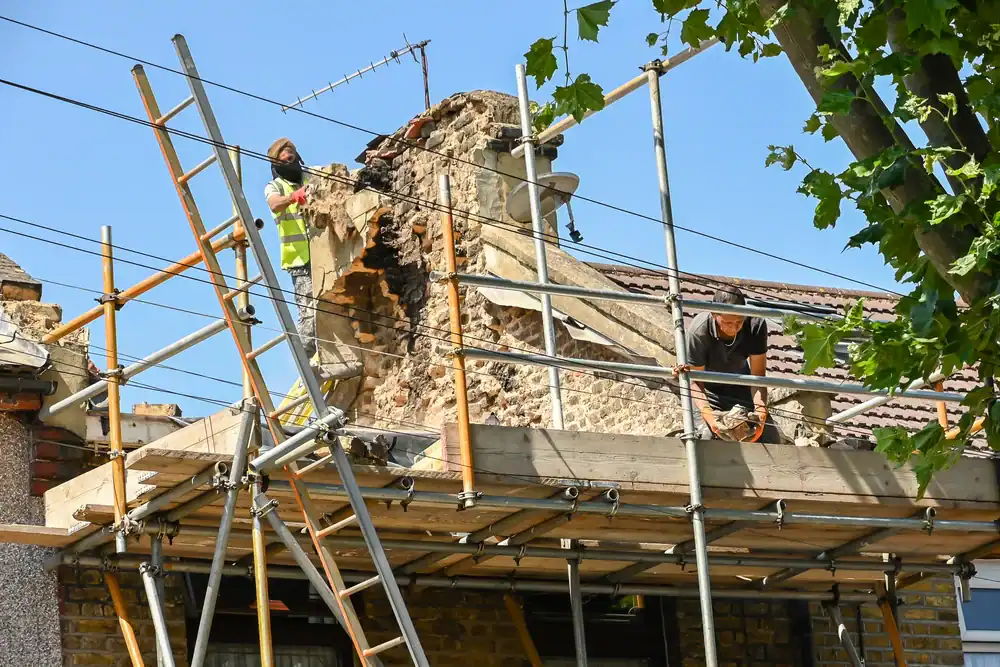
First, we come out and actually look at your chimney. Not just from the ground—we get up there and inspect the crown, the flashing, the masonry, the whole structure. We’re looking for cracks, deteriorating mortar, water damage, anything that’s compromised or will be soon.
Then we tell you what’s wrong and what it’ll cost to fix it. No hidden fees, no surprise charges later. If your chimney needs repointing, we tell you that. If the flashing needs to be replaced, we explain why and show you the problem.
Once you approve the work, we schedule it and get it done. Most chimney repairs take one to three days depending on what needs fixing. We’re not the type to start your job and then disappear for a week to work on someone else’s project.
After the repair, you get a chimney that actually does its job. Water stays out. The structure stays sound. You can use your fireplace or heating system without wondering if something’s going to fail.

Ready to get started?
We handle everything from minor mortar repairs to complete chimney rebuilds. That includes repointing deteriorated mortar joints, replacing damaged bricks, fixing or replacing chimney flashing, repairing or rebuilding chimney crowns, fixing chimney leaks, and addressing structural issues before they get worse.
Belleville’s weather is particularly hard on chimneys. You get the freeze-thaw cycles that expand water in tiny cracks and turn them into major problems. You get the heavy spring rains that test every seal and flashing joint. You get the temperature swings that stress masonry materials.
That’s why we focus on repairs that actually last. We’re not slapping mortar on cracks and calling it fixed. We’re addressing the underlying issue—whether that’s failed flashing, deteriorated mortar, or structural movement—so the problem doesn’t come back next season.
If you’re seeing water stains near your fireplace, pieces of brick or mortar in your yard, visible cracks in your chimney, or white staining on the brick, those are signs you need someone to look at it sooner rather than later. Small problems caught early cost hundreds. The same problems ignored until next spring can cost thousands.

It depends entirely on what’s wrong with your chimney. Minor repointing work might run you $500 to $1,500. Flashing replacement usually falls between $300 and $1,200. If you need significant masonry work or a crown rebuild, you’re looking at $1,500 to $4,000 or more.
The real cost driver is how long you’ve waited. A small crack that gets fixed in the fall might cost $400. That same crack after a winter of freeze-thaw cycles could require removing and replacing multiple courses of brick, which might run $3,000.
That’s why we offer free estimates. We come out, look at your specific situation, and tell you exactly what it’ll cost. No guessing, no ranges, no “it depends”—just a clear number based on what your chimney actually needs.
Cleaning removes creosote and debris from inside your chimney. Repair fixes structural damage to the chimney itself. You need a chimney sweep if you use your fireplace regularly and haven’t had it cleaned in a year or more. You need repair if you’re seeing physical damage to the structure.
Signs you need repair include water stains on your ceiling or walls near the chimney, visible cracks in the brick or mortar, pieces of brick or mortar falling off, white staining on the exterior brick, or a chimney crown that’s cracked or crumbling.
If you’re not sure, we can inspect it and tell you. Sometimes you need both—cleaning to remove buildup and repair to fix structural issues. Sometimes you just need one or the other. We’ll tell you what’s actually necessary, not just what we can bill you for.
Most chimney leaks come from failed flashing or a damaged crown. Flashing is the metal seal where your chimney meets your roof. If it’s installed wrong, deteriorates, or pulls away from the chimney, water gets in. The crown is the concrete top of your chimney—if it cracks, water runs straight down into your chimney structure.
We fix flashing leaks by removing the old flashing, properly sealing the joint, and installing new flashing that’s actually secured correctly. For crown damage, we either repair the existing crown if the damage is minor or rebuild it if it’s too far gone.
Sometimes leaks come from deteriorated mortar joints or cracks in the brick itself. In those cases, we repoint the joints or replace damaged bricks. The key is finding where the water’s actually getting in, not just patching the spot where you see it inside your house. Water travels, so the leak you see might be three feet away from where water’s entering.
Most chimney repairs take one to three days. Simple repointing or flashing replacement might be done in a day. More extensive masonry work or crown rebuilds might take two or three days, depending on the scope and weather conditions.
We can’t work in heavy rain or freezing temperatures because mortar needs proper conditions to cure. If we’re halfway through your job and a storm rolls in, we’ll weatherproof everything and come back when conditions are right.
You’ll know the timeline before we start. We don’t give vague estimates like “a few days” or “about a week.” We tell you exactly how long your specific repair will take, and we stick to that schedule unless weather makes it impossible to work safely or effectively.
If you’re seeing problems now, get them fixed now. Waiting just gives water more time to get into places it shouldn’t be, and winter freeze-thaw cycles will make existing damage worse.
Spring and fall are the best times for chimney work because temperatures are moderate and mortar cures properly. Summer works too, though it’s hot work. Winter is trickier because mortar doesn’t cure well in freezing temperatures, but if you’ve got an active leak or structural issue, waiting until spring could mean significantly more damage and higher repair costs.
Here’s the reality: that small crack you’re seeing now will be a bigger crack after winter. Water will get in, freeze, expand, and make the crack worse. By spring, what could’ve been a $600 repair might be a $2,500 repair. If your chimney needs work and we can do it before winter hits, that’s your best move financially.
Yes. We come out, inspect your chimney, and give you a clear estimate at no cost. You’re not paying for someone to tell you what’s wrong—you’re only paying if you decide to move forward with the actual repair.
During the estimate, we’ll show you what’s damaged, explain why it’s a problem, and tell you what it’ll cost to fix it. You’ll get an upfront number, not a range or a “starting at” price that balloons once work begins.
If you’re comparing estimates from multiple companies, make sure you’re comparing the same scope of work. Some contractors will quote you for the bare minimum to get the job, then “discover” additional problems once they’re up there. We tell you everything that needs fixing during the estimate so you can make an informed decision about what to repair now and what can wait.
Other Services we provide in Belleville