

You’re not thinking about your chimney until something goes wrong. A small crack in the crown. Water stains on the ceiling near the flue. A draft that doesn’t pull smoke like it used to.
By the time you notice, the damage is already happening. Water’s getting in. Freeze-thaw cycles are making it worse. And if you wait until November to call someone, you’ll either pay more for emergency work or go all winter without a working fireplace.
Here’s what changes when you handle chimney repair now: no surprise leaks during the first storm, no carbon monoxide scares because your flue is compromised, and no scrambling to find a masonry company when everyone’s booked solid. You get your fireplace back, your peace of mind back, and you stop a $500 fix from turning into a $5,000 rebuild.
We’ve been handling chimney repair, roofing, and masonry work in Caldwell and Essex County for nearly twenty years. We’re not a national franchise. We’re local contractors who know what New Jersey winters do to chimneys.
The homes in Caldwell, West Caldwell, and North Caldwell weren’t built yesterday. Many have chimneys that are 40, 50, even 60 years old. That means crowns that crack every winter, mortar joints that need repointing, and flue liners that weren’t designed for modern heating systems.
We’ve seen it all. And we fix it right the first time—no hidden charges, no upselling, just honest work that keeps your chimney safe and functional.

First, we come out and inspect your chimney from top to bottom. We’re looking at the crown, the flashing, the mortar joints, the flue liner, and any signs of water damage or structural issues. This isn’t a sales call—it’s a real assessment.
Then we walk you through what’s wrong, what needs fixing now, and what can wait. We give you a free estimate with transparent pricing, no surprises. If you want to move forward, we schedule the work at a time that works for you.
The actual repair depends on what’s needed. Crown repair, repointing, flashing replacement, chimney leak fixing—we handle it all. Most jobs take one to three days depending on the scope. We clean up completely when we’re done, and you’re left with a chimney that’s safe, sealed, and ready for winter.

Ready to get started?
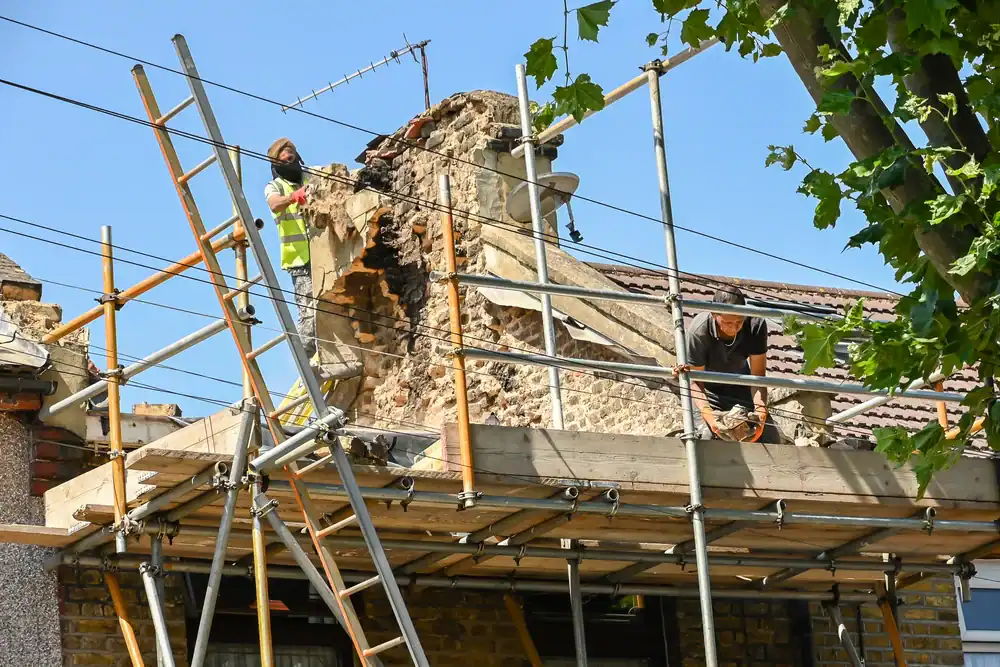
Chimney repair isn’t one thing. It’s a range of fixes depending on where the damage is. Crown repair is one of the most common jobs we do in Caldwell—freeze-thaw cycles crack the concrete cap at the top of your chimney, and once water gets in, the damage spreads fast.
Repointing is another big one. The mortar between your chimney bricks breaks down over time, especially on older homes. If the joints are crumbling, water infiltration and structural instability aren’t far behind. Flashing repair stops leaks where your chimney meets your roof—this is where most water damage starts.
We also handle flue liner repair or replacement, which is critical for safety. A damaged liner lets heat, smoke, and carbon monoxide seep into your home. And if your chimney needs waterproofing, we apply a breathable sealant that keeps moisture out without trapping it inside the masonry. Every repair we do is code-compliant and built to last through New Jersey’s harsh weather.

Cleaning removes creosote and soot buildup inside the flue. Repair fixes structural damage to the chimney itself—cracks, leaks, crumbling mortar, or a damaged crown.
If you’re seeing water stains near your fireplace, pieces of brick or mortar in your firebox, or a white chalky residue on the outside of your chimney, that’s not a cleaning issue. That’s damage. A chimney sweep can clean your flue, but they’re not going to fix a cracked crown or repoint your mortar joints.
The best way to know what you need is to get an inspection. We’ll tell you if it’s just a cleaning or if there’s actual repair work that needs to happen. Most of the time, if your chimney is older than 20 years and hasn’t been maintained, you’re looking at both.
Two things: the work gets harder and more expensive, or it doesn’t happen at all. Masonry work requires temperatures above 40°F for the mortar to cure properly. Once it gets too cold, the repair won’t hold, and you’ll end up paying for the same job twice.
If you wait until late fall, most chimney repair companies are slammed. You’re competing with every other homeowner who put it off, and you might not get scheduled until spring. That means going all winter without using your fireplace—or worse, using it when it’s not safe.
The other risk is that minor damage gets worse. A small crack in your crown turns into a major leak. Water gets into the masonry, freezes, expands, and causes even more cracking. What could’ve been a few hundred dollars in the summer becomes a multi-thousand dollar repair by spring. Get it done now while the weather’s cooperating and contractors have availability.
It depends on what’s broken. Crown repair typically runs between $500 and $1,500. Repointing mortar joints can range from $1,000 to $3,000 depending on how much of the chimney needs work. Flashing repair is usually $300 to $800. Full chimney rebuilds—if the structure is severely damaged—can run $4,000 to $10,000 or more.
The average chimney repair job in Essex County falls somewhere between $550 and $4,300, according to local data. But that’s a wide range because every chimney is different. Age, height, extent of damage, and accessibility all affect the price.
We don’t give cookie-cutter estimates. We come out, assess your specific situation, and give you a transparent quote with no hidden fees. If there’s a cheaper fix that’ll work, we’ll tell you. If you need a bigger repair to actually solve the problem, we’ll explain why. You’ll know exactly what you’re paying for before any work starts.
No. Even a small crack is a safety risk. If the crack is in the crown, water’s getting into your chimney. If it’s in the flue liner, heat and gases can escape into your walls or attic. If it’s in the exterior masonry, the structural integrity of the entire chimney is compromised.
A cracked flue is especially dangerous because it can let carbon monoxide into your home. You won’t see it or smell it, but it’s deadly. Chimney fires can also spread through cracks into the wooden framing of your house.
If you’ve noticed a crack—anywhere—don’t use your fireplace until it’s been inspected and repaired. It’s not worth the risk. We’ve seen too many situations where a homeowner thought a crack was no big deal, kept using the fireplace, and ended up with major damage or a dangerous situation that could’ve been prevented.
Yes. Every repair job starts with an inspection. We’re not going to guess what’s wrong or sell you services you don’t need. We physically inspect your chimney from the roof down to the firebox, checking the crown, flashing, mortar, flue liner, damper, and any visible signs of water damage or structural issues.
This inspection is part of our free estimate process. We’ll show you what we found, explain what needs to be fixed, and prioritize repairs based on safety and urgency. If something can wait, we’ll tell you. If it needs to be handled now, we’ll explain why.
Annual inspections are also a good idea even if you’re not seeing problems. Most chimney damage happens slowly over time, and catching it early saves you money. If you’re buying a home in Caldwell or haven’t had your chimney looked at in years, an inspection gives you a clear picture of what you’re dealing with before winter arrives.
Repair fixes an existing chimney. Installation builds a new one from scratch or replaces a chimney that’s beyond saving. Most of the time, repair is the right move—it’s faster, less expensive, and gets your chimney back to safe working condition.
But if your chimney has severe structural damage, extensive cracking throughout the masonry, or a compromised foundation, a full rebuild might be necessary. We’ll never recommend a rebuild unless repair isn’t a viable option. Our goal is to fix what’s broken in the most cost-effective way possible.
Chimney installation also comes into play if you’re adding a fireplace to a home that doesn’t have one, or if you’re converting from a prefab fireplace to a masonry one. New construction and major renovations sometimes require full chimney installation. We handle both, but we’ll always start by assessing whether your existing chimney can be repaired first.
Other Services we provide in Caldwell