

You stop worrying about carbon monoxide seeping into your home. You stop wondering if that crack is going to turn into a $15,000 problem next winter. You actually use your fireplace without second-guessing whether it’s safe.
A properly repaired chimney does what it’s supposed to do: it pulls smoke and dangerous gases out of your house, keeps heat where it belongs, and doesn’t leak water into your walls. That’s not dramatic—that’s just how it should work.
When your chimney’s in good shape, you’re not scrambling to find emergency chimney repair during the coldest week of the year. You’re not dealing with water stains on your ceiling or wondering why your heating bill jumped. You’ve got one less thing on your list, and your family’s safer because of it.
We’ve been handling chimney repair, roofing, and masonry work throughout Cedar Grove and Essex County for over two decades. We’re licensed, insured, and we don’t play games with pricing or timelines.
Cedar Grove homes deal with brutal winters and humid summers—conditions that tear apart masonry faster than most homeowners realize. We’ve seen what happens when repairs get delayed, and we’ve fixed plenty of chimneys that should’ve been addressed years earlier.
We’re not the cheapest option, and that’s intentional. You’re paying for work that lasts, materials that hold up, and a team that shows up when we say we will. No hidden charges, no upselling you on things you don’t need.

First, we come out and inspect your chimney—inside and out. We’re looking at the flue liner, the crown, the masonry, the flashing, and anywhere water might be getting in. You get a clear explanation of what’s wrong and what it’ll take to fix it.
Then we give you an upfront estimate. No surprises, no “we’ll figure it out as we go.” You know what you’re paying before we start.
Once you approve the work, we schedule it and stick to that timeline. We handle everything from brick chimney repair to chimney leak fixing, creosote removal, and full rebuilds if that’s what’s needed. Our crew manages the job from start to finish—you’re not coordinating with five different people.
When we’re done, your chimney works the way it should. If you need certification for a new furnace or water heater (New Jersey requires it), we handle that too. You’re not left guessing whether the job was done right.

Ready to get started?
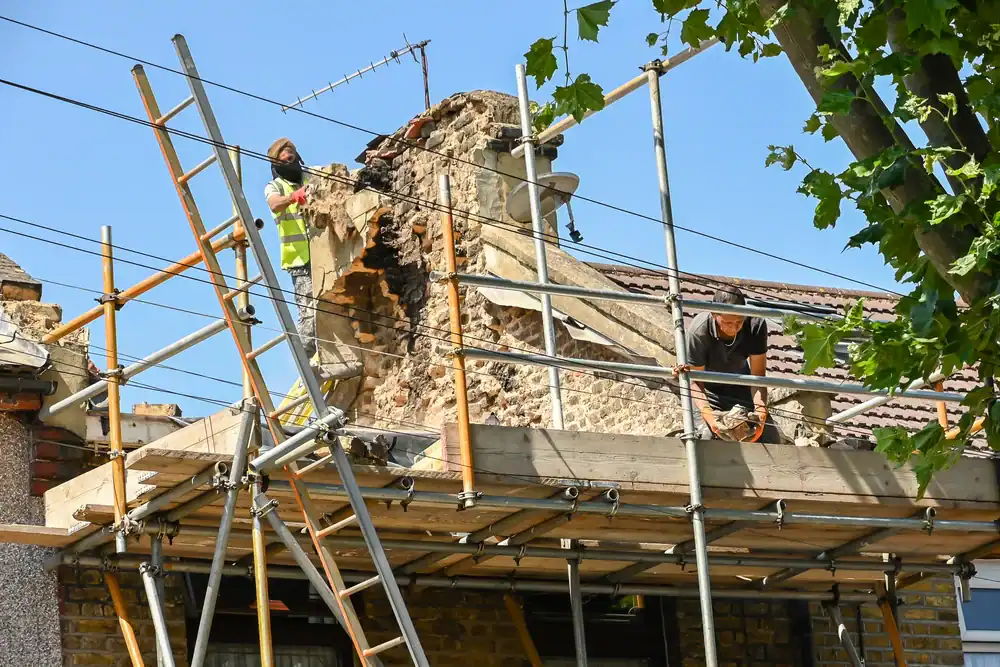
Chimney repair covers a lot of ground depending on what’s failing. We handle masonry repairs when bricks are cracked or crumbling, flashing repairs when water’s getting in around the roofline, and crown repairs when the top of your chimney is letting moisture seep into the structure.
If your flue liner is damaged, that’s a safety issue—we’ll reline it so smoke and gases don’t leak into your home. If the chimney’s leaning or the foundation is compromised, we’ll assess whether it needs rebuilding or if targeted repairs will hold.
Cedar Grove’s freeze-thaw cycles are particularly hard on chimneys. Water gets into small cracks, freezes, expands, and turns minor damage into major problems. That’s why catching issues early matters—it’s the difference between a few hundred dollars in repairs and a full chimney rebuild.
We also handle fireplace repair, chimney installation for new construction or additions, and chimney cleaning when creosote buildup is creating a fire hazard. Every job starts with a thorough inspection so you know exactly what you’re dealing with.

If you’re seeing water stains on the ceiling near your chimney, white staining on the brick (efflorescence), or pieces of brick or mortar in your fireplace, you’ve got a repair issue—not just a cleaning issue. Cleaning handles creosote buildup and blockages. Repairs handle structural damage, leaks, and safety hazards.
A lot of homeowners assume their chimney just needs a sweep when the real problem is a cracked crown or damaged flashing. That’s why a proper inspection matters. We’ll tell you if it’s a cleaning job, a repair job, or both.
If you haven’t had your chimney inspected in a few years and you’re using it regularly, get it looked at. Waiting until you see visible damage usually means you’re already past the “easy fix” stage.
Most chimney leaks come from four places: the crown (the concrete top), the flashing (where the chimney meets the roof), the masonry itself, or the chimney cap. Water gets in through cracks, bad seals, or missing components, then works its way into your home.
Fixing a leak depends on where it’s coming from. If the crown is cracked, we’ll repair or replace it. If the flashing is loose or corroded, we’ll reinstall it properly with the right materials. If the brick is porous or damaged, we’ll repoint the mortar or seal the masonry.
Cedar Grove gets a lot of rain and snow, and your chimney takes the worst of it. If you’re seeing water damage inside your home, don’t wait—it’s only going to get worse. Leaks don’t fix themselves, and the longer water sits in your chimney, the more expensive the repair becomes.
It depends entirely on what’s broken. Repointing mortar joints might run $1,000 to $3,000. A crown repair could be $800 to $1,500. A full chimney rebuild can hit $10,000 or more if the structure is compromised.
We don’t give ballpark estimates over the phone because chimneys are complicated, and every house is different. What looks like a small crack from the ground might be a much bigger issue once we’re up there. That’s why we do a free on-site estimate—so you get real numbers based on your actual chimney, not a guess.
What we will tell you upfront: the cost of fixing a problem early is always less than the cost of fixing it after it’s caused structural damage or a safety hazard. If you’re putting off a repair because of cost, at least get it inspected so you know what you’re dealing with.
If you’re using your fireplace or wood stove regularly, yes. If you’re not using it at all, you can probably stretch it to every two or three years—but you should still get it checked.
Annual inspections catch problems before they become expensive. Creosote builds up every time you burn wood, and if it gets thick enough, it can ignite and cause a chimney fire. Cracks develop from weather exposure, animals nest in chimneys during the off-season, and flashing deteriorates over time.
New Jersey also requires chimney certification if you’re replacing a furnace, boiler, or water heater. You can’t pass that inspection if your chimney has structural issues or code violations. Getting ahead of it with regular inspections means you’re not stuck delaying a heating system replacement because your chimney failed certification.
It depends on what’s wrong with it. If the flue liner is cracked or damaged, no—you’re risking carbon monoxide exposure or a chimney fire. If the crown is cracked but the flue is intact, you might be okay in the short term, but you’re still letting water damage get worse every time it rains.
If you’re not sure, don’t use it until it’s been inspected. Chimney fires are loud, scary, and dangerous. They sound like a freight train and they spread fast. Most of them happen because someone kept using a chimney that had damage they didn’t know about—or damage they were ignoring.
We’ve seen homeowners keep using a fireplace because “it seemed fine,” only to end up with a fire or a carbon monoxide scare. It’s not worth the risk. Get it checked, get it fixed, then use it as much as you want.
Chimney sweep companies focus on cleaning—removing creosote, soot, and blockages from the flue. They’ll usually do a basic inspection while they’re at it, but they’re not typically equipped to handle structural repairs, masonry work, or rebuilds.
We handle the actual repair and construction work: fixing cracked bricks, rebuilding crowns, replacing flue liners, repointing mortar, and addressing leaks. We also do chimney installation for new builds or additions.
Some companies do both, but most specialize in one or the other. If your chimney needs cleaning, call a sweep. If it needs repair, you need a licensed masonry contractor. If you’re not sure what it needs, we’ll inspect it and tell you exactly what’s required—and if it’s just a cleaning, we’ll say so.
Other Services we provide in Cedar Grove