

You’re not worrying about water stains on your ceiling during the next rainstorm. Your fireplace is safe to use without carbon monoxide concerns.
Your insurance stays valid because you’ve got documentation of proper maintenance. That small crack you noticed in October didn’t turn into a $8,000 masonry rebuild by February.
Most importantly, you’re not scrambling to find emergency chimney repair during a snowstorm when contractors charge double and availability is slim. The work gets done during fall when scheduling is flexible and weather cooperates. You planned ahead, handled it like an adult, and now it’s just done.
Proline Construction has spent nearly twenty years working on homes throughout Morris County. We know what Denville’s weather does to brick chimneys, and we know what actually holds up.
Most homes here were built in the 1940s through 1960s. That means original masonry that’s seen 60+ winters of freeze-thaw cycles. We’ve repaired hundreds of them.
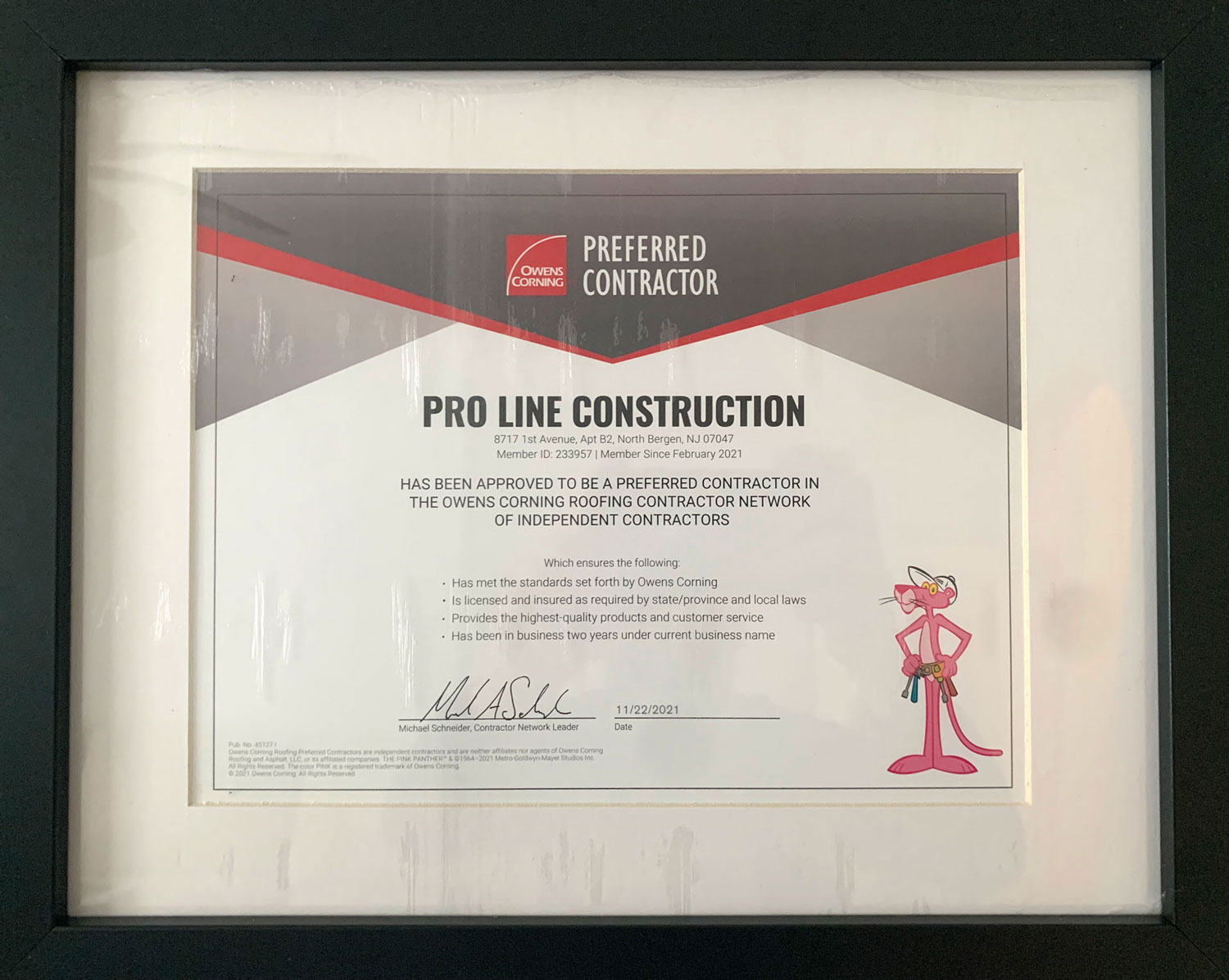
We’re licensed, insured, and we don’t hide costs. You get a detailed estimate upfront, and the final bill matches it. No surprises, no upsells once we’re on your roof.

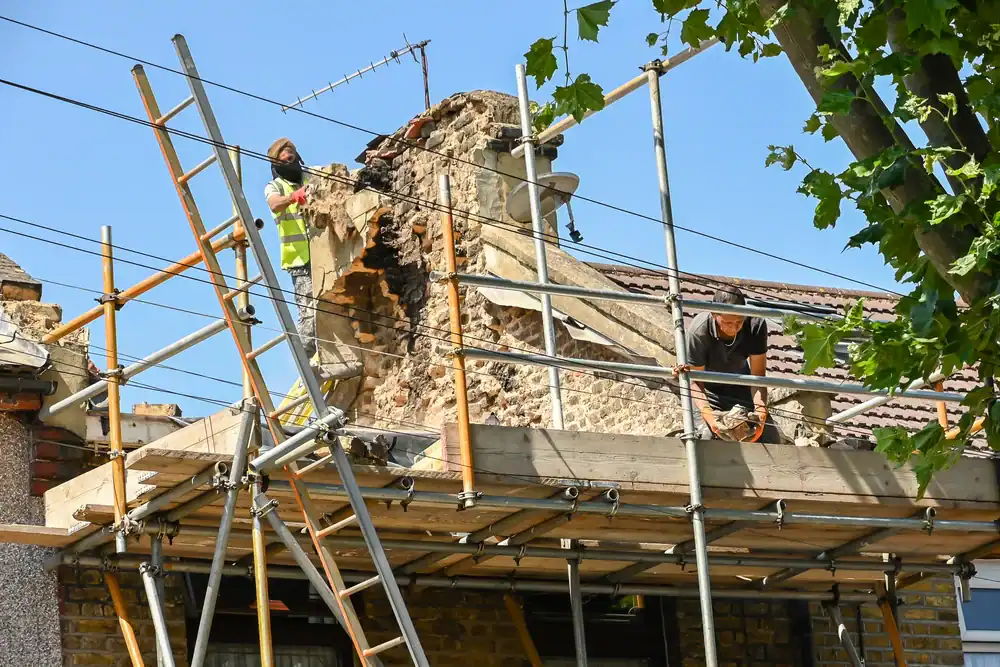
First, we inspect your chimney from top to bottom. That means getting on the roof, checking the crown, the flashing, the flue liner, and the masonry joints. We’re looking for cracks, spalling bricks, water damage, and structural issues.
You get a written assessment with photos. We explain what needs immediate attention, what can wait, and what’s just cosmetic. Then we give you a fixed-price estimate that covers materials, labor, and timeline.
Once you approve, we schedule the work during a weather window that makes sense. Most brick chimney repair jobs in Denville take one to three days depending on the damage. We protect your roof and landscaping, complete the repairs using proper materials rated for New Jersey winters, and clean up completely when we’re done.
You get documentation for your insurance company and a warranty on the work. If you need a chimney sweep or inspection down the road, we handle that too.

Ready to get started?
We handle everything from minor tuckpointing to full chimney rebuilds. That includes repairing cracked chimney crowns, replacing damaged flashing, rebuilding deteriorated brick sections, and fixing chimney leaks that show up as water stains inside your home.
Denville’s freeze-thaw cycles are particularly brutal on masonry. Water gets into small cracks, freezes, expands by 9%, and turns minor damage into major structural problems within a single winter. We see this constantly in homes built during the 40s-60s construction boom that defines this area.
We also handle fireplace repair, chimney installation for new construction or additions, and annual inspections required by New Jersey law. Your homeowner’s insurance likely requires documented annual inspections by a qualified professional. We provide that documentation.
If you’re dealing with spalling bricks, deteriorating mortar joints, or a chimney that’s leaning, those aren’t DIY projects. They’re structural issues that need proper masonry work and materials that can handle Morris County weather.

It depends entirely on what’s wrong. Minor tuckpointing and crown sealing might run $800 to $1,500. Replacing damaged flashing typically costs $1,200 to $2,000. Rebuilding a deteriorated chimney section can range from $3,000 to $8,000 depending on height and access.
Full chimney replacement starts around $10,000 and goes up from there based on size and materials. Emergency repairs during winter cost significantly more because of weather complications and limited contractor availability.
The smartest move is getting an inspection in early fall. Small cracks you fix in October for $1,200 can become $6,000 masonry rebuilds by March after freeze-thaw cycles do their damage. We’ve seen it dozens of times in Denville, especially on homes from the 1940s-60s era that make up over 40% of the township’s housing stock.
New Jersey law requires annual inspections for all chimney types. It’s not optional, and it’s not a scam. Your homeowner’s insurance policy almost certainly requires it too.
Most policies exclude damage from lack of maintenance. If your chimney leaks and causes interior damage, your claim gets denied if you can’t show proof of regular professional inspections. Insurance companies aren’t looking for reasons to pay out, and “I didn’t know I needed inspections” doesn’t hold up.
Beyond legal and insurance requirements, annual inspections catch small problems before they become expensive emergencies. A $300 inspection that identifies an $800 repair is a lot smarter than skipping it and facing a $5,000 emergency rebuild mid-winter. Denville’s weather is hard on chimneys. Freeze-thaw cycles, heavy rain, and temperature swings cause serious deterioration. Catching it early is just basic home maintenance.
A chimney sweep cleans out creosote buildup, removes blockages, and inspects for safety issues. That’s maintenance you need annually if you burn wood. It prevents chimney fires and ensures proper ventilation.
Chimney repair fixes structural problems: cracked crowns, deteriorating mortar, damaged flashing, spalling bricks, or leaks. These are masonry and construction issues that require different skills and materials than sweeping.
You need both, but they’re not the same service. Many chimney sweep companies don’t do actual masonry repair work. They’ll identify problems during an inspection but refer you to a masonry contractor for the fixes. We handle both the inspection side and the repair work, which saves you time coordinating between multiple contractors. If your chimney needs structural repairs, you need someone who understands masonry and building codes, not just someone who cleans flues.
If you’re seeing water stains on your ceiling or walls near the chimney, it’s already serious. Water is getting past your flashing or through cracks in the masonry, and it’s been happening long enough to show up inside.
Water damage doesn’t stay contained. It spreads through framing, insulation, and drywall. It causes mold, rot, and structural deterioration that gets expensive fast. A chimney leak that shows visible interior damage has likely been going on for months or longer.
Even if you’re not seeing interior stains yet, visible cracks in your chimney crown, gaps in the flashing, or deteriorating mortar joints mean water is getting in. Denville’s freeze-thaw cycles will turn those small entry points into major structural problems within one or two winters. Water freezes, expands, makes cracks bigger, and the cycle repeats. It compounds quickly. The time to fix a chimney leak is as soon as you notice any sign of it, not after it’s caused thousands in interior damage.
You can, but it won’t hold up, and you might make things worse. Proper chimney repair requires specific mortar mixes rated for exterior masonry exposed to freeze-thaw cycles. The stuff at big box stores isn’t formulated for that.
Mortar also needs to match the existing mix in terms of hardness and flexibility. If your home was built in the 1950s with lime-based mortar and you patch it with modern Portland cement, the different expansion rates will cause more cracking. It’s a compatibility issue most homeowners don’t know about.
Beyond materials, proper tuckpointing requires removing deteriorated mortar to the right depth, cleaning the joints, and applying new mortar in layers with proper curing time. Slapping patch material over a crack doesn’t address the underlying problem and usually fails within a season. If you’re dealing with structural cracks, spalling bricks, or anything beyond surface-level cosmetic issues, it’s not a DIY project. Improper repairs often cost more to fix later than doing it right the first time.
Late summer through mid-fall is ideal. You want the work done before heating season starts and before winter weather makes masonry work difficult or impossible.
Mortar needs temperatures above 40°F to cure properly. Once November hits in Denville, you’re gambling with weather windows. By December, most masonry contractors won’t take on chimney repairs because conditions aren’t right for proper curing.
Fall scheduling also means better availability and standard pricing. Emergency chimney repairs during winter cost significantly more because of the difficulty and limited contractor availability. If you’re trying to find someone in January when your chimney is leaking during a snowstorm, you’re paying premium rates and dealing with limited options.
Spring works too, but that’s when everyone who ignored problems all winter is calling for repairs. You’ll face longer wait times. The smart play is handling it in September or October when weather is cooperative, contractors have availability, and you’re not competing with the emergency repair crowd.
Other Services we provide in Denville