
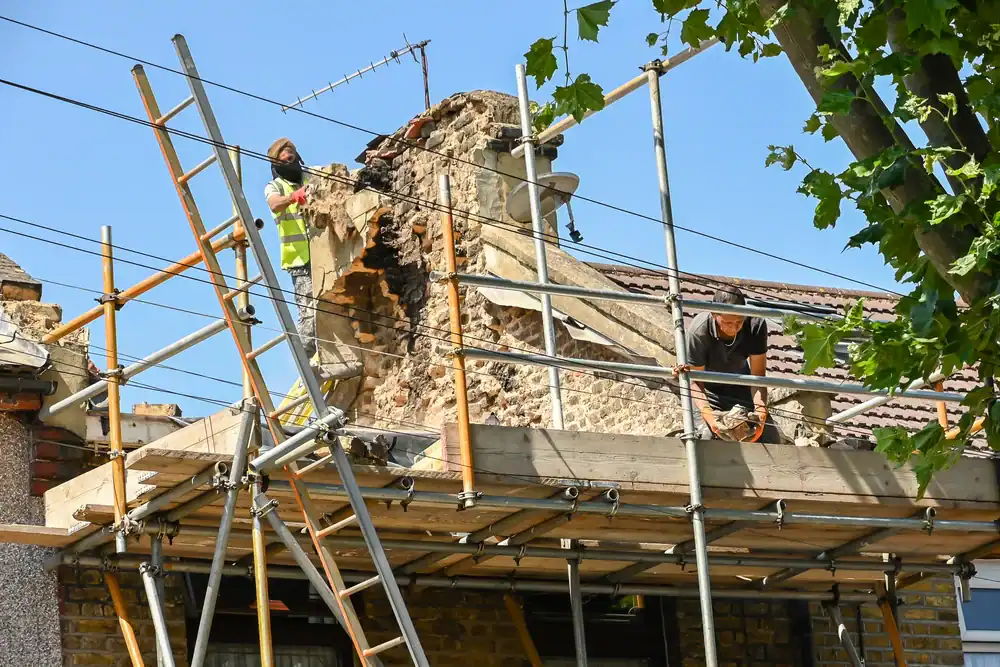

That stain on your ceiling? It’s not just cosmetic. Water’s been working its way through your chimney for months, compromising the structure you can’t see.
By the time most homeowners notice interior damage, the real problem is already eating away at mortar joints, flue liners, and masonry. Every rain adds to it. Every freeze-thaw cycle makes it worse.
Proper chimney repair stops water at the source. You’re not just patching what’s visible. You’re preventing the hidden rot that turns a few hundred dollar fix into a full chimney rebuild. That’s the difference between maintenance and crisis management.
When your chimney works the way it should, you’re not thinking about it during winter. Your fireplace heats your home safely. Your heating system vents properly. And you’re not wondering if that next storm is going to make things worse.
We’ve been handling chimney repair, brick chimney repair, and full masonry work across Lake Hiawatha and Morris County for nearly 20 years. We’re certified contractors who know New Jersey building codes inside and out.
We’ve seen what happens when homeowners wait too long. We’ve also seen what proper maintenance prevents. That’s why we don’t upsell you on work you don’t need, and we don’t downplay problems that’ll cost you more later.
Lake Hiawatha’s weather is tough on chimneys. Freeze-thaw cycles, heavy snow, summer storms—it all adds up. We’ve worked on enough homes here to know exactly what fails first and why. You’re getting someone who’s done this before, not someone learning on your property.

First, we come out and actually look at your chimney. Not a quick glance—a real assessment. We’re checking the crown, the flashing, the mortar joints, the flue liner, and anything else that could be causing problems or about to.
You get a clear explanation of what’s wrong and what it’ll take to fix it. No jargon. No scare tactics. If it’s a small repair, we’ll tell you. If it’s something that needs attention now before winter, we’ll tell you that too. You’ll get a free estimate that breaks down the work and the cost.
Once you’re ready to move forward, we schedule the work around your timeline and the weather. Some repairs need dry conditions. Others we can handle year-round. We manage the project from start to finish, and we don’t leave until the job’s done right.
After the repair, your chimney does what it’s supposed to do. No leaks. No drafts. No safety risks. And if you’re using your fireplace or relying on your heating system, you can do it without wondering if something’s going to fail.

Ready to get started?
We handle everything from minor mortar repairs to full chimney rebuilds. That includes chimney crown repair, flashing replacement, brick chimney repair, chimney leak fixing, repointing, flue liner installation, and fireplace repair. If it’s part of your chimney system, we work on it.
In Lake Hiawatha, the most common issues we see are water damage from failed flashing and deteriorating mortar joints. Both are fixable if you catch them early. New Jersey’s climate doesn’t give you much room for error—once water gets in, it moves fast.
We also handle chimney installation for new construction or additions, and we work with homeowners who need their chimneys inspected before selling or after buying a property. New Jersey law requires annual inspections, and a lot of insurance companies won’t cover you without proof of proper maintenance.
You’re not just getting a repair. You’re getting a contractor who knows Morris County, knows the weather patterns here, and knows what actually works long-term. We use quality materials because we’ve seen what happens when someone cuts corners. And we don’t leave your property until the job’s finished and cleaned up.

It depends entirely on what’s wrong. Minor mortar repairs or small flashing fixes might run a few hundred dollars. A full chimney crown replacement or extensive brick chimney repair can cost several thousand.
Here’s what drives the price: the extent of the damage, the materials needed, and how accessible your chimney is. A two-story home with a steep roof costs more to work on than a single-story ranch. Water damage that’s been sitting for years costs more than a fresh crack you caught early.
We give free estimates, and we break down exactly what you’re paying for. No hidden fees. No surprises. And if there’s a way to fix it for less without compromising quality, we’ll tell you. Emergency repairs in the middle of winter will cost more than scheduled work in the fall—that’s just the reality of the business.
If the structure is still solid and the damage is localized, you’re looking at a repair. If the chimney’s leaning, the bricks are crumbling throughout, or the flue liner is shot, replacement makes more sense.
We see a lot of chimneys in Lake Hiawatha that just need repointing or a new crown. The bones are good—they just need maintenance. But if water’s been getting in for years and the freeze-thaw cycle has done its damage, sometimes rebuilding part or all of the chimney is the only safe option.
During the inspection, we’ll tell you honestly what’s salvageable and what’s not. A repair might buy you another 10-20 years. A replacement gives you a fresh start. Both have their place, and the right call depends on your chimney’s current condition and your long-term plans for the property.
Late spring through early fall. You want dry weather and moderate temperatures for most masonry work, and you want the repair done before you’re running your heating system all winter.
A lot of homeowners wait until they smell smoke in the house or see water stains, and by then it’s November. That’s not ideal. Scheduling gets tight, weather becomes a factor, and if the repair takes longer than expected, you’re without heat.
If you’re seeing signs of damage now—cracks, loose bricks, water stains, or chunks of mortar in your gutters—don’t wait. The damage doesn’t pause for winter. It gets worse. Getting it fixed in the off-season also means better availability and no rush fees. You’re in control of the timeline instead of scrambling when the problem becomes urgent.
Yes. New Jersey law requires it, and your insurance company probably does too. But even if they didn’t, it’s still the smart move.
An annual inspection catches small problems before they become expensive ones. A certified chimney sweep or contractor will check for creosote buildup, structural damage, blockages, and anything else that could cause a fire or carbon monoxide issue. That’s not optional maintenance—that’s safety.
Most chimney fires happen because of creosote buildup that wasn’t cleaned. Most carbon monoxide problems happen because of blockages or cracks that weren’t caught. An inspection costs a fraction of what an emergency repair costs, and it’s a fraction of what a house fire costs. If you’re burning wood, using a gas fireplace, or running an oil furnace, you need that chimney inspected every year.
Most of the time, yes. Chimney leaks usually come from failed flashing, a cracked crown, or deteriorated mortar joints. All of those are repairable without tearing down the chimney.
We locate the source of the leak, fix the entry point, and address any damage the water caused. If the flashing around your chimney isn’t sealed properly, we replace it. If the crown has cracks, we repair or rebuild it. If the mortar’s failing, we repoint the joints.
The key is catching it early. If water’s been leaking for months or years, it might’ve damaged the interior structure or the flue liner. At that point, the repair gets more involved. But in most cases, chimney leak fixing is straightforward work that stops the problem and prevents further damage—no full replacement needed.
A chimney sweep cleans your chimney and inspects for safety issues like creosote buildup or blockages. A masonry company like us handles the structural repairs—brick chimney repair, repointing, crown replacement, flashing, and rebuilds.
You need both, but they do different jobs. If your chimney’s dirty or you haven’t had it cleaned in a year, call a chimney sweep. If you’ve got cracks, leaks, or crumbling mortar, you need a masonry contractor who knows how to fix the structure.
We work on chimneys as part of our broader home improvement and masonry services. That means we’re handling the bricks, the mortar, the crown, the flashing—anything that’s part of the physical chimney system. And because we’ve been doing this in Morris County for nearly two decades, we know what fails here and how to fix it so it lasts.
Other Services we provide in Lake Hiawatha