
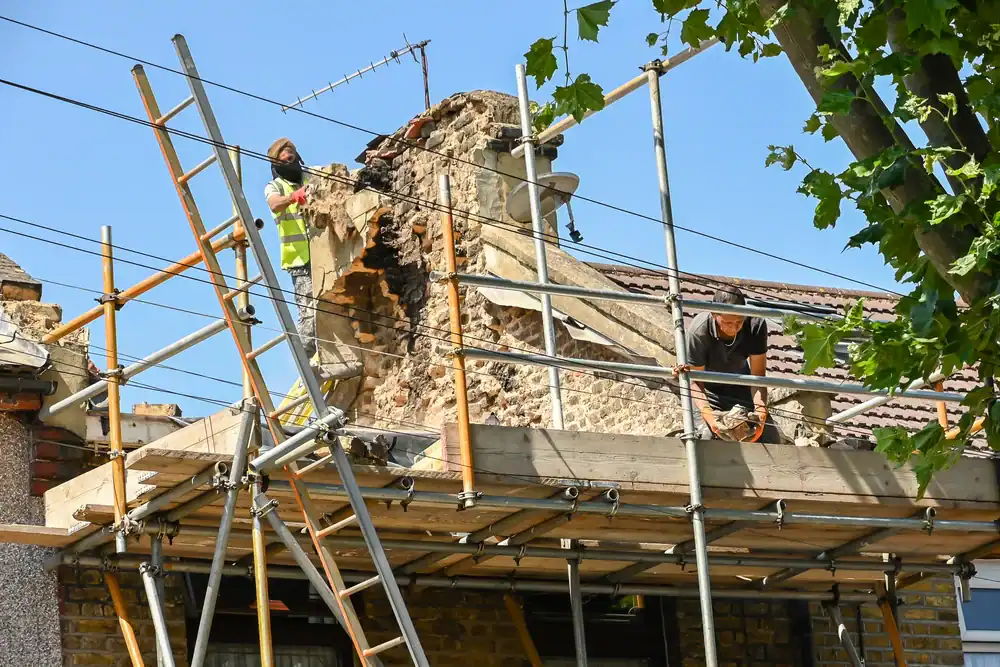

Water causes more damage to chimneys than fire ever will. Your chimney stands above your roofline, exposed to every storm, freeze, and thaw cycle Morris County throws at it. Most of your home is protected by roof and eaves. Your chimney isn’t.
When water gets in through cracks in the crown, damaged flashing, or deteriorating mortar joints, it doesn’t just sit there. It seeps into the masonry, freezes when temperatures drop, and expands. That’s when small cracks become structural problems. Rust forms inside the firebox. The flue liner deteriorates. Heat starts making contact with building materials it should never touch.
You’re not just looking at an eyesore. You’re looking at a fire risk, carbon monoxide concerns, and repair bills that grow every season you wait. Professional chimney repair catches these issues early, seals out moisture, and keeps your fireplace safe to use all winter long.
We’ve been working on Lake Hopatcong properties for nearly 20 years. We’ve repaired chimneys on century-old lake bungalows and newer year-round homes alike. We know what Morris County weather does to masonry, and we know how to fix it right the first time.
We’re certified contractors who follow New Jersey construction codes, not shortcuts. Our pricing is transparent, our estimates are free, and we don’t hide fees or upsell services you don’t need. You’ll know what the job costs before we start, and you’ll know exactly what we’re fixing and why.
Lake Hopatcong homes have character. Many were built as summer cottages in the early 1900s, with fireplaces that have been in use for generations. We respect that history while making sure your chimney is safe, functional, and built to last another hundred years.

First, we inspect your chimney from top to bottom. We’re looking at the crown, the flashing, the mortar joints, the flue liner, and the firebox. We check for cracks, rust, blockages, and any signs of water intrusion. You get a clear explanation of what’s wrong and what needs to be fixed.
Then we give you a written estimate. No surprises, no hidden charges. If you need a full rebuild, we’ll tell you. If it’s just repointing mortar joints or replacing a cracked crown, we’ll tell you that too. You decide what makes sense for your home and your budget.
Once you approve the work, we schedule it and get it done. We protect your property, complete the repairs using quality materials, and clean up when we’re finished. If it’s a bigger job like chimney installation or a full masonry rebuild, we manage every step and keep you updated. You’re not left guessing where things stand.
Before we leave, we walk you through what we did and answer any questions. Your chimney is safe, sealed, and ready for the next season.

Ready to get started?
We handle everything from minor repairs to complete chimney rebuilds. That includes repointing mortar joints, replacing damaged crowns, fixing or replacing flashing, relining flues, repairing fireboxes, and rebuilding chimneys from the roofline up when needed.
Lake Hopatcong’s housing stock is older than most towns in Morris County. The median home was built in 1975, and many lakefront properties date back to the early 1900s. That means chimneys that have weathered decades of freeze-thaw cycles, storms, and constant use. Mortar deteriorates. Crowns crack. Flashing fails. It’s not a matter of if, it’s when.
We also provide chimney inspections, which are required in New Jersey when you replace a furnace, boiler, or water heater. The state’s Uniform Construction Code mandates chimney certification before those installations can happen. We’ll inspect, certify, and handle any repairs needed to bring your chimney up to code.
If you’re dealing with a leak, seeing rust in your firebox, noticing crumbling mortar, or just haven’t had your chimney checked in years, we’ll assess it and fix what needs fixing. Our work is backed by experience, proper licensing, and a commitment to doing it right.

It depends entirely on what’s wrong. Minor repairs like repointing mortar joints or sealing a crown typically run a few hundred dollars. Replacing flashing, relining a flue, or rebuilding a firebox costs more, usually in the $1,000 to $3,000 range. A full chimney rebuild from the roofline up can run $8,000 to $15,000 depending on height and materials.
We give you a free estimate after inspecting your chimney. You’ll know exactly what needs to be done and what it costs before any work starts. We don’t believe in vague quotes or surprise charges. You get a clear breakdown, and you decide if it makes sense.
Most homeowners are surprised how affordable repairs are when caught early. It’s the ones who wait until the chimney is leaning or the firebox is rusted through that end up with big bills. Small problems stay small if you address them.
The National Fire Protection Association recommends annual inspections, especially if you use your fireplace regularly. In New Jersey, where winters are cold and fireplaces get heavy use, late summer or early fall is the best time to schedule it. That gives you time to make repairs before you need the fireplace.
Even if you don’t use your fireplace often, your chimney is still exposed to weather year-round. Water intrusion, freeze-thaw damage, and mortar deterioration happen whether you’re burning fires or not. An inspection catches those issues before they turn into structural problems.
New Jersey also requires chimney certification when you replace a furnace, boiler, or water heater. If you’re planning any of those upgrades, you’ll need an inspection to meet code. We handle both routine inspections and code-required certifications.
Visible cracks in the crown or mortar joints are the most obvious signs. If you see crumbling brick, gaps between the chimney and roofline, or rust inside the firebox, those are red flags. Water stains on the ceiling near the chimney or a musty smell in the fireplace also indicate moisture is getting in.
Sometimes the damage isn’t visible from the ground. The flue liner could be cracked, the flashing could be failing, or the crown could have hairline fractures you can’t see without getting on the roof. That’s why inspections matter, especially for older Lake Hopatcong homes where chimneys have been standing for decades.
If your chimney is leaning, if you hear animals inside, or if smoke isn’t drafting properly when you use the fireplace, don’t wait. Those are serious issues that need immediate attention. The longer you put it off, the more expensive and dangerous it becomes.
We can handle emergency repairs year-round, but major masonry work is best done in warmer months. Mortar needs temperatures above 40 degrees to cure properly. If it’s too cold, the mortar won’t set right, and the repair won’t last.
That said, if you have an active leak, a damaged crown letting water in, or a structural issue that can’t wait, we’ll do what’s needed to stabilize the chimney and prevent further damage. We can install temporary flashing, seal critical cracks, or make emergency fixes that hold until we can complete the full repair in spring.
If you’re dealing with a chimney problem in winter, call us. We’ll assess it, tell you what can be done now, and what should wait. We’re not going to leave you with a dangerous chimney or a leak that’s destroying your home, but we’re also not going to do substandard work just to get it done fast.
Most chimneys can be repaired unless the structural damage is severe. If the mortar joints are failing, the crown is cracked, or the flashing needs replacing, those are straightforward repairs. Even a damaged flue liner can be relined without rebuilding the entire chimney.
You’re looking at a rebuild if the chimney is leaning, if the masonry is crumbling throughout, or if the structure is compromised from the roofline up. That’s more common in very old chimneys that have been neglected for years, or in cases where water damage has been ongoing for a long time.
We’ll inspect your chimney and give you an honest assessment. If it can be repaired, we’ll tell you what that involves and what it costs. If it needs to be rebuilt, we’ll explain why and what that process looks like. You’ll have the information you need to make the right call for your home and budget.
Chimneys leak for a few common reasons. The crown could be cracked, allowing water to seep into the masonry. The flashing where the chimney meets the roof could be damaged or improperly installed. The mortar joints could be deteriorating, letting water in through gaps. Or the chimney could be missing a cap, allowing rain to pour straight down the flue.
We start by identifying where the water is getting in. That requires a thorough inspection of the crown, flashing, mortar, and cap. Once we know the source, we fix it. That might mean resealing or replacing the crown, installing new flashing, repointing mortar joints, or adding a chimney cap.
Water damage doesn’t fix itself. It gets worse every time it rains or snows. The freeze-thaw cycle in Morris County accelerates the deterioration. If you’re seeing water stains, rust, or signs of moisture in or around your chimney, get it looked at. The repair is almost always cheaper than the damage that happens if you wait.
Other Services we provide in Lake Hopatcong