

You light a fire without worrying if carbon monoxide is leaking through cracks you can’t see. Your heating system runs efficiently because the flue isn’t compromised. You’re not scrambling to find emergency chimney sweep companies near me at 9 PM on a Friday when you smell smoke in the wrong room.
Here’s what most people don’t realize until it’s too late. That white staining on your brick chimney? It’s not just cosmetic. By the time you notice it on the outside, water has been destroying the interior structure for months. New Jersey’s freeze-thaw cycles don’t wait for you to get around to it.
A properly repaired chimney means your fireplace actually heats your home instead of drafting cold air down into your living room. It means passing inspection if you’re selling. It means not explaining to your insurance company why you ignored visible damage before the house fire.
The difference between an $800 repair and an $8,000 rebuild usually comes down to six months. That’s how fast minor chimney damage escalates in Morris County weather.
We’ve been handling chimney repair, roofing, and masonry work across Morris County for years. We’re not the biggest operation in North Jersey, but we’re the ones who show up on time and explain what’s actually wrong before we start tearing things apart.
Most of our chimney work in Lincoln Park comes from the same problem. Homeowners notice a small issue, wait through one more winter, then call us when it becomes urgent. We’d rather catch it early when fireplace repair still makes financial sense.
Our team handles everything from brick chimney repair to full chimney installation. We work on older homes where the original masonry is failing and newer builds where the flashing was never done right. Lincoln Park’s housing stock means we see both regularly.

First, we come out and actually look at your chimney. Not a quick glance from the driveway – we’re talking about getting on the roof, checking the crown, inspecting the flashing, looking inside the flue with a camera if needed. You get a real assessment, not a sales pitch.
We’ll tell you what needs to be fixed now and what can wait. If your chimney crown has minor cracks but your flashing is completely shot, we’re addressing the flashing first because that’s what’s letting water in. Priorities matter when you’re trying to avoid spending more than necessary.
Once we agree on the scope, we pull permits if required, schedule the work around weather that actually makes sense for masonry, and complete the job without dragging it out for weeks. Most chimney leak fixing and standard repairs take one to three days depending on extent of damage.
After the work is done, we walk you through what we did and what you should keep an eye on going forward. You’ll know what normal wear looks like versus what means you need to call someone.

Ready to get started?
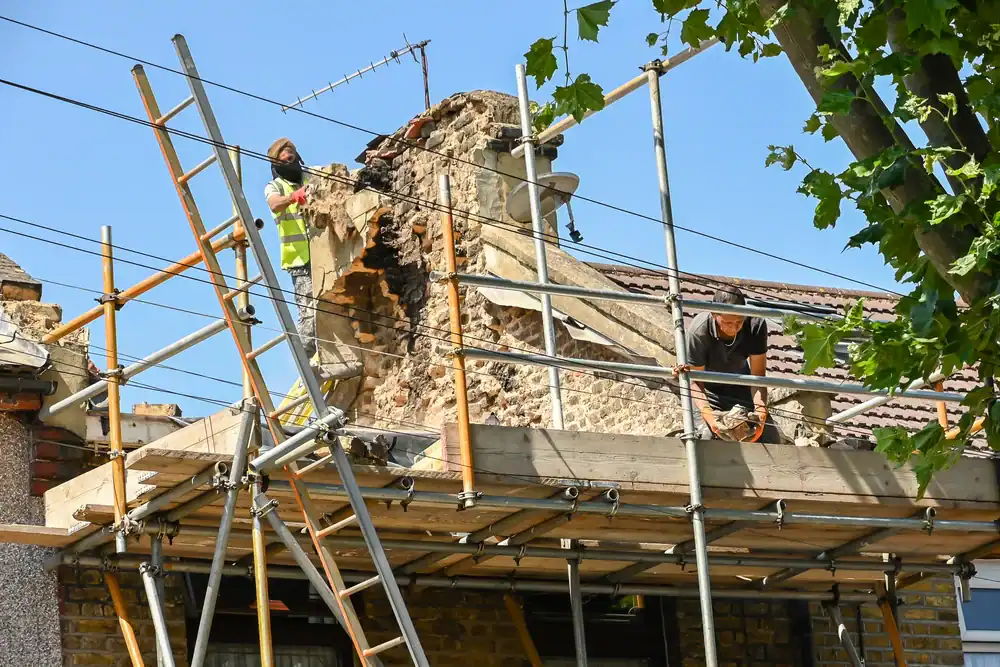
Chimney crown repair is usually where we start because that’s where most water enters. We’re rebuilding deteriorated crowns with proper slope and overhang so water runs off instead of sitting on top of your brick. If the crown is beyond repair, we’re removing it completely and pouring a new one.
Brick and mortar work comes next. We’re repointing joints that have eroded, replacing damaged bricks, and rebuilding sections where the freeze-thaw cycle has pushed the structure out of alignment. Lincoln Park’s weather is brutal on masonry – this isn’t optional maintenance.
Flashing repair or replacement happens on almost every job. The metal seal between your roof and chimney fails faster than the chimney itself. We’re removing old flashing, installing new step flashing and counter flashing, then sealing it properly so water can’t get behind it.
Chimney liner repair or installation addresses what’s happening inside the flue. Cracked liners let carbon monoxide into your home. We’re either repairing sections or installing new stainless steel liners depending on what the inspection shows. This isn’t where you cut corners.

Cleaning removes creosote buildup and debris from inside the flue. Repair fixes structural damage to the chimney itself. They’re completely different services, though you might need both.
If you’re seeing white staining on the exterior brick, pieces of your crown crumbling off, water stains on the ceiling near the chimney, or drafts coming down the flue even when the damper is closed – that’s repair territory. A chimney sweep can’t fix structural problems. They’ll clean the flue and tell you to call a masonry company.
Most chimneys in Lincoln Park need inspection at least once a year, especially if you’re using your fireplace regularly through winter. The National Fire Protection Association recommends annual inspections because small problems become dangerous problems fast. During that inspection, it becomes obvious whether you need cleaning, repair, or both.
Here’s a simple test: if you can see daylight through cracks in your chimney crown or if mortar is literally falling out from between bricks, you’re past the cleaning stage.
Water gets into chimneys through four main entry points: damaged crowns, failed flashing, cracked masonry, or a missing or deteriorated chimney cap. In Morris County, the freeze-thaw cycle makes all of these worse every winter.
The crown is the concrete top of your chimney. When it cracks, water sits on top of the brick instead of running off. That water freezes, expands, cracks widen, more water gets in. We fix this by rebuilding the crown with proper overhang and slope.
Flashing is the metal seal where your chimney meets the roof. It fails because it was installed wrong originally or because it’s rusted through. We’re removing the old flashing completely and installing new step flashing and counter flashing with proper overlap and sealant. This is the most common source of chimney leaks we see.
Cracked bricks and eroded mortar joints let water directly into the chimney structure. Once water is inside the masonry, it’s destroying the chimney from within. We’re repointing the joints and replacing damaged bricks to stop water penetration. Sometimes we’ll also apply breathable waterproofing to the exterior, but only after the structure is sound.
Minor repairs like repointing mortar joints or fixing small crown cracks usually run $500 to $1,500. Mid-level work like replacing flashing, rebuilding a crown, or repairing significant brick damage typically costs $1,500 to $4,000. Major repairs like partial rebuilds or full chimney liner installation can run $4,000 to $10,000 or more.
The actual number depends entirely on what’s wrong and how long it’s been ignored. A small crack in the crown caught early might cost $800 to fix. That same crack left alone through two freeze-thaw cycles could mean rebuilding the entire top section of the chimney for $5,000.
Here’s what drives cost up: extent of water damage, height of the chimney, accessibility for equipment, whether we’re just repairing or need to rebuild sections, and if there’s internal flue damage requiring liner work. A two-story colonial with significant masonry damage costs more than a ranch with a short chimney and minor crown issues.
We give you a written estimate after inspection so there’s no confusion about what you’re paying for. Most homeowners in Lincoln Park are choosing to fix problems early rather than gambling on another winter. The math makes sense when you compare an $1,800 repair now versus an $8,000 emergency rebuild next spring.
If you’re seeing visible damage, smelling smoke in the house when the fireplace is running, or noticing drafting problems – no, don’t use it. The risk isn’t worth it.
Cracked flue liners can let carbon monoxide into your living space. You won’t smell it. You won’t see it. You’ll just start feeling tired and nauseous, and if the exposure continues, it gets worse from there. Structural cracks in the chimney can allow heat and sparks to reach combustible materials in your walls or roof. This is how chimney fires start.
If the damage is purely exterior – like the crown is cracked but the flue is intact – you might be okay to use the fireplace temporarily, but you’re still letting water into the structure every time it rains. That water damage is progressing whether you’re burning fires or not.
The safe answer is to get it inspected before you use it. We can tell you definitively whether it’s safe to operate or if you’re risking a dangerous situation. Most people in Lincoln Park call us in late summer or early fall before they plan to use the fireplace through winter. That timing makes sense – you’re getting repairs done before you need the chimney, and we’re not trying to do masonry work in freezing temperatures.
Most standard chimney repairs take one to three days depending on scope and weather. Minor work like repointing or small crown repairs might be done in a day. Replacing flashing, rebuilding a crown, or doing significant brick work usually takes two to three days. Major rebuilds or liner installations can take a week or more.
Weather controls the timeline more than anything else. We can’t do quality masonry work when it’s below freezing or when rain is in the forecast. Mortar needs proper temperature and dry conditions to cure correctly. If we start your job and weather turns, we’re pausing until conditions are right. Rushing masonry work in bad weather just means you’re paying for repairs that won’t last.
The other factor is what we find once we start. Sometimes damage that looked minor from the ground turns out to be more extensive when we’re actually up there working on it. We’re not going to discover that your chimney needs a partial rebuild and just keep going without talking to you first. You’ll know what we found, what it means for cost and timeline, and you’ll decide how to proceed.
For planning purposes, most Lincoln Park homeowners should expect two to three days for typical chimney repair work. We’re scheduling jobs during dry weather windows, showing up when we say we will, and finishing the work properly before we move to the next job.
Repair means we’re fixing specific damaged sections while the overall structure remains intact. Rebuilding means the chimney is compromised enough that we’re taking down part or all of it and reconstructing from a certain point up.
You’re looking at repair when the damage is localized – cracked crown, failed flashing, some deteriorated mortar joints, a few damaged bricks. The structure is still sound and properly aligned. We’re addressing the problems and restoring the chimney to working condition. This is the most common scenario we see in Lincoln Park.
Rebuilding becomes necessary when the structure itself is failing. If the chimney is leaning, if large sections of brick are severely damaged, if the interior flue is collapsing, or if water damage has compromised the structural integrity – that’s rebuild territory. We’re taking it down to a stable point and reconstructing it properly.
Cost difference is significant. Repairs typically run $1,500 to $4,000. Partial rebuilds start around $4,000 and go up depending on height and extent. Full chimney rebuilds can run $10,000 to $20,000 or more for taller chimneys.
The decision comes down to safety and economics. If the structure is sound, repair makes sense. If we’re going to be back in two years fixing more problems because the underlying structure is failing, rebuilding is actually the more cost-effective choice long-term.
Other Services we provide in Lincoln Park