

You’re not dealing with emergency calls in January when it’s 20 degrees and your chimney’s leaking into the living room. You’re not wondering if that crack is going to turn into a $5,000 problem by spring.
When your chimney repair is handled correctly, you get a structure that holds up against Montville’s freeze-thaw cycles without falling apart. You get a fireplace you can actually use without worrying about carbon monoxide or chimney fires. You get to skip the part where a small issue becomes a total rebuild because someone missed it during a quick inspection.
Most importantly, you’re not scrambling to find a masonry company during peak season when everyone else is doing the same thing. The work gets done when weather cooperates, materials cure properly, and you’re not paying emergency rates because you waited too long.
We’ve been handling chimney repair, roofing, and masonry work across Montville and Morris County for years. We’re licensed, we’re local, and we know exactly what New Jersey weather does to chimneys.
We’re not the cheapest option, and that’s intentional. You’re paying for work that lasts, contractors who show up when they say they will, and repairs that don’t need to be redone in two years. We’ve seen what happens when homeowners go with the lowest bid, and it usually ends with them calling us to fix it anyway.
Our team handles everything from small brick chimney repair to complete rebuilds. We do the inspection, give you a free estimate, and walk you through what actually needs fixing versus what can wait.

First, we come out and actually look at your chimney. Not a quick glance from the ground—we’re talking about a real inspection of the crown, flashing, mortar joints, flue, and any visible damage. We’ll tell you what’s wrong, what caused it, and what happens if you don’t fix it.
Then we give you a free estimate that breaks down the work. No surprises, no upselling you on things you don’t need. If it’s a simple repointing job, we’ll tell you. If the crown needs rebuilding or you’ve got flashing issues causing leaks, we’ll explain why and what’s involved.
Once you approve the work, we schedule it for a time that makes sense—ideally late summer or early fall before the busy season hits. We handle the repair using the right materials for New Jersey’s climate, whether that’s Thermocrete for crack sealing, new flashing, brick replacement, or waterproofing. The job gets done, we clean up, and you’re set for winter.

Ready to get started?
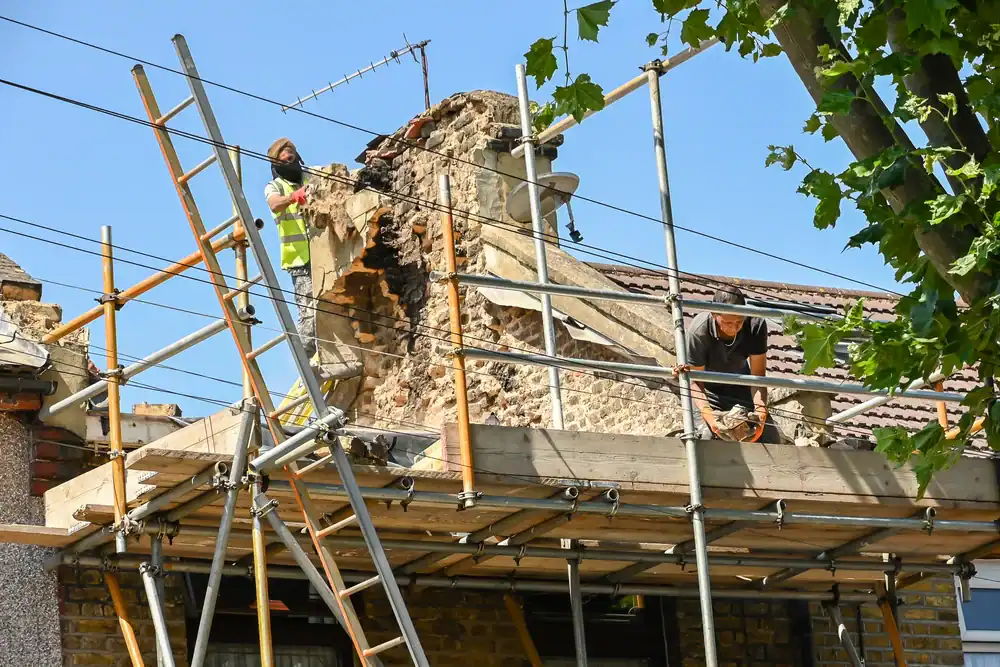
We cover the full range of chimney work. That means repointing mortar joints that have cracked from Montville’s freeze-thaw cycles, replacing damaged bricks, rebuilding chimney crowns that are letting water in, and fixing or replacing flashing that’s supposed to keep your roof sealed.
If you’ve got a leak, we find where it’s actually coming from—not just where you see the water stain. Chimney leaks are tricky because water travels, and a lot of contractors will patch the wrong spot and call it done. We trace it back to the source, whether that’s failed flashing, a cracked crown, or deteriorated mortar.
We also handle fireplace repair for homeowners who’ve noticed draft issues, smoke backing up into the house, or dampers that don’t work right anymore. And if you’re looking at a full chimney installation for a new build or addition, we do that too. New Jersey building codes are strict, and we make sure everything is up to spec so you don’t have issues down the line.
The goal is straightforward: you get a chimney that works, doesn’t leak, and isn’t going to cost you a fortune in emergency repairs when the temperature drops.

It depends entirely on what’s wrong. A basic repointing job where we’re filling in cracked mortar joints might run you a few hundred dollars. A full crown rebuild or flashing replacement is going to cost more—typically in the low thousands depending on the size of your chimney and how much damage there is.
Emergency repairs in the middle of winter will cost you significantly more than scheduling the work in late summer or early fall. That’s partly because of demand—everyone needs help at once—and partly because working in freezing temperatures is harder and materials don’t cure as well.
The best way to get an actual number is to have us come out and look at it. We’ll give you a free estimate that breaks down what needs to be done and what it’ll cost. No guessing, no range so wide it’s meaningless.
Late summer or early fall, before everyone else realizes they need help. By the time October hits, chimney sweep companies near me and masonry contractors are booked solid because that’s when homeowners start thinking about heating season.
Spring is your second-best option, right after winter ends and you can assess any damage from freeze-thaw cycles. The weather is mild, materials cure properly, and you’re not competing with the fall rush.
Avoid scheduling repairs in winter unless it’s an emergency. Cold weather makes the work harder, extends drying times, and limits what materials we can use. Plus, you’ll pay more because of the conditions. If you can plan ahead, you’ll save money and get better results.
Most chimney leaks come from one of three places: failed flashing, a cracked crown, or deteriorated mortar joints. Flashing is the metal seal between your chimney and roof—if it’s installed wrong or starts to rust and separate, water gets in. The crown is the concrete top of your chimney, and if it cracks, water runs straight down into the structure.
Mortar joints break down over time, especially in New Jersey where freeze-thaw cycles are constant. Water seeps into tiny cracks, freezes, expands, and makes the crack bigger. By the time you notice a leak inside your house, the damage has usually been happening for a while.
We fix leaks by finding the actual source, not just patching where you see water. That might mean replacing flashing, rebuilding the crown, repointing mortar, or waterproofing the exterior. Once it’s sealed correctly, the leak stops—and it stays stopped.
New Jersey law requires annual chimney inspections by qualified professionals, but even if it didn’t, you’d want one. Chimneys take a beating from weather, and small problems turn into expensive ones fast if you’re not catching them early.
An inspection catches things like creosote buildup that could cause a chimney fire, cracks in the flue that let carbon monoxide into your house, or mortar damage that’s letting water in. These aren’t things you can see from the ground, and by the time they’re obvious, you’re looking at serious repairs.
If you use your fireplace or wood stove regularly, an annual inspection is non-negotiable. Even if you don’t use it much, you still want someone checking it before you light a fire. The cost of an inspection is a fraction of what you’d pay to fix a problem that got ignored.
Most chimneys can be repaired unless the damage is structural or the deterioration is so widespread that patching it would cost more than starting over. If you’ve got some cracked mortar, a damaged crown, or flashing issues, that’s all repairable.
If the chimney is leaning, the bricks are spalling badly throughout the structure, or the flue liner is destroyed, you’re probably looking at a rebuild. Same thing if the chimney has been neglected for years and there are multiple major issues stacked on top of each other.
We’ll tell you honestly which situation you’re in. There’s no point in doing a repair that’s just going to fail in a year, and there’s no reason to rebuild something that can be fixed properly for a fraction of the cost. We assess it, explain what makes sense, and let you decide.
A chimney sweep cleans out creosote, checks for blockages, and inspects the flue. They’re focused on making sure the chimney is safe to use and that nothing’s clogged or built up inside. That’s an important service, especially if you burn wood regularly.
A masonry company handles the structural work—repairing bricks, rebuilding crowns, repointing mortar, replacing flashing, and fixing leaks. If your chimney needs actual construction work, that’s where we come in.
Some companies do both, but most specialize in one or the other. If your chimney sweep finds damage during an inspection, they’ll usually refer you to a masonry contractor to handle the repairs. We work with sweeps all the time, and it’s a good system—they keep the inside clean and safe, we keep the outside structurally sound.
Other Services we provide in Montville