
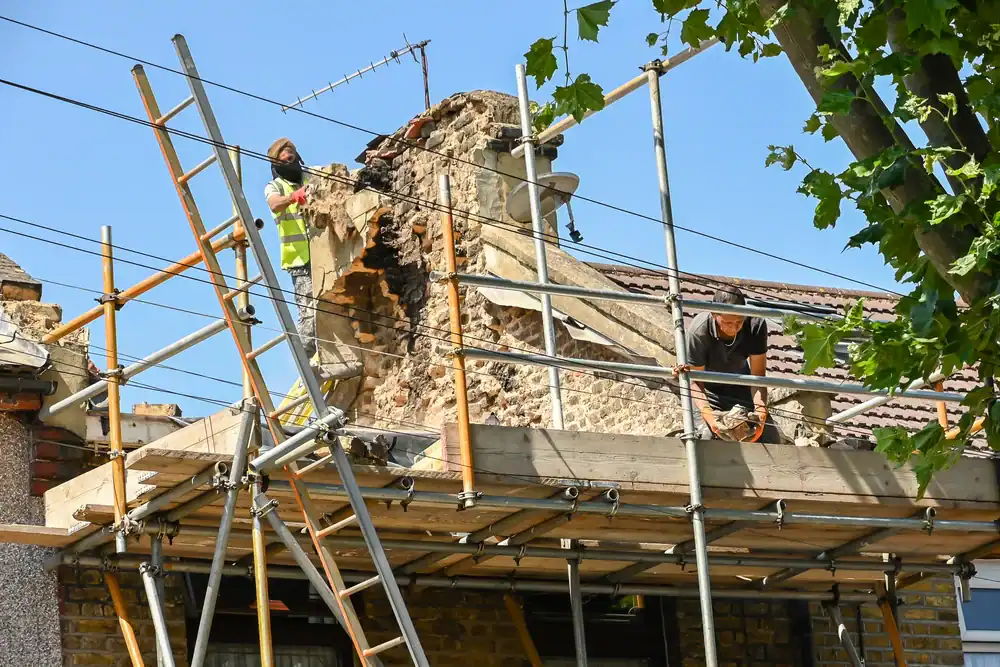

Water gets into cracks. Then it freezes. Then those cracks get bigger. Before you know it, you’re looking at interior water damage, rusted dampers, and bricks that are literally falling apart.
Morris winters are brutal on masonry. The freeze-thaw cycle doesn’t care if your chimney was built in 1920 or 2020. It finds the weak spots and makes them worse.
When you catch these problems early, the fix is straightforward. A repointing job or a crown repair costs a fraction of what you’ll pay if the whole structure starts to fail. And you won’t be dealing with water stains on your ceiling or smoke backing up into your living room because the flue is compromised.
Most homeowners don’t think about their chimney until something goes wrong. That’s normal. But once you see the signs—cracked mortar, white staining on the bricks, pieces of your crown chipping off—waiting just makes it worse and more expensive.
We’ve been working on homes in Morris, NJ and throughout the county for nearly twenty years. We’re not a franchise or a national chain. We’re local contractors who know exactly what New Jersey weather does to chimneys.
Our crews are certified, licensed, and experienced in masonry work. We’ve repaired chimneys on historic colonials in Morristown, modern homes in Parsippany, and everything in between. When we inspect your chimney, we’re looking at the same issues we’ve fixed hundreds of times before.
We don’t upsell you on work you don’t need. If your chimney needs a full rebuild, we’ll tell you. If it just needs repointing and a new crown, that’s what we’ll recommend. You get a free estimate based on what’s actually wrong, not what makes us the most money.

First, we come out and do a thorough inspection. We’re looking at the crown, the flashing, the mortar joints, the flue liner, and the firebox. We check for cracks, spalling bricks, water damage, and structural issues. This inspection is free, and it tells us exactly what needs to be fixed.
Then we give you a detailed estimate. No vague “we’ll figure it out as we go” pricing. You’ll know what the repair costs, what materials we’re using, and how long it takes. If we find something unexpected once we start work, we talk to you before we do anything about it.
The actual repair depends on what’s wrong. Repointing means removing deteriorated mortar and replacing it with fresh material that matches your existing chimney. Crown repairs involve rebuilding the top surface that keeps water out. Flashing work seals the area where your chimney meets your roof. If your liner is damaged, we install a new one that meets current safety codes.
Most repairs take one to three days depending on the scope. We clean up completely when we’re done. And the work is guaranteed, so if something isn’t right, we come back and fix it.

Ready to get started?
Morris County has a lot of older homes with chimneys that weren’t built to modern standards. Many don’t have liners, or the liners are clay tiles that have cracked over the years. Some have crowns that were poured incorrectly and are letting water seep in. Others just have decades of wear from our freeze-thaw cycles.
When we repair your chimney, we’re addressing whatever specific problem you have. That might be tuckpointing the mortar joints, rebuilding a deteriorated crown, replacing damaged flashing, or installing a stainless steel liner. For chimneys with significant brick damage, we remove and replace the affected sections with matching materials.
We also handle fireplace repair if the firebox or damper is damaged. A lot of older fireplaces have fireboxes with cracked firebrick or dampers that don’t seal properly. Both create safety issues and efficiency problems. Fixing them means your fireplace actually works the way it should.
If you’re in Morris and you’re seeing white staining on your chimney bricks (that’s efflorescence, which means water is getting in), or if you’ve got pieces of your crown breaking off, or if your mortar is crumbling when you touch it, you need repairs. Those problems don’t fix themselves, and they get exponentially more expensive the longer you wait.

It depends entirely on what’s wrong with your chimney. Repointing mortar joints typically runs between $1,000 and $3,000 depending on how much of the chimney needs work. A crown repair or rebuild usually costs $800 to $1,500. Flashing replacement runs $500 to $1,200. If you need a new chimney liner installed, that’s generally $2,500 to $5,000 depending on the height and type of liner.
A full chimney rebuild—which you’d only need if the structure is severely damaged or unsafe—can run $8,000 to $15,000 or more. But most homeowners don’t need a full rebuild. They need targeted repairs that address specific problems before they spread.
The only way to know what your repair will cost is to have someone inspect your chimney and give you an actual estimate. Anyone who quotes you a price over the phone without seeing the chimney is guessing. We do free inspections and give you a detailed written estimate before any work starts.
Cleaning removes creosote buildup and blockages from inside the flue. That’s maintenance you should do annually if you use your fireplace regularly. Repair fixes structural damage to the chimney itself—the bricks, mortar, crown, liner, or flashing.
If you’re seeing visible damage on the outside of your chimney—cracks in the crown, crumbling mortar, bricks that are flaking or spalling, rust stains, or white powder on the masonry—you need repairs, not just a cleaning. If you’ve got water leaking into your house around the chimney, or if you’re seeing water stains on the ceiling near the chimney, that’s a structural issue.
Inside problems are harder to spot without an inspection. A damaged flue liner, for example, isn’t something you can see from the ground. But if you’re getting smoke backing up into your house, or if you smell something off when you use your fireplace, those can be signs that the liner is cracked or deteriorating.
Most chimney sweep companies will tell you if they spot structural issues during a cleaning. But if you’re already seeing exterior damage, don’t wait for your annual cleaning to address it. Get it inspected and repaired now before water does more damage.
Most chimney leaks come from one of four places: a damaged crown, failed flashing, cracked masonry, or a missing or damaged chimney cap. The crown is the concrete top that seals the chimney. When it cracks, water runs straight down into the chimney structure. Flashing is the metal seal where the chimney meets the roof, and if it’s not installed correctly or if it deteriorates, water gets in there.
Masonry itself is porous. When the mortar joints break down or bricks crack, water seeps in. Then it freezes, expands, and makes the cracks worse. A chimney cap keeps rain and snow out of the flue, and if you don’t have one or if it’s damaged, water is going directly down your chimney.
Fixing a leak means identifying where the water is getting in and repairing that specific area. If it’s the crown, we rebuild it with proper slope and sealing. If it’s the flashing, we remove the old flashing and install new material with correct overlapping and sealing. If it’s the masonry, we repoint the joints and replace damaged bricks. If you don’t have a cap, we install one.
The key is catching it early. A small crown crack is a quick repair. A crown that’s been leaking for years might mean you also have interior water damage, a rusted damper, and deteriorated masonry that all need to be addressed.
Most chimney repairs take one to three days depending on what needs to be done. Repointing mortar joints on a typical two-story chimney usually takes one to two days. A crown repair or rebuild is typically a one-day job. Flashing replacement can often be done in a day. Installing a new chimney liner takes one to two days depending on the height and accessibility.
Larger projects take longer. If you need extensive masonry work—like replacing a significant section of damaged bricks—that might take three to five days. A full chimney rebuild can take a week or more depending on the size and complexity.
Weather affects the timeline too. We can’t do masonry work in freezing temperatures because mortar won’t cure properly. Heavy rain delays roofing work. If we’re in the middle of your job and the weather turns, we’ll protect the work area and resume as soon as conditions allow.
When we give you an estimate, we’ll tell you how long the job should take. We don’t drag projects out, and we don’t leave your property half-finished for weeks. We start, we finish, we clean up, and we’re done.
No, you shouldn’t use your fireplace during chimney repairs. If we’re working on the crown, the flue, the liner, or doing any masonry work, the chimney isn’t safe to use until the repairs are complete and everything has cured properly.
Mortar needs time to set and cure before it’s exposed to heat and smoke. If you fire up your fireplace before the mortar is fully cured, you risk damaging the fresh work. New chimney liners need to be properly sealed and inspected before you use them. Any work involving the flue or the firebox means the system isn’t intact and shouldn’t be used.
Most repairs happen during spring, summer, or early fall when you’re not using your fireplace anyway. If you need emergency repairs during winter, we’ll get the work done as quickly as possible so you can get back to using your fireplace safely.
If your chimney is damaged enough that it’s unsafe to use, we’ll tell you that upfront during the inspection. Don’t use a fireplace with a cracked liner, deteriorated mortar, or structural damage. The risk of carbon monoxide leaking into your house or a chimney fire isn’t worth it.
Yes. If you’re buying a home in Morris, NJ and it has a chimney, you should have it inspected before you close. A standard home inspection usually includes a visual check of the chimney, but it’s not as thorough as a dedicated chimney inspection by someone who specializes in masonry and chimney systems.
We’ll inspect the entire chimney structure—inside and out. That means checking the crown, flashing, masonry, mortar joints, flue liner, damper, firebox, and chimney cap. We’re looking for damage, deterioration, code violations, and safety issues. Many older homes in Morris County have chimneys that don’t meet current codes, especially when it comes to liners.
After the inspection, you’ll get a detailed report of what we found and what needs to be fixed. If there are problems, you can use that information to negotiate with the seller—either asking them to make repairs before closing or adjusting the purchase price to account for the cost of repairs you’ll need to make.
Chimney repairs can be expensive if there’s significant damage. Finding out about problems before you buy the house means you’re not surprised by a $5,000 repair bill three months after you move in. It’s a small investment that can save you a lot of money and hassle down the road.
Other Services we provide in Morris