

You stop worrying every time it rains. No more water stains spreading across your ceiling or that musty smell creeping into your living room. Your heating system works the way it should, without drafts pulling warm air up and out.
Morris County winters are cold enough without throwing money at a furnace that’s fighting a damaged flue. A properly sealed chimney crown and intact flashing mean water stays outside where it belongs. That’s fewer repair calls, lower heating bills, and one less thing on your list.
The real benefit isn’t just what gets fixed. It’s what doesn’t happen next. No emergency calls in January when contractors are booked solid and charging premium rates. No structural damage spreading to your roofline or interior walls. Just a chimney that does its job quietly while you focus on everything else.
We’ve worked on chimneys, roofs, and masonry across Morris County for nearly two decades. We’re not new to Mount Olive’s weather patterns or the way freeze-thaw cycles tear apart mortar joints every winter.
Most of our work comes from referrals. That happens when you show up on time, do what you said you’d do, and don’t try to upsell people on repairs they don’t need. We’ve seen what happens when chimney problems get ignored, and we’ve fixed enough emergency situations to know that most of them didn’t have to be emergencies.
You’re hiring local contractors who understand how homes are built here and what actually holds up over time. We handle everything from minor brick chimney repair to full rebuilds, and we use materials that make sense for this climate.

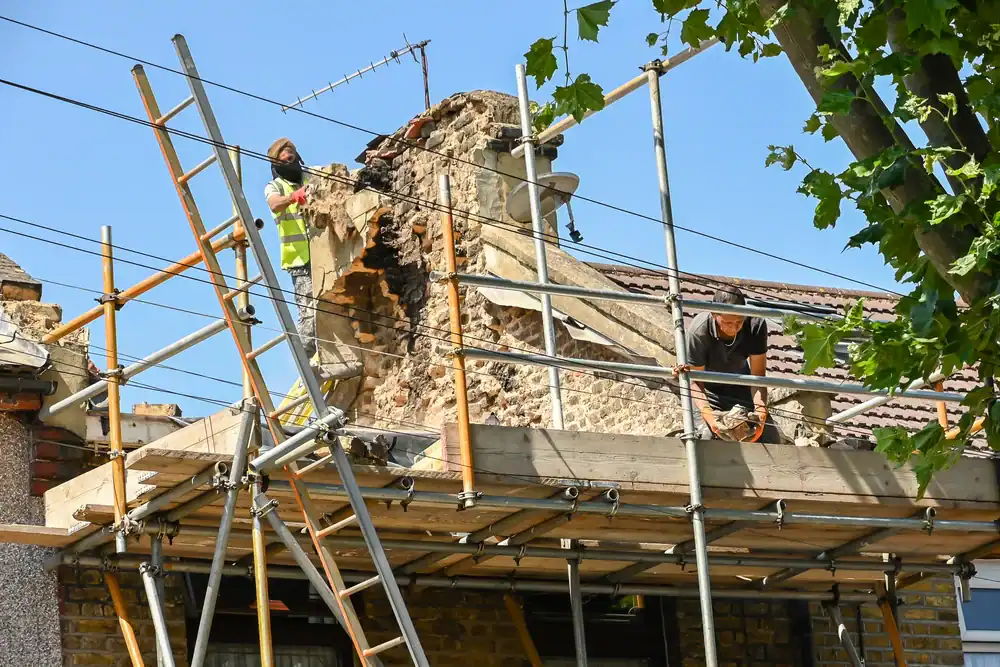
First, we inspect the entire chimney structure from crown to foundation. That means checking for cracks in the masonry, damaged flue liners, deteriorating mortar joints, and flashing that’s pulled away from your roofline. We’re looking for active problems and things that are about to become problems.
Then we give you a straightforward assessment. If your chimney crown has a crack that’s letting water in, we tell you that. If your mortar joints need repointing before next winter, we tell you that too. No padding the estimate with work you don’t need.
The actual repair depends on what’s wrong. Tuckpointing involves removing old mortar and replacing it with fresh material that can handle moisture and temperature swings. Flashing repair means properly sealing the connection between your chimney and roof so water can’t sneak through. Crown repair or replacement gives you a solid, sloped surface that sheds water instead of absorbing it.
We work efficiently because we’ve done this hundreds of times. You get a timeline upfront, and we stick to it unless weather doesn’t cooperate.

Ready to get started?
You get a complete inspection that covers every part of your chimney system. We check the exterior masonry for spalling bricks and cracked mortar. We examine the chimney crown for damage and the flashing for proper sealing. Inside, we inspect the flue liner for cracks or deterioration that could let heat and gases escape into your walls.
Repairs are specific to what your chimney needs. Brick replacement for sections that are crumbling. Mortar repointing where joints have deteriorated. Crown repair or rebuild if the top surface is compromised. Flashing replacement if the seal between chimney and roof has failed. Waterproofing treatment to protect the masonry from moisture penetration.
Mount Olive homes deal with serious temperature swings and heavy precipitation. Your chimney takes the brunt of it. We use materials rated for this climate and install them correctly the first time. That means breathable waterproofing sealers that let moisture escape while keeping rain out. Mortar mixes formulated for freeze-thaw resistance. Flashing that’s properly integrated with your roofing system, not just slapped on top.
If you’re also dealing with fireplace issues or need chimney sweep companies near me for a cleaning and inspection, we coordinate that work so you’re not calling multiple contractors. One visit, complete assessment, everything handled.

Cleaning removes creosote and debris from inside the flue. Repair fixes structural damage to the masonry, crown, flashing, or liner. You need cleaning annually if you use your fireplace regularly—that’s about maintenance and fire prevention.
You need repair when you see visible damage. Cracked bricks, crumbling mortar, water stains on your ceiling near the chimney, pieces of your chimney crown in the yard after a storm. If your chimney is leaking, that’s not a cleaning issue. Water is getting in through damaged masonry or failed flashing.
Sometimes you need both. A chimney sweep might find a cracked flue liner during a cleaning. Or we might find heavy creosote buildup during a repair inspection. The point is to address what’s actually wrong. If you’re not sure, start with an inspection. We’ll tell you exactly what you’re dealing with and what needs to happen next.
Water gets into chimneys through cracks in the crown, failed flashing, or deteriorated masonry. The crown is that concrete top surface—it’s supposed to shed water away from the flue opening. When it cracks, water pools and seeps into the chimney structure. Flashing is the metal seal between your chimney and roof. If it’s loose, corroded, or improperly installed, water runs right through that gap.
Fixing leaks means identifying every entry point and sealing it properly. Crown repair involves patching cracks or, if the damage is extensive, removing the old crown and pouring a new one with proper slope and overhang. Flashing repair means removing the old material, preparing the surface correctly, and installing new flashing that’s integrated with your roofing system and sealed with appropriate caulking.
Sometimes the masonry itself is absorbing water because the bricks are old and porous. In that case, we apply a breathable waterproofing sealer after repairs are complete. It keeps rain out but lets interior moisture escape, which is critical in our climate. You can’t just slap sealant on damaged masonry and call it fixed—you have to repair the structure first, then protect it.
Minor repairs like repointing a small section of mortar joints or patching a chimney crown run a few hundred dollars. More extensive work like replacing multiple courses of brick, rebuilding a crown, or installing new flashing gets into the thousand-plus range. A partial chimney rebuild or full liner replacement is several thousand.
The actual cost depends on how much damage exists, how accessible your chimney is, and what materials are needed. A two-story chimney costs more to repair than a single-story ranch chimney because of the scaffolding and labor involved. Matching old brick for a historic home costs more than standard brick for a newer build.
Here’s what matters more than the initial price: what happens if you don’t fix it. A $400 crown repair now prevents a $3,000 interior water damage repair later. An $800 flashing replacement now means you’re not calling for emergency roof leak repairs during the next major storm. We give you an upfront estimate based on what your chimney actually needs, and we explain what happens if you delay. Then you decide what makes sense for your situation and budget.
Late summer and early fall, before you start using your fireplace and before contractors get slammed with emergency calls. September and October are ideal. The weather is still cooperative for masonry work, which needs decent temperatures for mortar to cure properly. You’re not competing with everyone else who waited until their chimney started leaking in November.
Masonry work requires temperatures above freezing, ideally above 40 degrees, for proper curing. Cold weather slows everything down and can compromise the quality of repairs. Winter repairs are possible but more complicated and often more expensive because of the extra precautions needed.
If you’re already seeing problems—active leaks, crumbling bricks, visible cracks—don’t wait for the perfect season. Get it inspected now and scheduled as soon as possible. A small problem in July is still a small problem. That same issue in December, after months of exposure and freeze-thaw cycles, might be significantly worse. New Jersey requires annual inspections anyway, so staying ahead of repairs makes sense from both a safety and cost perspective.
It depends entirely on what’s damaged. Cosmetic issues like minor mortar deterioration on the exterior? Probably fine to use your fireplace while you schedule repairs. Cracked flue liner, damaged crown letting water into the structure, or significant masonry deterioration? No, don’t use it.
A damaged flue liner is a serious safety issue. The liner contains heat and combustion gases, directing them safely out of your home. Cracks or gaps in the liner let heat escape into the surrounding structure, which can ignite wood framing or other combustible materials. Carbon monoxide can also leak into your living space through a compromised liner.
If you’re not sure whether it’s safe, don’t guess. Have it inspected. We’ll tell you if you can keep using your fireplace or if you need to wait until repairs are complete. Most people don’t realize how much heat a chimney fire generates—over 2,000 degrees. That’s enough to crack even a sound flue liner and cause serious structural damage. If your chimney is already compromised, you’re increasing the risk significantly every time you light a fire.
Yes. The principles are the same whether your chimney is brick, stone, or a combination. We’re repairing mortar joints, replacing damaged masonry units, fixing crowns and flashing, and addressing structural issues. The specific techniques and materials vary slightly, but the core work is identical.
Stone chimneys, especially older ones built with fieldstone, sometimes require more careful matching if stones need replacement. We source stone that matches your existing chimney in size, color, and texture as closely as possible. Brick matching is usually easier since brick dimensions are standardized, but color and texture matching still matters if you want repairs to blend in.
The bigger issue with any masonry chimney is making sure repairs are done correctly for long-term durability. That means using the right mortar mix—not too hard, not too soft—for the specific masonry type. It means proper joint tooling so water sheds away from the mortar instead of pooling. It means understanding how the structure moves and settles over time and accounting for that in the repair. Whether it’s brick or stone, we’re focused on repairs that last because we’re not interested in coming back to fix the same chimney in three years.
Other Services we provide in Mount Olive