

You stop worrying about whether that crack is letting water into your walls. You use your fireplace without wondering if smoke is going to back up into your living room. You’re not calling emergency services because a small problem turned into a big one.
A properly repaired chimney doesn’t just look better. It vents correctly, keeps water out, and maintains the structural integrity of one of your home’s most exposed features. That matters in North Caldwell, where homes built in the 1960s and 70s are dealing with decades of freeze-thaw cycles, UV exposure, and weather that doesn’t quit.
The difference between a $2,000 repair now and a $10,000 rebuild later usually comes down to timing. Most homeowners wait too long because they don’t realize how fast chimney damage accelerates once it starts. Water gets in through a hairline crack, freezes, expands, and suddenly you’re looking at crumbling mortar and loose bricks.
We work throughout Essex County, and we’ve seen what happens to chimneys in this area. The older housing stock in North Caldwell means most properties need regular masonry attention, and chimneys take the worst of it.
Our team includes certified contractors who understand local building codes and the specific challenges that come with maintaining brick structures in New Jersey’s climate. We’re not a national franchise following a script. We’re local contractors who’ve worked on enough chimneys to know what fails first and why.
When you call us, you’re getting someone who can assess the actual condition of your chimney, explain what needs fixing, and give you a realistic timeline and cost. No upselling. No scare tactics. Just honest evaluation and quality work.

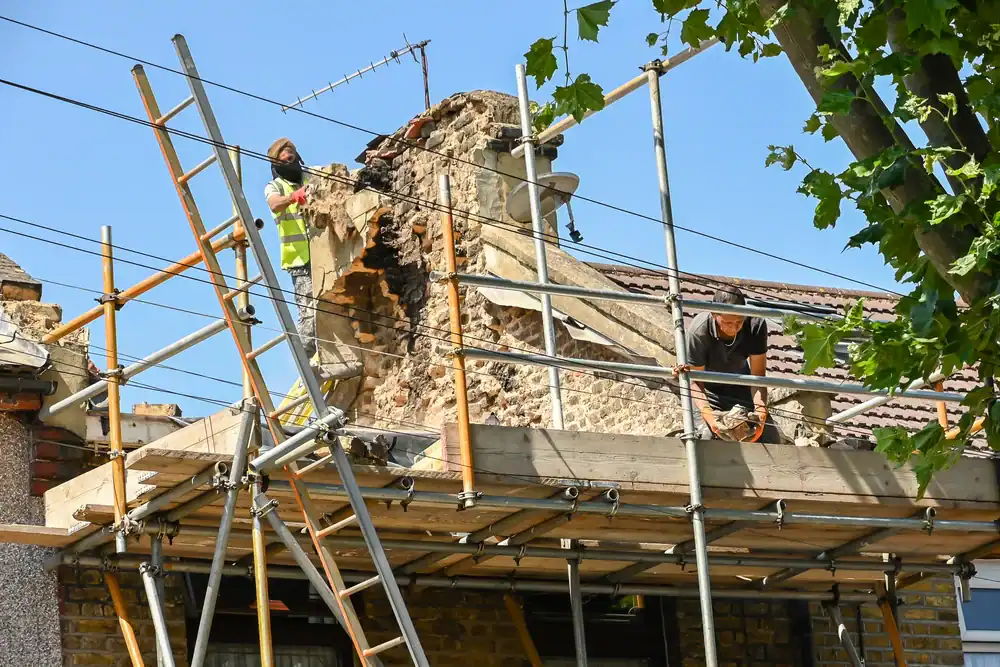
First, we come out and inspect the entire chimney structure from top to bottom. That means looking at the crown, the flashing, the mortar joints, the bricks themselves, and the interior flue. Most problems show obvious signs if you know what to look for.
We’ll tell you exactly what’s wrong and what needs to happen. If it’s repointing mortar joints, we’ll explain that. If the crown is cracked and letting water in, you’ll know. If the flashing around your roofline has failed, that’s a different fix entirely. Each repair gets matched to the actual problem.
Once you approve the work, we schedule it and get it done. For brick chimney repair, that usually means removing damaged mortar, cleaning the joints, and repointing with material that matches your existing masonry. For leaks, we track down the entry point and seal it properly. For structural issues, we may use Thermocrete or other materials to reinforce without full replacement.
The goal is to fix what’s broken, prevent future damage, and do it in a way that lasts. You shouldn’t need us back next year for the same issue.

Ready to get started?
We handle the full range of chimney and fireplace repair. That includes repointing deteriorated mortar joints, replacing damaged bricks, rebuilding chimney crowns, fixing or replacing flashing, sealing leaks, and addressing structural issues before they compromise your home.
In North Caldwell, where 65% of homes are single-family detached properties with chimneys that have been standing for 50+ years, the most common issues we see are water infiltration and mortar deterioration. Both are fixable if caught early. Both get expensive if ignored.
We also work with homeowners who need chimney installation as part of renovation projects or who are dealing with code compliance issues. If you’re buying or selling a home in the area, chimney condition often comes up during inspections. We can handle whatever the inspector flags.
Our service area covers North Caldwell and surrounding Essex County communities. We’re familiar with local building requirements and work with the same material suppliers and inspectors regularly. That means fewer delays and fewer surprises once work begins.

Once a year, ideally in early fall before you start using your fireplace regularly. That’s the industry standard, and it’s based on real risk data.
The Chimney Safety Institute of America tracks thousands of chimney-related incidents annually, and most of them are preventable with regular inspection. In New Jersey’s climate, you’re dealing with moisture, freeze-thaw cycles, and temperature swings that accelerate deterioration. An annual inspection catches problems while they’re still small.
If you use your fireplace frequently or burn wood regularly, you also need to consider creosote buildup. That’s a separate issue from structural damage, but it’s just as important. Creosote causes chimney fires, and those can spread to your home fast. A chimney sweep companies near me search will turn up services that handle cleaning, but make sure they’re also checking for structural issues while they’re up there.
Water gets in through cracks in the crown, failed flashing, damaged mortar joints, or porous bricks. Sometimes it’s one entry point. Sometimes it’s several.
The crown is the concrete top of your chimney, and it takes direct weather exposure year-round. Cracks develop from temperature changes and settling. Once water gets in, it runs down inside the chimney structure and can show up as stains on your ceiling or walls, sometimes far from the actual chimney.
Flashing is the metal seal where your chimney meets your roof. If it’s installed wrong, rusted through, or pulled away from the structure, water pours in during every rainstorm. We fix leaks by identifying the source, removing failed materials, and reinstalling proper waterproofing. For crowns, that might mean resurfacing or rebuilding. For flashing, it means new metal and proper sealing. For mortar, it means repointing the joints that have deteriorated.
Basic repointing runs $1,500 to $3,000 depending on how much of the chimney needs work. Crown repair or replacement adds another $1,000 to $2,000. Full chimney rebuilds start around $10,000 and go up from there.
The wide range comes down to what’s actually wrong. If you’ve got a few damaged mortar joints and a small crack in the crown, you’re on the lower end. If the entire structure is compromised and bricks are loose, you’re looking at more extensive work.
In North Caldwell, where median home values exceed $900,000, chimney repair is a maintenance cost that protects a significant investment. Waiting doesn’t save money. It just shifts the expense from repair to replacement. We give you a detailed estimate after inspection so you know exactly what you’re paying for and why.
Not if there’s structural damage, blockages, or ventilation issues. Using a damaged chimney risks carbon monoxide exposure, chimney fires, or smoke backing up into your home.
About 25% of chimney accidents involve blockages that prevent proper venting. When combustion gases can’t escape, they come back into your living space. Carbon monoxide is odorless and dangerous. It’s not worth the risk.
If you’ve noticed cracks, loose bricks, smoke problems, or water leaks, stop using the fireplace until someone inspects it. We can assess whether it’s safe to use and what repairs are needed to make it functional again. Some issues are minor and quick to fix. Others require more work. Either way, you’ll know where you stand before you light another fire.
Repointing means removing old, deteriorated mortar from the joints between bricks and replacing it with fresh material. Rebuilding means tearing down part or all of the chimney structure and reconstructing it from scratch.
Repointing is maintenance. It addresses mortar that’s cracked, crumbling, or missing before the bricks themselves become unstable. It’s common on older chimneys and costs a fraction of what rebuilding does. Most chimneys in North Caldwell that have been standing for decades need repointing at some point.
Rebuilding becomes necessary when the structural integrity is compromised beyond what repointing can fix. That happens when bricks are damaged, the chimney is leaning, or there’s been significant water damage that’s weakened the entire structure. We’ll tell you which one you need based on what we find during inspection. If repointing will solve the problem, we’re not going to recommend a rebuild.
Yes. We work on new chimney installation projects throughout North Caldwell and Essex County, whether you’re building new, adding a fireplace to an existing home, or replacing a chimney that’s beyond repair.
New installation involves designing the chimney to meet current building codes, selecting appropriate materials, and constructing it to handle the specific venting requirements of your fireplace or heating system. Code requirements have changed over the years, so newer installations often include features that older chimneys don’t have.
We handle the full process from planning through final inspection. That includes coordinating with your other contractors if it’s part of a larger project, pulling necessary permits, and making sure everything meets local requirements. If you’re renovating a home in the area and want to add or upgrade a fireplace, we can walk you through what’s involved and what your options are.
Other Services we provide in North Caldwell