

You’re not dealing with water stains on your ceiling anymore. No more worrying whether that crack is going to turn into a collapse when the temperature drops below freezing again.
Your chimney works the way it should. The flue draws smoke properly. The crown isn’t letting water seep into your masonry. Your fireplace is safe to use without wondering if you’re risking a chimney fire or carbon monoxide leak.
And you’re not calling someone back in six months because the repair didn’t hold. New Jersey winters are brutal on chimneys—freeze-thaw cycles, heavy snow, ice buildup. If the repair isn’t done with the right materials and technique, you’re just buying time. We use methods that account for our climate, so the work lasts.
You also get documentation. New Jersey law requires annual chimney inspections with written records kept for at least five years. When we finish a job, you have what you need to stay compliant and prove your chimney’s been maintained if you ever sell.
We’ve been handling residential and commercial masonry work across Parsippany and Morris County for nearly 20 years. We’re certified, insured, and we’ve seen what happens when chimney repairs get delayed or done poorly.
Most homes in Parsippany were built in the 1960s and 70s. That means chimneys that have been through 50+ winters. Mortar deteriorates. Crowns crack. Flashing fails. We work on these older structures regularly, so we know what to look for and how to fix it without tearing apart more than necessary.
We don’t do high-pressure sales or fake urgency. You call, we come out, we give you a free estimate with transparent pricing, and you decide. If you move forward, we manage the project start to finish and get it done on time.

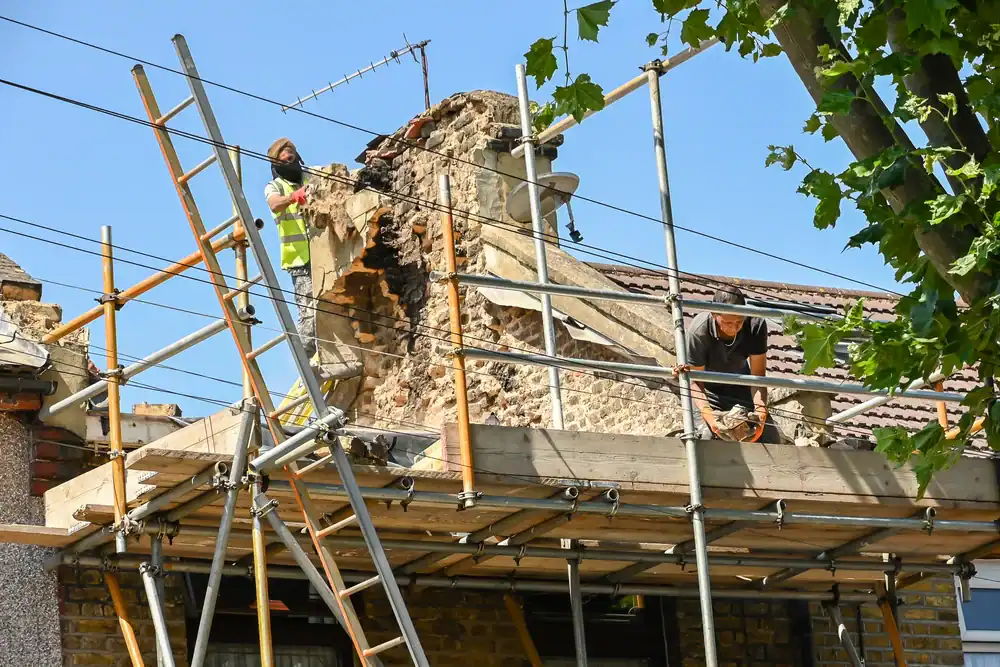
First, we schedule a free consultation at your property. We inspect the chimney from top to bottom—crown, flashing, mortar joints, flue liner, firebox. We’re looking for cracks, water damage, structural issues, anything that’s compromised or will be soon.
Then we walk you through what we found. No jargon, no upselling. If your crown is cracked and letting water in, we tell you. If your flashing is pulling away from the roofline, we show you. We explain what needs to be fixed now versus what you can monitor.
You get a written estimate. It includes materials, labor, timeline, and exactly what we’re doing. No hidden charges, no surprises halfway through the job.
Once you approve, we schedule the work. Most chimney repairs take one to three days depending on the scope. We use quality materials designed to handle New Jersey weather, and we don’t rush. If mortar needs time to cure properly, we give it that time.
After the work’s done, we clean up and walk you through what we did. You get documentation for your records, and if you have questions down the road, you can call.

Ready to get started?
We handle the full range of chimney and fireplace issues. Crown repair and rebuilding when the concrete cap at the top of your chimney is cracked or crumbling. Tuckpointing and mortar joint repair for deteriorated brickwork. Flashing replacement when the metal seal between your chimney and roof is leaking.
We also do flue liner repair or replacement if the interior of your chimney is damaged—this is critical for preventing chimney fires and carbon monoxide leaks. Firebox repair for cracked or damaged fireplace interiors. Chimney waterproofing to protect against future water intrusion.
If you need full chimney installation or rebuilding, we do that too. Some chimneys are too far gone to repair, especially if the foundation is compromised. We’ll tell you honestly if that’s the case.
Parsippany’s climate makes chimney maintenance non-negotiable. Cold winters, fluctuating temperatures, heavy precipitation—it all accelerates deterioration. Nearly half of cold-weather chimney leaks come from damaged crowns, which means a lot of homes are dealing with hidden water damage before they even realize there’s a problem. We see it constantly. The earlier you address it, the less it costs.

Most chimney repairs in Parsippany run between $500 and $1,500, depending on what’s damaged and how extensive the work is. A simple crown repair or tuckpointing job is on the lower end. Flashing replacement, flue liner work, or structural repairs cost more.
If your chimney needs a full rebuild, you’re looking at a bigger investment—sometimes several thousand dollars. But that’s rare unless the structure is severely compromised or there’s been a collapse.
We give free estimates, so you’ll know the cost upfront before any work starts. We don’t believe in vague ranges or surprise charges halfway through. You’ll get a written breakdown of materials, labor, and timeline so you can make an informed decision.
Spring through early fall. Chimney repairs involve masonry work, and the materials need the right temperature range to cure properly. When it’s too cold, mortar doesn’t set correctly, and you end up with a repair that fails faster.
Winter repairs are possible in an emergency—like if you have a major leak or structural issue that can’t wait—but they’re not ideal. The conditions make the work harder, the materials less reliable, and the cost often higher.
If you’re noticing issues now, don’t wait until November when everyone’s scrambling to get their chimneys ready for heating season. Schedule the work while the weather’s cooperating and contractors aren’t booked solid. You’ll get better availability, better working conditions, and a repair that lasts.
Yes. New Jersey law requires annual chimney inspections by a qualified professional, and you’re required to keep written documentation for at least five years. It’s not optional.
Beyond the legal requirement, it’s also practical. Chimneys deteriorate faster than most people realize, especially in our climate. A small crack in the crown can turn into a major water leak over one winter. A damaged flue liner can lead to a chimney fire or carbon monoxide poisoning.
An inspection catches those problems early when they’re cheap and easy to fix. Skipping it means you’re rolling the dice on expensive emergency repairs—or worse, a safety hazard. Most inspections take less than an hour and cost a fraction of what you’d pay to fix damage that could’ve been prevented.
Most chimney leaks come from four places: a cracked crown, failed flashing, damaged mortar joints, or a missing chimney cap. Water gets in, and once it’s inside the masonry, it causes all kinds of problems—especially when it freezes and expands.
Crown damage is the most common culprit. The crown is the concrete cap at the top of your chimney, and it takes a beating from weather. When it cracks, water seeps straight into the brickwork. We repair or rebuild the crown depending on how bad the damage is.
Flashing is the metal seal where your chimney meets the roof. If it’s loose, corroded, or improperly installed, water runs right down into your house. We replace the flashing and make sure it’s sealed correctly. Mortar joint issues get fixed with tuckpointing—removing the old, deteriorated mortar and replacing it with fresh material. If you don’t have a chimney cap, we install one. It’s a simple fix that keeps water, animals, and debris out of your flue.
It depends on what’s damaged, but in most cases, no—you shouldn’t. If the flue liner is cracked or deteriorated, using your fireplace can let carbon monoxide and smoke leak into your home. If there’s creosote buildup and structural damage, you’re risking a chimney fire.
Even if the damage seems minor, like a cracked crown or some loose mortar, using the fireplace can make the problem worse. Heat accelerates deterioration, and water that’s already gotten into the masonry will cause more damage when the chimney heats and cools repeatedly.
The safest move is to have the chimney inspected and repaired before you use it. If you’re in the middle of winter and you need heat, we can assess whether it’s safe to use temporarily or if you need to find an alternative until the repair is done. Don’t guess—get it checked.
If the damage is isolated—a cracked crown, deteriorated mortar joints, failed flashing—you’re looking at a repair. If the chimney structure itself is compromised, you might need a rebuild.
Signs you need more than a repair: the chimney is leaning or pulling away from the house, there are large vertical cracks running through multiple courses of brick, the interior flue is severely damaged, or the foundation is failing. Those are structural issues that can’t be patched.
We’ll tell you honestly what you’re dealing with after the inspection. If a repair will hold and keep your chimney safe, that’s what we’ll recommend. If the structure is too far gone and a repair is just going to be a temporary band-aid, we’ll explain why a rebuild makes more sense. You’re not getting upsold—you’re getting the truth about what your chimney needs.
Other Services we provide in Parsippany