

You’re not dealing with chimney issues because you ignored your home. Morris County weather is brutal on masonry. Freezing winters crack mortar joints, heavy spring rains seep through damaged flashing, and summer humidity accelerates deterioration you can’t even see yet.
When your chimney works the way it should, you’re not wondering if that stain on your ceiling is getting worse. You’re not smelling smoke in rooms where it shouldn’t be. You’re not lying awake during the first cold snap worrying about carbon monoxide or whether that crack you noticed last year is now a safety hazard.
A properly repaired chimney means your fireplace drafts correctly, water stays outside where it belongs, and you’re not bleeding money into emergency masonry work every few years. It means you pass inspections without scrambling. It means the next buyer doesn’t use your chimney as a negotiation point.
You get to use your fireplace without second-guessing whether it’s safe. That’s what a real chimney repair does.
We’ve worked on chimneys throughout Parsippany-Troy Hills and Morris County for nearly twenty years. We’re not a franchise or a referral service. We’re licensed masonry contractors who show up, assess the actual problem, and fix it correctly the first time.
Most of the chimney issues we see in this area are predictable. Older homes near the Troy Hills section deal with original mortar that’s finally giving out. Properties closer to the Parsippany Lake area see more water infiltration because of how weather moves through the region. We know what fails first and why.
You’re hiring people who’ve seen your exact problem dozens of times and know how to fix it without upselling you on work you don’t need. We’re certified, insured, and we’ve built our reputation on being straightforward about what’s broken and what it takes to make it right.

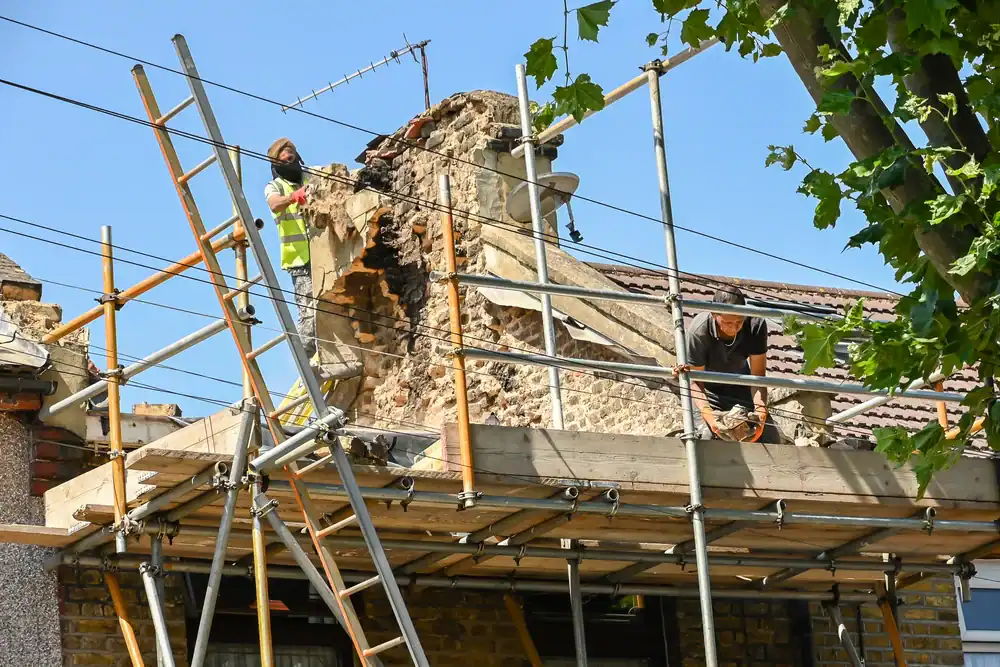
First, we come out and inspect your chimney from top to bottom. That means getting on the roof, checking the crown and cap, examining the flashing, and looking inside the flue. We’re checking for cracks, water damage, loose bricks, deteriorating mortar, and anything that’s letting heat or moisture go where it shouldn’t.
Then we tell you what’s wrong in plain terms. Not “your chimney system is compromised.” We’ll say “your flashing is separating from the roofline and that’s why you’re getting water in your attic” or “the mortar joints on the north side are cracked and need repointing before next winter.” You’ll get a written estimate that breaks down labor, materials, and timeline.
Once you approve the work, we schedule it based on weather and your availability. Most brick chimney repair and chimney leak fixing jobs take one to three days depending on scope. We use materials that match your existing masonry and are built to handle New Jersey winters.
When we’re done, you get a walkthrough of what we fixed, photos of the work, and a timeline for when you should schedule your next inspection. If your repair required any permits or certifications for NJ code compliance, we handle that documentation.

Ready to get started?
Chimney repair isn’t one thing. It’s whatever your chimney actually needs to function safely and keep water out of your house.
That might mean repointing mortar joints where freeze-thaw cycles have caused deterioration. In Parsippany-Troy Hills, this is especially common on north-facing chimneys that don’t get direct sun to dry out moisture. We remove the damaged mortar and replace it with new material that’s properly mixed and cured.
Chimney leak fixing often involves replacing or resealing flashing where your chimney meets the roofline. This is one of the most common failure points we see, and it’s why you’re getting water stains on your ceiling near the chimney. We remove the old flashing, install new corrosion-resistant material, and seal it correctly so water can’t sneak behind it.
If your chimney crown is cracked or your cap is missing, we rebuild or replace those. The crown is the concrete top that sheds water away from the flue, and the cap is the metal cover that keeps rain, animals, and debris out. Both are critical, and both take a beating in Morris County weather.
For chimneys with structural issues like leaning or separated bricks, we assess whether you need a partial rebuild. Sometimes the damage is isolated to the top few courses of brick. Other times, the problem goes deeper and requires more extensive masonry work. We’ll tell you which one you’re dealing with and why.
Fireplace repair is separate but related. If your firebox has cracked firebrick or a damaged damper, we handle that too. A damper that doesn’t seal costs you money in heating bills, and cracked firebrick is a fire hazard.

Most chimney repairs in this area run between $500 and $2,500 depending on what’s broken and how much of it needs fixing. Repointing mortar joints on a small section might cost $500 to $900. Replacing flashing and fixing a minor leak usually falls between $800 and $1,500. A full chimney crown rebuild can run $1,200 to $2,000.
If you’re dealing with structural damage or a partial chimney rebuild, costs go up from there. But here’s the thing: the longer you wait, the more expensive it gets. A $600 flashing repair this year becomes a $3,000 water damage and masonry repair next year if you let it go.
We give you a written estimate after the inspection so you know exactly what you’re paying for. No surprises, no hidden fees. And if you’re getting wildly different quotes from other chimney sweep companies near me, ask what’s included. Sometimes a low bid means they’re only fixing the visible problem and ignoring what’s causing it.
Late spring through early fall. Mortar needs time to cure, and that doesn’t happen well when it’s freezing or when it’s getting soaked by rain immediately after application. If we’re doing any masonry work that involves mortar or sealants, we need a few days of dry weather with temperatures above 40 degrees.
That means May through October is your window for most chimney repairs in Parsippany-Troy Hills. Summer is ideal because you get longer days, stable weather, and faster curing times. Fall is busy because everyone suddenly remembers they have a chimney when the temperature drops, so if you’re planning ahead, schedule before October.
Winter repairs are possible for emergencies, but they cost more and take longer because we’re working around weather. If you’re seeing active leaks or structural issues, don’t wait for perfect weather. But if you’re being proactive, spring and summer are smarter.
If the damage is isolated to specific areas like the crown, cap, flashing, or a section of deteriorated mortar joints, you need repair. If the entire structure is leaning, has widespread brick damage, or the internal flue liner is compromised throughout, you’re looking at replacement or a significant rebuild.
Most chimneys in Parsippany-Troy Hills don’t need full replacement. What they need is targeted repair before small problems turn into big ones. White staining on the exterior bricks means water is getting in and bringing salts to the surface. That’s fixable if you catch it early. Cracks in the crown or missing mortar between bricks are repair jobs, not replacements.
A chimney that’s visibly leaning away from the house or has large vertical cracks running through multiple courses of brick is a different story. That’s a structural issue that might require rebuilding from the roofline up, or in severe cases, a full chimney installation from the ground.
We’ll tell you honestly which category you’re in after the inspection. There’s no point in doing a repair if the underlying structure is failing, and there’s no reason to replace a chimney that just needs some maintenance work.
Water damage gets worse, repair costs go up, and you’re increasing the risk of a chimney fire or carbon monoxide leak. Chimneys don’t heal themselves. Every freeze-thaw cycle makes cracks bigger. Every rainstorm pushes more water into places it shouldn’t be.
If you’ve got a leak, that water is soaking into the wood framing around your chimney, rotting it out slowly. By the time you see staining on your ceiling, the damage inside your walls is already significant. Left alone, you’re looking at structural repairs that go way beyond chimney work.
Damaged mortar and cracks in the chimney structure let heat escape into the surrounding walls. That’s a fire hazard. If the flue liner is cracked, you’re potentially venting carbon monoxide into your home instead of outside. These aren’t scare tactics—they’re the actual risks that come with a deteriorating chimney.
The cost difference between fixing a problem early versus waiting is usually double or triple. A $700 repair this year becomes a $2,000+ emergency next year. And if the damage gets bad enough that it fails a home inspection when you go to sell, you’re fixing it anyway—but now you’re doing it on someone else’s timeline, probably during the busy season when costs are higher.
Yes, because your chimney isn’t just for your fireplace. If you have a furnace, boiler, or water heater that vents through your chimney, it’s working year-round whether you light a fire or not. And even if nothing is venting through it, the structure itself is still exposed to weather and deteriorating over time.
New Jersey building code requires chimney certification when you replace a water heater, furnace, or boiler, or when you sell your home. If your chimney has issues, you’re finding out about them during a transaction when you have zero leverage and no time to shop around for repairs. That’s the worst possible time to discover you need $2,000 worth of masonry work.
An inspection every few years catches problems while they’re still small. We’re looking for the same things whether you use your fireplace daily or haven’t touched it in a decade: deteriorating mortar, damaged flashing, cracks in the crown, animals nesting in the flue, and water infiltration. All of those things happen regardless of how often you burn wood.
If you’re in an older home in Parsippany-Troy Hills and you haven’t had your chimney looked at in five-plus years, you’re overdue. It’s not about finding work to do—it’s about making sure a major structural component of your house isn’t quietly falling apart.
Yes. We’re a full-service masonry company and home exterior contractor, so if your chimney needs work and your roof is due for replacement or your siding has issues, we can coordinate all of it. That saves you time, reduces the number of contractors you’re dealing with, and often makes the overall project more efficient.
A lot of chimney problems are connected to other exterior issues. If your roof is old and the flashing around the chimney is failing, it makes sense to address both at once. If you’ve got brick damage on your chimney and similar deterioration on a brick façade or walkway, we’re handling the same type of repair with the same materials and crew.
We do roofing, siding, gutter work, masonry, and chimney installation and repair throughout Morris County. If you’re planning multiple projects, we can give you a comprehensive assessment and a timeline that makes sense. You’re not coordinating schedules between three different companies or hoping one contractor doesn’t mess up another’s work.
One estimate, one point of contact, one crew that shows up and gets it done. If that makes your life easier, we’re set up to handle it.
Other Services we provide in Parsippany-Troy Hills