

You’re not dealing with a crumbling chimney anymore. No more water stains on your ceiling when it rains. No more wondering if that crack is going to turn into a $10,000 problem next year.
Your fireplace works when you need it. Your insurance company stays happy because you’re meeting New Jersey’s annual inspection requirements. Your family’s safe from carbon monoxide and fire hazards that come with neglected chimneys.
Here’s what actually matters: you’re not scrambling in December when temperatures drop and your heating system needs to work. You handled it early. The repair holds up through freeze-thaw cycles, heavy snow, and those random warm spells that make New Jersey weather so unpredictable. That’s the difference between a quick patch job and chimney repair that actually lasts.
We’ve been handling chimney repair, masonry work, and structural fixes in Randolph and throughout Morris County for years. We’re certified contractors who know local building codes inside and out.
We’ve seen what New Jersey weather does to chimneys. The freeze-thaw cycles that crack mortar joints. The heavy rain that finds every weak point in your flashing. The humidity that accelerates deterioration faster than most homeowners expect.
You’re working with people who’ve repaired hundreds of chimneys in this area. We know which materials hold up and which ones fail after two winters. We know what inspectors look for and what your insurance company needs documented. That’s not something you get from a general handyman.

First, we inspect the entire chimney system. Not just the obvious problem you called about. We’re looking at the crown, the flashing, the mortar joints, the liner, and the interior for creosote buildup. You get a full assessment of what needs fixing now and what you should watch.
Then we give you a straightforward estimate. No surprise charges later. We explain what we found, why it matters, and what happens if you wait. Some repairs are urgent. Others can be scheduled strategically before they become emergencies.
The actual repair depends on what your chimney needs. Could be repointing mortar joints, replacing damaged bricks, installing new flashing, or relining with Thermocrete for better durability. We use materials designed to handle New Jersey’s climate, not whatever’s cheapest. The work gets done on schedule, and we clean up completely when we’re finished.
You get documentation for your records and your insurance company. If an annual inspection is due, we handle that too so you’re compliant with state requirements.

Ready to get started?
Chimney repair in Randolph covers more than just fixing visible cracks. You’re dealing with a system that has to withstand extreme temperature swings, constant moisture exposure, and structural stress from your roof settling over time.
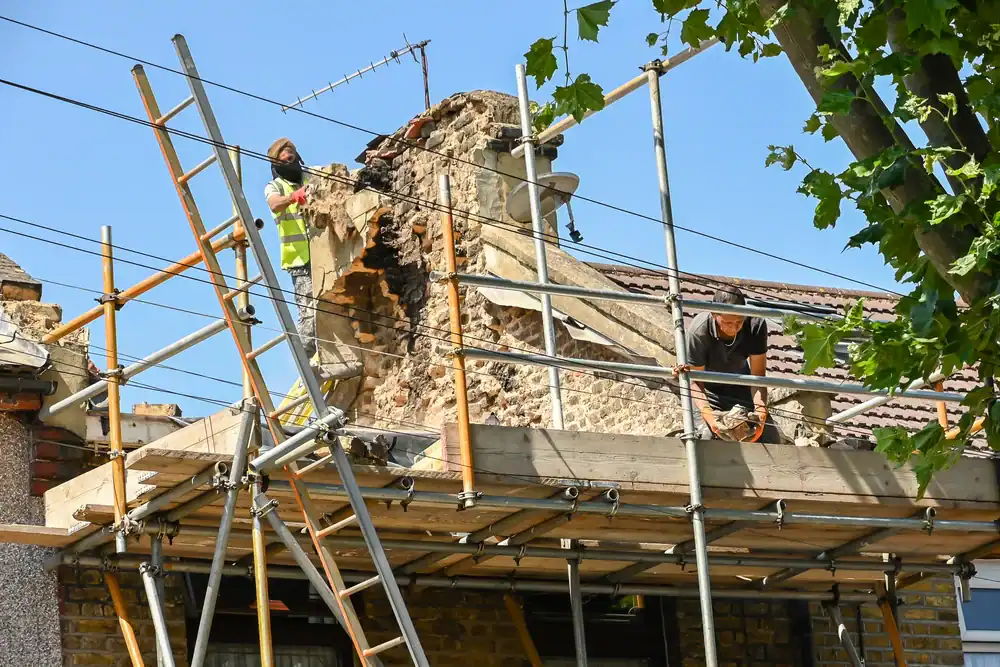
We handle brick chimney repair when mortar deteriorates or bricks crack from freeze-thaw damage. That’s common in Morris County where winter temperatures regularly drop below freezing, then spike back up. Water gets into tiny cracks, freezes, expands, and turns minor issues into major structural problems.
Chimney leak fixing addresses water infiltration at the source. Usually that’s damaged flashing where your chimney meets the roof, a cracked crown, or a missing chimney cap. We identify exactly where water’s getting in and fix it permanently, not just seal it temporarily.
If your liner’s compromised, we install Thermocrete lining systems that resist acid from flue gases and provide better insulation than traditional clay tiles. This matters for both safety and efficiency. A damaged liner lets carbon monoxide seep into your home and reduces your heating system’s performance.
Fireplace repair and chimney installation services are also available when you need more than basic fixes. Sometimes the most cost-effective solution is replacing components that are beyond repair rather than patching them repeatedly.

Most chimney repairs in Randolph run between $450 and $2,500, depending on what’s damaged and how extensive the work is. Simple mortar repointing might cost $500 to $1,000. Replacing a chimney crown or fixing significant brick damage runs $1,500 to $3,500. Full chimney rebuilds can reach $8,000 to $15,000 if the structure’s severely compromised.
Here’s what affects your cost: how accessible your chimney is, how much material needs replacing, whether you need specialized equipment like scaffolding, and what’s causing the damage. A small leak caught early costs a fraction of what you’ll pay if water damage spreads to your roof structure or interior walls.
We give you a detailed estimate upfront after inspecting your chimney. No guessing. You know exactly what you’re paying for and why each repair matters. That’s how you make an informed decision instead of hoping a cheap patch job holds up.
Yes. New Jersey law requires annual chimney inspections by qualified professionals. This isn’t optional, and it’s not just a recommendation from chimney sweep companies trying to drum up business.
Your homeowner’s insurance likely requires it too. Most policies mandate annual inspections to maintain coverage. If you have a chimney fire or carbon monoxide incident and can’t prove you’ve been maintaining the system, your claim could be denied. That’s an expensive lesson you don’t want to learn the hard way.
Beyond legal requirements, annual inspections catch problems early. Creosote buildup happens gradually. Mortar deteriorates slowly. Small cracks grow over time. An inspection identifies these issues when they’re still cheap to fix. Skip inspections for a few years and you’re looking at emergency repairs that cost five to ten times more than preventive maintenance. The inspection pays for itself by preventing one major repair.
Water stains on your ceiling or walls near the chimney mean you have active leaks. Don’t wait on this. Water damage spreads fast and leads to mold, rotted wood, and structural issues that cost thousands to remediate.
Crumbling mortar between bricks, especially if you can pull pieces out by hand, means your chimney’s structural integrity is compromised. This gets worse quickly through freeze-thaw cycles. Loose or damaged bricks are equally urgent because they can fall and cause serious injury or property damage.
White staining on exterior bricks (efflorescence) indicates moisture is penetrating your chimney and pulling salts to the surface. Rust on your damper or firebox means water’s getting in. A damaged chimney cap or crown lets rain and snow pour directly into your chimney system. Any of these signs warrant immediate inspection because the underlying damage is usually worse than what’s visible from the ground.
Minor repairs like repointing mortar joints or replacing a chimney cap usually take one to two days. More extensive brick chimney repair involving significant masonry work might take three to five days depending on the scope and weather conditions.
Chimney relining projects typically take two to three days. Full chimney rebuilds can take one to two weeks. Weather plays a big role in timing because we can’t do quality masonry work in freezing temperatures or heavy rain. Mortar needs proper curing conditions to achieve full strength.
We schedule your project with realistic timelines and keep you updated if anything changes. Most homeowners are surprised how quickly we complete repairs once we start. The key is getting on the schedule early, especially if you’re booking for fall when demand spikes before winter. Waiting until November when everyone suddenly remembers they have a chimney means you might not get scheduled until spring.
That depends entirely on what’s damaged and how severe the problem is. If you have structural cracks, a damaged liner, or significant creosote buildup, using your fireplace is dangerous. You’re risking a chimney fire or carbon monoxide exposure.
Minor cosmetic issues like small mortar cracks on the exterior might not prevent safe fireplace use, but you need a professional assessment to know for sure. Don’t guess. The consequences of being wrong include house fires and carbon monoxide poisoning.
If we’ve identified your chimney as unsafe to use, we’ll tell you directly and explain why. Your heating season doesn’t have to be ruined though. We prioritize urgent repairs so you’re not without your fireplace all winter. The worst situation is ignoring problems until you have an emergency mid-January when repair timelines stretch out because of weather and high demand. Get it inspected now, know where you stand, and make an informed decision about timing.
Chimney repair addresses specific damaged components while keeping the overall structure intact. You’re replacing sections of brick, repointing mortar, fixing the crown, updating flashing, or relining the flue. The chimney’s foundation and most of its structure remain unchanged.
Chimney rebuilding means tearing down part or all of the existing chimney and reconstructing it from scratch. This becomes necessary when damage is too extensive for repairs to be cost-effective or safe. If your chimney has major structural cracks, severe water damage throughout, or the foundation has settled significantly, rebuilding might be your only real option.
Here’s how to think about it: if 60% or more of your chimney needs work, rebuilding often costs less than trying to repair everything piecemeal. You get a completely sound structure with modern materials and techniques rather than patching an old system that’ll need more repairs in a few years. We’ll be straight with you about which approach makes sense for your situation and your budget. Sometimes repair is the smart move. Sometimes it’s throwing good money after bad.
Other Services we provide in Randolph