
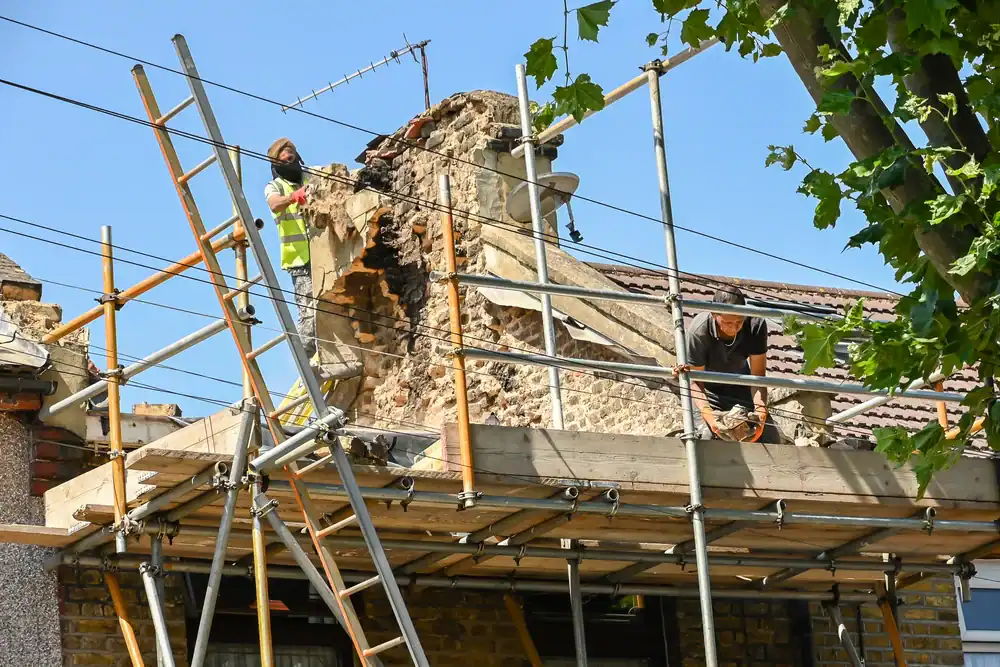

You’re not looking for a Band-Aid. You need someone who can assess the real problem—whether it’s a cracked crown, failing flashing, or mortar joints that are crumbling after years of freeze-thaw cycles—and fix it right.
Upper Montclair’s historic homes weren’t built to handle decades of moisture infiltration. When water gets into your masonry, it doesn’t just sit there. It freezes, expands, and breaks apart the structure from the inside out. That’s how a small crack becomes a $15,000 rebuild.
The goal isn’t just patching what’s visible. It’s making sure your chimney can handle another twenty winters without leaking into your living room, rusting out your damper, or putting your family at risk. That means proper flashing, repointing that actually lasts, and materials that hold up to New Jersey weather.
You’ll know the difference when the next rainstorm comes through and your ceiling stays dry.
We’ve been handling chimney and masonry work across Essex County for years. We’re licensed, we’re local, and we’ve worked on enough colonial-era chimneys in Upper Montclair to know what holds up and what doesn’t.
You’re not getting a sales pitch. You’re getting a free estimate from someone who’ll tell you exactly what needs fixing and what can wait. We’ve rebuilt chimneys that were one winter away from collapse, and we’ve sealed leaks that other companies said needed full replacement.
The homes here deserve contractors who respect the craftsmanship that went into them. That’s what we do.

First, we come out and inspect the entire chimney—not just the part you’re worried about. We’re looking at the crown, the flashing, the mortar joints, the liner, and anything else that could be compromised. You’ll get a clear explanation of what’s wrong and why it matters.
Then we give you a free estimate with options. If you need repointing, we’ll show you where the mortar’s failed. If the flashing is shot, we’ll explain how water’s getting in. If the whole thing needs rebuilding, we’ll walk you through what that looks like and why it’s the right call.
Once you approve the work, we handle it start to finish. That means proper materials, clean work, and a chimney that’s built to last. No shortcuts, no surprises.
You’ll know exactly what you’re paying for before we start, and you’ll see the difference when the job’s done.

Ready to get started?
Depending on what your chimney needs, we handle everything from minor repointing to full rebuilds. That includes brick chimney repair, crown sealing, flashing replacement, chimney leak fixing, and liner installation. If you’re dealing with cracked masonry, we’ll repoint the joints with mortar that’s mixed for New Jersey’s climate—not the cheap stuff that crumbles in five years.
For homes in Upper Montclair, flashing failure is one of the most common issues we see. The metal that seals the gap between your roof and chimney takes a beating from snow, ice, and temperature swings. When it fails, water pours straight into your walls. We replace it with properly installed, durable flashing that actually keeps water out.
If your chimney’s beyond repair, we’ll rebuild it. That means tearing down to a stable point, rebuilding with quality brick and mortar, and making sure the new structure is properly lined and capped. It’s not the cheapest option, but it’s the one that stops the problem for good.
You’re also getting contractors who know local building codes and won’t leave you with work that doesn’t pass inspection.

If the damage is localized—a few cracked bricks, some missing mortar, a failing crown—repair usually makes sense. But if the structure is leaning, if there’s widespread cracking, or if water’s been getting in for years and the interior is compromised, rebuilding is often the smarter move.
We’ll tell you which one applies to your situation. A lot of homeowners try to patch things year after year, spending thousands on repairs that don’t hold because the underlying structure is shot. Rebuilding costs more upfront, but it stops the cycle of constant fixes.
During the inspection, we’ll show you what’s salvageable and what’s not. If half your chimney is solid and the other half is crumbling, we can sometimes rebuild just the damaged section. It depends on the specific condition of your masonry and how the chimney was originally constructed.
Most leaks come from failed flashing, cracked crowns, or missing chimney caps. Flashing is the metal seal between your roof and chimney—it’s supposed to keep water out, but it degrades over time. Crowns are the concrete top of the chimney, and when they crack, water runs straight down into the masonry. Caps keep rain and snow from pouring directly into the flue.
Yes, leaks can be fixed permanently if the repair addresses the actual source. That means replacing flashing correctly, rebuilding or sealing the crown with proper materials, and installing a quality cap. A lot of “fixes” just smear some caulk over the problem and call it done. That lasts maybe a season.
We use materials designed for this climate—sealants that hold up to freeze-thaw cycles, flashing that’s installed under the shingles (not just slapped on top), and crowns that are built to shed water. If the masonry itself is too damaged, we’ll repoint or rebuild as needed so the repair actually lasts.
Once a year, ideally before you start using your fireplace in the fall. That’s when you catch small problems—a little crack, some loose mortar, a bird’s nest in the flue—before they turn into expensive emergencies.
If you use your fireplace regularly, you also need the chimney swept annually to remove creosote buildup. Creosote is the leading cause of chimney fires, and it accumulates every time you burn wood. A lot of homeowners don’t realize their chimney is coated in flammable residue until it’s too late.
Even if you don’t use your fireplace, the chimney still takes a beating from weather. Water infiltration, freeze-thaw damage, and UV exposure don’t stop just because the flue isn’t active. An annual inspection catches deterioration early, when repairs are still affordable. Waiting until you see water stains on your ceiling or smell smoke in your living room means the damage is already serious.
It depends on what’s wrong. If there’s structural damage, cracks in the liner, or any issue that could let smoke or carbon monoxide into your home, no—don’t use it. If the problem is cosmetic or limited to the exterior, you might be fine temporarily, but you’re still risking further damage.
Carbon monoxide poisoning is not something to gamble with. If your chimney isn’t venting properly because of blockages, cracks, or liner failure, deadly gases can back up into your house. You won’t smell it, and you won’t see it. The first sign is often headaches, dizziness, or worse.
When in doubt, get it inspected before you light another fire. We’ll tell you if it’s safe to use or if it needs immediate attention. A lot of chimneys look fine from the outside but have hidden damage inside the flue. That’s where camera inspections come in—we can see exactly what’s going on and give you a straight answer about whether it’s safe to use.
Repointing means removing the old, damaged mortar between the bricks and replacing it with new mortar. It’s a repair that restores the integrity of the masonry without tearing the whole thing down. Rebuilding means taking apart the chimney—either partially or completely—and reconstructing it from scratch.
Repointing works when the bricks are still in good shape but the mortar joints have deteriorated. That’s common in older homes where the original mortar wasn’t designed to handle a century of weather. We grind out the old mortar, clean the joints, and fill them with a mix that’s formulated for durability in this climate.
Rebuilding is necessary when the structure itself is compromised—leaning, crumbling, or so damaged that repointing won’t hold. If the bricks are spalling (flaking apart), if there’s major cracking, or if the chimney has been leaking for years and the interior is rotted, rebuilding is the only real fix. It costs more, but it gives you a chimney that’ll last another lifetime instead of limping along for a few more years.
It depends entirely on what needs fixing. Minor repointing might run a few hundred dollars. Flashing replacement, crown repair, or chimney cap installation typically falls in the $500 to $1,500 range. A full rebuild can run several thousand, depending on the height and condition of the chimney.
We don’t give ballpark estimates over the phone because every chimney is different. A two-story colonial with a massive brick chimney that’s been leaking for a decade is a completely different job than a ranch with a small chimney that just needs some mortar touched up.
What we do is come out, assess the actual condition, and give you a free written estimate that breaks down exactly what needs to be done and what it’ll cost. No surprises, no upselling. If there’s a cheaper option that’ll hold up, we’ll tell you. If the only real fix is a bigger job, we’ll explain why. You’ll have the information you need to make the right call for your home and your budget.
Other Services we provide in Upper Montclair