
You’re not calling us because everything’s fine. Something’s cracked, leaking, or just doesn’t look stable anymore. Maybe you’ve noticed water stains on the ceiling near your fireplace. Maybe the mortar’s crumbling and you’re wondering if the whole thing’s about to come down.
Here’s what changes after we fix it. Your chimney stops letting water into your house. That means no more stains spreading across your walls, no rot creeping into your framing, and no mold growing where you can’t see it. You can actually use your fireplace without worrying about smoke backing up into your living room or carbon monoxide building up because the flue’s blocked.
Your home value stays intact. In West Orange, where the median home is worth over $568,000, a damaged chimney isn’t just ugly—it’s a red flag to buyers and inspectors. You also stay compliant with New Jersey’s annual chimney inspection requirements, which means your insurance stays valid and you’ve got documentation if you ever need it.
The repair holds up. We’re not patching things with caulk and hope. You get rebuilt masonry, proper flashing, and a crown that actually sheds water the way it’s supposed to.
We’ve been handling chimney repair and masonry work in West Orange for years. We’re not a franchise or a referral service—we’re the crew that shows up, does the work, and stands behind it.
Most of the homes we work on were built between the 1940s and 1960s. That means original brick, aging mortar joints, and chimneys that have been through decades of New Jersey winters. We’ve seen what fails first, what lasts, and what actually needs replacing vs. what just needs maintenance.
We’re licensed, insured, and up to date on New Jersey building codes and NFPA standards. Every project gets a customized estimate based on what your chimney actually needs—not a one-size-fits-all price or an upsell on work you don’t need. You’ll know what we’re doing, why we’re doing it, and what it costs before we start.

First, we come out and inspect the chimney from top to bottom. That means getting on the roof, checking the crown and cap, looking at the flashing where the chimney meets the roof, and inspecting the masonry for cracks, spalling brick, or deteriorated mortar joints. We also check the flue and damper to make sure everything’s structurally sound and safe to use.
Once we know what’s wrong, we give you a written estimate that breaks down the work and the cost. No surprises. If it’s a simple repair—like repointing mortar joints or replacing a chimney cap—we’ll tell you. If the crown is cracked and letting water in, or if the flashing needs to be rebuilt, we’ll explain why that matters and what happens if you don’t fix it.
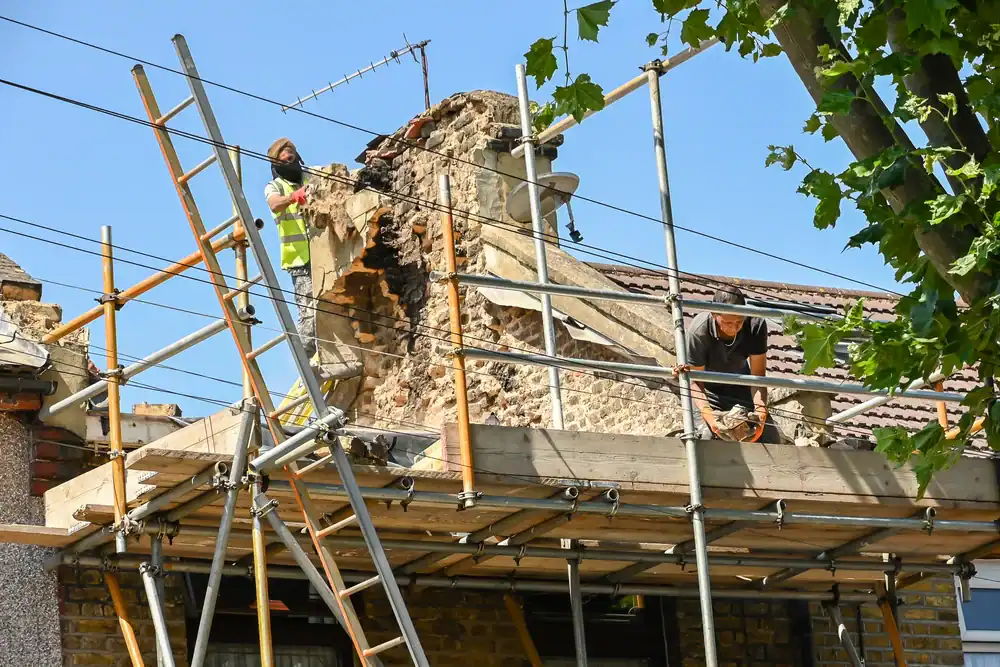
Then we do the work. Depending on what your chimney needs, that might mean tuckpointing damaged mortar, rebuilding the crown with proper slope and overhang, installing new flashing, or replacing deteriorated bricks. If you’ve got a chimney leak, we trace it to the source and fix it—not just seal over the symptoms.
After the repair, you get a system that works the way it should. We clean up the site, haul away debris, and leave you with documentation for your records and insurance.

Ready to get started?
Every chimney repair starts with figuring out what’s actually broken. In West Orange, the most common problems we see are water intrusion, deteriorated mortar, and damaged flashing—all made worse by freeze-thaw cycles and the heavy rain this area gets.
If your chimney crown is cracked, we rebuild it with a proper wash that directs water away from the flue. If the flashing is rusted or improperly installed, we remove it and install new step flashing and counterflashing that actually keeps water out. Mortar joints that are crumbling get repointed with fresh mortar that matches the original in strength and appearance. Spalling bricks—where the face of the brick is flaking off—get replaced so water can’t penetrate deeper into the structure.
We also handle chimney caps and dampers. A missing or damaged cap lets rain, animals, and debris straight into your flue. A damper that won’t close means you’re losing heat all winter. Both are straightforward fixes that make a big difference.
For homes built in the ’40s through ’60s—which is a huge portion of West Orange’s housing stock—we often see chimneys that were built without a crown or with minimal flashing. Fixing that now prevents the kind of damage that leads to full chimney rebuilds down the road. Costs vary depending on the scope, but chimney flashing repair in New Jersey typically runs $300 to $1,200, and crown replacement ranges from $300 to $1,800. We’ll give you an exact number based on your chimney’s condition.

Cleaning removes creosote and soot buildup inside the flue—that’s maintenance. Repair fixes structural damage like cracks, leaks, or deteriorated masonry. If you’re seeing water stains, crumbling mortar, or pieces of brick on the ground, that’s a repair issue.
A chimney sweep can clean your flue, but they’re not always equipped to handle masonry work or flashing replacement. If they find damage during an inspection, you’ll need a licensed masonry contractor to fix it. New Jersey requires annual chimney inspections, and those inspections often catch problems before they become emergencies.
If your chimney is leaking, that’s not something a cleaning will solve. Water is getting in through the crown, the flashing, or cracks in the masonry—and it needs to be sealed and repaired properly. Ignoring it leads to interior water damage, mold, and even structural issues with your roof framing.
Most chimney leaks come from one of three places: a cracked or missing crown, failed flashing, or deteriorated mortar joints. West Orange gets heavy rain and freeze-thaw cycles that crack masonry and break down sealants over time.
The crown is the concrete or mortar top that seals the chimney. If it’s cracked, water runs straight down into the chimney structure and eventually into your home. Flashing is the metal barrier between the chimney and the roof—if it’s rusted, improperly installed, or missing, water flows right past it during rainstorms.
Older homes in West Orange—especially those built in the ’40s and ’50s—sometimes don’t have a proper crown at all, or the flashing was done with roofing tar instead of real step flashing. That might’ve held up for a while, but it doesn’t last. Fixing it the right way means rebuilding the crown with proper overhang and installing metal flashing that’s woven into the roofing system.
It depends on what’s broken. Chimney flashing repair typically costs between $300 and $1,200 in New Jersey. Crown replacement runs $300 to $1,800 depending on the size of your chimney. Repointing mortar joints costs less if it’s just a few spots, but more if the entire chimney needs tuckpointing.
A full chimney rebuild—if the structure is compromised—can run several thousand dollars, but that’s usually only necessary if the damage has been ignored for years. Most of the time, catching problems early means you’re looking at a repair, not a replacement.
We give free estimates based on what your chimney actually needs. That means we inspect it, identify the problem, and give you a written price before any work starts. No guessing, no upselling. If you’re dealing with an emergency—like a chimney fire or a major leak during a storm—expect costs to be higher due to the urgency and weather conditions.
Not if the damage affects the flue, the structure, or the ventilation. A cracked flue liner can let carbon monoxide and smoke into your home instead of venting it outside. A damaged chimney crown or deteriorated mortar might not seem like a safety issue, but if water’s getting in, it’s breaking down the chimney from the inside.
If you’ve been told your chimney needs repair, don’t use your fireplace until it’s fixed. The risk isn’t worth it. Chimney fires cause nearly 25,000 residential fires a year in the U.S., and a compromised chimney makes that risk even higher.
New Jersey law requires annual inspections by a qualified professional, and part of that inspection is determining whether your chimney is safe to use. If it’s not, you’ll need documentation showing the repair was completed before your insurance will cover any fire-related claims. We provide that documentation with every job.
Most chimney repairs take one to three days depending on the scope of work and weather conditions. A simple repair—like replacing a chimney cap or repointing a few mortar joints—can be done in a day. Rebuilding a crown, replacing flashing, or tuckpointing the entire chimney takes longer.
Weather plays a big role. Mortar needs time to cure, and we can’t do masonry work in freezing temperatures or heavy rain. That’s why spring and early fall are the best times to schedule chimney repair in West Orange—you get better availability, better working conditions, and better results.
If your chimney is leaking and causing active damage inside your home, we’ll prioritize getting it watertight as quickly as possible. Once the immediate problem is solved, we can schedule the rest of the work around your timeline and the weather.
It depends on the scope of work. Minor repairs like repointing mortar or replacing a chimney cap usually don’t require a permit. Structural work—like rebuilding a chimney or doing major masonry reconstruction—typically does.
West Orange follows New Jersey building codes, and any work that affects the structural integrity of your chimney or your home needs to be permitted and inspected. We handle that process as part of the job, so you don’t have to deal with the township yourself.
Permits aren’t just red tape—they ensure the work is done to code and documented properly. That matters if you ever sell your home or file an insurance claim. Buyers and insurers want to see that repairs were done legally and correctly, and a permit provides that proof.
Other Services we provide in West Orange