
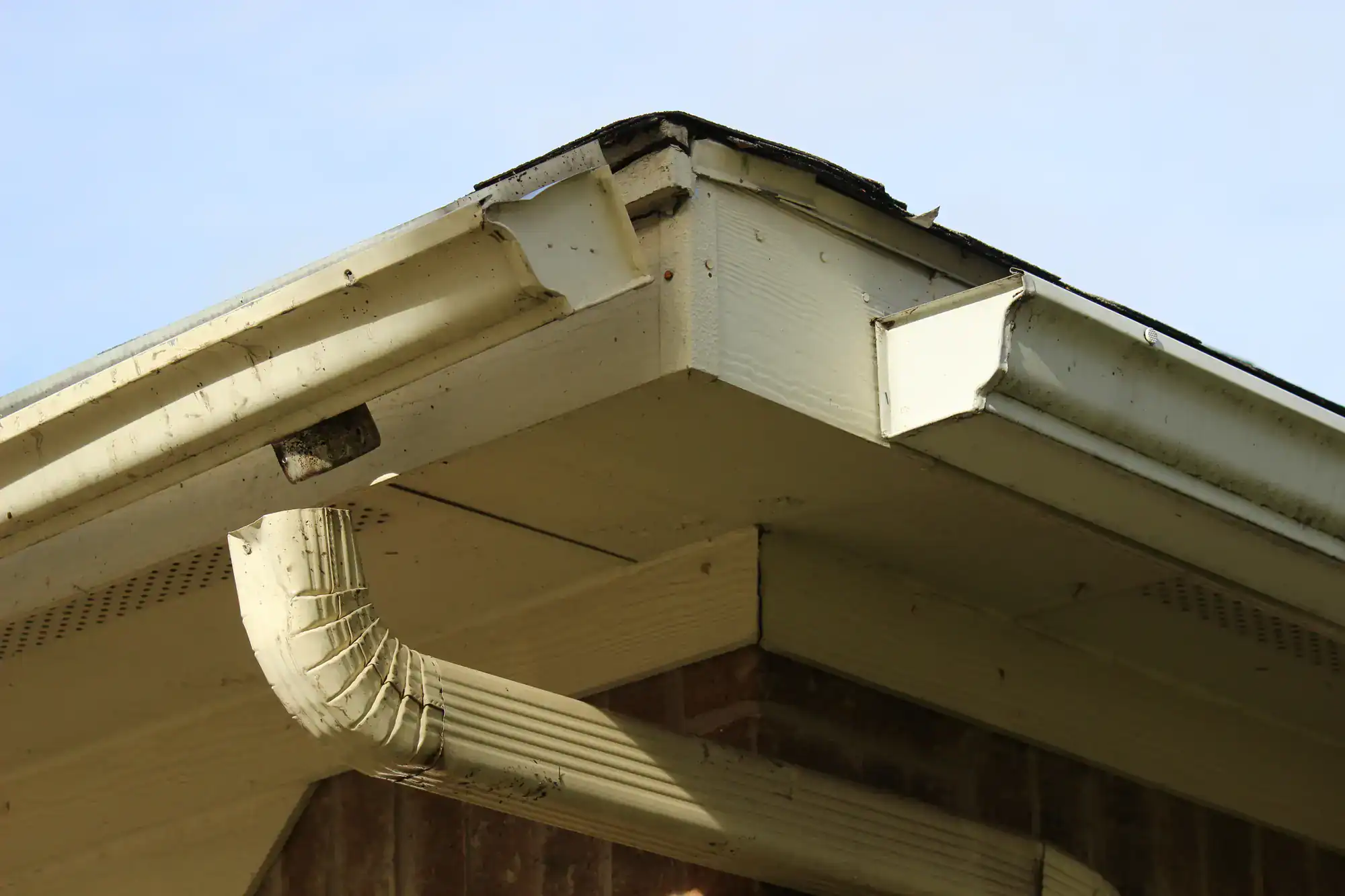
Watsessing has a documented flooding history. The neighborhood sits in the valley of the Second River, and streets like Watsessing Avenue and Franklin Street have seen it firsthand flash floods, basement water, foundation stress. When your gutters are clogged, sagging, or pulling away from the fascia, they stop doing the one job they exist to do: move water away from your home. In a neighborhood with this kind of drainage exposure, that failure has a cost.
The other piece is the tree canopy. Watsessing Park’s mature trees are part of what makes this neighborhood feel the way it does but they also drop a serious amount of leaves every fall. Sectional gutters with aging seams can’t keep up. They clog, they leak at the joints, and they hold standing water that freezes in January and puts pressure on your roofline. A properly installed seamless system pitched correctly, with the right hanger spacing for your specific roofline handles all of that without the constant maintenance cycle.
The homes here are older, too. Most of Watsessing’s housing stock dates back to before 1960, with plenty built in the early 1900s. That means the fascia, the roofline, and the original gutter mounting points have decades of wear behind them. Getting this right matters more on a 1920s colonial than it does on a new build and it requires someone who actually knows what they’re looking at.
We’re a family-owned contractor based in northern New Jersey, serving Essex County homeowners since 2018. We hold NJ Home Improvement Contractor License #13VH09838700 publicly verifiable through the NJ Division of Consumer Affairs and we’re BBB Accredited and a GAF Preferred Contractor. Every job comes with a full warranty, and every consultation is free with no pressure to commit.
What that actually means for you: you’re not dealing with a door-knocker who showed up after a storm. You’re dealing with a licensed, insured contractor who has worked on older homes throughout Watsessing and the surrounding Essex County area homes with the same pre-war construction, the same aging fascia, the same roofline quirks you’re dealing with. We know what to look for, and we’ll tell you what we find before any work begins.
Reviews from past customers say it plainly fair pricing, prompt communication, quality work. One customer had a gutter repair done and noted that the job was handled exactly as described, on time and without surprises. That’s the standard here, not the exception.
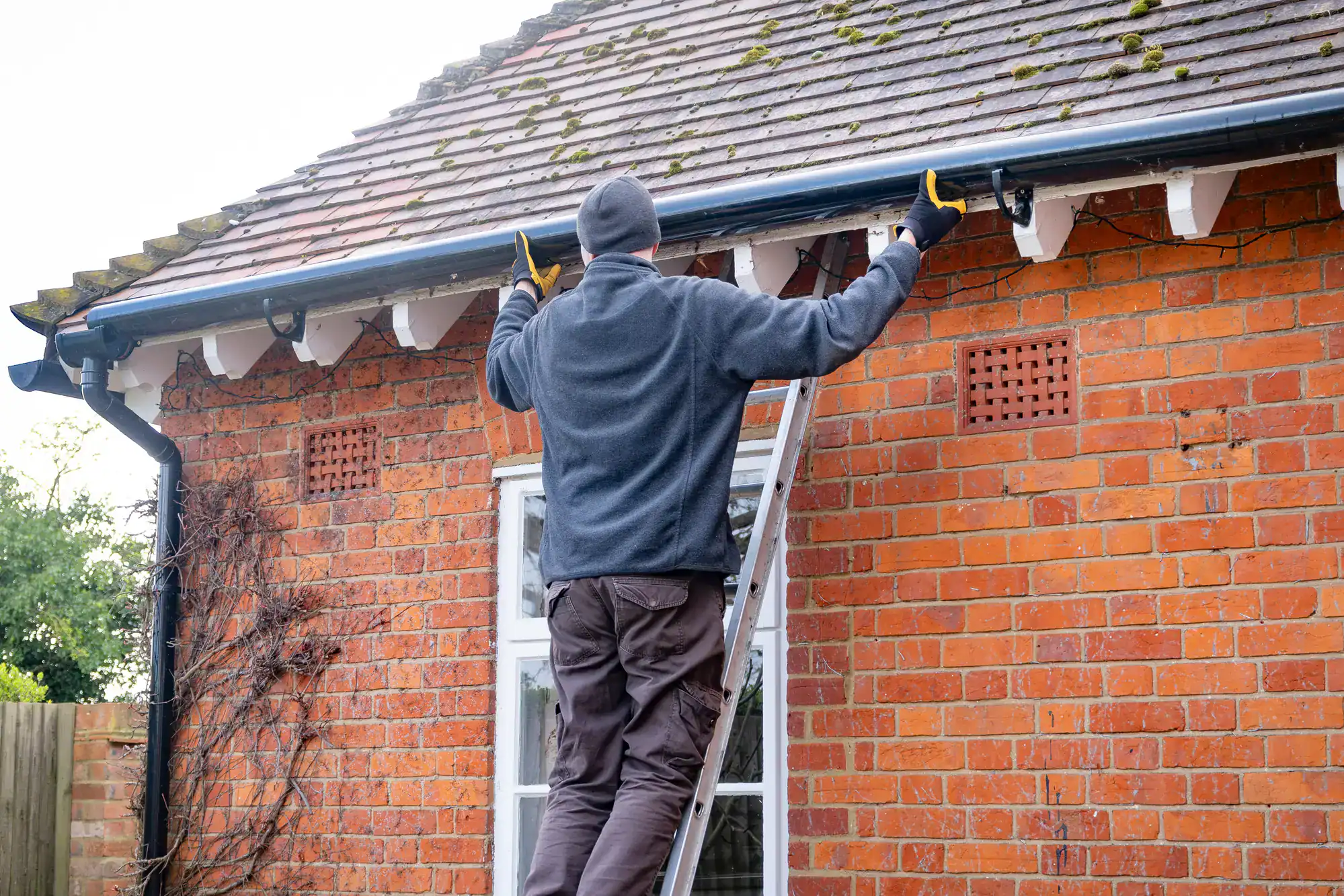
It starts with a free on-site consultation. We come out, look at your gutters, check the fascia, assess the pitch and drainage, and give you a clear picture of what’s going on and what it would take to fix it. No vague estimates over the phone, no pressure to sign anything on the spot. If your gutters can be repaired, we’ll tell you that. If the system needs full replacement, we’ll explain exactly why.
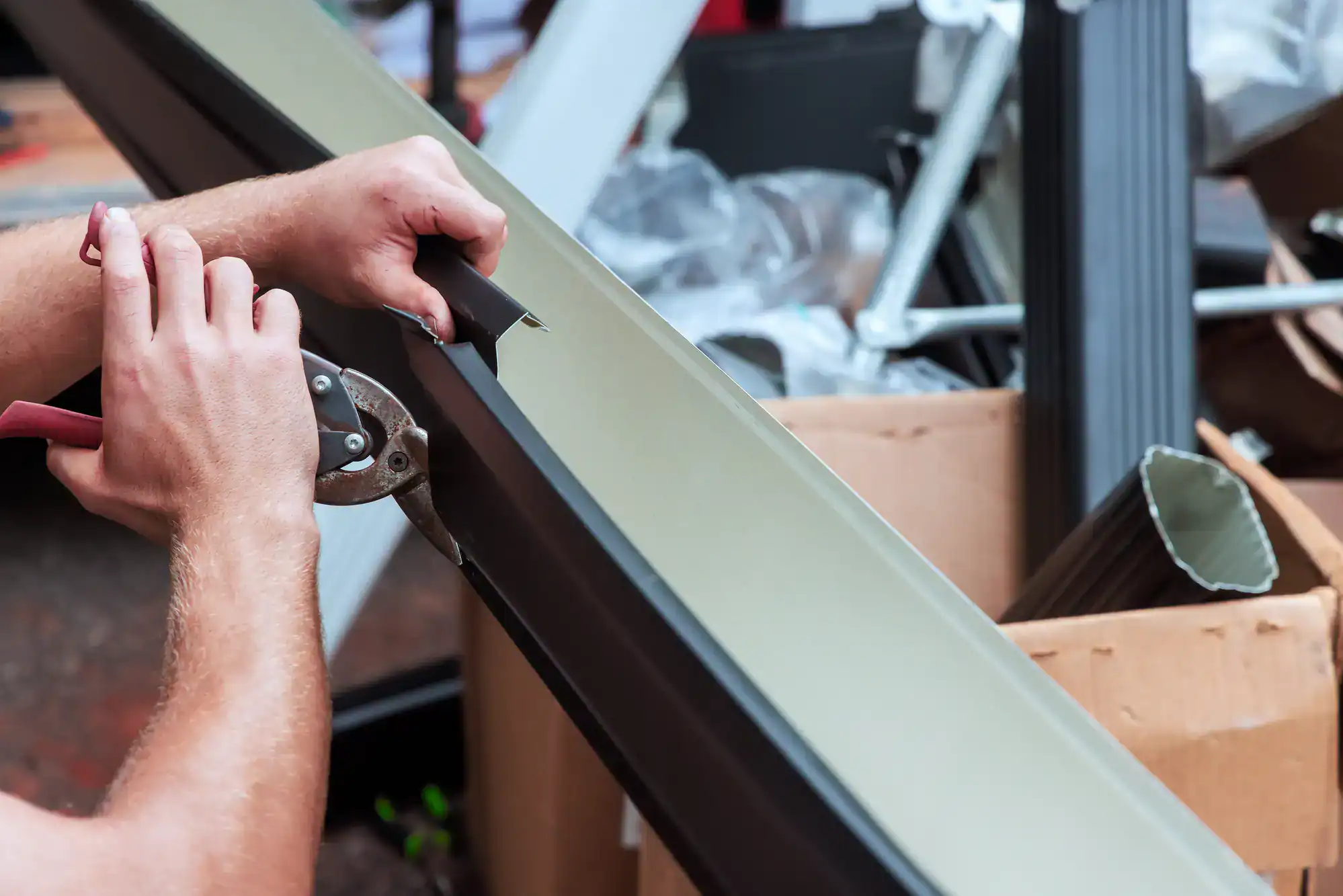
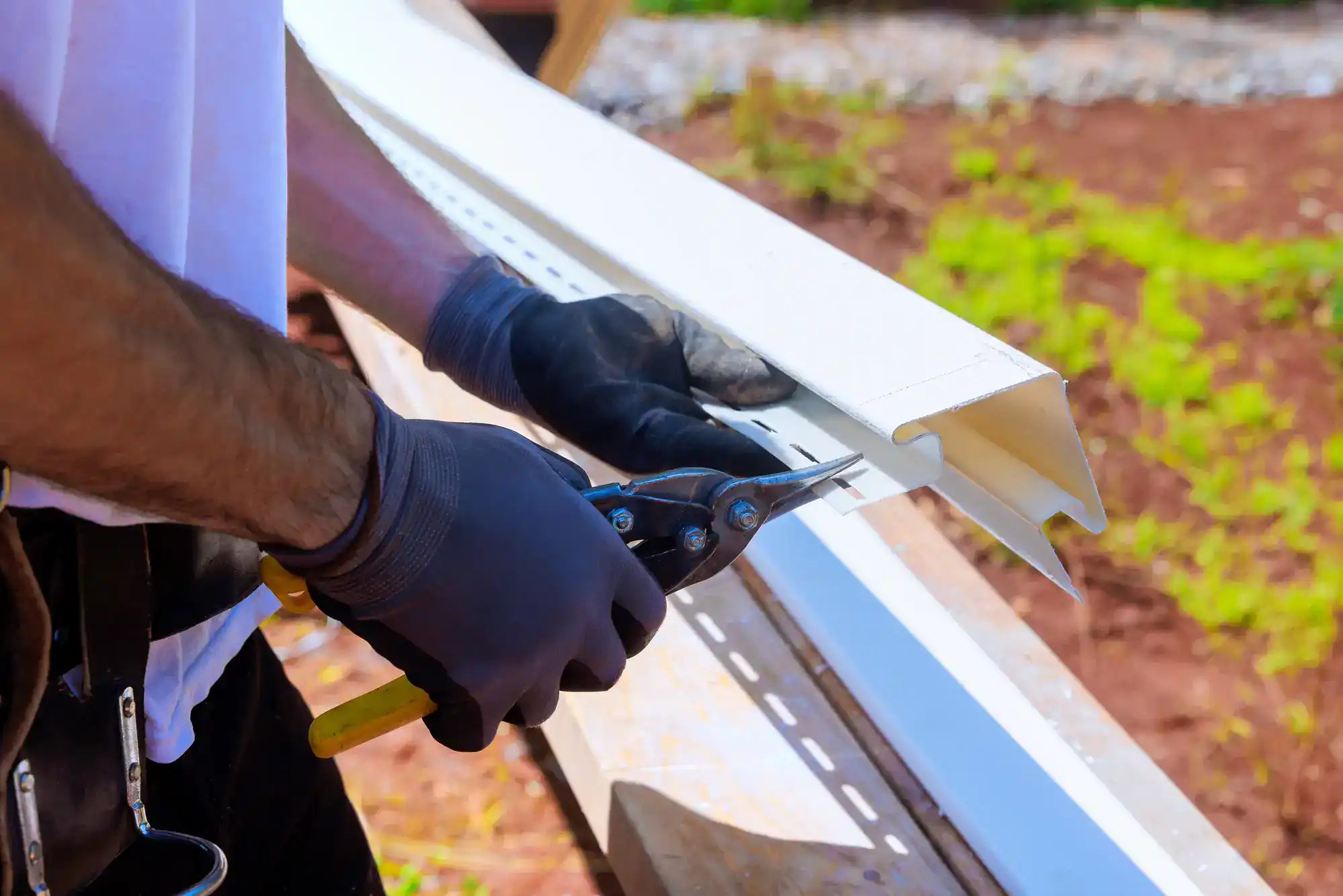
If you move forward, seamless gutters are fabricated on-site to the exact dimensions of your roofline. That matters on older Watsessing homes where rooflines aren’t always standard a custom fit means no gaps, no mismatched sections, and no seam joints where leaks tend to start. Downspout placement is assessed based on your property’s actual drainage pattern, which in a neighborhood with Second River proximity and older storm infrastructure is not something to guess at.
For work that meets the threshold under Bloomfield Township’s construction requirements, we manage the permit process as part of the job. You don’t have to figure out what’s required under the township’s Uniform Construction Code that’s handled. Once the installation is complete, the site is cleaned up and we walk you through what was done and what to watch for going forward.
Ready to get started?
Request a callback

We handle the full range of gutter work new installation, full system replacement, targeted repairs, and downspout reconfiguration. For most Watsessing homes, the conversation starts with seamless aluminum gutters, which outperform sectional systems in freeze-thaw conditions and hold up better under the heavy leaf load this neighborhood produces every fall. They’re fabricated on-site, which means the fit is exact regardless of the roofline’s age or profile.
Gutter repair is available for situations where the system is structurally sound but has specific failure points a separated seam, a sagging section, a downspout that’s pulling away or draining in the wrong direction. If the underlying fascia has rotted (common on pre-war homes throughout Watsessing and the broader Bloomfield area), that gets addressed before any new gutter system goes up. Installing new gutters over damaged fascia is a short-term fix that creates a longer-term problem, and we won’t do it.
Because we’re a full-service exterior contractor, we can also assess your roofline, siding, and chimney while we’re on-site. If there’s a related issue contributing to your gutter problems a compromised drip edge, a roofline that’s shedding water incorrectly you’ll know about it. That kind of integrated assessment is something a gutter-only company can’t offer, and on a home that’s been standing since the 1920s, it’s often where the real value is.
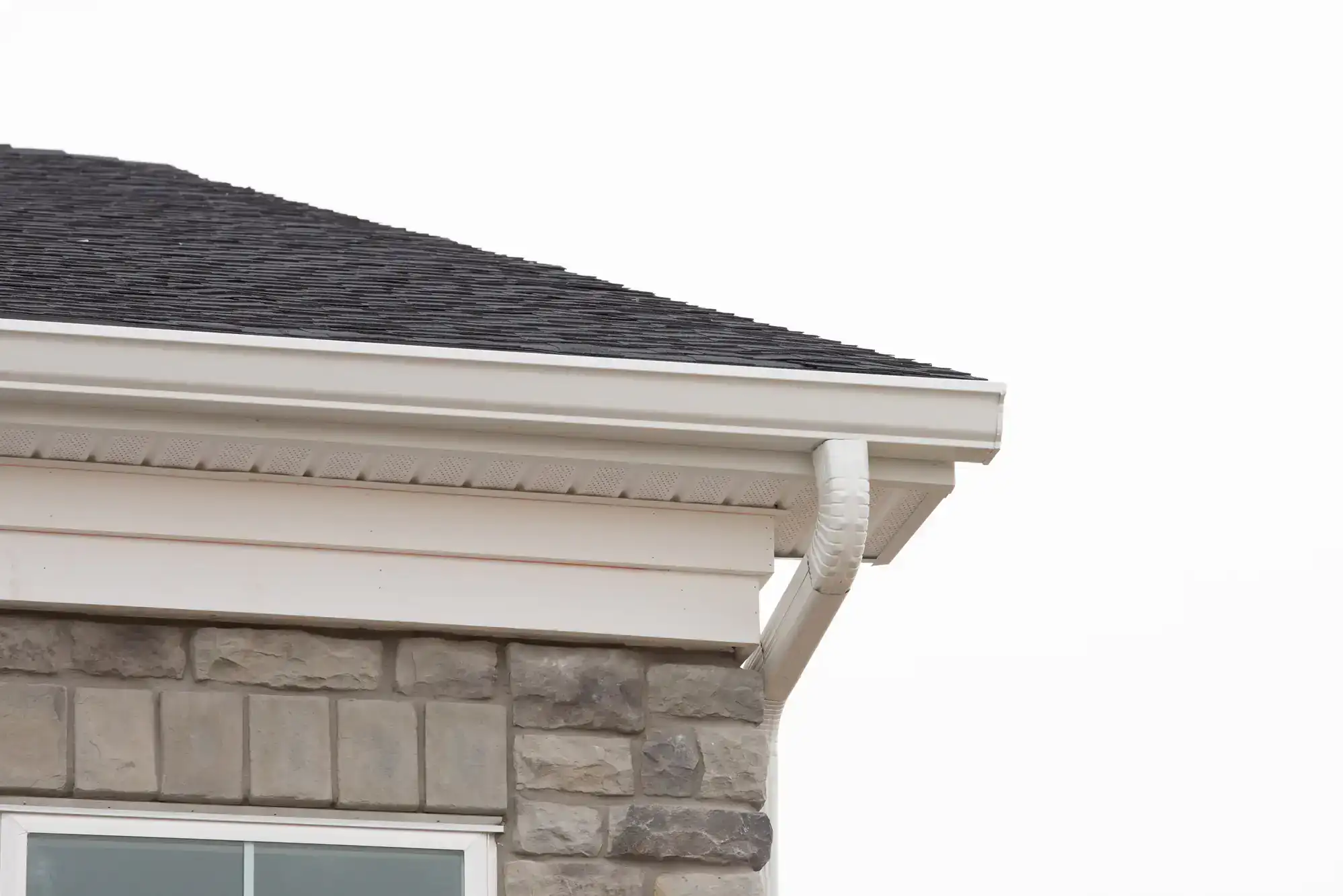
Whether a permit is required depends on the scope of the work. In Bloomfield Township, gutter installation that involves structural modifications or exceeds certain thresholds under the New Jersey Uniform Construction Code may require a construction permit through the Township’s Department of Inspections. The minimum permit fee starts at $90 per subcode, with an additional 20% plan review fee relatively straightforward for most residential gutter jobs.
The more important point is that you shouldn’t have to figure this out yourself. We handle the permit process as part of the job when it’s required. We’re familiar with Bloomfield Township’s code requirements and know what triggers a permit versus what doesn’t. You’ll be told upfront what applies to your specific project, and if a permit is needed, it gets pulled properly before work begins not skipped over to save time.
The honest answer is that it depends on what’s actually failing. Gutters that are sagging in one section, leaking at a single seam, or have a downspout that’s come loose are usually repairable assuming the rest of the system is in decent shape and the fascia behind it is solid. That kind of targeted repair is often the right call and the more cost-effective one.
Full replacement makes more sense when the system is older and showing failure at multiple points, when the gutters are sectional and the seams have deteriorated throughout, or when the underlying fascia has rotted and needs to be replaced anyway. On Watsessing’s older homes many built before 1940 it’s not uncommon to find all three of those conditions at once. A free consultation gives you a clear answer based on what’s actually there, not a default recommendation toward the more expensive option.
Overflow without obvious clogging usually comes down to one of three things: the gutters are pitched incorrectly and water isn’t draining toward the downspout fast enough, the downspout capacity isn’t sufficient for the volume of water your roof sheds during a heavy rain, or the gutters themselves are undersized for the roof area they’re serving.
In Watsessing, this issue comes up more than you’d expect during summer thunderstorms the kind of fast, high-volume rain events that hit Essex County hard in June and July. An older gutter system that was originally sized for a different roofline configuration, or one that’s shifted over the years due to freeze-thaw stress on the hangers, can look perfectly clean and still overflow in those conditions. Fixing it isn’t just about cleaning it’s about reassessing the pitch, the downspout sizing, and the overall drainage layout for how your roof actually sheds water today.
Sectional gutters are assembled from pre-cut pieces that connect at seams every few feet. Those seams are where the vast majority of gutter leaks originate the sealant breaks down over time, especially through New Jersey’s freeze-thaw cycles, and water starts escaping at every joint. On a home that’s been through thirty or forty winters, the seams on a sectional system are almost always the first thing to go.
Seamless gutters are fabricated in one continuous piece on-site, cut to the exact length of your roofline. There are no mid-run seams the only connection points are at the corners and downspouts, which are far fewer failure points to manage. For Watsessing homes with mature trees overhead and a climate that cycles between freezing and thawing from November through March, seamless gutters simply hold up better and require less ongoing maintenance. The upfront cost is modestly higher, but the performance difference over a 10-to-20-year lifespan is significant.
More than most people expect. Watsessing Park is 69 acres of mature trees, and the residential streets surrounding it many with old sycamores and oaks drop a heavy leaf load every fall. That debris accumulates in gutters faster here than in neighborhoods with younger or sparser tree coverage, and it doesn’t stop at leaves. Seed pods, small branches, and organic buildup throughout the season all contribute to clogging that, if left unaddressed, holds standing water against your fascia and roofline through the winter.
For most Watsessing homeowners, a professional gutter cleaning and inspection each fall before the first freeze is the minimum. If your gutters are older or sectional, that inspection should also check the seam integrity and hanger spacing, because the weight of wet leaves and ice puts real stress on both. Gutter guards can reduce the frequency of cleaning needed, but they don’t eliminate it entirely, and the right type of guard matters depending on your specific tree coverage and gutter profile.
Start with the basics: a valid NJ Home Improvement Contractor registration (required by law for any residential job over $500), general liability insurance, and workers’ compensation coverage. These aren’t optional they’re the legal minimum, and you can verify a contractor’s registration number directly through the NJ Division of Consumer Affairs website before anyone sets foot on your property.
Beyond credentials, pay attention to how the contractor communicates during the estimate process. Do they actually look at the fascia and check the pitch, or do they measure the roofline and hand you a number? On older Watsessing homes, the condition of the fascia and the existing drainage layout matters as much as the gutter material itself. A contractor who skips that assessment is setting you up for a repeat problem. Ask specifically whether they handle permits when required, whether their work is warranted, and what happens if something isn’t right after the job is done. The answers to those questions tell you a lot more than the price does.
Other Services we provide in Watsessing