

You stop worrying about whether water’s getting into your foundation. You stop watching cracks spread across your chimney every spring. You stop budgeting for emergency repairs because someone didn’t seal it right the first time.
When masonry’s done correctly for Jefferson’s climate, it protects your home from the freeze-thaw damage that hits us harder than most of the state. Water doesn’t get a chance to settle into the mortar, expand when it freezes, and blow apart your brickwork from the inside out.
Your steps stay level and safe. Your retaining walls hold their position through wet springs and frozen winters. Your chimney doesn’t lean, crack, or let moisture into your home. That’s what proper masonry installation and maintenance actually does—it removes problems instead of creating new ones down the road.
We handle masonry the way it needs to be handled in northern New Jersey—with an understanding of what freeze-thaw cycles do to mortar joints, what clay soil does to foundations, and what happens when contractors cut corners on waterproofing.
We’re a local masonry contractor serving Jefferson and Morris County. We don’t hide costs, we don’t upsell unnecessary work, and we don’t pretend every job is the same. Some brick just needs repointing. Some needs a full rebuild. We’ll tell you which one you’re looking at and why.
Our work comes with straightforward pricing, proper licensing and insurance, and a one-year workmanship warranty. We’ve seen what happens when masonry fails in this area, and we’d rather do it right the first time than come back to fix someone else’s shortcuts.

First, we come out and look at what’s actually going on. Not every crack means your foundation’s collapsing, but some do. We’ll assess the damage, figure out what’s causing it, and tell you what needs to happen to fix it properly.
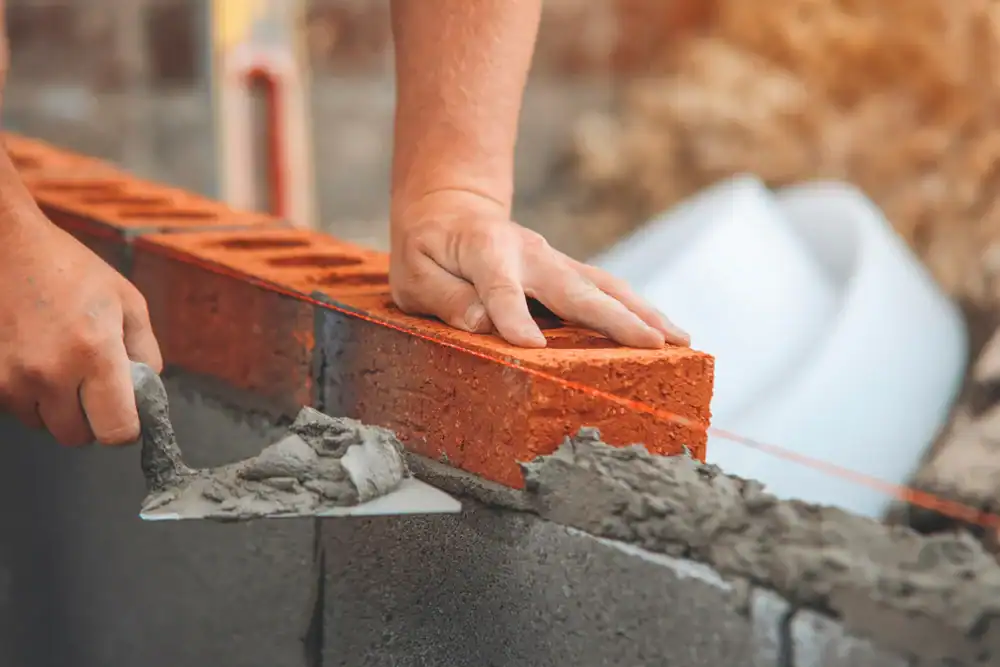
Once you approve the scope and price, we prep the area and get to work. For repointing, that means removing deteriorated mortar to the right depth and replacing it with mortar that matches your existing brick in strength and composition. For new installations like retaining walls or brick paving, we make sure the base is solid and drainage is handled so you’re not dealing with settling or water damage later.
We use cold-weather admixtures when temperatures drop and waterproof sealants that actually repel moisture instead of trapping it. When the job’s done, we clean up the site and walk you through what we did. If something doesn’t look right or hold up the way it should within the first year, we come back and make it right.

Ready to get started?
We handle brick veneers, chimney repair, retaining brick walls, repointing, brick paving, and structural masonry restoration. If it’s made of brick, stone, or block and it’s damaged or needs to be built, we can handle it.
Jefferson sits in an area where freeze-thaw cycles hit hard—typically 35 to 45 cycles each winter. That’s a lot of expansion and contraction, and it’s why so many chimneys and brick walls around here start failing after ten or fifteen years if they weren’t built or maintained correctly. We account for that in every job.
Our masonry maintenance includes inspecting mortar joints, checking for water infiltration, sealing cracks before they spread, and repointing sections that are starting to deteriorate. For bigger projects like retaining walls, we address drainage and soil issues so the wall doesn’t shift or bow over time. Clay-heavy soil is common in Morris County, and it causes settlement problems if you don’t plan for it. We do.

If it’s done right, repointing should last fifteen to thirty years in northern New Jersey. That range depends on the quality of the mortar, how well the joints were prepped, and whether the brick was sealed afterward.
The main thing that shortens the lifespan is water. If moisture gets into the mortar joints and freezes, it expands and breaks apart the bond. That’s why we remove old mortar to the proper depth—usually about three-quarters of an inch—and use mortar that’s softer than the brick itself. Harder mortar cracks the brick. Softer mortar takes the stress and protects the structure.
We also apply breathable sealants that keep water out but let moisture vapor escape. If you trap moisture inside the wall, you’ll get spalling and freeze damage no matter how good the repointing job was.
Most of the time, it’s foundation settlement or freeze-thaw damage in the mortar joints. Chimneys are heavy, and if the footing wasn’t poured deep enough or the soil underneath shifts, the whole structure can tilt.
Freeze-thaw cycles are the other major cause. Water gets into cracks in the crown or the mortar joints, freezes, expands, and pushes the brickwork apart. Once that starts, it accelerates every winter until you’re looking at a serious structural issue.
If your chimney’s leaning, that’s a foundation problem and it needs to be stabilized before it gets worse. If it’s cracking or spalling, that’s usually a mortar and waterproofing issue. Either way, catching it early saves you from a full rebuild.
Yes, but the fix depends on why they’re sinking. If the base wasn’t compacted properly or if water’s washing out the material underneath, we’ll need to remove the steps, regrade and compact the base, and reinstall them on a stable foundation.
Sometimes the steps themselves are fine but the mortar joints have deteriorated, which makes them loose and uneven. In that case, repointing and resetting the bricks can solve the problem without a full replacement.
Uneven steps are a safety hazard, especially in winter when ice forms in the low spots. If you’re noticing movement or gaps between the bricks and the foundation, get it looked at before someone gets hurt or the damage spreads to the foundation itself.
It depends on the scope of the damage and what needs to be done. Repointing a chimney might run a few thousand dollars. Rebuilding a retaining wall or replacing a full section of brick veneer can cost significantly more.
Most residential masonry projects in this area fall somewhere between $1,000 and $8,000, but that’s a wide range because every job is different. A small crack repair is on the low end. A full foundation stabilization project is on the high end.
We give you a clear estimate upfront after we assess the damage. No hidden fees, no surprise charges. You’ll know what the job costs and what you’re getting before we start.
Yes, but only when conditions allow. Mortar needs to cure properly, and that doesn’t happen if temperatures drop too low. We use cold-weather admixtures that let mortar set in cooler temperatures, but there’s a limit.
If it’s below freezing or if there’s precipitation in the forecast, we’ll wait. Rushing a masonry job in bad weather leads to weak joints, cracking, and premature failure. It’s not worth it.
That said, we do offer emergency masonry services if something fails and needs immediate attention—like a collapsed chimney or a wall that’s actively leaning. In those cases, we’ll stabilize the structure and schedule the full repair for better weather if needed.
Brick repair means fixing the mortar joints, sealing cracks, or replacing a few damaged bricks while keeping the existing structure intact. Brick replacement means tearing out a section—or all—of the brickwork and rebuilding it from scratch.
Repair makes sense when the brick itself is still in good shape and the damage is limited to the mortar or a few isolated spots. Replacement is necessary when the brick is spalling, the structure is compromised, or the damage is too widespread to fix with repointing alone.
We’ll tell you which option makes sense for your situation. If repair will buy you another twenty years, there’s no reason to replace. If the brick’s deteriorated to the point where repairs won’t hold, we’ll explain why replacement is the better investment.
Other Services we provide in Jefferson