

You stop worrying about crumbling mortar every spring. Your chimney doesn’t leak when it rains. The retaining wall in your yard actually holds back soil instead of bowing out.
That’s what happens when masonry gets done right the first time. You’re not patching the same spots year after year. You’re not watching cracks spread across your brick veneer or dealing with water damage inside your home because the exterior failed.
The work holds up through 40-plus freeze-thaw cycles each winter. It handles the clay-heavy soil around Parsippany that expands when wet and contracts when dry. And it looks clean, not like someone slapped mortar on and called it a day.
We’ve been handling masonry work in Morris County for years. We know what happens to brick and stone in this area because we see it constantly—chimneys that crack from temperature swings, foundations stressed by our soil conditions, patios that settle unevenly.
We’re licensed, bonded, and insured, which matters when you’re dealing with structural work on your property. You’re not hiring someone who disappears halfway through or leaves you holding liability if something goes wrong.
Every project we finish in Parsippany carries our name. That means something when you live and work in the same community.

You reach out, and we schedule a time to look at your property. We assess what’s damaged, what’s causing it, and what needs to happen to fix it properly. You get a written estimate that breaks down pricing, materials, and timeline—no surprises later.
Once you approve, we handle permits if needed and schedule the work around your availability. Our crew shows up on time, preps the site to protect your landscaping and property, then gets to work. Whether it’s brick repair, chimney rebuilding, retaining wall installation, or custom stonework, we manage every step.
When the job’s done, we walk the site with you to make sure everything meets your expectations. You get documentation of the work completed, and we clean up before we leave. If you have questions months later, you can still reach us.

Ready to get started?
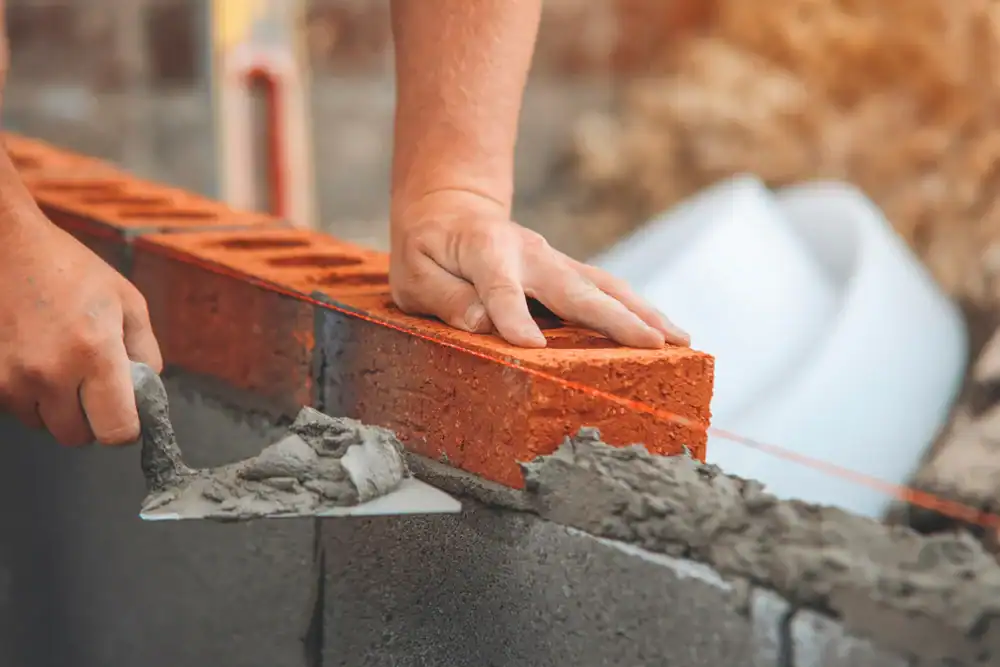
Brick repair is constant around here. Mortar deteriorates from moisture getting in and freezing, which makes bricks loosen and crack. We repoint the joints, replace damaged bricks, and seal it properly so water doesn’t get back in.
Chimney repair and rebuilding comes up frequently too. Cracked crowns, missing mortar, and deteriorating flashing let water into your home. We rebuild chimneys from the roofline up if needed, install new flashing, and apply water-repellent sealant that actually works in New Jersey weather.
Retaining walls, brick paving, and custom stone veneers round out most projects. Parsippany’s clay soil shifts, so retaining walls need proper drainage and solid foundations. We build them to handle the ground movement without cracking or bowing. For patios and walkways, we use brick paving that’s set on a stable base—not just laid on sand that’ll settle unevenly in two years.

Quality repointing should last 20 to 30 years in this area if it’s done correctly. That means using mortar that matches the original in strength and composition—not something harder than the brick itself, which causes the brick to deteriorate instead of the mortar.
The bigger factor is prep work. If we don’t grind out the old mortar deep enough (at least twice the joint width), the new mortar won’t bond properly. It’ll fall out within a few years. We also need to account for New Jersey’s freeze-thaw cycles by using mortar with the right air content and applying it during appropriate weather conditions.
You’ll know repointing was done wrong if you see mortar crumbling out within five years or bricks starting to crack along the edges. That’s usually because someone rushed the job or used incorrect materials.
Water is the main culprit. Your chimney crown (the concrete top) cracks from temperature changes, and water seeps into those cracks. When it freezes, it expands and makes the cracks worse. Over time, water gets into the brick and mortar, which leads to spalling—where the brick face pops off.
Flashing failure is the other common issue. Flashing is the metal seal between your chimney and roof. If it’s installed poorly or deteriorates, water runs straight into your home during rain. You’ll see water stains on your ceiling or walls near the chimney before you see the exterior damage.
Morris County gets heavy rain and significant temperature swings, which accelerates all of this. A chimney that might last 40 years in a drier climate might need major work in 20 years here. Regular inspection every few years catches problems before they become expensive.
The clay-heavy soil around Parsippany expands when it gets wet and shrinks when it dries out. That constant movement puts pressure on retaining walls. If the wall doesn’t have proper drainage behind it, water builds up and adds even more pressure. Eventually, the wall bows out or collapses.
Most failed retaining walls we see didn’t have adequate base preparation. The foundation needs to be deep enough and stable enough to handle the soil load. Walls also need weep holes or drainage pipes to let water escape instead of building up behind the structure.
Another issue is using materials that aren’t rated for the wall height and soil conditions. A short decorative wall is different from a four-foot retaining wall holding back a slope. The engineering requirements change, and shortcuts lead to failure within a few years.
Brick repointing runs between $5 and $25 per square foot depending on wall height, accessibility, and how much prep work is needed. A typical chimney repoint might be $1,000 to $3,000. Full chimney rebuilds start around $4,000 and go up based on height and complexity.
Retaining walls vary widely—$15 to $50 per square foot depending on materials, height, and site conditions. A basic 20-foot wall that’s three feet high might run $2,000 to $4,000. Brick paving for patios typically costs $10 to $30 per square foot installed.
These are ranges, not quotes. Your actual cost depends on what’s damaged, what’s causing the damage, and what needs to happen to fix it permanently. We provide written estimates after seeing your property because guessing over the phone doesn’t help you plan your budget accurately.
It depends on how extensive the damage is and what’s causing it. If you’ve got a few cracked bricks or deteriorated mortar joints in one area, repair makes sense. If the damage is widespread or the underlying structure is compromised, replacement is often more cost-effective long-term.
Here’s a practical test: if more than 25% of the surface is damaged, replacement usually makes more sense than patching. You’re paying for labor either way, and patching severely damaged masonry often means you’ll be back fixing adjacent areas within a few years.
We also look at what caused the damage. If it’s just age and weather, repair works fine. If it’s foundation settlement, water infiltration, or structural issues, we need to address the root cause first. Otherwise, you’re just putting new masonry over the same problem, and it’ll fail again.
Check three things: licensing, insurance, and references. In New Jersey, masonry contractors should be licensed and registered. Ask to see their license number and verify it. They should also carry liability insurance and workers’ compensation—ask for certificates and call to confirm they’re current.
References matter, but look for recent work in your area. A contractor who did good work five years ago in another county might not be the same operation today. Check online reviews, but focus on detailed reviews that describe actual work, not just “great job” comments.
Get everything in writing before work starts—scope, materials, timeline, payment schedule, and warranty terms. Legitimate contractors don’t ask for large deposits upfront or pressure you to sign immediately. If someone wants 50% down before ordering materials or starting work, that’s a red flag in this industry.
Other Services we provide in Parsippany