
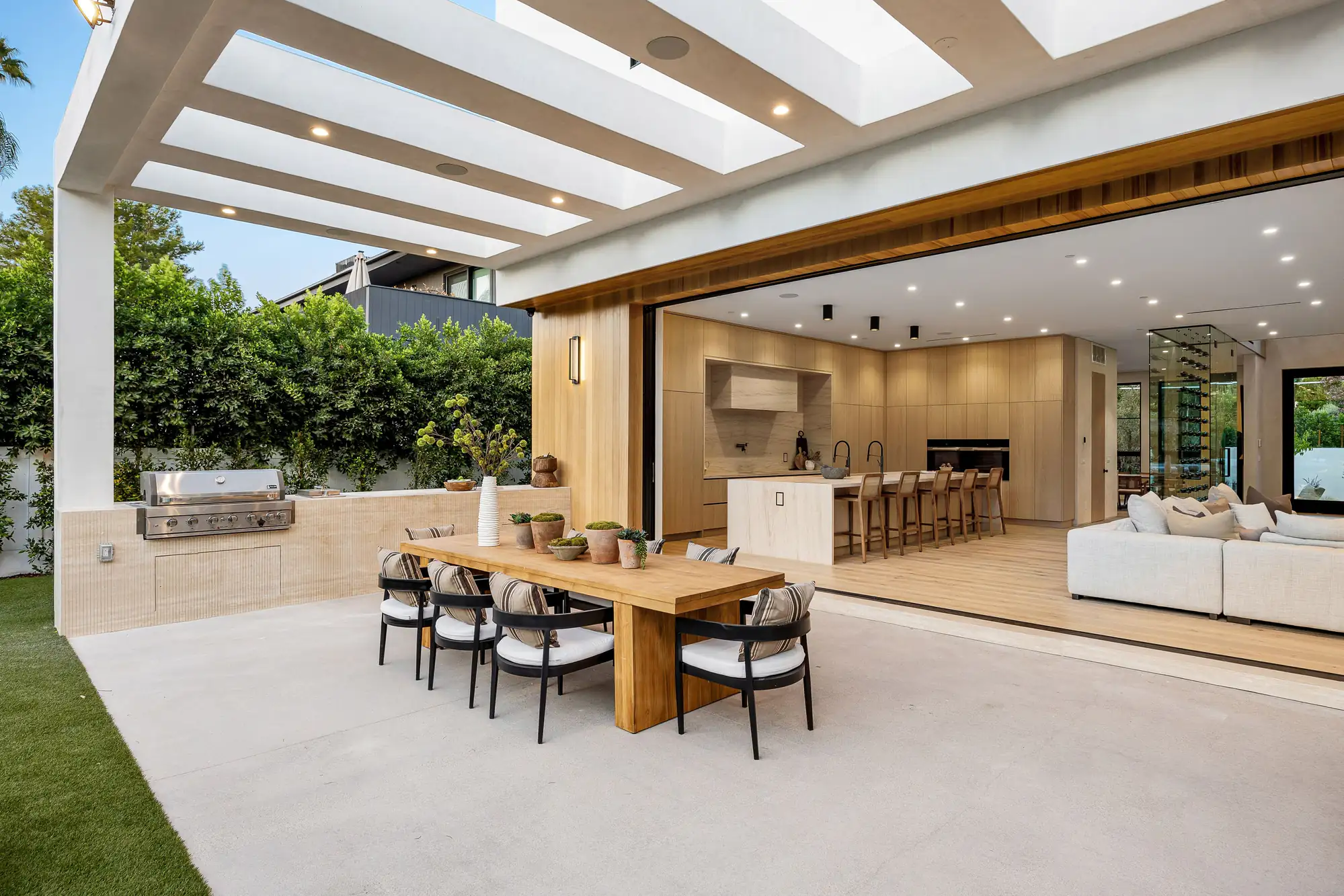
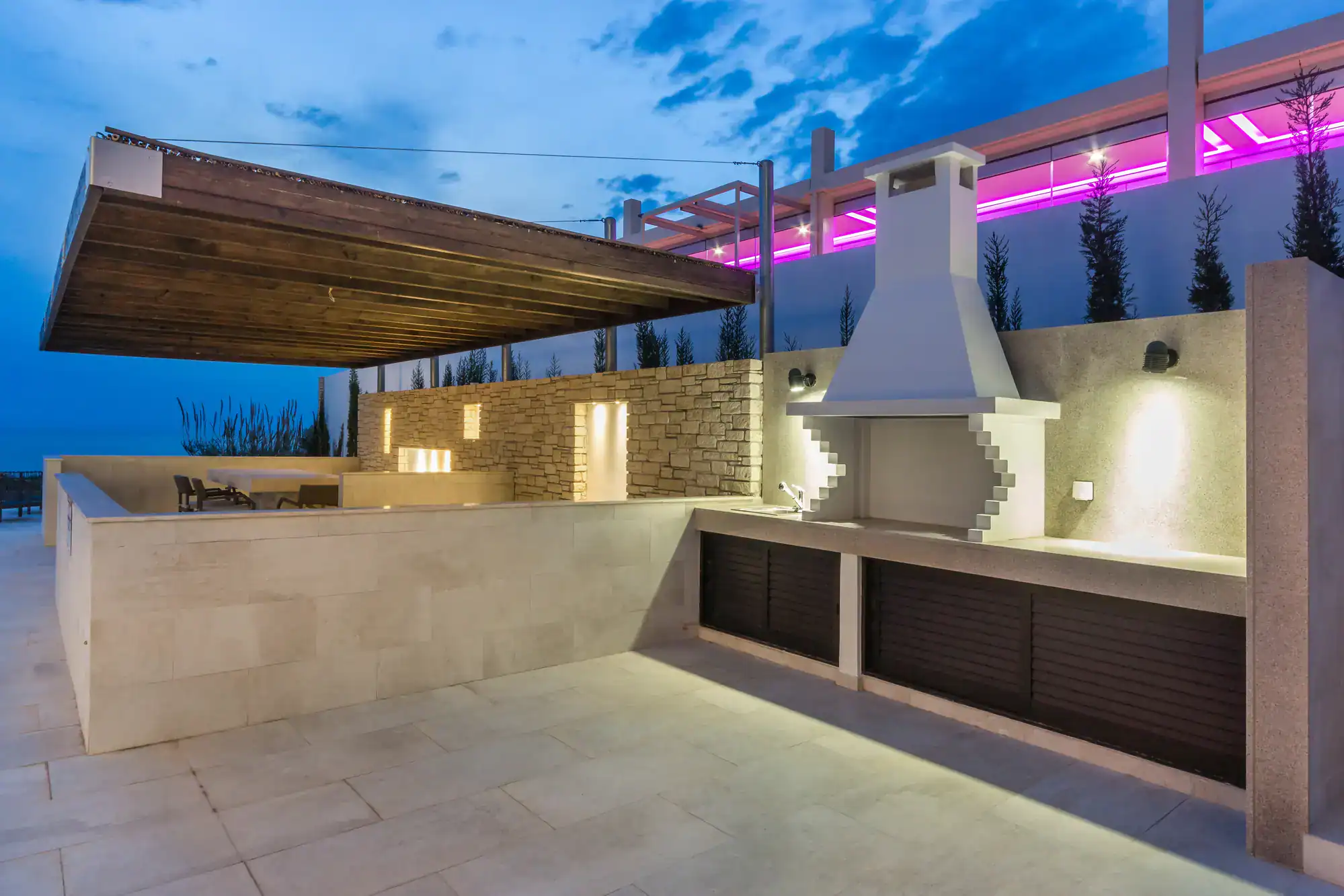
Most homeowners in Glen Ridge aren’t looking for a backyard upgrade they’re looking for a backyard that finally works the way the rest of their home does. A well-built outdoor kitchen gives you a real cooking and entertaining space that holds up year after year, without cracking countertops, crumbling mortar, or appliances that corrode after two seasons.
Glen Ridge’s climate is the part most contractors skip over. Essex County goes from 90-degree summers to below-freezing winters, and that freeze-thaw cycle is brutal on outdoor masonry that wasn’t built with the right materials and proper footings. When it’s done right concrete block frames, properly sealed stone or granite countertops, weather-rated appliances you’re not resealing and patching every spring. You’re cooking.
There’s also a practical investment argument here that’s hard to ignore. Median home values in Glen Ridge have tripled since 2000, sitting above $770,000 today. A custom outdoor kitchen adds real, appraiser-recognized value to an already significant asset. Eighty-three percent of realtors report that outdoor kitchens appeal to buyers, and the return on a well-built project can range from 55% to over 100% of cost. In a borough where homeowners put down roots and hold their properties long-term, that math makes sense.
We’re a family-owned general contracting company based in northern New Jersey, serving residential clients across Essex County since 2018. We’re BBB Accredited, hold an active NJ Division of Consumer Affairs license (#13VH09838700), and carry GAF Preferred Contractor status credentials you can look up before you ever make a call.
In a borough like Glen Ridge, where over 90% of the housing stock falls within a National Register Historic District and the Historic Preservation Commission actively reviews backyard construction, you need a contractor who knows the local process not one who hands you a permit headache after the job is done. We handle the full permit process, including coordination with the Glen Ridge Building Department on Bloomfield Avenue, so nothing gets missed.
Tony leads every project personally. Clients consistently note his communication, punctuality, and follow-through in third-party reviews qualities that matter in a tight-knit community like Glen Ridge where your contractor’s professionalism reflects directly on your home.
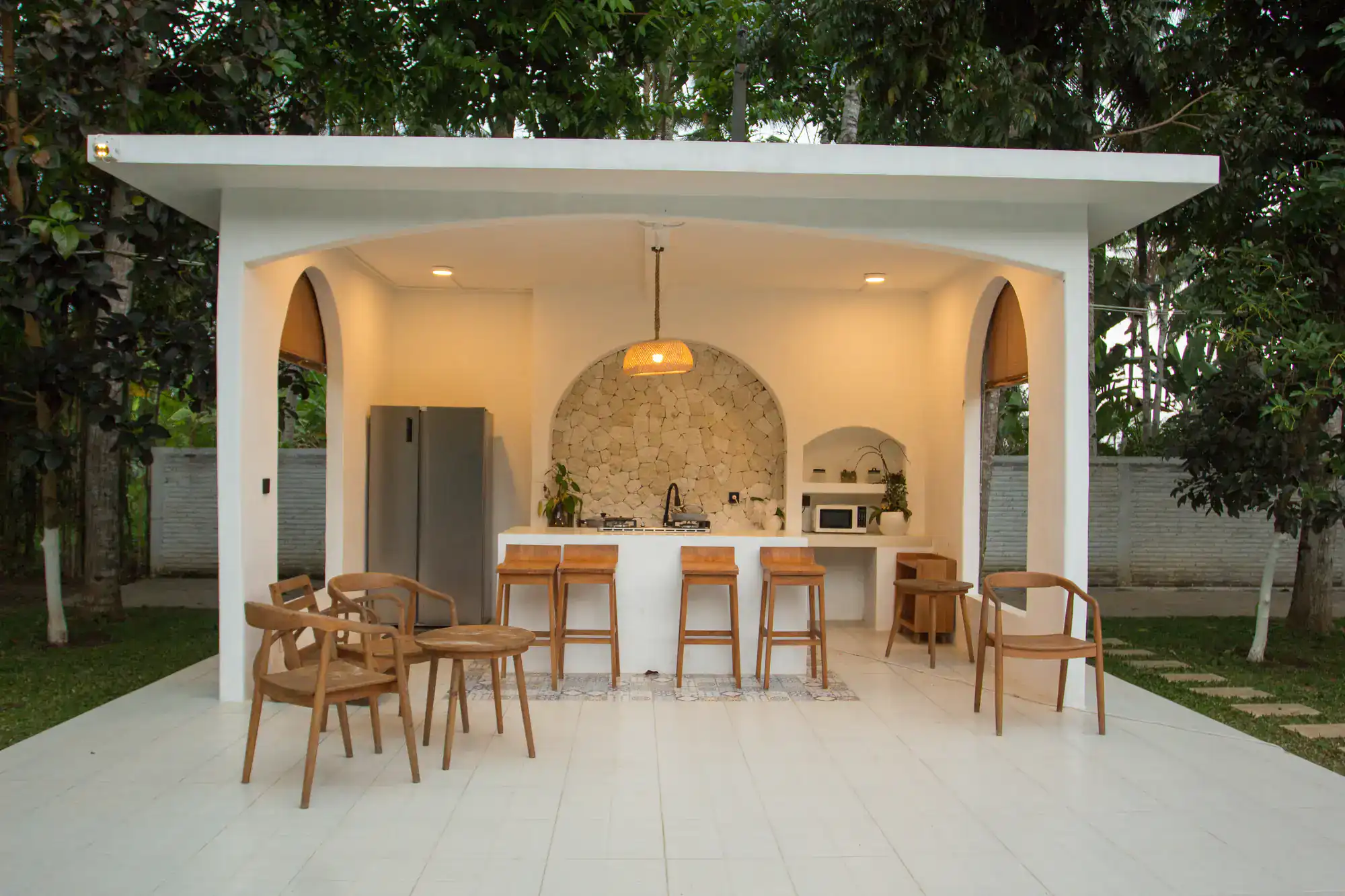
It starts with a free consultation. Tony walks your backyard, looks at the actual space you’re working with the lot configuration, proximity to the house for gas line access, setbacks from property lines, any existing masonry or paving worth integrating and talks through what’s realistic for your specific property. Glen Ridge lots are medium-sized and often enclosed by mature trees or neighboring structures, so layout decisions matter early. L-shaped and linear configurations tend to work best here, and that’s a conversation worth having before anyone starts drawing plans.
From there, we handle the permit applications. That includes the building permit, gas line permit, electrical and plumbing permits if your design calls for them, and HPC review if your project involves construction visible from the street which, in a borough where 90% of properties fall within the Historic District, applies more often than most homeowners expect. The Glen Ridge Building Department schedules inspections on Tuesday and Thursday afternoons, and we coordinate all of it so you’re not chasing paperwork.
Construction starts with a proper concrete footing not a pour on top of existing pavers. The frame goes up in concrete block, the countertops are set in your chosen material (bluestone, granite, or poured concrete, each selected for NJ’s freeze-thaw conditions), appliances are installed and connected, and the site is left clean. When the final inspection clears, it’s yours.
Ready to get started?
Request a callback

Every outdoor kitchen we build starts with a masonry frame concrete block construction that handles New Jersey’s climate the same way the brick on your pre-war home has handled it for eighty years. No wood framing that absorbs moisture, swells, and eventually fails. No prefab aluminum kits that look out of place next to a 1920s Tudor or Colonial. The structure is built to last, and the materials are chosen to match the architectural character of homes that were designed to stand for generations.
Countertop options include bluestone at $35–$40 per square foot, granite or poured concrete at $60–$70 per square foot all properly sealed for freeze-thaw resistance. Built-in grill stations, outdoor bars, integrated storage, side burners, and fire features can all be incorporated depending on your space and how you entertain. The NKBA recommends at least 42 inches of aisle clearance for one cook and 48 inches for two, with 15-inch landing zones flanking the cooking surface standards we build to on every project.
Because Glen Ridge’s Historic Preservation Commission updated its ordinance in September 2025 and has been actively enforcing backyard construction regulations, every project we build here is fully permitted and compliant. That matters now, and it matters even more when you sell.
Yes and in Glen Ridge, the permit process involves more than just the standard building permit. Any permanent outdoor kitchen structure requires a building permit from the Glen Ridge Building Department at 825 Bloomfield Avenue. If your design includes a built-in grill or gas burner connected to a natural gas or propane line, a gas line permit is required. Electrical and plumbing permits apply if you’re adding outlets, lighting, a sink, or running water.
What catches most homeowners off guard is the Historic Preservation Commission layer. Because over 90% of Glen Ridge falls within the National Register Historic District, any construction that’s visible from the street may also require HPC review before work begins. The commission updated its preservation ordinance in September 2025 and has been actively enforcing backyard construction regulations meaning unpermitted work here carries real consequences, including fines and potential removal orders. We handle the full permit process, including HPC coordination where applicable, so nothing gets missed and no work gets stopped.
The short answer is masonry concrete block frames with stone veneer or stucco, and countertops in properly sealed bluestone, granite, or poured concrete. These materials handle New Jersey’s freeze-thaw cycles the same way the brick and stone on Glen Ridge’s pre-war homes have handled them for decades. The problem with wood framing and prefab aluminum kits isn’t that they look wrong it’s that they fail. Wood absorbs moisture, swells, warps, and rots. Aluminum frames expand and contract with temperature swings in ways that loosen joints and compromise the structure over time.
For countertops specifically, bluestone runs $35–$40 per square foot and is a natural fit for Glen Ridge’s architectural character. Granite and poured concrete come in at $60–$70 per square foot and offer excellent durability when properly sealed. The sealing step is not optional in Essex County surfaces that aren’t sealed before the first hard freeze (typically November) are vulnerable to moisture infiltration and cracking. We select and seal every material with NJ’s climate in mind, not just aesthetics.
The range is genuinely wide, and it depends on size, materials, appliances, and how much site prep is involved. A straightforward linear outdoor kitchen with a built-in grill, concrete block frame, and bluestone countertop will come in differently than a full L-shaped setup with a built-in grill, outdoor bar, side burner, integrated storage, and granite countertops. As a general reference point, outdoor kitchen construction runs $33–$130 per square foot depending on scope, and full project costs can reach $52,000 or more for a well-equipped, mid-to-large build.
In Glen Ridge specifically, there are a few cost factors worth knowing upfront. Permit fees add to the total, and if your project requires Historic Preservation Commission review, that process adds time and sometimes additional documentation. If your existing backyard surface isn’t structurally suitable for a masonry build which is common with older paver patios on pre-war properties throughout Glen Ridge a concrete footing pour is required before the frame goes up. We provide clear, itemized estimates with no hidden charges, so you know exactly what you’re paying for before anything starts.
Potentially, yes and this is the detail that catches most homeowners and many contractors completely off guard. The Glen Ridge Historic Preservation Commission was established in 1987 and actively reviews construction within the Historic District. Because more than 90% of the borough falls within that district, the HPC’s jurisdiction covers the vast majority of properties in Glen Ridge.
The specific trigger is visibility from the street. If your outdoor kitchen involves construction that can be seen from a public right-of-way which applies to corner lots, side-yard installations, and some rear-yard configurations depending on lot depth and fencing HPC review is required in addition to standard building permits. The commission updated its ordinance in September 2025, and its own meeting minutes reference ongoing enforcement of backyard construction regulations. Working with a contractor who knows this process and who submits the right documentation to the right offices is the difference between a smooth project and a stop-work order. We handle all of it.
For most projects, the construction phase itself runs two to four weeks depending on size and complexity. The longer lead time is usually the permitting process, not the build. In Glen Ridge, standard permit applications through the Building Department add time upfront, and if your project requires Historic Preservation Commission review, that adds another layer of scheduling around the HPC’s meeting calendar.
The practical takeaway for Glen Ridge homeowners is this: if you want your outdoor kitchen ready for summer entertaining, the conversation needs to start in late winter or early spring. Contractors who are well-booked in this area are often committed through spring by March. The best construction window in Essex County runs from late May through early October, when temperatures support proper mortar curing and concrete work. Starting the consultation and permitting process in February or March gives you the best chance of breaking ground in May and having a finished, inspected outdoor kitchen before the Fourth of July.
In Glen Ridge specifically, the investment case is strong. Median home values in the borough have climbed from $255,700 in 2000 to over $772,000 today and 92.9% of occupied housing units are owner-occupied, meaning residents here are long-term holders who invest in their properties with permanence in mind. A well-built custom outdoor kitchen adds appraiser-recognized value to an already significant asset, with return-on-investment estimates ranging from 55% to over 100% of project cost depending on quality and scope.
Beyond the numbers, outdoor kitchens appeal to buyers and in a borough where buyers are specifically seeking the combination of historic character, top schools, and a home that functions as a real gathering place, a properly built outdoor cooking and entertaining space checks a box that most Glen Ridge properties don’t currently have. The key word is properly built. A permitted, masonry-constructed outdoor kitchen with quality appliances and materials that hold up in NJ’s climate adds value. An unpermitted prefab kit that deteriorates after three winters does the opposite and in a Historic District community with active HPC enforcement, unpermitted structures can become a liability at resale.
Other Services we provide in Glen Ridge