
Most homeowners in West Orange don’t lack the vision for a great outdoor kitchen they lack a contractor who actually understands what it takes to build one here. The sloped lots in Pleasantdale and Gregory aren’t forgiving. A structure that isn’t leveled and footed correctly on hillside terrain will shift, crack, and cost you more to fix than it did to build. A masonry outdoor kitchen built on a proper concrete footing doesn’t have that problem.
Then there’s the climate. West Orange sits on the First Watchung Mountain, and your upper-neighborhood winters are harder than what the valley towns to the east deal with. Repeated freeze-thaw cycles from November through March will destroy a wood-framed prefab kit inside of a few seasons. Masonry block frames, freeze-thaw resistant mortar, and properly sealed stone countertops are built specifically to hold up under those conditions not just survive them, but look good doing it for decades.
And when you’re sitting in a home worth $650,000 or more, the ROI matters too. Outdoor kitchens return between 55% and over 100% of their cost in added home value, and in a market where West Orange’s average sale price hit $683,000 in 2024, a well-built outdoor kitchen isn’t a splurge it’s one of the smarter investments you can make in this zip code.
Proline Construction is a family-owned general contracting company based in northern New Jersey, serving West Orange and Essex County homeowners since 2018. We’re BBB Accredited, hold NJ Division of Consumer Affairs license #13VH09838700, and carry GAF Preferred Contractor status all third-party credentials you can look up before you ever pick up the phone.
We’ve worked on properties throughout West Orange, from the Tudor-style homes in Pleasantdale to the larger estates closer to Llewellyn Park. We know the terrain, we know the building department at 66 Main Street, and we know what it takes to get a project permitted and built correctly in this township. Every project comes with a full warranty and a free consultation no pressure, no hidden charges, just a straight conversation about what you want and what it’ll take to build it right.
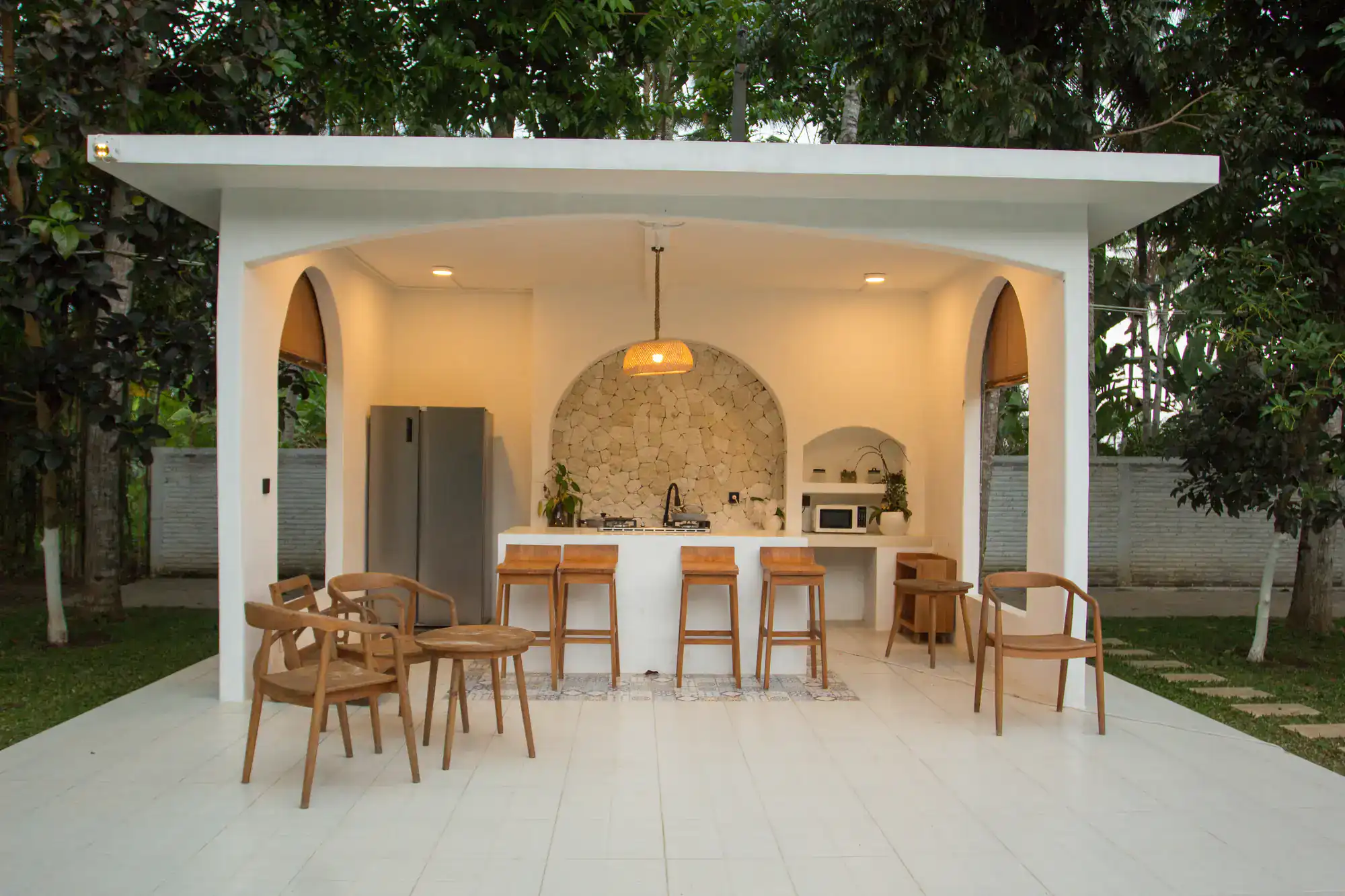
It starts with a free consultation where we talk through your space, your vision, and your budget. If your property is on one of West Orange’s hillside lots which is common in the Gregory, St. Cloud, and Pleasantdale neighborhoods we’ll assess the grade and discuss what foundation work the terrain requires. That conversation shapes the design before anything gets drawn up.
Once the design is locked, we handle the permitting. In West Orange, an outdoor kitchen with gas, electrical, or plumbing connections requires multiple permit applications building, electrical, plumbing, and fire subcodes and in some cases, prior zoning approval is required before any permit is issued. We manage that entire process with the West Orange Building Department so you don’t have to chase paperwork or figure out the sequencing yourself.
Construction typically begins after permits are in hand. We pour the concrete footings, build the masonry frame using block or brick, and finish with your selected countertop and veneer materials. Inspections happen at the required stages, and the project doesn’t close until the certificate of completion is issued. If you’re planning a summer outdoor kitchen in West Orange, the window to start the permitting process is late winter February or March at the latest so plan accordingly.
Ready to get started?
Request a callback

West Orange’s housing stock isn’t uniform, and your outdoor kitchen shouldn’t be either. Tudor homes in Pleasantdale, brick colonials in Gregory, Victorian estates near Llewellyn Park each one has an architectural character that a generic prefab kit will clash with. We build masonry outdoor kitchens from the ground up using stone veneer, brick, and custom countertop materials that are selected to match your home’s exterior. If the house has fieldstone accents, the outdoor kitchen can too.
What’s included depends on what you want: built-in grills, outdoor countertops, masonry bases, bar areas, pizza ovens, outdoor fireplaces, and weather-resistant storage are all options we build into the structure during construction not bolted on as afterthoughts. Every element is integrated into the masonry frame, which means it’s sealed against the elements and built to last through West Orange’s full seasonal range.
We also handle the details that most homeowners don’t think about until they’re in the middle of a project setback compliance under West Orange’s Chapter 25 Land Use Ordinance, utility rough-ins coordinated with our licensed subcontractors, and material selections that perform in a freeze-thaw climate. You get a finished outdoor cooking space that works the way you imagined it, without the surprises that come from hiring someone who’s never pulled a permit in Essex County before.
Yes, in almost every case. If your outdoor kitchen includes a gas line, electrical service, or plumbing connections, you’ll need separate permits for each building, electrical, plumbing, and fire subcodes are all handled through the West Orange Building Department at 66 Main Street. For some projects, the town also requires prior zoning approval before any permit is issued, which adds a step to the front end of the process.
The reason this matters beyond just following the rules: unpermitted work creates real problems at resale. With median home values in West Orange approaching $650,000, having unpermitted construction on record or worse, work that has to be removed or corrected before closing is a costly situation to be in. We handle the entire permitting process on your behalf, including coordinating with the zoning office at (973) 325-4119 when required, so the project is clean from start to finish.
Most custom masonry outdoor kitchens in the West Orange market run between $30,000 and $80,000, depending on size, materials, appliance selections, and the complexity of the site. Properties on sloped lots which are common in the upper-mountain neighborhoods like St. Cloud and Pleasantdale may require additional foundation work to properly level and support the structure, which can affect the overall cost.
That range might feel significant, but it’s worth framing against what you’re building into. Outdoor kitchens consistently return between 55% and over 100% of their cost in added home value. The free consultation we offer is specifically designed to help you understand what your project would realistically cost before any commitment is made no pressure, no vague estimates, just a clear picture of what you’re looking at.
The core issue is how each type of structure handles moisture and temperature change. West Orange sits on the First Watchung Mountain, and the upper neighborhoods experience more frost accumulation and more intense freeze-thaw cycling than the valley towns to the east. When moisture gets into a wood-framed prefab kit and then freezes, the frame expands, cracks, and deteriorates often within two or three seasons. It’s not a hypothetical; it’s a pattern that plays out regularly in NJ outdoor construction.
Masonry construction handles this differently. Concrete footings prevent shifting. Masonry block frames don’t absorb moisture the way wood does. Freeze-thaw resistant mortar mixes are specifically formulated for exterior NJ conditions. And sealed stone or granite countertops don’t crack from temperature swings the way cheaper surface materials do. The result is a structure that doesn’t just survive West Orange winters it comes out the other side looking the same as it did going in.
West Orange’s Chapter 25 Land Use Ordinance includes setback requirements that directly affect outdoor kitchen placement. Accessory structures in residential zones generally cannot be located within 15 feet of the principal building, and they cannot cover more than one-third of the minimum required rear yard. If your outdoor kitchen includes a permanent roof or pergola structure, it may be classified as an accessory building and subject to those rules.
The practical takeaway is that placement decisions need to happen before design is finalized not after. If you design around a layout that turns out to be non-compliant, you’re either redesigning or applying for a variance, both of which add time and cost. We review each property’s zoning requirements at the start of the project so the layout is compliant from day one. It’s one of the less glamorous parts of the process, but it’s also one of the most important ones.
The honest answer is that the permitting process is usually the longest part. Once permits are in hand, the physical construction of a custom masonry outdoor kitchen typically takes one to three weeks depending on size and complexity. But getting to that point submitting applications, waiting on approvals, coordinating zoning review when required can take four to eight weeks in West Orange depending on the current volume at the Building Department.
That’s why the planning window matters. If you want your outdoor kitchen ready for summer entertaining, you need to be starting the design and permitting process in late winter February or March at the latest. Homeowners who call in May hoping to have something built by July are usually looking at an early fall completion at best. We’re upfront about that timeline from the first conversation, because building in realistic expectations from the start is how projects actually finish on time.
West Orange has some of the most architecturally distinctive housing stock in Essex County Tudor homes in Pleasantdale, Victorian estates in and around Llewellyn Park, brick colonials in Gregory. The materials that work best for outdoor kitchens in these settings are ones that echo what’s already on the exterior of the home: natural stone veneer, brick, bluestone countertops, and granite surfaces all integrate naturally with older architectural styles without looking like they were dropped in from a big-box store catalog.
Beyond aesthetics, material selection in West Orange also has to account for climate performance. Natural stone and granite countertops handle freeze-thaw cycling far better than poured concrete or tile surfaces, which can crack and spall after a few hard winters. We discuss material options during the consultation with both factors in mind what looks right for the property and what will hold up under the conditions your outdoor kitchen is actually going to face. The two goals aren’t in conflict; the materials that perform best in this climate also tend to be the ones that look most at home on a West Orange property.
Other Services we provide in West Orange