
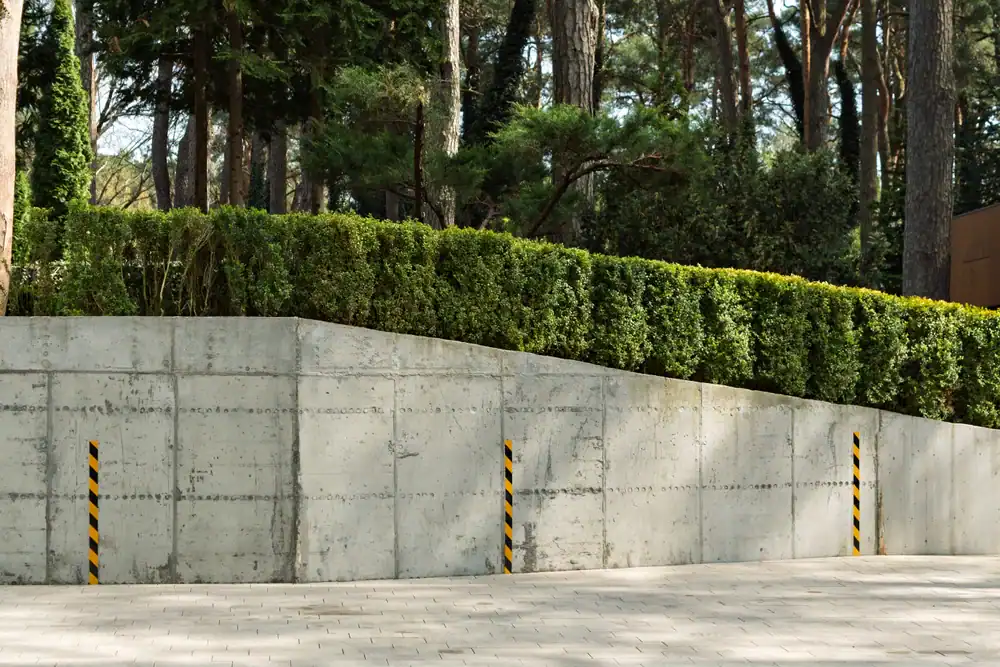

You get erosion control that actually works. When heavy rain hits, your soil stays where it belongs instead of washing into your driveway or your neighbor’s yard. The drainage system we build into every wall handles water pressure before it becomes a structural problem.
Your sloped yard becomes level, usable space. That means room for a patio, a garden bed, or just a flat area where your kids can play without rolling downhill. The concrete retaining wall blocks we use create clean terraces that turn unusable slopes into functional outdoor areas.
Your property value stays protected. In Bloomfield’s housing market where median home values sit around $446,000, a failing retaining wall isn’t just an eyesore—it’s a liability. A professionally installed block wall retaining wall shows buyers that your property has been maintained correctly.
We handle retaining wall projects throughout Bloomfield and Essex County. We know what happens when walls aren’t built to handle freeze-thaw cycles, and we’ve repaired enough failing walls to understand what works long-term in this climate.
Your project gets managed by the same team from estimate to completion. No subcontractors showing up with different information. No surprise charges halfway through. We give you upfront pricing, then we show up and do the work as discussed.
Bloomfield’s older housing stock—much of it built in the 1940s or earlier—means we’re often working with established landscapes and existing drainage patterns. That requires understanding how your property actually functions, not just dropping in a standard wall design.

We start with a site visit to look at your slope, drainage patterns, and soil conditions. You’ll get a clear explanation of what needs to happen and why. If your wall needs proper drainage solutions built in, we’ll tell you. If the project requires specific concrete retaining wall blocks for structural reasons, you’ll understand the reasoning before we start.
The installation begins with excavation and base preparation. This part isn’t visible in the finished product, but it’s what keeps your wall standing for decades. We’re talking about compacted gravel base, proper drainage stone, and perforated pipe that moves water away from the wall structure.
Then we build the wall itself using interlocking blocks that create structural stability without relying solely on mortar. Each course gets leveled and set correctly. The backfill gets compacted in layers, not dumped all at once. When we’re done, you get a wall that looks clean and functions correctly—meaning it handles water, holds back soil, and stays level year after year.

Ready to get started?
Your retaining wall installation includes complete site preparation, which means excavation, grading, and base material. The concrete blocks we use are commercial-grade interlocking units designed for structural retaining walls, not decorative wall landscaping that can’t handle soil pressure.
Every wall gets a proper drainage system built in. That includes drainage stone behind the wall, perforated drain pipe at the base, and filter fabric to prevent soil from clogging the system. In Bloomfield, where we see significant rainfall and freeze-thaw cycles, this drainage work is what separates walls that last from walls that fail within five years.
You also get options for wall design that fit your property. Some projects need basic concrete retaining wall blocks for maximum strength. Others work better with natural stone veneer for a more finished look. We’ll walk through what makes sense for your specific situation—considering your slope, your soil type, and what you’re trying to accomplish with the space.

A properly built concrete retaining wall should last 50-100 years in New Jersey’s climate. That longevity depends entirely on three things: correct base preparation, integrated drainage, and quality materials.
The walls that fail early—usually within 5-15 years—almost always have drainage problems. When water can’t escape from behind the wall, it creates hydrostatic pressure that pushes the wall forward. Add freeze-thaw cycles to that pressure, and you get cracking, bulging, and eventual failure.
The concrete retaining wall blocks themselves are incredibly durable. They’re designed to handle weather, soil pressure, and decades of freeze-thaw cycles. But they need to be installed on a properly compacted base with drainage that actually works. Skip those steps, and even the best blocks won’t save the wall.
The material cost for a DIY retaining wall might run $15-25 per square foot for basic concrete blocks. Professional installation typically runs $40-80 per square foot depending on wall height, site access, and drainage complexity. That’s a significant difference, but it doesn’t tell the whole story.
DIY projects often fail because the base isn’t prepared correctly, the drainage system is inadequate, or the wall isn’t built to handle the actual soil pressure. When that wall fails, you’re paying for complete removal and professional reinstallation—which costs more than doing it right the first time.
Professional installation includes proper excavation equipment, compacted base material, engineered drainage systems, and crews who understand how to build walls that handle New Jersey weather. You’re also getting work that meets local building codes, which matters when you eventually sell your property. Most buyers will walk away from a property with a visibly failing retaining wall, or they’ll demand a significant price reduction to cover replacement costs.
Look for visible bulging or leaning—if the wall is noticeably tilted or bowed outward, that’s structural failure in progress. Check for large cracks running through multiple blocks, especially horizontal cracks near the base. White chalky deposits (efflorescence) indicate water is moving through the wall, which means drainage problems.
Separation between the wall and the soil behind it is another red flag. If you can see gaps opening up, the wall is moving forward and losing its structural integrity. Same goes for blocks that have shifted out of level or separated from each other.
Minor surface cracks and cosmetic wear are normal over time. But if you’re seeing movement, significant cracking, or drainage issues (like water pooling at the base of the wall), you’re looking at repair or replacement. The longer you wait, the more expensive it gets—because the wall continues to fail and can start causing erosion problems or damage to other parts of your property.
For structural retaining walls in Bloomfield, interlocking concrete blocks are the most reliable choice. These aren’t decorative landscaping blocks—they’re engineered units designed to handle significant soil pressure and New Jersey’s freeze-thaw cycles. The interlocking design creates stability without requiring mortar between every joint.
Natural stone can work for shorter walls (under 3 feet) or as a veneer over concrete block, but it requires more labor and doesn’t offer the same structural consistency as manufactured blocks. Timber walls look nice initially but deteriorate quickly in our climate—you’re looking at 15-20 years maximum before replacement.
The specific block you choose depends on your wall height and soil conditions. Taller walls or walls holding back heavy clay soil need larger, heavier blocks with better interlocking systems. We should be able to explain why we’re recommending specific products for your situation, not just pushing whatever we have in stock.
A retaining wall can be part of your drainage solution, but it won’t fix drainage problems by itself. The wall needs its own drainage system to function correctly—that means gravel backfill, perforated drain pipe, and proper grading to move water away from the structure.
If your yard has standing water or erosion issues, the retaining wall project gives you an opportunity to address those problems at the same time. We can integrate drainage solutions that redirect water to better locations, install catch basins to handle runoff, or regrade areas to improve water flow.
The key is understanding that drainage problems get worse when ignored. That standing water isn’t just annoying—it’s creating soil saturation that increases pressure on any retaining wall. If you’re building a new wall, it makes sense to handle drainage comprehensively rather than treating symptoms. Otherwise you’re just moving the problem around your yard instead of actually solving it.
Most residential retaining wall projects in Bloomfield take 3-7 days of actual work, depending on wall length, height, and site conditions. A simple 30-foot wall that’s 3-4 feet tall might be done in 3-4 days. Longer walls, taller walls, or projects with difficult access take longer.
Weather affects the timeline significantly. We can’t pour base material or set blocks in heavy rain, and we won’t compact backfill when the soil is saturated. Spring and fall are typically the best seasons for retaining wall work in New Jersey—the ground isn’t frozen, and you’re less likely to hit extended periods of rain.
The timeline also depends on whether you need permits and inspections. Some municipalities require permits for retaining walls over a certain height. That adds time for permit approval before we start and inspection scheduling during construction. We handle that process, but it’s worth knowing upfront so you’re not surprised by the schedule.
Other Services we provide in Bloomfield