
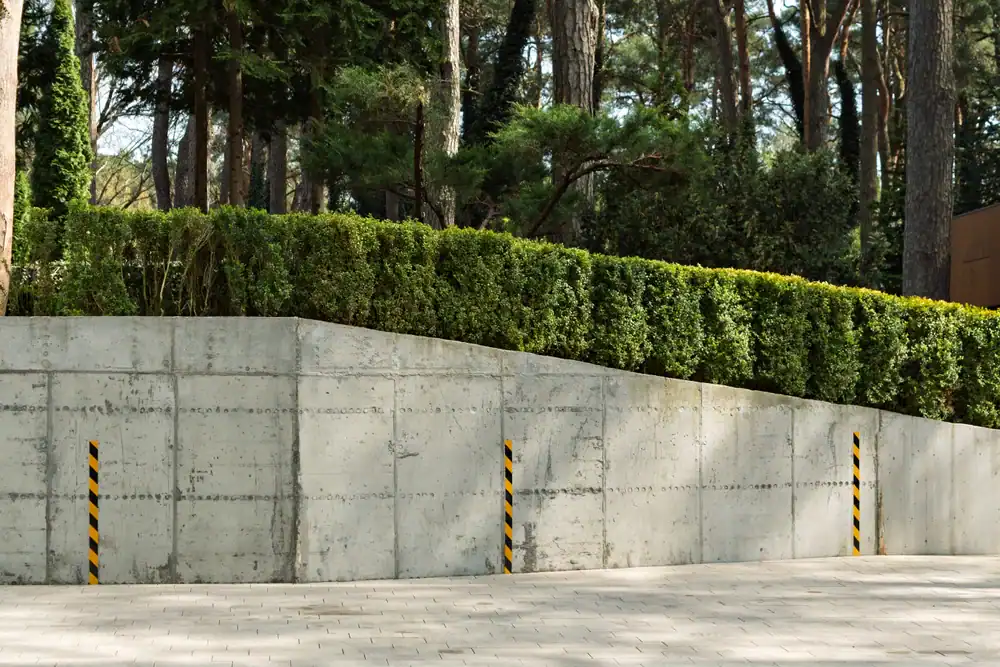

You stop watching soil slide down your driveway. Water goes where it’s supposed to go instead of pooling against your foundation or cutting trenches through your lawn.
Your yard becomes usable again. That slope you’ve been avoiding turns into flat space for a patio, garden beds, or just grass that doesn’t erode every spring. The cracks in your walkway stop spreading because the ground underneath finally has support.
Brookdale properties sit on terrain that shifts. Clay pockets hold water. Slopes funnel runoff straight into basements. A properly built retaining wall accounts for all of that. It’s not just stacking blocks—it’s engineering drainage, compacting base material, and building something that lasts through New Jersey winters without bowing or cracking.
You’re not patching problems anymore. You’re fixing the cause.
We’ve spent nearly two decades working on properties across Bergen County and surrounding areas. We’ve seen what happens when retaining walls are built without proper drainage. We’ve repaired walls that failed because someone skipped the gravel base or didn’t account for frost heave.
We don’t cut corners. Every wall we build in Brookdale gets a reinforced base, perforated drain pipe, and geo-grid reinforcement when the height or soil conditions require it. We pull permits. We follow New Jersey construction codes. We show up when we say we will.
Brookdale homeowners deal with slopes, drainage issues, and soil that doesn’t cooperate. We’ve handled all of it. If your property has a grade problem, we’ve probably solved a version of it before.

We start by looking at your property. Where does water go when it rains? What’s the soil composition? How much height do we need to retain? If the wall is over a certain height, we bring in engineering to make sure it’s built to hold the load.
Next, we excavate and prep the base. This is where most DIY jobs and cheap contractors fail. We dig below the frost line, compact the subgrade, and lay a minimum of six inches of crushed stone. Then we install drainage—perforated pipe wrapped in filter fabric that directs water away from the wall.
Then we build. Whether it’s concrete retaining wall blocks, poured concrete, or another material, every course is leveled and set correctly. We backfill with gravel, not dirt, so water doesn’t build up behind the wall. If the wall is tall or holding back a lot of soil, we add geo-grid reinforcement that ties into the backfill.
You get a wall that doesn’t shift, crack, or bow. And you get drainage that works.

Ready to get started?
Every retaining wall project includes site evaluation, proper excavation, and a compacted gravel base. We don’t skip steps. You get drainage installed behind the wall with perforated pipe and filter fabric. You get backfill material that won’t hold water. You get a wall that’s built to code.
In Brookdale, that means accounting for New Jersey’s freeze-thaw cycles, clay soil, and heavy spring runoff. We’ve seen properties where water has nowhere to go and ends up in basements or washing out driveways. Our walls are designed to handle that. We slope the backfill. We direct water to daylight or tie into existing drainage.
If you’re repairing a retaining wall that’s failing, we assess why it failed in the first place. Usually it’s poor drainage, no base, or soil pressure that wasn’t accounted for. We don’t just patch it. We rebuild it correctly so you’re not calling someone else in three years.
You also get options. Concrete blocks, natural stone, poured concrete—it depends on your budget, the height, and what you’re trying to achieve. We’ll walk through what makes sense for your property and your goals.

It depends on height, material, and site conditions. A basic segmental block wall might start around $3,000 for a short run. Taller walls, engineered systems, or projects that require significant excavation and drainage work can run $15,000 to $40,000 or more.
Concrete retaining wall blocks are usually the most cost-effective option for residential projects. Natural stone costs more but offers a different look. Poured concrete is often used for taller walls or commercial applications where engineering is required.
If your property has access issues, poor soil, or needs extensive grading, that adds to the cost. We give you a clear estimate upfront. No hidden charges. You’ll know what you’re paying for before we start.
Most likely, yes. New Jersey requires permits for retaining walls over a certain height, and Brookdale follows local building codes that regulate construction on sloped properties. If your wall is over three or four feet, you’ll almost certainly need a permit and possibly an engineered design.
Even if your wall is shorter, it’s worth checking. Some municipalities have stricter rules, especially if the wall is near a property line or affects drainage. We handle the permit process as part of the project. We know what the township requires and how to get approvals without delays.
Skipping the permit might seem easier, but it can cause problems if you ever sell your home. Buyers’ inspectors flag unpermitted work, and you could be forced to remove the wall or bring it up to code. It’s not worth the risk.
Concrete retaining wall blocks are the most popular choice for residential projects in Brookdale. They’re durable, affordable, and available in different colors and textures. They handle freeze-thaw cycles well and don’t require much maintenance.
Natural stone looks great but costs more and takes longer to install. It works well for shorter walls or decorative applications. Poured concrete is the strongest option and necessary for taller walls, but it’s more expensive and requires formwork and curing time.
Timber walls are less common now because wood rots, especially in New Jersey’s wet climate. If you want something that lasts, stick with concrete or stone. We’ll recommend what makes sense based on your site conditions, budget, and how you want the finished wall to look.
A straightforward residential wall usually takes one to two weeks from start to finish. That includes excavation, base prep, installation, backfill, and cleanup. Larger projects or walls that require engineering and permits can take longer.
Weather affects the timeline. If we’re in the middle of a wet stretch, we may need to pause excavation until the ground firms up. Concrete work requires dry conditions and proper curing time. We don’t rush jobs just to meet a deadline if it means compromising quality.
You’ll know the timeline before we start. We’re upfront about how long the project will take and what could cause delays. Once we’re on site, we work efficiently and clean up at the end of each day.
Sometimes. If the wall is leaning, cracking, or showing signs of failure, we assess whether it can be repaired or needs to be rebuilt. Small cracks or minor settling can often be fixed. Walls that are bowing significantly or have failed drainage usually need to be replaced.
The most common cause of retaining wall failure is poor drainage. Water builds up behind the wall, creates pressure, and pushes it out. If there’s no drainage system or the original system has clogged, the wall will eventually fail no matter how well it was built.
We’ll inspect your wall, explain what’s happening, and give you options. If a repair makes sense, we’ll do that. If the wall needs to be rebuilt, we’ll tell you why and what we’ll do differently to prevent the same problem. Repairing a retaining wall the wrong way just delays the inevitable.
It can, but only if it’s designed with drainage in mind. A retaining wall by itself doesn’t fix drainage—it manages soil. But when we build a wall, we install drainage systems behind it that redirect water away from your foundation, driveway, or low-lying areas.
That means perforated drain pipe, gravel backfill, and proper grading so water has somewhere to go. If your property has standing water or runoff issues, we look at the whole picture. Sometimes a retaining wall is part of the solution. Other times you need additional drainage work like French drains or regrading.
Brookdale properties often deal with clay soil and slopes that funnel water toward homes. We’ve handled plenty of projects where fixing the drainage was just as important as building the wall. We’ll walk your property, identify where water is coming from, and design a system that actually solves the problem.
Other Services we provide in Brookdale