
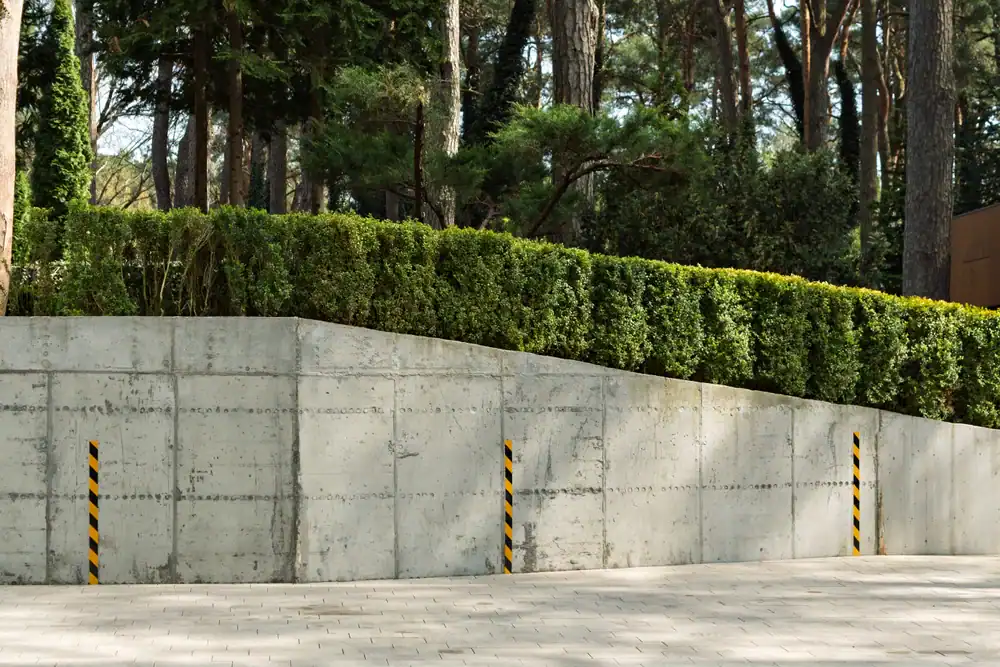

Your yard stays where it belongs. Water flows away from your foundation instead of pooling around it during those heavy spring rains Caldwell gets hit with year after year.
You stop worrying every time the forecast calls for storms. The erosion that’s been eating away at your slope? Done. The drainage issues turning your basement into a stress point? Handled.
Properties with properly built retaining walls see value increases around 15% on average. But the real payoff is simpler than that. You get usable outdoor space where there used to be a muddy, unstable slope. You get peace of mind knowing your foundation isn’t slowly being compromised by water and soil movement. You get a yard that looks intentional instead of like it’s fighting a losing battle with gravity.
We know Essex County soil. We know how clay-heavy ground behaves when it gets saturated. We know which retaining wall blocks hold up and which ones start shifting after two winters.
We’re licensed, insured, and we don’t hide costs. When we give you a quote, that’s what you pay. No surprise charges when we hit clay or rock, because we account for Caldwell’s soil conditions from the start.
You’re not getting a crew that learned about retaining walls from YouTube. You’re getting contractors who’ve built hundreds of walls across North Jersey and understand what actually works here.

First, we come out and look at your property. We’re checking slope, drainage patterns, soil type, and how water moves across your yard during heavy rain. This isn’t a five-minute walkthrough. We need to understand what’s causing your erosion or drainage problem before we design a solution.
Then we give you options. Concrete retaining wall blocks, interlocking systems, or poured concrete depending on your height requirements and budget. We explain what each option costs and why, including the drainage system that goes behind the wall because that’s what actually keeps it standing long-term.
Once you approve the plan, we pull permits if needed and schedule the work. We excavate, prepare a proper base with compacted gravel, install drainage, and build the wall in sections. The base work takes longer than the actual wall construction, but that’s what prevents settling and failure down the road.
After the wall is up, we backfill with proper drainage material and make sure water has a clear path away from both the wall and your foundation. Then we clean up and walk you through basic maintenance so your investment lasts.

Ready to get started?
You get a complete drainage solution, not just stacked blocks. That means perforated pipe, drainage aggregate, and proper grading so water doesn’t build up behind your wall and push it over.
You get materials that match Caldwell’s freeze-thaw cycles. New Jersey winters are brutal on retaining walls. We use concrete retaining wall blocks and interlocking systems rated for our climate, not whatever’s cheapest at the supply yard.
You get proper permits and compliance with New Jersey soil erosion regulations. Essex County has specific requirements, and we handle that paperwork so you’re not dealing with township headaches later.
The work includes excavation, base preparation, wall construction, drainage installation, backfill, and site cleanup. If we need to work around existing landscaping or utilities, we coordinate that. If your wall needs repair instead of replacement, we assess the damage honestly and tell you whether fixing it makes sense or if you’re throwing money at a losing battle.

Most retaining wall projects in Caldwell run between $4,000 and $12,000 depending on height, length, and site conditions. You’re looking at roughly $35 to $65 per square foot installed for quality work.
A basic 3-foot-tall wall that’s 20 feet long with standard concrete blocks and drainage might land around $5,000. If you need a taller wall, difficult access, or you’re dealing with heavy clay soil that requires extra excavation, that number goes up.
The biggest cost driver is usually site prep and drainage, not the blocks themselves. If your property has poor drainage or unstable soil, we need to address that first or your wall won’t last. Cheap installations skip the drainage work, which is why you see failed retaining walls all over North Jersey after a few years.
Interlocking concrete blocks handle New Jersey’s freeze-thaw cycles better than most other options. They’re engineered to move slightly without cracking, which matters when ground freezes and expands every winter.
Concrete retaining wall blocks come in different styles, but the key is getting ones with a proper lip system that locks each course together. Gravity walls work for shorter applications under 3 feet, but anything taller needs a mechanical connection between blocks.
Natural stone looks great but costs significantly more and requires skilled installation to do right. Treated timber is the budget option, but you’re replacing it in 10-15 years while concrete blocks last 50-plus years with basic maintenance. For most Caldwell properties dealing with slope and drainage issues, interlocking concrete blocks give you the best combination of durability, cost, and performance.
A typical residential retaining wall takes 3 to 7 days from excavation to completion. Smaller walls under 30 feet might be done in 2-3 days. Larger projects with multiple tiers or difficult access can run 10 days or more.
Weather impacts the timeline significantly. We can’t pour bases or backfill in heavy rain, and we won’t rush drainage work just to meet a schedule. Doing it right matters more than doing it fast.
The permit process adds time on the front end if your wall is over 4 feet tall or near property lines. Essex County typically processes permits within 2-3 weeks. We handle that submission, but it’s worth knowing about if you’re planning around a specific deadline.
Caldwell typically requires permits for retaining walls over 4 feet tall or any wall that alters drainage patterns on your property. If your wall is near a property line or affects a neighbor’s drainage, you’ll need permits regardless of height.
New Jersey’s soil erosion regulations also kick in for certain projects, especially if you’re moving significant amounts of earth or building on slopes. The township wants to see engineered plans for taller walls to ensure they’re built safely and won’t fail.
We handle permit applications as part of our service because we know what Caldwell’s building department requires. It’s easier than trying to navigate it yourself, and it protects you from code violations that can complicate property sales down the road. The permit cost is usually a few hundred dollars and adds 2-3 weeks to the project timeline.
It depends on what’s failing and why. If your wall is leaning, bulging, or has major cracks, that usually means the drainage system failed or there was never proper drainage installed. Repairing the visible damage without fixing the underlying drainage problem is just temporary.
Small cracks, minor settling, or a few loose blocks can often be repaired if the wall’s structure is still sound. We can replace damaged sections, add drainage if it’s missing, and reinforce the wall to extend its life another 10-20 years.
But if the wall has moved more than a few inches, if the base has failed, or if water damage has compromised the structural integrity, replacement makes more sense financially. Pouring money into repairs on a wall that’s going to fail anyway doesn’t help you. We’ll assess it honestly and tell you which route actually solves your problem long-term.
Keep the drainage system clear. That means checking the drainage outlets at least twice a year and after major storms to make sure water can flow freely. Clogged drains cause pressure buildup that pushes walls over.
Remove vegetation growing in or near the wall. Tree roots and even aggressive plants can shift blocks over time. A little preventive weeding saves you from bigger problems later.
Inspect for settling or movement annually. Small issues caught early are cheap fixes. A wall that’s shifted 6 inches has usually failed at the base level and needs major work. Check after winter especially, since freeze-thaw cycles cause the most stress. If you notice any bulging, leaning, or cracks wider than a quarter-inch, call someone who knows retaining walls to assess it before it gets worse.
Other Services we provide in Caldwell