
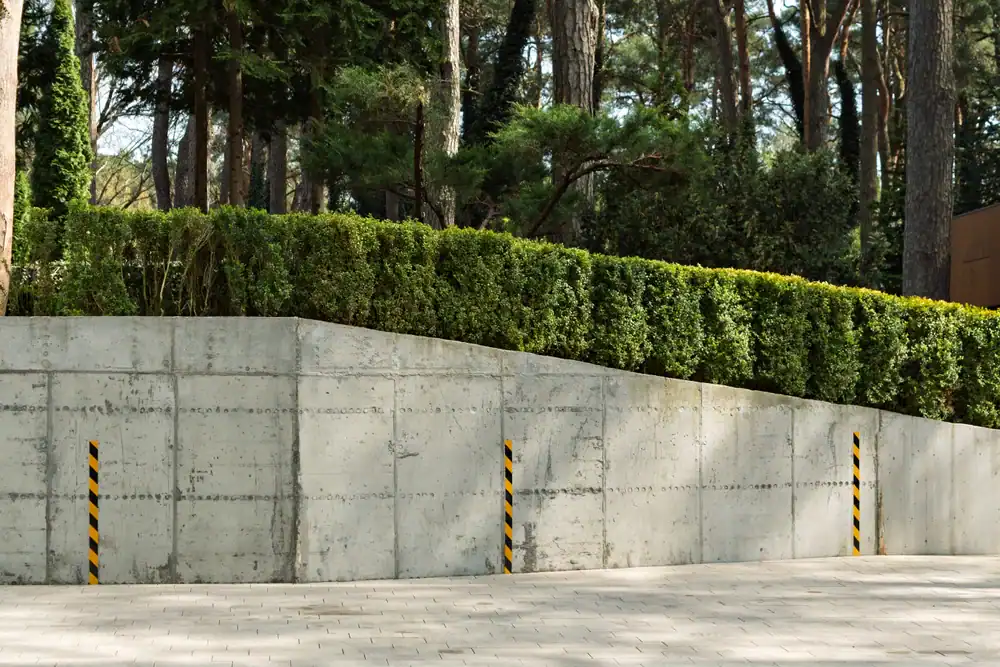

Cedar Grove’s rolling terrain creates beautiful views, but it also creates real problems. Soil slides down slopes after heavy rain. Water pools near your foundation. That steep section of your yard sits unused because it’s too dangerous or impractical to landscape.
A properly built retaining wall stops all of that. You get flat, usable space where there was only a slope. You prevent thousands of dollars in erosion damage. You protect your foundation from water intrusion that leads to basement problems.
The difference between a wall that lasts 50 years and one that fails in five comes down to three things: proper base preparation, integrated drainage, and quality materials. Most DIY attempts and cheap contractors skip at least one of these. We don’t.
We’ve worked on Cedar Grove properties for over 30 years. We know the soil conditions here. We understand how freeze-thaw cycles affect different materials in Essex County. We’ve seen what happens when walls are built without proper drainage—and we’ve rebuilt plenty of them.
You’re not hiring a crew that learned about retaining walls from YouTube. You’re working with NCMA-certified installers who understand the engineering behind segmental retaining walls and know exactly what Cedar Grove’s terrain demands.
We handle the permit process for walls over four feet. We source materials that actually hold up in New Jersey weather. And we build walls that do their job without needing repairs every few years.

We start with a site evaluation. We measure the slope, check soil conditions, and identify drainage patterns. If your wall needs to be over four feet, we bring in engineering and handle the permit requirements with Essex County.
Next comes excavation and base preparation. This is where most failures start, so we dig deep enough and use the right base materials. We’re talking compacted gravel, proper depth, and a level foundation—not just stacking blocks on dirt.
Then we build the wall itself using concrete retaining wall blocks, natural stone, or poured concrete depending on your property’s needs and your preferences. Every course gets checked for level. Drainage pipes go in behind the wall to prevent water pressure buildup.
Finally, we backfill with gravel for drainage, compact everything properly, and finish the top. You get a wall that looks clean and does its job without shifting, bowing, or cracking.

Ready to get started?
Material choice matters more in Cedar Grove than you might think. Our freeze-thaw cycles destroy cheaper blocks within a few years. We use materials rated for Northern New Jersey weather—granite, bluestone, and premium concrete retaining wall blocks from manufacturers like Techo-Bloc and Cambridge.
For walls under four feet, interlocking retaining wall blocks work well and give you design flexibility. They’re engineered to handle pressure without needing reinforcement. For taller walls or heavier loads, we use reinforced systems or natural stone.
Every wall we build includes proper drainage—perforated pipe, gravel backfill, and weep holes where needed. This isn’t optional. Hydrostatic pressure from trapped water is the number one cause of retaining wall failure. We’ve seen too many walls bow out and collapse because someone skipped the drainage step.
You also get options for wall landscaping. We can terrace steep slopes with multiple shorter walls instead of one tall wall. We can integrate planting areas, steps, or lighting. The goal is a wall that solves your erosion problem and actually improves how you use your property.

Most residential retaining walls in Cedar Grove run between $25 and $75 per square foot depending on materials, height, and site conditions. A typical 30-foot wall that’s three feet high costs $2,250 to $6,750.
Block wall retaining wall systems using interlocking concrete blocks sit at the lower end of that range. Natural stone walls using bluestone or granite cost more but last longer and add more to your property value. In Cedar Grove’s real estate market, a well-designed stone retaining wall can boost property values by 5-10%.
The biggest cost variables are excavation difficulty, drainage requirements, and whether you need engineering and permits. Walls over four feet require both in New Jersey, which adds to the upfront cost but ensures the wall is safe and legal. Steep slopes or poor soil conditions increase excavation and base prep costs.
Yes, if your wall is over four feet tall. New Jersey requires engineering and permits for retaining walls exceeding four feet in height. This applies whether you’re building the wall yourself or hiring a contractor.
The permit process involves submitting engineered plans to Essex County showing the wall design, drainage plan, and how it handles soil pressure. An engineer needs to stamp the plans. Most homeowners don’t realize this until they’re halfway through a project, which creates expensive problems.
We handle the entire permit process for walls that need it. We work with structural engineers who design retaining walls regularly, submit the paperwork, and make sure everything meets code. For walls under four feet, you typically don’t need a permit, but you still need proper construction techniques or the wall will fail regardless of its height.
Concrete retaining wall blocks and natural stone both work well in Cedar Grove if they’re rated for freeze-thaw cycles. The “best” material depends on your wall height, budget, and how the wall fits into your overall landscape design.
Interlocking concrete blocks are cost-effective, durable, and come in multiple colors and textures. They’re engineered specifically for retaining walls, so they handle pressure well. Brands like Techo-Bloc and Cambridge make blocks that last 50+ years in New Jersey weather.
Natural stone—especially granite and bluestone—costs more but adds significant property value and lasts even longer. Stone walls can last 100-200 years when built correctly. They also look more natural in Cedar Grove’s established neighborhoods where homes have mature landscaping.
Wood and railroad ties are cheaper upfront but rot within 10-15 years in our climate. Poured concrete works for certain applications but cracks more easily than segmental systems. We typically recommend concrete blocks for most residential projects and natural stone when aesthetics and long-term value matter most.
Most residential retaining walls take three to seven days from excavation to completion. Small walls under 20 feet might finish in two days. Larger walls with complex drainage or multiple tiers take longer.
The timeline depends on wall length, height, site access, and soil conditions. If we’re working on a steep slope with difficult access, equipment moves slower and excavation takes longer. If your wall needs engineering and permits, add two to four weeks for the approval process before construction starts.
Weather affects the schedule too. We can’t pour concrete in freezing temperatures, and heavy rain delays excavation and base work. Spring and fall are ideal for retaining wall construction in Cedar Grove. Summer works fine but gets booked up quickly. Winter is possible for some projects but weather makes timelines less predictable.
Poor drainage causes about 90% of retaining wall failures. Water builds up behind the wall, creates hydrostatic pressure, and pushes the wall outward. Eventually the wall bows, cracks, or collapses completely.
Prevention is straightforward but requires doing the work correctly. We install perforated drainage pipe behind every wall to collect water and direct it away. We backfill with gravel instead of soil so water drains through instead of building pressure. We include weep holes in the wall face so water has multiple escape routes.
The other common failure point is inadequate base preparation. If the base isn’t deep enough, level, and properly compacted, the wall settles unevenly and develops cracks. We excavate below the frost line, use compacted gravel for the base, and make sure every course is level before moving to the next one. These steps take more time upfront but they’re the difference between a wall that lasts decades and one that fails in five years.
Most failing retaining walls need complete replacement, not repair. Once a wall starts bowing or cracking from drainage problems or foundation issues, the structural integrity is compromised. Patching cracks or straightening a bowed wall doesn’t fix the underlying problem.
Minor issues like replacing a few damaged blocks or adding drainage where it’s missing can sometimes extend a wall’s life. But if the wall is leaning more than an inch or two, has major cracks, or shows signs of foundation movement, rebuilding is the only real solution.
The good news is that repairing retaining wall issues now prevents bigger problems later. A failing wall doesn’t just look bad—it stops controlling erosion, which means soil slides toward your foundation, water pools where it shouldn’t, and you risk serious property damage. Rebuilding the wall correctly solves the immediate problem and prevents expensive foundation or drainage repairs down the road.
Other Services we provide in Cedar Grove