
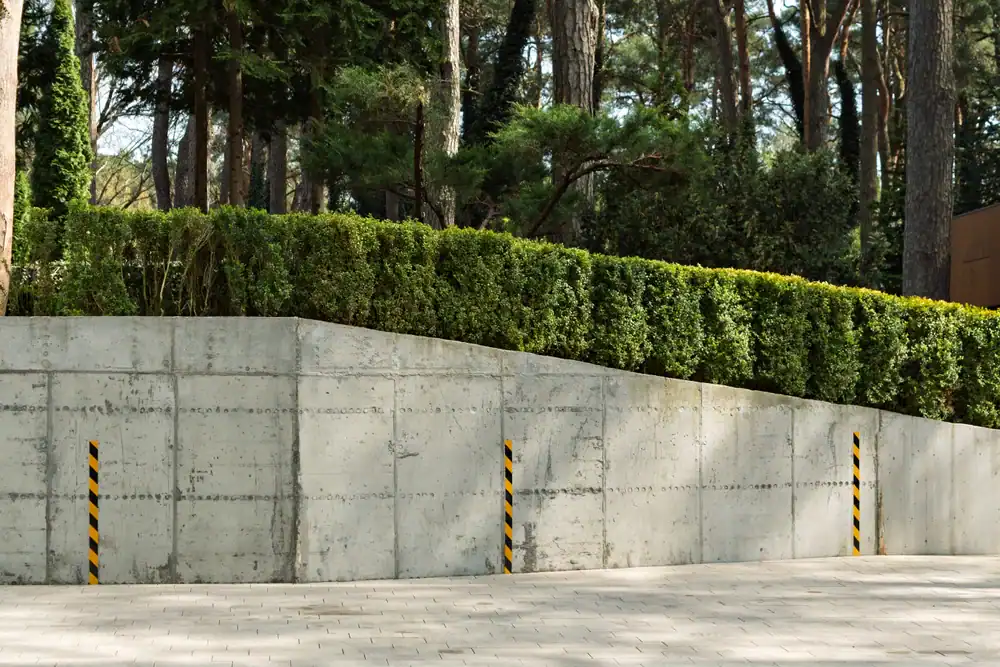

A retaining wall isn’t just stacked blocks. It’s engineered to handle the weight of saturated soil pushing against it during heavy rain.
When built right, it redirects water away from your foundation. It prevents soil from washing into your yard or driveway. It creates level, usable space where you had a slope.
In Orange, where properties sit on varied terrain and drainage matters, your retaining wall needs proper backfill, drainage pipes, and materials that won’t crack under pressure. You’re looking at concrete retaining wall blocks that cost $15-$30 per square foot, natural stone at $25-$75, or poured concrete depending on your site conditions.
The difference between a wall that lasts 20 years and one that leans after five comes down to drainage design and foundation prep. If water can’t escape from behind the wall, hydrostatic pressure builds up and pushes it over. That’s why weep holes, gravel backfill, and perforated drainage pipes aren’t optional upgrades.
You’ll know it’s working when rain doesn’t pool near your foundation. When your yard stays level. When you’re not watching soil wash away every storm.
We handle retaining walls, foundation work, and drainage solutions across Orange and the surrounding Essex County area. We’re local, we pull permits when required, and we don’t disappear after the job.
Orange properties deal with specific challenges – older homes, varied lot grades, soil that doesn’t always drain well. We’ve worked on enough properties here to know what holds up and what doesn’t.
When you call, you’ll talk to someone who can walk your property, explain what’s happening with your soil and water flow, and give you an honest assessment. No hidden fees. No pressure to overbuild. Just a clear plan and transparent pricing before we start.

First, we assess your site. That means looking at the slope, checking soil conditions, measuring the height difference, and figuring out where water goes when it rains. If your wall needs to be over four feet or you’re on a steep grade, we’ll tell you if engineering is required.
Next, we excavate and prepare the foundation. This isn’t just digging a trench. We’re creating a level, compacted base – usually crushed stone – that won’t shift or settle. For taller walls or unstable soil, we go deeper.
Then we install drainage before we build. Perforated pipe behind the wall, gravel backfill, weep holes if needed. This step is what prevents your wall from failing three years in.
We build the wall using concrete retaining wall blocks, poured concrete, or natural stone depending on what your site needs and what you’re spending. Each course gets leveled, pinned if necessary, and backfilled correctly as we go.
Finally, we backfill, compact, and finish the top. You’ll see clean edges, proper grading away from the wall, and a structure that’s built to handle New Jersey weather without leaning or cracking.

Ready to get started?
You’re getting a site evaluation that identifies drainage issues before they become expensive problems. We measure, mark utilities, and pull permits if your municipality requires them – in Orange, that’s typically for walls over a certain height or near property lines.
Material selection matters more than most contractors admit. Concrete blocks work well for most residential applications and cost less than natural stone. Stone looks better but costs more and takes longer to install. Poured concrete is strongest for taller walls but limits your design options. We’ll explain what makes sense for your property and budget.
Orange homeowners typically spend between $4,000 and $15,000 depending on wall height, length, and material choice. A basic 50-foot concrete block wall runs around $8,000. Add drainage systems, and you’re looking at another $5-$15 per square foot, but that’s what keeps your wall standing.
We handle excavation, hauling, foundation prep, installation, drainage integration, backfill, and cleanup. If your wall needs engineering drawings, we’ll coordinate that too. You’re not managing multiple contractors or wondering if the drainage was done right.
The goal is a wall that controls erosion, manages water, and adds functional space to your property without requiring constant maintenance or failing after a few freeze-thaw cycles.

Most residential retaining walls in Orange run between $4,000 and $15,000 depending on height, length, and materials. A standard 50-foot concrete block wall averages around $8,000.
Concrete retaining wall blocks cost $15-$30 per square foot installed. Natural stone runs $25-$75 per square foot. Poured concrete falls somewhere in between but requires more labor.
Add drainage systems – which you need if you want your wall to last – and that’s another $5-$15 per square foot. Permits in Orange typically cost $50-$500 depending on wall height and location. If you need engineering drawings for walls over four feet, that’s an additional cost upfront but prevents expensive failures later.
The price depends on access to your yard, how much excavation is required, soil conditions, and whether we’re dealing with a straight wall or curves and corners.
In Orange, NJ, you typically need a permit for retaining walls over a certain height – usually four feet – or if the wall is near a property line or affects drainage patterns. Requirements vary, so we check with the local building department before starting.
Permit costs in New Jersey municipalities generally range from $50 to $500. The process involves submitting plans, showing how drainage will be handled, and sometimes providing engineering drawings if the wall is tall or on a steep slope.
Skipping permits might seem like it saves money, but it creates problems when you sell your property or if the wall fails and causes damage to a neighbor’s lot. We pull permits when required and handle the paperwork so you’re not dealing with the building department yourself.
If your wall is under four feet, on level ground, and not affecting water flow to adjacent properties, you might not need one. But it’s worth confirming before you start digging.
Concrete retaining wall blocks are the most common choice in New Jersey because they handle freeze-thaw cycles well, cost less than stone, and install faster than poured concrete. They come in different textures and colors, so you’re not stuck with industrial-looking gray blocks.
Natural stone looks better but costs significantly more – $25-$75 per square foot versus $15-$30 for concrete blocks. Stone also takes longer to install because each piece is different and requires more fitting and adjustment.
Poured concrete is strongest for taller walls or heavy load situations, but it’s harder to repair if something goes wrong and doesn’t offer much design flexibility.
For most residential properties in Orange, concrete blocks offer the best combination of durability, cost, and appearance. They’re engineered to interlock, they don’t require mortar, and they’re designed specifically for retaining wall applications. If budget isn’t a concern and you want a premium look, natural stone is worth considering.
A properly built retaining wall with correct drainage should last 20-40 years in New Jersey. The lifespan depends more on drainage design than the blocks themselves.
Walls fail because water builds up behind them, creating hydrostatic pressure that pushes them over. If your wall has perforated drainage pipe, gravel backfill, and weep holes, water escapes instead of building pressure. That’s what makes it last decades instead of years.
Concrete blocks are durable in harsh weather. Natural stone lasts even longer but costs more upfront. Wood retaining walls – sometimes used for smaller garden walls – last 10-15 years before rot becomes an issue.
Signs your wall is failing include leaning, cracking, bulging, or water pooling at the base. If you catch these early, repairs cost less than full replacement. But if drainage wasn’t installed correctly from the start, you’re looking at rebuilding rather than patching.
The walls we build include proper drainage by default because we’d rather do it right once than come back to fix it in five years.
A retaining wall can redirect water flow and prevent erosion, but it’s not a drainage solution by itself. It needs integrated drainage to work properly and solve your water issues.
If water runs toward your foundation during rain, a retaining wall with proper grading can redirect it away from your house. If soil washes into your driveway every storm, a wall holds it back. But the wall itself needs drainage behind it – perforated pipe and gravel backfill – or it’ll fail from water pressure.
In Orange, where lot grades vary and older properties sometimes have inadequate drainage, we often combine retaining walls with French drains, regrading, or catch basins to manage water flow across the entire property.
The wall holds soil in place. The drainage system moves water where it needs to go. You need both working together, especially in areas with clay soil that doesn’t absorb water quickly. We evaluate your property’s drainage patterns before designing the wall so you’re solving the problem, not just moving it somewhere else.
Look for leaning, tilting, or bowing – even a few inches means the wall is under stress and likely to get worse. Cracks wider than a quarter-inch, especially horizontal cracks, indicate structural problems.
Water pooling at the base of the wall or soil washing out from behind it means drainage has failed or was never installed correctly. Bulging sections show that soil pressure is pushing the wall out of alignment.
If you see any of these signs, get it looked at before it fails completely. Early repairs might involve adding drainage, reinforcing sections, or rebuilding a small area. Waiting until the wall collapses means full replacement, hauling away failed materials, and potentially dealing with erosion damage to your property or foundation.
Walls don’t usually fail overnight. They show warning signs months or years before collapsing. The problem is most homeowners don’t know what to look for or assume a small lean isn’t serious.
If your wall is more than 10 years old and you’re seeing any movement, cracking, or drainage issues, have someone evaluate it. Catching problems early saves money and prevents bigger headaches down the road.
Other Services we provide in City Of Orange