

You’ve watched the rain wash soil down your slope. Maybe you’ve seen cracks forming, or noticed your yard shrinking after every storm. That’s not just an eyesore—it’s your property value sliding away.
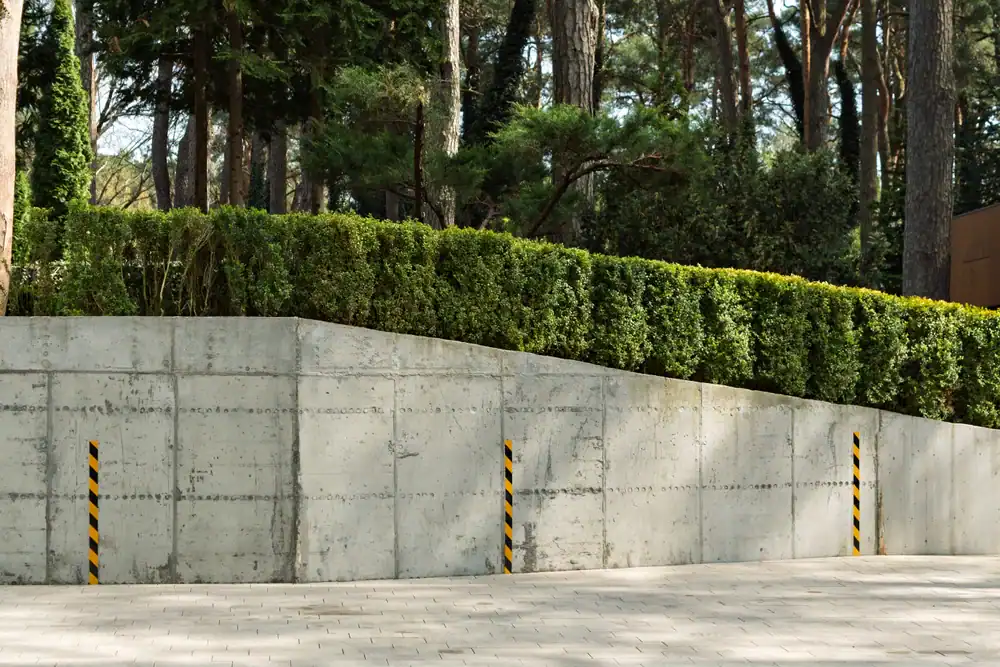
A properly built retaining wall stops that. It holds back the hillside, redirects water where it belongs, and turns unusable slope into level space you can actually use. Concrete retaining wall blocks don’t rot like timber or rust like metal—they sit there doing their job for decades.
Morris County gets hit with heavier storms now than it did twenty years ago. Precipitation from extreme weather events is up 70% across the Northeast. Your property needs more than decorative wall landscaping—it needs a structure engineered to handle what’s coming. When the next heavy rain rolls through Denville, NJ, you’ll have one less thing to worry about.
We’ve been handling exterior projects across New Jersey for nearly two decades. We’re not new to this. Our team knows how Morris County soil behaves, what local regulations require, and how to build retaining walls that hold up under real conditions.
We’ve done the roofing, the masonry, the drainage work. We understand how all these systems connect. When you’re dealing with a retaining wall project, that matters—because a wall that doesn’t account for water flow or soil type is a wall that fails.
You’ll work with certified contractors who’ve refined their skills over years of hands-on work in Denville, NJ and the surrounding area. No hidden charges. No surprises halfway through. Just clear pricing and work that gets done right the first time.

First, we come out and look at your property. We’re checking the slope, the soil, the drainage patterns, and any existing issues. This isn’t a five-minute walkthrough—we need to understand what’s actually happening on your land before we recommend a solution.
Then we talk through your options. Block wall retaining wall systems, poured concrete, stone—each has trade-offs. We’ll explain what makes sense for your specific situation, what it’ll cost, and how long it’ll take. No pressure, just information.
Once you’re ready to move forward, we handle the permitting. Morris County regulates projects that disturb more than 5,000 square feet of soil, and walls over three to four feet typically need permits. We know the process and make sure everything’s filed correctly.
The actual installation starts with excavation and base prep. The footer has to be right—it’s what keeps the wall from shifting. Then we build up the wall in courses, backfill with proper drainage material, and compact everything as we go. When we’re done, you’ve got a structure that’s built to code and engineered to last 50 to 100 years.

Ready to get started?
A retaining wall isn’t just stacked concrete retaining wall blocks. It’s a drainage system, a structural foundation, and a long-term erosion solution all working together.
Every project includes proper excavation, compacted base material, and drainage infrastructure behind the wall. That’s what keeps water from building up pressure and pushing the wall out over time. We’re also factoring in frost depth for this area—New Jersey winters mean the ground freezes and thaws, and your wall needs to be built deep enough to handle that movement.
In Denville, NJ, you’re dealing with soil that’s been shaped by glacial activity and centuries of weathering. Some areas have clay, others have sandy loam. We adjust our approach based on what’s actually there, not what a generic guide says to do. That’s the difference between a wall that lasts and one that needs repairing retaining wall sections within a few years.
You’ll also get a clear timeline and communication throughout. We’re not the crew that disappears for days and shows up whenever. You’ll know when we’re coming, what we’re doing, and when the job will be finished.

Most retaining wall projects in this area run between $3,500 and $9,400, but that’s a wide range because every property is different. You’re looking at roughly $35 to $65 per square foot when you factor in materials and labor.
What drives the cost? Height and length, obviously. But also soil conditions, access to the site, drainage requirements, and whether you need permits. A simple three-foot wall with easy access costs a lot less than a six-foot tiered system on a steep grade with limited equipment access.
Concrete retaining wall blocks are typically more expensive upfront than timber, but they last 50 to 100 years with almost no maintenance. Timber rots. It warps. You’re replacing it in 10 to 15 years. When you’re comparing quotes, compare lifespan too—not just the initial number.
Most likely, yes—especially if your wall is over three to four feet tall. Morris County regulates construction projects that disturb more than 5,000 square feet of soil, and retaining walls usually fall under those rules.
Permits typically cost between $50 and $450 depending on the scope of work and the height of the wall. The process exists for a reason: walls that aren’t built to code can fail, and when they fail, they can cause serious property damage or even safety hazards.
We handle the permitting process as part of our service. We know what the county requires, what documentation they need, and how to get approvals without unnecessary delays. Trying to skip permits might save you a couple hundred bucks now, but it’ll cost you a lot more if you ever try to sell your home and the buyer’s inspector flags unpermitted work.
Concrete retaining wall blocks and poured concrete systems last the longest—typically 50 to 100 years when they’re installed correctly. They don’t rot, they don’t rust, and they handle freeze-thaw cycles without breaking down.
Timber walls look nice and cost less upfront, but you’re replacing them in 10 to 20 years. Metal can rust. Natural stone is durable but requires skilled installation and costs more. For most residential properties in Denville, NJ, concrete block systems offer the best combination of longevity, cost, and performance.
The key isn’t just the material—it’s the installation. A concrete wall without proper drainage will fail just as fast as a cheap timber wall. Water pressure is what kills retaining walls. When you build in drainage from the start, use the right backfill material, and compact everything properly, you get a wall that outlasts the mortgage.
If you’ve got a slope and you’re seeing erosion, pooling water, or soil washing away after rainstorms, you probably need one. Other signs: cracks forming in existing walls, plants or trees sliding downhill, or areas of your yard becoming unusable because of the grade.
Retaining walls do two things—they hold back soil and manage water. If your property has elevation changes and drainage issues, a retaining wall can solve both problems at once. It creates level space, stops erosion, and redirects water away from your foundation or other structures.
In Denville, NJ, where we’re seeing more frequent heavy storms, properties that used to manage fine are now dealing with erosion they’ve never had before. If you’re noticing new problems after big rains, don’t wait until you’ve lost significant soil or damaged other parts of your property. Fixing erosion damage costs a lot more than preventing it.
It depends on what’s failing and why. Minor cracks, a few loose blocks, or surface damage—that’s usually repairable. We’re talking $800 to $1,000 for most standard fixes. But if the wall is leaning, bulging, or showing major structural movement, repair isn’t going to cut it.
When a wall starts leaning, it means the foundation has failed or water pressure has compromised the structure. You can patch the visible damage, but the underlying problem is still there. In those cases, replacement is the only real solution. Trying to save a failing wall just delays the inevitable and often makes the final cost higher.
We’ll come out and give you an honest assessment. If it can be repaired, we’ll tell you. If it needs to be replaced, we’ll explain why and what it’ll take to do it right. Repairing retaining wall sections makes sense when the core structure is still sound—but when it’s not, rebuilding is the smarter investment.
Most residential retaining wall projects take one to two weeks from start to finish, but that timeline shifts based on the size of the wall, site conditions, and weather. A straightforward 20-foot wall on level ground with good access? That’s on the shorter end. A multi-tiered system on a steep slope with drainage work and limited equipment access? That takes longer.
Permitting can add time on the front end—usually a week or two depending on how backed up the county is. We factor that into the schedule so you’re not left waiting without knowing why.
Weather matters too. We can’t pour footers in frozen ground, and heavy rain delays excavation work. We’ll give you a realistic timeline upfront and keep you updated if anything changes. The goal is to get it done right, not just done fast. A rushed job means problems later, and nobody wants that.
Other Services we provide in Denville